Here is the most important thing to understand before comparing a bird skeleton to a dinosaur skeleton: birds are dinosaurs. Not metaphorically, not loosely. Scientifically, birds are living theropod dinosaurs, descended from the same lineage that includes Velociraptor and Tyrannosaurus rex. So when you search for 'bird vs dinosaur skeleton,' what you are really asking is: how does a modern bird skeleton compare to a non-bird dinosaur skeleton? And more practically, which specific bones let you tell them apart when you are staring at a fossil plate or a museum specimen? That is exactly what this guide covers.
Bird vs Dinosaur Skeleton: Bone-by-Bone ID Guide

Marcus Hendricks
19 Apr 2026
What 'bird vs dinosaur skeleton' actually means (and what you can compare)
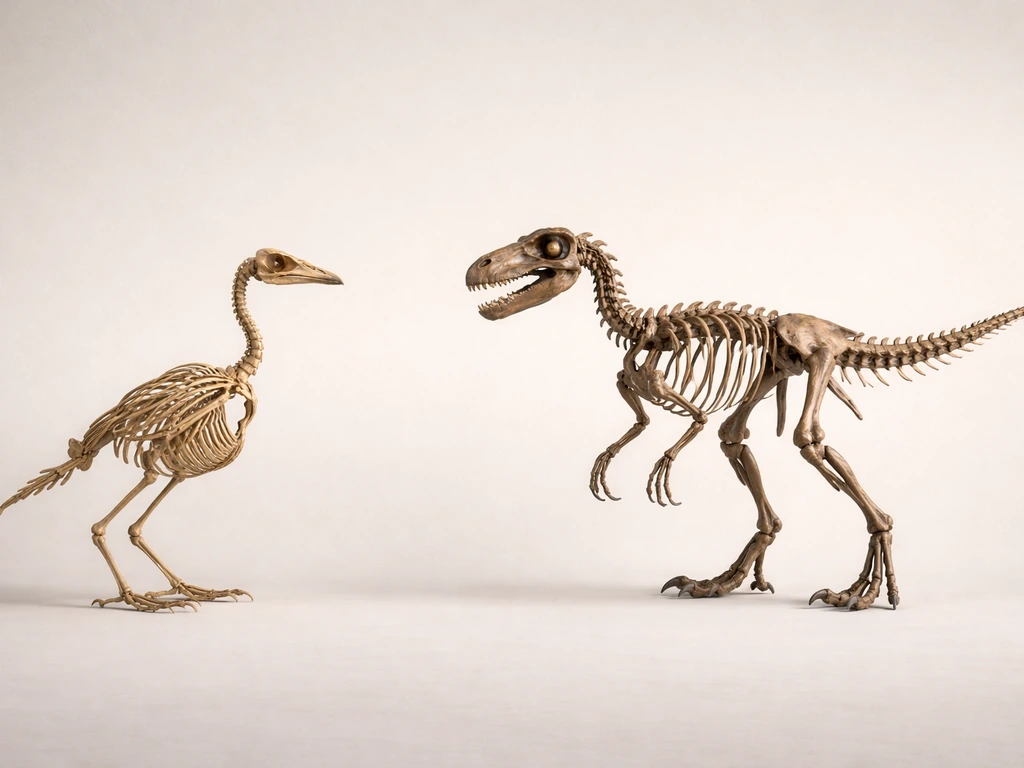
The framing of 'bird vs dinosaur' suggests two completely separate groups. They are not. The correct framing is bird skeletons versus non-bird dinosaur skeletons, and even within that, the most instructive comparison is between birds and their closest extinct relatives: the theropod dinosaurs. Theropods are the two-legged, often bipedal dinosaurs, and they include everything from T. rex to the small feathered maniraptorans like Microraptor. Birds (Aves) evolved from within that theropod lineage, which is why a pigeon skeleton and a Velociraptor skeleton share a surprising number of features.
This matters a lot for identification. If you are trying to figure out whether a fossil fragment belongs to a bird or a non-bird dinosaur, you cannot rely on a single 'bird bone' to settle the question. The Smithsonian's dinosaur educators frame this as a lineage comparison, not a hard either/or split. The American Museum of Natural History goes even further, explicitly cautioning that traits like hollow bones and even a furcula (the wishbone) appear in non-bird dinosaurs too. Good identification always uses a cluster of features, not a single diagnostic bone.
For this guide, 'dinosaur skeleton' means a non-avian dinosaur, with theropods being the most bird-like and therefore the most useful comparison group. When you see the comparison structured this way, everything becomes much cleaner.
Key shared body plan vs where birds and dinosaurs diverge
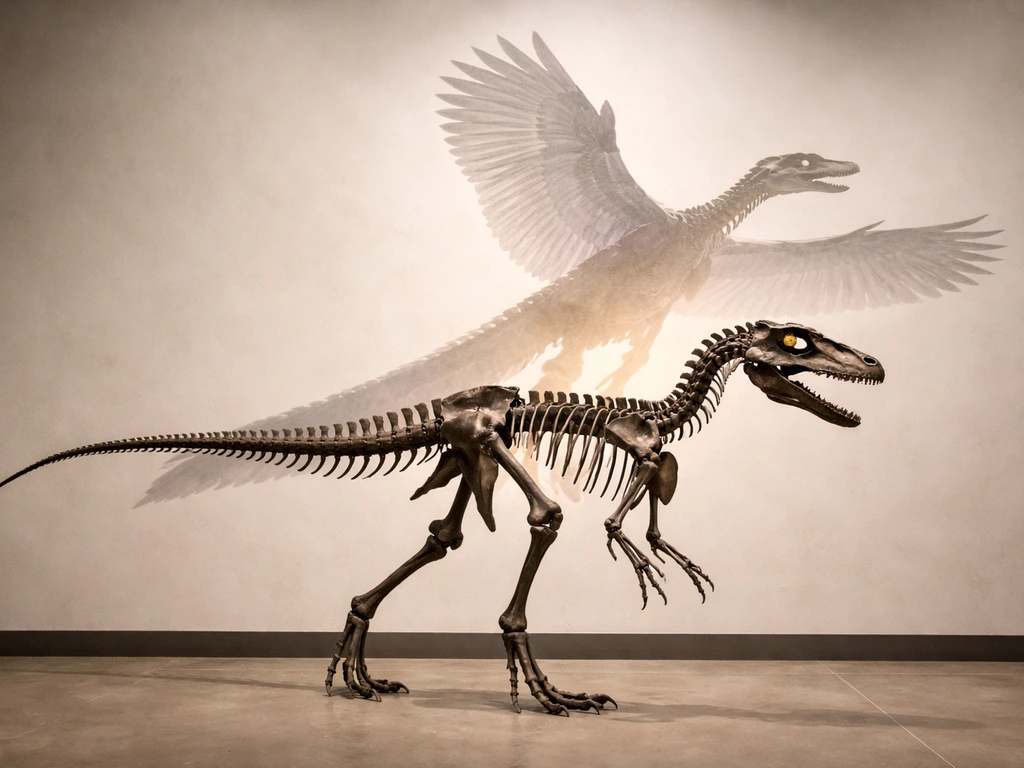
Start with what is shared, because it explains why the comparison is so genuinely tricky. Theropod dinosaurs and birds share: bipedal posture with hind limbs held directly under the body, a three-toed foot arrangement, hollow (pneumatized) bones, a wishbone (furcula formed by fused clavicles), and a general body plan where the forelimbs are shorter than the hind limbs. These are ancestral theropod features that birds inherited and kept. When you look at a crow skeleton and a small dromaeosaur skeleton side by side, the family resemblance is not superficial. It is real and deep.
Where they diverge is in the degree of specialization that flight and the avian lifestyle demanded. Modern birds show extreme fusion and reduction of bones, loss of teeth, expansion of the sternum into a keeled breastbone for flight muscle attachment, and radical remodeling of the hand into a wing structure. These are not gradual tweaks. They are significant architectural changes layered onto the shared theropod body plan. Once you know what to look for, you can spot them reliably.
| Feature | Non-Bird Theropod Dinosaur | Modern Bird |
|---|---|---|
| Hollow bones | Present in many species | Present and extensively pneumatized |
| Furcula (wishbone) | Present in many theropods | Present and robust |
| Teeth | Usually present (rarely absent) | Absent; replaced by beak/ramus |
| Skull fusion | Bones largely separate in adults | Many bones fused into a single unit |
| Sternum keel | Flat or absent | Prominent keel (carina) in flying birds |
| Hand bones | Three separate clawed digits | Fused into carpometacarpus; claws reduced or absent |
| Tail vertebrae | Long bony tail (many vertebrae) | Short; fused into pygostyle |
| Pelvis | Open acetabulum; pubis points forward or back | Fused synsacrum; pubis points rearward |
| Foot | Three main weight-bearing toes plus hallux | Hallux often reversed; perching/raptor adaptations |
Skull and beak bones: how to tell bird from dinosaur at a glance
The skull is usually your fastest diagnostic region. Non-bird theropod dinosaurs have teeth set in sockets (thecodont dentition), a skull built from multiple relatively distinct bones, and no true beak. Birds, by contrast, have completely lost teeth (a process already underway in early birds like Archaeopteryx, which still had teeth, and completed in modern Aves). The London Natural History Museum positions Archaeopteryx as the pivotal example precisely because it sits right at this transition: it had both teeth and feathers, making it a literal anatomical bridge. That is useful for identification because it tells you that the absence of teeth is a reliable marker for modern birds but not for all fossil birds.
Modern bird skulls are also highly fused. In a mature bird, the sutures between individual skull bones are largely obliterated, giving the skull a smooth, unified dome appearance. In non-bird dinosaurs, individual skull bones are more distinct, often with visible suture lines and, in larger species, prominent crests, ridges, or fenestrae (skull openings). The bird skull is also disproportionately large relative to the face, housing large orbits (eye sockets) that reflect the visual demands of flight and predation.
The beak itself is formed by the premaxilla and dentary bones elongated and covered in keratin (which does not fossilize well, but the underlying bone shape is diagnostic). If you see an elongated, toothless snout with a smooth bone margin in the fossil record, you are almost certainly looking at a bird. If you see a toothed jaw with clearly articulated skull bones, you are looking at a non-bird dinosaur or a very early transitional bird.
Hand and forelimb: wings vs theropod arms
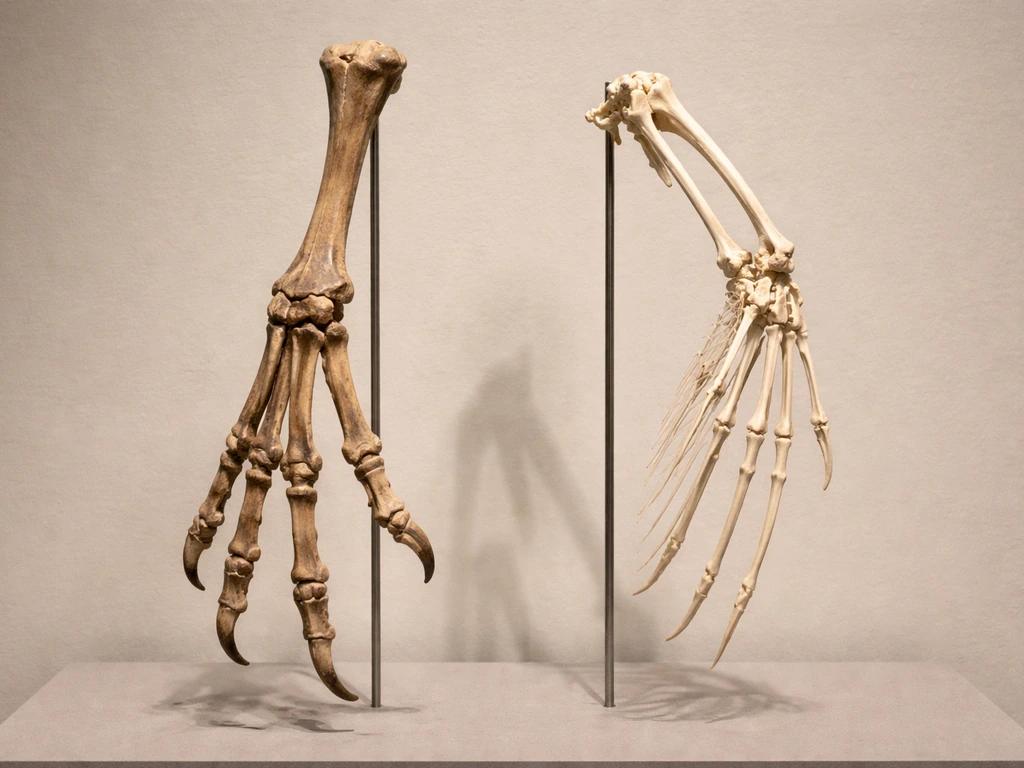
This is one of the most reliable places to separate a bird skeleton from a non-bird theropod. In non-bird theropods, the forelimb (arm) ends in a hand with up to three clawed digits that are separate and functionally independent. These digits have distinct phalanges (finger bones) that you can count. The wrist bones (carpals) are also distinct and in some species, like dromaeosaurs, show a semi-lunate carpal bone that allowed the wrist to fold sideways, a key step toward the wing-folding motion seen in modern birds.
In modern birds, the hand bones are fused into a single structure called the carpometacarpus. You cannot count individual finger bones the way you can in a theropod. The radius and ulna (forearm bones) are retained but the hand is dramatically simplified. In flying birds, the ulna often bears quill knobs, small bumps where the secondary flight feathers attach, and that is something you will never see on a non-bird dinosaur forearm. If you are looking at a specimen and the hand bones are fused into one elongated piece rather than discrete fingers, you are holding a bird.
One common misidentification happens when people assume that any forelimb with a semi-lunate wrist is avian. It is not. That wrist structure appears in multiple dromaeosaurs and other maniraptorans. The fusion of the hand bones into a carpometacarpus is what clinches bird identity, not the wrist shape alone.
Vertebral column, ribs, and the sternum
The tail is an excellent quick-check region. Non-bird dinosaurs have a long, bony tail made of many individual caudal vertebrae, and in dromaeosaurs this tail is stiffened by elongated bony processes. Modern birds have a drastically shortened tail: most caudal vertebrae are reduced, and the last several are fused into a single stubby bone called the pygostyle. The pygostyle is the anchor point for the tail feathers. If you see a fused, blade-like terminal tail bone, you are looking at a bird. If you see a long series of individual vertebrae extending rearward, you are looking at a non-bird dinosaur.
In the thoracic (chest) region, birds have uncinate processes: small, hook-shaped bony projections that extend from the ribs and overlap the next rib rearward. These structures stiffen the rib cage and are critical for the breathing mechanics that sustain powered flight. Non-bird dinosaurs generally lack well-developed uncinate processes (though some exceptions exist in certain groups). The cervical (neck) vertebrae in birds are also highly flexible and S-shaped in posture, an adaptation that lets the beak reach food without the body moving. Non-bird theropods hold the neck more horizontally.
The sternum (breastbone) is one of the most diagnostic bones in flying birds. In birds capable of powered flight, the sternum has a prominent vertical keel called the carina, which anchors the pectoralis muscles responsible for the downstroke. Non-bird dinosaurs have a flat or minimally developed sternum with no such keel. Flightless birds (ostriches, emus) also have a reduced or absent keel, which is a reminder that this feature tells you about flight capability within birds, not just 'bird or not bird.' A keeled sternum means flying bird. A flat sternum could mean flightless bird or non-bird dinosaur, so you need to check other features.
Pelvis, hind limbs, and feet: the ground-level tells
The pelvis is enormously informative and it is also one of the regions that causes the most confusion, because dinosaur classification itself was historically based on hip structure (the 'bird-hipped' ornithischians vs 'lizard-hipped' saurischians). Here is the twist: birds actually evolved from saurischians (lizard-hipped dinosaurs), not from the 'bird-hipped' ornithischians, despite the naming. So do not use the 'bird-hip' label to mean 'related to birds.' It does not.
In modern birds, the pelvic bones (ilium, ischium, and pubis) are fused together and fused with the lumbar and sacral vertebrae into a single rigid structure called the synsacrum. This fusion creates a stiff, load-bearing platform for the hind limbs during walking, landing, and perching. In non-bird dinosaurs, the pelvic bones are distinct, individually visible, and connected to the vertebrae more loosely. If you see a long, continuous, fused bony plate forming the mid-back and pelvis in one piece, you are looking at a bird pelvis.
The hind limb proportions also shift. In birds, the functional 'knee' that you see bending in a live bird is actually the ankle. The true knee is hidden under feathers close to the body. The tarsometatarsus (a fused foot bone) is elongated, and the tibia (shin bone) is typically longer than the femur (thigh bone). In non-bird theropods, the proportions vary by species, but the femur and tibia are often more equal in length and the foot bones are less fused.
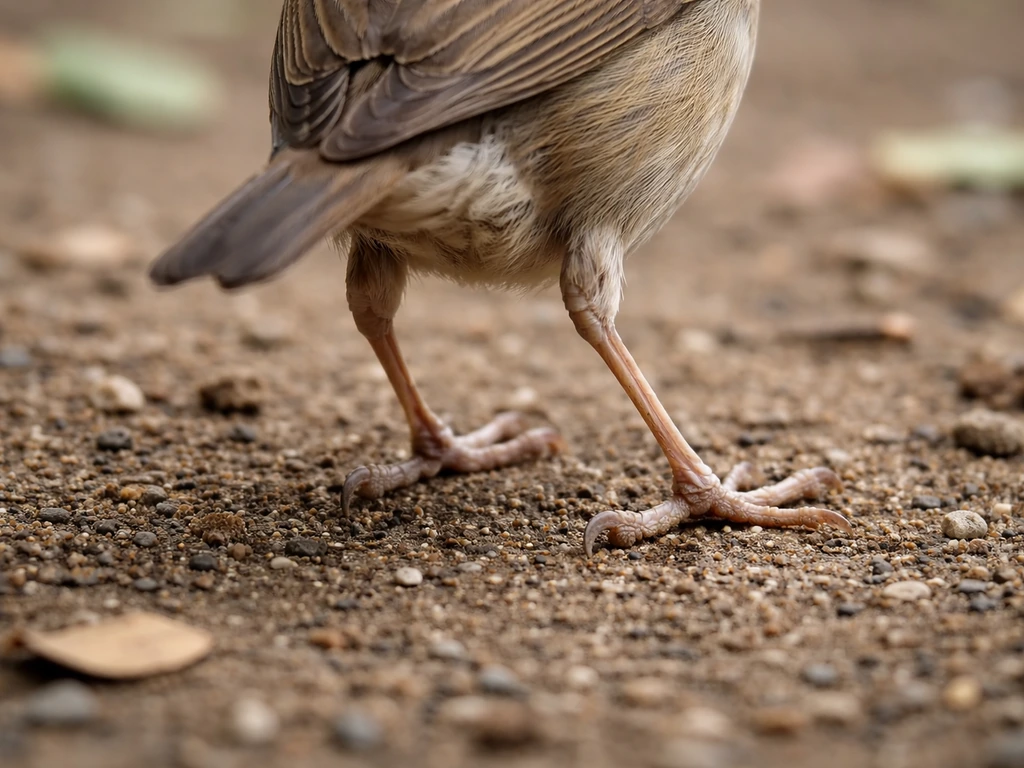
The foot and claws deserve their own attention. Modern birds typically have a reversed hallux (the hind toe) that opposes the forward-facing toes, making perching and gripping possible. Raptors like hawks and eagles have dramatically enlarged, curved talons on the hallux and the second toe. Non-bird theropods, especially dromaeosaurs, have a large, sickle-shaped claw on the second toe that is held raised off the ground.
This dromaeosaur 'killing claw' is sometimes mistaken for a raptor talon, but in non-bird dromaeosaurs the claw is proportionally much larger and the foot anatomy does not show the fully reversed hallux characteristic of perching birds. If you are curious about how this hip anatomy compares between birds and other reptile lineages, the comparison between bird hip and lizard hip anatomy adds useful context.
How to use this in real life: identifying bones, avoiding common mistakes, and what to do next
If you are working from a museum specimen, a fossil photograph, or even a high-resolution image online, run through a mental checklist in this order: skull first (teeth or no teeth, fused or separate bones), then the tail (pygostyle or long bony tail), then the sternum (keeled or flat), then the hand (fused carpometacarpus or separate digits), and finally the pelvis (fused synsacrum or distinct pelvic bones). Any one of these can be ambiguous on its own. Two or three matching the bird pattern and you are almost certainly looking at a bird. All five pointing the same way and you can be very confident.
The most common mistakes people make in this comparison follow predictable patterns. First, assuming hollow bones or a furcula means 'bird': they do not, because many theropod dinosaurs share these features. Second, calling any feathered dinosaur a bird: feathers evolved before flight and appear in non-bird dinosaurs like Yutyrannus and Microraptor (which is technically a non-avian dinosaur despite being almost indistinguishable from early birds in some ways). Third, confusing small theropod fossils with bird fossils: small maniraptorans like Anchiornis or Xiaotingia are so close to the bird lineage that even specialists debate their placement, which is exactly why the multi-feature checklist matters more than gut feel.
When you are working from images rather than physical specimens, pay special attention to scale bars and bone texture. Bird bones are often extremely thin-walled and lightly built. Non-bird theropod bones, even small ones, tend to be proportionally thicker-walled at the midshaft. The bone surface texture can also differ: bird bones often have a smoother, more polished cortical surface, while some non-bird theropod bones show more rugose (rough) surface textures at muscle attachment sites.
Practical next steps for verification
- Start with the AMNH Dinosaurs Among Us educational materials, which include labeled diagrams specifically designed for comparing bird and theropod skeletal features side by side.
- Use the Smithsonian National Museum of Natural History's online fossil collections portal to pull up comparative images of theropod and avian specimens at consistent scales.
- Cross-reference any bone you are unsure about against Archaeopteryx reference images first, because Archaeopteryx sits directly at the transition and shows which features are avian and which are retained from non-bird dinosaurs.
- If you are working from a physical fossil fragment, focus on the hand/wrist region and the tail end as your first priorities, since fusion patterns in those areas are the most reliable rapid indicators.
- If the specimen is a living or recently dead bird, check for quill knobs on the ulna and the reversed hallux, two features no non-bird dinosaur has.
It is also worth exploring related comparisons that sharpen your eye for these distinctions. Comparing a bird skeleton directly to a T. If you want a clearer bird dinosaur skeleton comparison, pair each bone-region check with a corresponding theropod example and compare the pattern, not just one standout feature. Doing a bird skeleton vs T.
rex skeleton comparison also highlights which bones change most abruptly along the theropod line Comparing a bird skeleton directly to a T. . rex skeleton shows how dramatic the divergence becomes at the extreme end of the theropod range, while comparing bird hip structure to lizard hip structure (a very different lineage) helps clarify what 'bird-like pelvis' actually means in anatomical terms versus common usage.
Those companion comparisons make the bird-vs-dinosaur checklist above click into place much faster, especially when you are staring at an ambiguous fragment and need to work through the logic systematically.
The bottom line is this: bird skeletons and non-bird dinosaur skeletons are genuinely similar in their deep architecture, and that similarity is not a mistake or a coincidence. It reflects real evolutionary history. But the derived avian features (fused bones, pygostyle, keeled sternum, carpometacarpus, reversed hallux) are clear, consistent, and identifiable once you know where to look. Run the checklist, use multiple features, and you will not be fooled by a single shared trait like a hollow bone or a wishbone ever again.
FAQ
If I find a single bone fragment, what is the most reliable “first pass” feature to check for bird vs non-bird dinosaur?
Use the skull rule as your first pass only when you actually have cranial material. Teeth presence (toothed jaw vs toothless beak-shaped margin) and whether the skull bones look highly fused are more decisive than hollow bone or a single rib feature. If you only have postcranial fragments, move to a region-specific check, for example, pygostyle-like terminal tail elements for birds, or discrete caudal vertebrae for non-bird dinosaurs.
Can feathered dinosaurs be confidently identified as birds just because they had feathers?
Not confidently. Feathers can evolve before powered flight, so a specimen may show feathers but still lack the full suite of avian skeletal specializations (like a carpometacarpus, pygostyle, and typically a keeled sternum for flying birds). When feathers are present, identification should shift from “feathers yes/no” to “avian skeleton yes/no.”
What should I do if the specimen is too incomplete to see the sternum or the hand?
Fall back to another pair of regions that usually preserve well together. A common strategy is skull (teeth vs toothless beak and fusion level) plus tail (pygostyle vs long unfused caudal series). If skull is missing, then tail plus pelvis (synsacrum fused mid-back and pelvis versus more distinct pelvic bones) can still separate birds from most non-bird theropods.
Are hollow bones and a furcula always enough to label something as a bird?
No. Hollow or pneumatized bones occur in many theropods, and a wishbone-like furcula can also appear outside the avian line. Treat furcula or hollow bone as supportive evidence, then confirm with at least one derived avian structural trait, such as carpometacarpus fusion, pygostyle, or a keeled sternum consistent with flight capability.
How do I avoid confusing early birds with non-avian theropods when teeth or partially fused features are involved?
Expect transitional mosaics. Early birds like Archaeopteryx can still have teeth, and some fusion may be incomplete, so you should not rely on one trait such as “teeth present.” Instead, check for combined avian tendencies, for example, a beak-shaped jaw outline plus progressively bird-like hand structure, or tail reduction plus other flight-related skeletal changes.
If I see a semi-lunate wrist, does that guarantee it is a bird?
No. The semi-lunate carpal feature can occur in multiple maniraptoran dinosaur groups. The deciding confirmation is whether the hand is fused into a carpometacarpus (bird condition) rather than having countable, functionally independent digits with separate phalanges (non-bird theropod condition).
How can I tell whether a “tail” bone is a pygostyle or just damaged caudal vertebrae?
Look for an actual terminal fused element rather than a broken series. A pygostyle should appear as a compact, fused, blade-like end to the tail, not as multiple discrete caudal vertebrae. If the fragment shows sutured or separate vertebral components extending rearward, that pattern favors non-bird theropods.
Birds and non-bird dinosaurs can both show robust breathing-related rib features. What is a practical rib-cage check?
In fossils, focus on uncinate process presence and development rather than general “rib overlap.” Birds have well-developed uncinate processes that extend and overlap adjacent ribs, strengthening the rib cage. If you cannot see the full thorax, prioritize other regions like the sternum keel or the hand fusion to avoid over-interpreting rib fragments.
Could flightless birds (like ostriches or emus) be mistaken for non-bird dinosaurs in skeletal ID?
Yes, especially if you only check the sternum. Flightless birds can have a reduced or absent keeled sternum, so a flat sternum does not automatically indicate a non-bird dinosaur. In those cases, confirm avian identity using other derived traits, such as the carpometacarpus (even if reduced), pygostyle presence, and the fused synsacrum pattern.
How should I interpret “bird-like pelvis” in everyday descriptions versus actual anatomical criteria?
Do not rely on casual labels like “bird-hipped” when you are trying to decide bird vs non-bird. Birds evolved from saurischian dinosaurs, so pelvis terms based on old naming schemes can mislead. Use the actual structural pattern, especially whether pelvic bones form a fused synsacrum with the sacral and lumbar vertebrae (bird) versus more distinct, less fused pelvic elements (non-bird theropods).
If the specimen is small, how do I deal with the problem that tiny maniraptorans can look very bird-like?
Use the full checklist logic rather than gut feeling. Small size increases the chance of mixing early birds, near-bird maniraptorans, and debated taxa. Require multiple concordant bird traits (for example, carpometacarpus fusion plus pygostyle plus synsacrum) before committing to bird identity.
When I’m working from photos, what two details most often lead people astray?
Scale and bone texture. Use the scale bar to avoid misjudging which skeletal elements are present, and compare cortical texture (birds often have thin-walled, lightly built bones, while many non-bird theropods have proportionally thicker midshaft walls and different surface roughness at muscle attachment sites).
What is a good “order of operations” if I only have time to check a few regions?
Use skull first if available, then tail, then sternum (if visible). If those do not settle it, check hand fusion (carpometacarpus versus separate digits) and finally pelvis fusion (synsacrum versus distinct pelvic bones). This sequence mirrors the most diagnostic regions and reduces the chance that a shared ancestral trait causes a false call.
If my checklist gives mixed results, what is the best way to decide next rather than guessing?
Treat the result as a probability question and re-check the most diagnostic derived structures. For example, if you have a bird-like tail but the hand looks non-avian, re-examine whether the hand is truly fused and whether the “tail” fragment could be misinterpreted. If you can, compare directly to a close theropod reference for the same body region rather than comparing to a generic “dinosaur skeleton.”