Giant moa and elephant birds are not closely related. They were both enormous, flightless birds that went extinct within the last millennium, but they lived on opposite sides of the world, belonged to separate lineages, and evolved their gigantic body plans independently. If you are looking at a reconstruction or museum skeleton and trying to figure out which one you are looking at, the fastest way to tell them apart is this: if the animal has a tiny, narrow head on an extremely long neck with no wings whatsoever, it is almost certainly a moa. If it has a thicker, heavier body with a large conical beak and proportionally shorter neck, you are looking at an elephant bird.
Giant Moa vs Elephant Bird: How to Tell Them Apart

Marcus Hendricks
26 Apr 2026
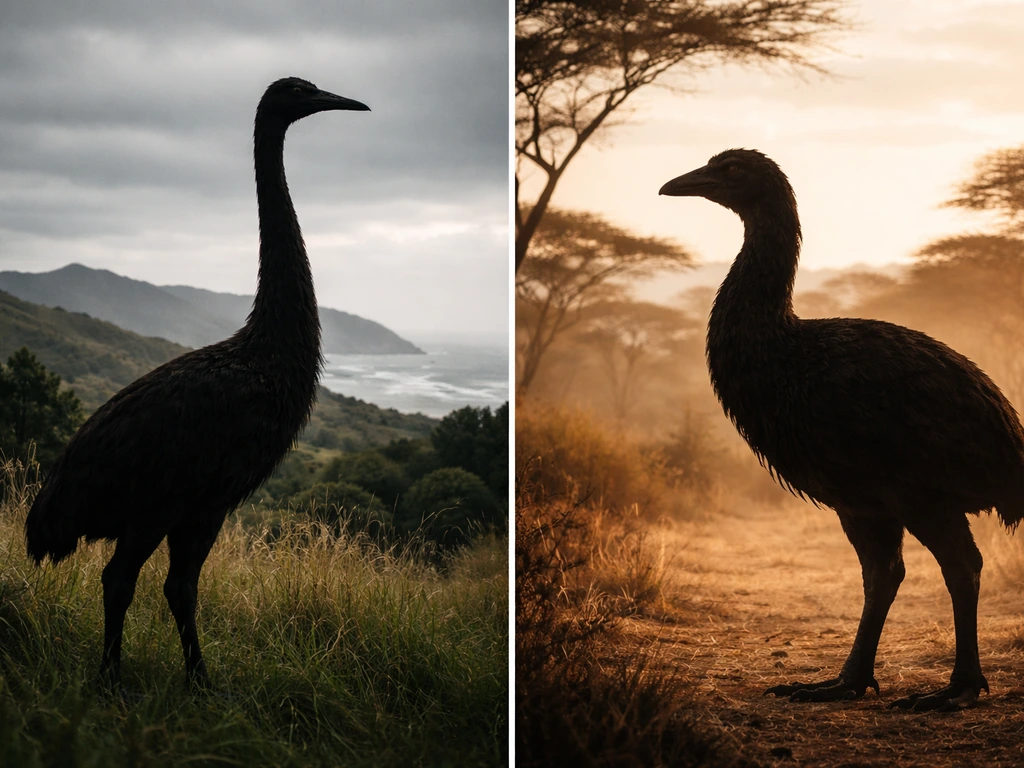
Are giant moa and elephant birds actually related?
Both birds belong to a broad group called paleognaths, which includes ostriches, emus, kiwis, rheas, and tinamous. Within that group, moa and elephant birds are both ratites, meaning they share a general body plan: flightless, heavily built, with a flat sternum and no functional wings. But being ratites does not make them close relatives any more than being mammals makes a whale and a bat close cousins.
Phylogenetic analyses using ancient DNA from moa place them firmly in their own order, Dinornithiformes, endemic to New Zealand. Elephant birds belong to the family Aepyornithidae, endemic to Madagascar. Molecular work has confirmed that the ratite lineages diversified through multiple independent losses of flight, meaning moa and elephant birds evolved their giant flightless forms separately. The resemblance is convergent evolution, not shared ancestry. Their last common ancestor was so far back that calling them relatives in any meaningful sense is like calling a horse and a tapir the same animal because they both have hooves.
One more wrinkle: elephant birds are not even a single tidy lineage themselves. blank" rel="noopener noreferrer">A 2023 molecular study on fossil eggshells found hidden genetic diversity among elephant-bird clades, with divergence distances more than triple the average between-genus distances seen in other ratites. CSIRO (2023) reports that elephant birds were extinct since around 1000 CE and that eggshell DNA, proteins, and genetics reveal greater complexity, including multiple species or lineages blank" rel="noopener noreferrer">a 2023 molecular study on fossil eggshells found hidden genetic diversity among elephant-bird clades. So when people say 'elephant bird,' they are actually gesturing at a more complex group than originally assumed.
Where they lived and what their worlds looked like
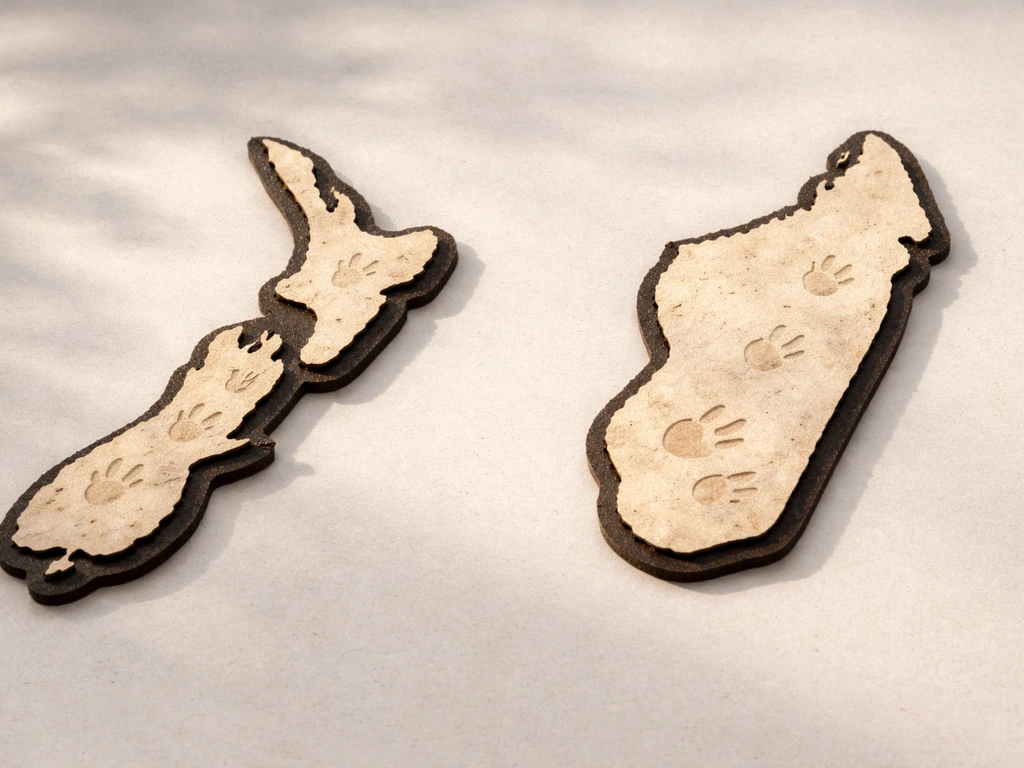
Giant moa (the genus Dinornis, which includes the North Island giant moa Dinornis novaezealandiae and the South Island giant moa Dinornis robustus) lived exclusively in New Zealand. They ranged across multiple landscape types: dense native forests, shrublands, duneland, grassland margins, and mountain zones. The South Island giant moa has fossil evidence from Rakiura/Stewart Island as well. Moa occupied what was essentially a predator-free, forested island environment before humans arrived, and they went extinct roughly 500 to 600 years ago following the arrival of Māori, who hunted them intensively.
Elephant birds lived in Madagascar and went extinct around a millennium ago, also under pressure from human activity. Their paleoecological record, reconstructed from isotopes in eggshells and bones, suggests they used a range of vegetation zones across southern Madagascar, including areas dominated by C3 plants and CAM plants like succulents and dry-forest species. In practical terms, picture a large flightless bird moving through a tropical and subtropical island landscape quite different from New Zealand's cool temperate rainforests and alpine zones.
The key geographic takeaway: if any source claims a giant moa lived in Madagascar or an elephant bird lived in New Zealand, that source is wrong. Geography alone is a reliable first filter.
Size, body shape, and the numbers you need to know
Both birds were genuinely enormous, which is part of why people conflate them. But the details of size and shape differ in important ways.
| Feature | Giant Moa (Dinornis) | Elephant Bird (Aepyornis / Vorombe) |
|---|---|---|
| Maximum height | ~3.6 m (female, largest estimates) | ~3 m |
| Body mass (estimates) | ~227–278 kg typical; up to ~517 kg by some methods | Hundreds of kg; Vorombe titan is the heaviest bird ever recorded |
| Body shape | Tall, slender, elongated | Stocky, barrel-chested, heavy |
| Neck | Extremely long, held upright | Long but proportionally shorter and thicker |
| Wings | Completely absent (no vestigial bones) | Vestigial wing bones present |
| Location | New Zealand only | Madagascar only |
| Extinction timing | ~500–600 years ago | ~1,000 years ago |
Moa held the height record, but elephant birds, especially Vorombe titan, were almost certainly heavier. Think of the moa as the giraffe of giant flightless birds: tall and stretched. The elephant bird was more like a very large, heavily built emu scaled up dramatically, lower to the ground relative to its mass.
Beaks, heads, and neck proportions: the fastest ID clues
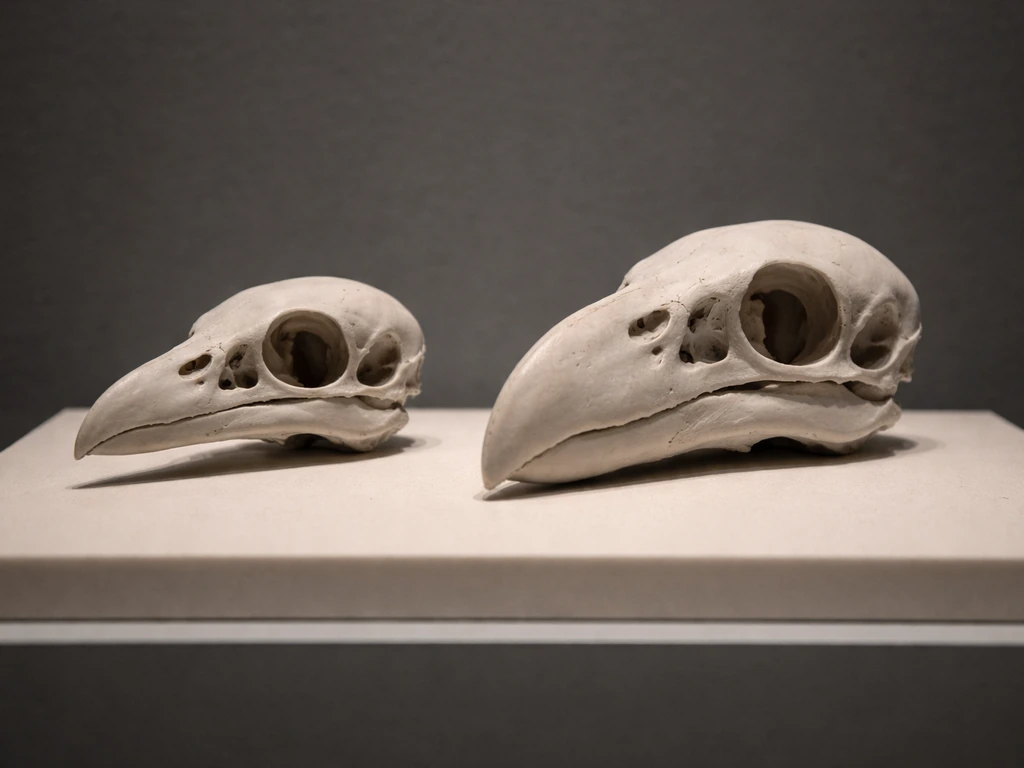
This is where the comparison becomes really useful for anyone looking at a photo, reconstruction, or museum specimen.
Moa heads are remarkably small relative to the animal's overall size. The skull is narrow and the beak is relatively small and slightly downward-curved, adapted for browsing vegetation at various heights. Virtual reconstructions of Dinornis robustus skulls have shown that different moa genera had distinct beak shapes tied to their feeding strategy, but in Dinornis the beak is relatively slender. The neck is the defining feature: moa had an extraordinarily long neck with many cervical vertebrae, held high and forward. If you also want to tell them apart from a quick glance at their looks, the key differences are in the neck length and beak shape. When you see a moa skeleton in profile, the neck is what dominates the silhouette.
Elephant birds had a proportionally large head with a thick, straight, conical beak. If you want, you can also compare their beaks and neck proportions to see why kelenken and the elephant bird are often confused kelenken vs elephant bird. Think of the beak as powerful and blunt, built for crushing and processing tough plant material. The neck is long but set on a much heavier body, so the overall impression is of compactness compared to the moa's towering silhouette. If a reconstruction shows a bird with a visually substantial, solid-looking head and a heavy beak, you are almost certainly looking at an elephant bird. If you specifically want the goliath birdeater vs bird angle, you can use the same ID mindset to compare body size, head shape, and feeding adaptations.
Feet, legs, and how they moved
Leg and foot anatomy is one of the most diagnostic features when you are looking at skeletal material or detailed reconstructions.
Moa legs are notable for their extreme robustness relative to body size, and research has shown that leg-bone robustness varies significantly across moa genera, reflecting divergent evolutionary paths. Dinornis limbs are long and columnar. Importantly, moa are the only birds known to have completely lost their wings, including the vestigial wing bones present in most other ratites. There is literally nothing where the wings should be. This is a definitive skeletal marker.
Elephant bird feet have broad terminal toe bones (phalanges) that are not hooked, which makes sense for a heavy, terrestrial animal that needed stable foot placement rather than gripping. The overall leg structure is massive and pillar-like, similar to what you see in very large ratites. Because elephant birds retained vestigial wing bones (unlike moa), a complete skeleton showing even tiny wing remnants points toward elephant bird.
Both birds were clearly flightless and walked on two legs, but the moa's longer limbs gave it a more upright, striding gait suited to covering ground across varied New Zealand terrain. The elephant bird's heavier, lower-slung build suggests a more deliberate, heavy-footed locomotion through Madagascar's vegetation.
Diet and daily behavior: what each bird was actually doing
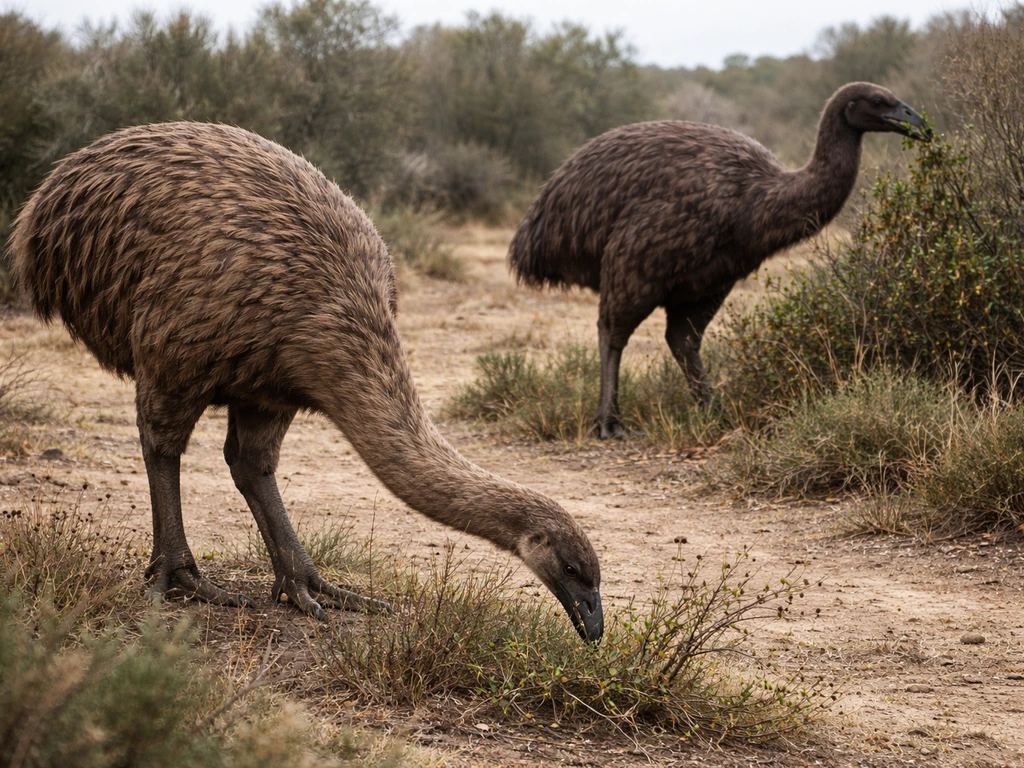
Moa diet is actually quite well understood because coprolites (fossilized droppings) have been recovered and analyzed genetically. The South Island giant moa ate twigs, seeds, berries, leaves, flowers, vines, herbs, and shrubs, foraging primarily in the transition zones between forest and grassland. Some moa species previously thought to be pure browsers also ate grazing-type food, showing flexible diets. The long neck allowed Dinornis to reach vegetation at a range of heights, from ground level up into shrub canopy.
Elephant bird diet is inferred indirectly through isotope analysis of eggshell and bone protein, rather than coprolites. The isotopic signatures suggest they fed across different vegetation types in Madagascar, including both forest and more open dryland environments. Their heavy, conical beaks point toward processing tough plant material, possibly including hard fruits, seeds, or fibrous vegetation. Without coprolite evidence equivalent to what exists for moa, elephant bird diet reconstruction remains somewhat less precise.
Both were large herbivores functioning as megafauna ecosystem engineers in island environments where they had no significant predators before humans arrived. Their extinction in both cases followed human colonization, which is a pattern seen repeatedly in island megafauna worldwide.
Common mix-ups and how to check your sources
The biggest misconception is assuming these two birds are closely related simply because they are both giant and flightless. If you want a quick framing for the broader “behemoth vs bird watcher” idea in wildlife discussions, focus on how big animals can dominate perception even when the details matter. That logic would also make ostriches and penguins close relatives. Giant flightless body plans evolved independently multiple times across ratites, and moa and elephant birds are a textbook example of convergent evolution, not close kinship.
The second common mistake is treating elephant birds as a single uniform species. The name 'elephant bird' covers the family Aepyornithidae, which included multiple species of varying sizes. Vorombe titan was the heaviest, while Aepyornis maximus was the species most commonly referenced historically. Molecular evidence now suggests the family contains more genetic diversity than previously recognized, so comparisons that treat 'the elephant bird' as one thing may be oversimplified.
A third misconception worth addressing: the name 'elephant bird' sometimes leads people to expect a mammal-like or semi-elephant appearance. It is entirely a bird, named for its massive size, not for any physical resemblance to elephants.
When verifying a reconstruction or image, here is a practical checklist you can apply immediately:
- Check geography: New Zealand means moa, Madagascar means elephant bird. Any source mixing these up is unreliable.
- Look at the head size: a tiny, narrow head on a very long neck points to moa. A larger, heavier head with a thick beak points to elephant bird.
- Check for wings: a skeleton with zero wing bones is almost certainly a moa. Vestigial wing remnants suggest elephant bird.
- Assess body proportions: a tall, slender silhouette suggests moa. A stocky, barrel-chested build suggests elephant bird.
- Look at the beak shape: slender and slightly curved is moa, thick and conical is elephant bird.
- Cross-check any size claims against known ranges: moa up to ~3.6 m tall, elephant bird up to ~3 m tall but heavier overall.
- Use museum collections and encyclopedias like Te Ara (for moa) and peer-reviewed paleontology sources for elephant birds to verify reconstructions rather than relying on popular media images alone.
If you are interested in digging deeper into the elephant bird side of this comparison, it is worth knowing that Vorombe titan is now considered a separate genus from Aepyornis, which adds another layer to the taxonomy. On the moa side, the diversity across New Zealand's landscape is genuinely fascinating: different species occupied different ecological niches, from mountain zones to coastal lowlands, which shaped distinct body proportions and feeding strategies within the moa family itself. The comparison between moa and other large ratites like emus is also a useful reference point for understanding how body plans scale with island ecology. That same scaling pattern is also why moa bird vs emu comparisons come up when people look at size and proportions across ratites emus.
FAQ
If I only have a loose bone (like a toe or a shin fragment), can I still tell whether it’s moa or elephant bird?
Often yes, but it depends on which element you have. Moa skeletons are a key tell because they show complete loss of wings, but if you only have a leg element, use proportions: moa limb bones tend to look more elongated and columnar in profile, while elephant bird feet are associated with broad, non-hooked terminal toe bones and a very massive, pillar-like lower-limb build. If the specimen includes any vestigial wing bones, that strongly favors elephant bird.
How can I avoid the common error of mixing up “elephant bird” with other giant ratites like the kiwi or emu?
Use geography and anatomy together. Kiwi and emus are ratites too, but they do not match the Madagascar-versus-New Zealand split, and their neck and beak proportions differ from the moa versus elephant bird patterns described here. For a quick check, confirm the neck silhouette and beak shape first, then verify the source location stated with the model’s region (New Zealand for moa, Madagascar for elephant birds).
What should I do if a museum display labels a specimen “giant moa” but the silhouette looks like a stout-bodied bird with a short neck?
Treat it as a misidentification until proven otherwise. Re-check at least three skeletal or reconstruction markers: (1) neck length relative to the body, (2) beak size and curvature (moa typically show a slimmer, slightly downward-curved beak with very long neck emphasis, elephant birds show a thick, straight conical beak with a more compact overall look), and (3) whether any wing remnants are visible. A stout body plus a heavy conical beak and even tiny wing remnants points to elephant bird.
Are there any tricky cases where the “neck length” rule of thumb might mislead me?
Yes, reconstructions can distort proportions. If a mount uses an incorrect pose (for example, neck pulled in or extended too far), the silhouette rule becomes less reliable. In that case, prioritize beak shape and skeletal markers: moa are the only known birds with fully lost wings, and elephant birds retain vestigial wing bones. Also compare how dominant the head appears relative to the neck, elephant birds tend to look more “head-forward” with a heavier beak.
If the article says elephant birds are not a single tidy lineage, how should I phrase comparisons in discussions without being misleading?
Say “elephant-bird family” or “aepyornithid elephant birds” rather than treating them as one uniform species. You can also mention that species differed in size (for example, Vorombe titan versus the historically referenced Aepyornis maximus), so comparisons should be framed as range and variation, not one fixed blueprint.
Do size and height alone ever reliably distinguish moa from elephant birds?
Not reliably. The article notes moa often lead in height, while elephant birds were likely heavier, but actual numbers vary by species and by how a reconstruction displays posture. A tall, stretched pose can make moa seem “heavier-looking,” while a crouched pose can make elephant birds seem less robust. For best accuracy, use the combined shape cues: neck and beak proportions first, then check feet or any wing remnants if available.
How reliable is the geographic filter if a source is vague, like “from the region” or “from an island ecosystem”?
It’s less reliable when the label is vague. You should only use the geography as a strong filter when the source explicitly states the country or island. If it only says “in the Southern Hemisphere” or “on an island,” treat it as insufficient and rely on the anatomical markers instead, especially beak shape and wing remnants.
Can coprolite evidence ever help with ID in the same way it helps with moa diet?
Usually not for practical identification. Coprolites are what make moa diet unusually direct, but the presence or absence of coprolites is not a dependable way to identify a skeleton. For elephant birds, diet inference relies more on isotopes from eggshell and bone protein, so unless you have documented eggshell or protein analyses tied to the specimen, stick to the skeletal ID markers.
Next Article
Godzilla vs Kong Bird: Identify the Exact Bird Lookalike
Disambiguate and ID the exact bird behind searches like Godzilla vs Kong bird using field marks, habitat, range, behavio