The single most reliable way to tell a male Goliath bird-eating spider (Theraphosa blondi) from a female is to look for tibial hooks on the front legs and check the pedipalps once the spider has reached maturity. Females are noticeably larger and bulkier, live far longer, and lack those hooks entirely. If you can get a good look at the underside of the first pair of legs and see small curved spurs near the tibia, you almost certainly have a mature male on your hands. Everything else, including size estimates and coloration, is useful supporting evidence but not a standalone confirmation.
Goliath Bird-Eating Spider Male vs Female Guide

Marcus Hendricks
23 Jun 2026
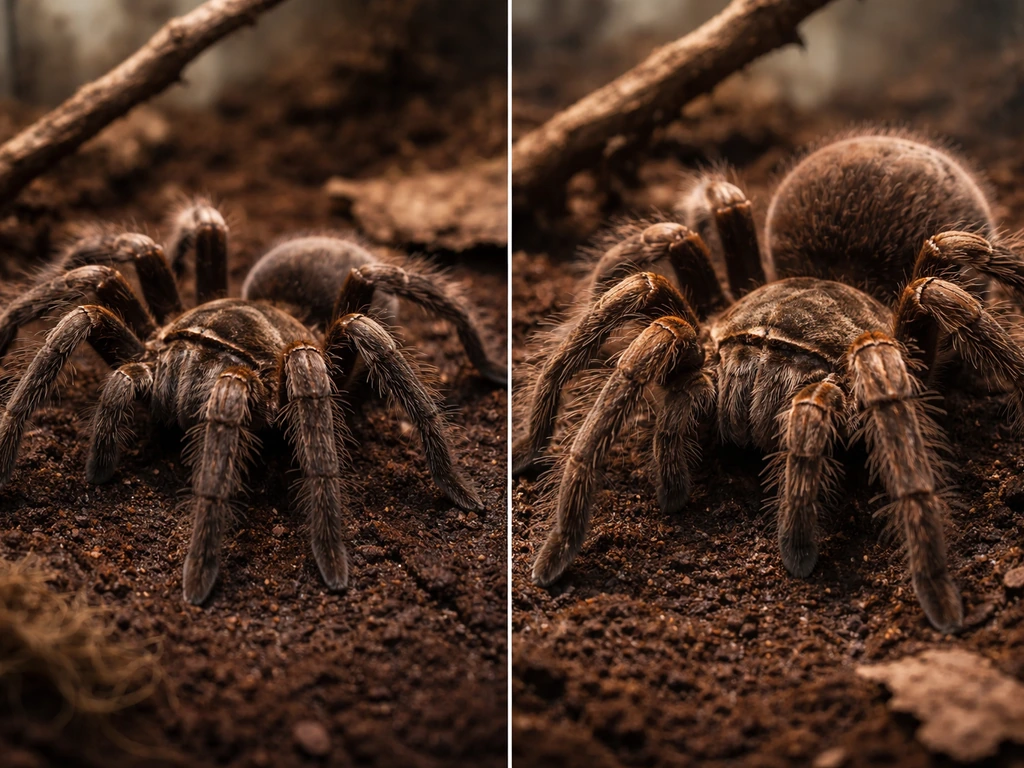
What the male vs female Goliath bird-eater differences actually look like
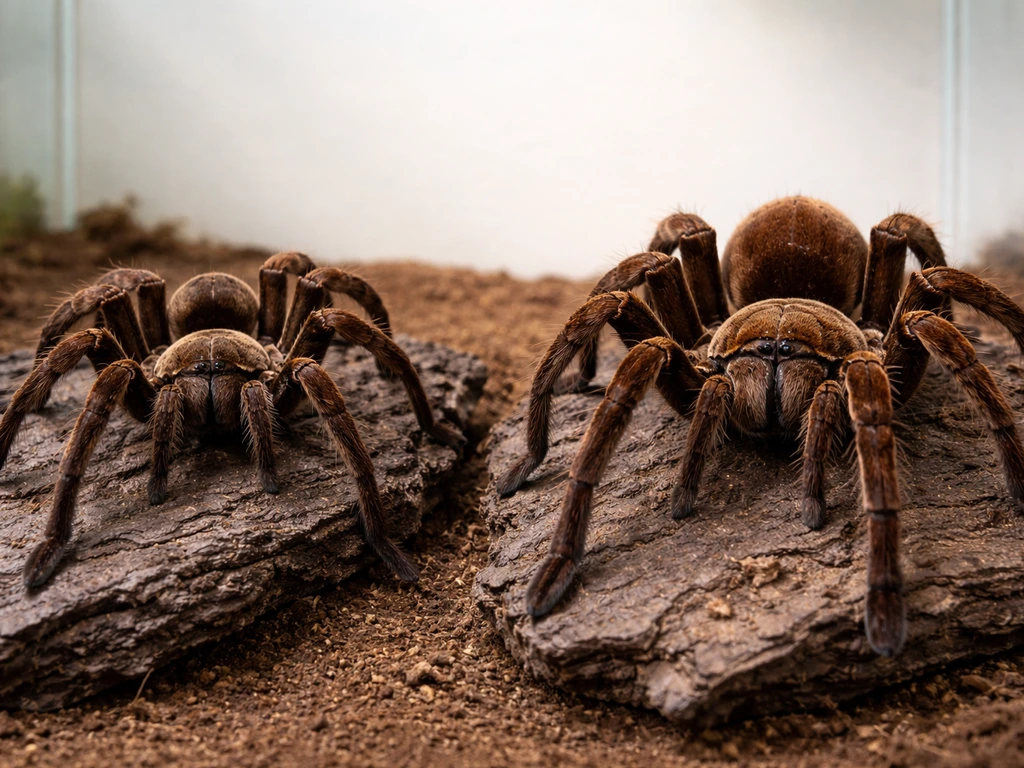
The Goliath bird-eating spider is famous for being the world's largest spider by mass, but that title applies mostly to the females. When you put a mature male and a mature female side by side, the difference is striking. The female is built like a tank: wide, heavy-bodied, with thick legs and a noticeably round abdomen. The male is leaner, longer-legged relative to his body, and almost wiry by comparison. He looks like he skipped leg day on the torso but doubled down on the limbs.
Both sexes share the same base coloration: a rich chocolate to dark brown covered in urticating setae (those irritating barbed hairs on the abdomen). Coloration alone will not reliably sex this species. What will help is looking at body shape, relative leg length, and once mature, those male-specific anatomical markers described below.
Size, appearance, and key identification traits by sex
Size is the most immediately obvious difference, but it only becomes truly useful once both individuals are mature. A fully grown female Goliath bird-eater can have a leg span reaching 28 to 30 cm (around 11 to 12 inches) and weigh up to 170 to 175 grams. Mature males typically max out around 20 to 22 cm in leg span and are significantly lighter, often under 90 grams. The female's abdomen is visibly wider and heavier, especially after feeding.
| Trait | Female | Male |
|---|---|---|
| Leg span (mature) | Up to 28–30 cm (11–12 in) | Up to 20–22 cm (8–9 in) |
| Body weight | Up to 170–175 g | Usually under 90 g |
| Body build | Wide, heavy abdomen, stocky legs | Leaner, longer-legged relative to body |
| Tibial hooks | Absent | Present on leg I after ultimate molt |
| Pedipalps | Simple, thin | Bulbous, club-like when mature |
| Lifespan | 15–25+ years | 3–6 years (dies shortly after maturity) |
| Coloration | Dark brown with urticating setae | Identical base coloration |
| Abdomen shape | Round and heavy | Narrower, tapers more noticeably |
The two anatomical markers that matter most for confident sexing are blank" rel="noopener noreferrer">tibial hooks (also called tibial spurs) and pedipalp structure. blank" rel="noopener noreferrer">Tibial hooks are small curved spurs on the underside of the tibia on the first pair of legs. They only appear after the male's ultimate (final) molt. Mature male pedipalps, the small limb-like appendages near the mouth, will look visibly swollen or club-like at the tip because they house the reproductive organ. A female's pedipalps stay thin and leg-like throughout her life.
What tibial hooks actually look like up close
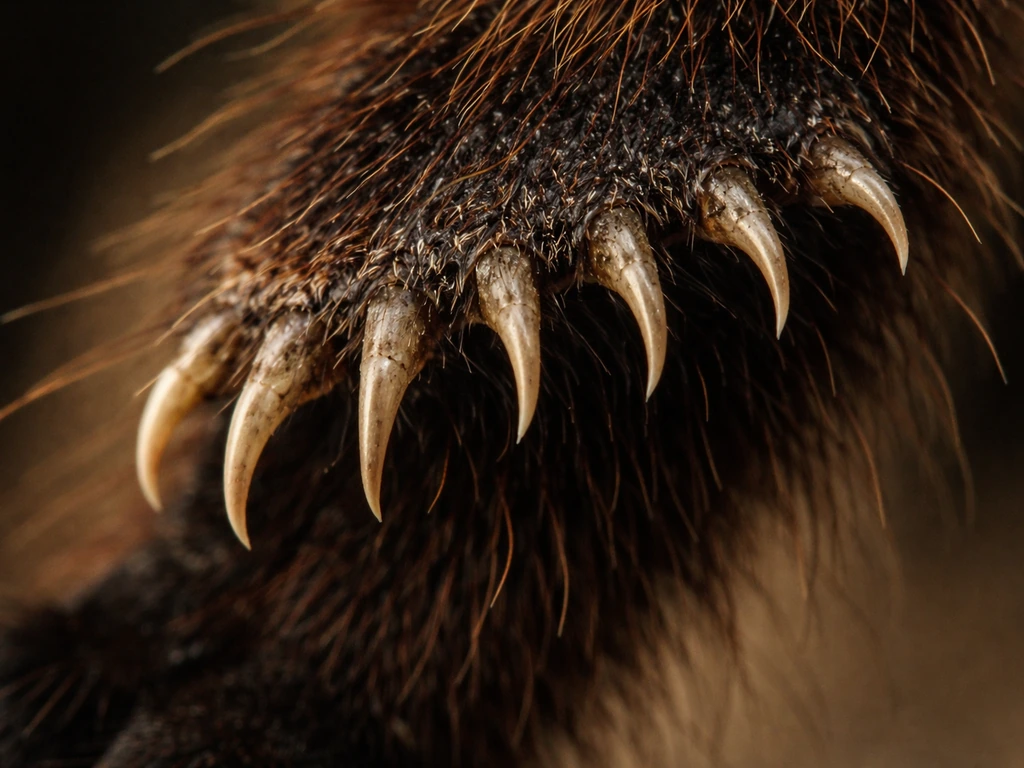
If you have never seen tibial hooks before, picture a small curved spine or spur pointing outward from the underside of the leg segment just above the foot. On a Goliath bird-eater, they are proportionally more visible than on smaller tarantulas. You typically need to look at the spider from below, or at a direct side angle with good lighting. In photos from above or at a distance, they are easy to miss, which is why keepers on forums constantly ask for ventral shots and close-ups of the front legs before confirming a sex identification.
Behavior and mating-related differences: what to realistically expect
Behavioral differences between males and females become most obvious once a male reaches maturity. Before that point, juveniles of both sexes behave similarly: they burrow, eat, and generally stay put. Once a male matures, his whole biological priority shifts to finding a mate, and his behavior reflects that urgently.
- Mature males roam constantly. They will pace the enclosure, attempt escapes, and become restless in a way that mature females rarely do. This is natural and not a sign of distress.
- Males stop eating as much or stop eating entirely once they reach their ultimate molt. This is normal.
- Males live significantly shorter lives than females. After the ultimate molt, a male Goliath bird-eater typically lives only 1 to 3 more years at most, and often considerably less.
- Females are more defensive when gravid (carrying eggs) and may become more prone to threat displays or biting during this period.
- During actual mating, the male uses his tibial hooks to hook under the female's fangs and lift them away from his body. This gives him a brief window to introduce the pedipalp and transfer sperm before the female potentially turns aggressive.
- After mating, females may produce an egg sac containing anywhere from 50 to over 200 eggs. They become highly protective of it and should not be disturbed.
- Males have no interest in the egg sac and should be removed from the female's enclosure immediately after mating to prevent being eaten.
One thing that surprises new keepers: a mature male's short lifespan is not a husbandry failure on your part. It is simply his biology. Females, by contrast, are the long-term investment of the two, with captive females recorded living 20 to 25 years or longer with good care.
Care considerations that differ by sex
If you are keeping Goliath bird-eaters, the sex of your spider should directly influence how you set up the enclosure, how often you handle them, and what your long-term expectations are.
Housing
Both sexes need a large terrestrial setup with deep substrate (at least 15 to 20 cm of a peat or coconut fiber mix) for burrowing, good ventilation, and a water dish they can access easily. Females can stay in the same enclosure long-term. For a mature male that is roaming and restless, make absolutely sure the enclosure has a secure, escape-proof lid. Males will test every weak point. Beyond that, the male does not need a larger space than the female, but he does need more security features.
Handling and safety
Goliath bird-eaters are generally not recommended for regular handling regardless of sex. They have urticating hairs that cause significant skin and eye irritation, and they can move extremely fast. That said, mature males in roaming mode are more unpredictable and are more likely to make a sudden dash. Gravid females or females guarding an egg sac should never be handled. If you do handle any Theraphosa, work low to the ground, avoid sudden movements, and never handle if you have recently touched food or have strong scents on your hands.
Feeding basics
Both sexes eat similar prey: roaches, crickets, and appropriately sized rodents for adults. Females eat more consistently and maintain a healthy weight throughout their lives. Mature males may refuse food entirely or eat sporadically, and forcing feeding is counterproductive. For females, a feeding schedule of every 1 to 2 weeks with prey items no larger than the abdomen is a reasonable baseline. Always remove uneaten prey within 24 hours to avoid stress on the spider.
Common confusion and how to avoid misidentifying sex
The most common mistake beginners make is trying to sex a juvenile Goliath bird-eater by size alone. Juveniles of both sexes overlap heavily in size, and without the adult anatomical markers, you genuinely cannot confirm sex from a live animal with certainty.
People also sometimes confuse other large tarantula species with Theraphosa blondi and apply the same sexing logic, which can work in broad strokes (tibial hooks are a male indicator across many tarantula species) but the specific size and weight ranges differ between species. That same kind of careful comparison is what helps when people search for tarantula vs bird tarantula species.
If you are comparing with a species like a tarantula from a different genus entirely, the differences can be even more dramatic.
Another common trap is relying on photos taken from above or at a distance. Tibial hooks are frequently invisible in these shots, and beginner keepers sometimes conclude a specimen is female simply because they cannot see the hooks. The answer is always to get a better view, specifically from the front or underside, with good lighting.
The gold standard for sexing tarantulas, including the Goliath bird-eater, is examining a shed exoskeleton (molt). The epigynal area on the inside of the molt, between where the lungs are located on the abdomen, will show a female's reproductive structure clearly. This requires a fresh molt that has not dried out and curled, and some magnification. Many experienced keepers preserve good quality molts specifically for this purpose. Without a molt to check, even experienced keepers rely on the tibial hooks and pedipalp combination and accept that some uncertainty remains until the spider fully matures.
Species confusion worth knowing about
The Theraphosa blondi complex also includes Theraphosa apophysis and Theraphosa stirmi, and these are sometimes sold or described under similar common names. The male vs female size dimorphism and the presence of tibial hooks apply across the genus, so the sexing method stays the same. However, size ranges can vary slightly between species, so do not assume a size benchmark from one species applies exactly to another.
Quick guide: how to tell male vs female right now
Run through this checklist in order. Stop when you have a confident answer. If you stall early in the list, you need better access or a molt to examine. If you are also comparing animal intelligence or hunting styles, you might enjoy a broader guide like octopus vs bird.
- Check for maturity first. If the spider is a juvenile (small, no distinct adult features), you cannot sex it reliably from live observation alone. Wait for the next molt.
- Look at the pedipalps. Are the tips bulbous and club-like? That points strongly to a mature male. Thin, tapered pedipalps suggest female or immature male.
- Examine the front legs (leg pair I) from below or front-on with good lighting. Look for small curved spurs (tibial hooks) on the underside of the tibia. Present means mature male. Absent means female or not yet mature.
- Assess body build. Is the abdomen wide, round, and heavy relative to leg length? That points to female. Leaner and longer-legged relative to body mass points to male.
- Check behavior. Is the spider roaming restlessly, pacing, and not eating? That pattern in a mature-sized specimen supports male. A spider that eats regularly and stays in or near its burrow is more consistent with female behavior.
- If still unsure, keep the next molt. Lay it flat under good light and use a magnifying glass to examine the inside of the abdomen near the book lungs for a visible reproductive structure (female) or its absence (male).
- If you need a definitive answer and do not have a molt, consult an experienced keeper or arachnid society with a clear, close-up photo of the front legs (underside), pedipalps, and ventral abdomen.
The Goliath bird-eating spider is one of the most dramatic animals in the hobby, but sexing it does not have to be mysterious. If you are also curious about insect comparisons, you can compare a centipede vs bird in terms of behavior and predation risk bird-eating spider. With a mature specimen and a good look at the front legs and pedipalps, you can get a confident answer without any specialist equipment.
The tibial hooks and bulbous pedipalps on the male are visible to the naked eye once you know what you are looking at. For anything younger or ambiguous, save the molt and examine it when you can. That approach works reliably whether you are a first-time keeper or have been keeping large tarantulas alongside other giant invertebrate comparisons for years.
FAQ
Can I reliably sex a Goliath bird-eating spider before it matures?
Usually no. Before the male’s final molt, tibial hooks will not be present and pedipalps may not show the swollen, club-like tips. At that stage you can only estimate based on body build and relative leg thickness, then treat the ID as unconfirmed until a ventral leg view or a fresh molt is available.
What if I see tibial hooks but I am not 100% sure it is a male?
If the curved spurs on the underside of the tibia are clearly visible on the first pair of legs from a good ventral or front-side angle, that is strong confirmation of a male. However, lighting and angle can create false impressions, so recheck with a second photo set, and if possible compare pedipalp tips as well (mature males show swollen or club-like pedipalps).
Why do some photos make the spider look female when it might be male?
From above or from far away, the underside tibial hooks are commonly hidden by the leg position and shadowing. If the hooks are not visible, it is not evidence of being female. The practical next step is to request or take a close, well-lit ventral shot of the first legs, ideally with a direct side angle that exposes the tibia underside.
Do females ever show anything that could be mistaken for tibial hooks?
Females lack those male-specific tibial spurs entirely after maturity. That said, debris, substrate particles, or minor leg protrusions can resemble a small curved point in low-resolution photos. If you cannot confirm the same feature exists on both sides and corresponds to the tibia underside location, treat it as inconclusive and rely on pedipalp shape or a molt check.
How can I tell if the pedipalps are truly the mature male type?
Look at the pedipalp tips when the spider is settled, not mid-movement. Mature male pedipalps typically appear visibly thicker or club-like at the end compared with the rest of the appendage, while female pedipalps stay thin and leg-like. If the pedipalps are obscured by the mouth area or the spider is too active, wait for a calmer moment or get a clearer angle rather than guessing.
Is it safe to handle a mature male if it seems calm?
Extra care is still required. Mature males are often more roaming and more likely to make sudden dashes, so even if it appears calm, any escape-proofing and low-to-the-ground handling practices are essential. Also avoid handling gravid females or any individual showing egg-sac guarding behavior.
Should I change the feeding schedule differently for males vs females?
Yes. Females usually eat more consistently, while mature males may refuse food or eat only sporadically. If you notice refusal, do not force feeding, and instead focus on offering appropriately sized prey and keeping the enclosure conditions stable. For females, a baseline of feeding every 1 to 2 weeks with prey items no larger than the abdomen is a common starting point, then adjust based on body condition.
How soon after a molt can I use it to sex the spider?
Use a fresh molt, before it dries out and curls. Sexing via the molt requires visibility of the female reproductive structures in the epigynal area inside the molt, and that is much easier when the molt is intact and not brittle or deformed. If you plan to save molts, preserve the best quality one quickly rather than relying on a later, damaged piece.
Do size ranges guarantee sex for Goliath bird-eating spiders?
No. Size dimorphism exists, but overlapping juvenile sizes are a major reason beginners misidentify sex. Even for larger individuals, weight and leg span can vary by feeding history and molt stage. Treat size as supporting evidence only, and aim for tibial hooks, pedipalp confirmation, or a molt-based ID for certainty.
What enclosure setup changes are most important for a male vs a female?
The biggest practical difference is security and stability. Both sexes need deep, burrow-capable substrate and ventilation, but mature males roaming mode require a truly escape-proof lid because they will test weaknesses. Beyond that, a male does not need more space than a female if the enclosure is properly secured.
Can I use the same sexing method for other species in the Theraphosa genus or sold as similar common names?
The core method still works across the genus, tibial hooks as a male indicator and pedipalp differences once mature. However, size and weight expectations can shift between species within the Theraphosa complex, so avoid using a single species’ benchmarks as an absolute rule when the label or trade name is ambiguous. If the exact species is uncertain, prioritize anatomical markers over size comparisons.