
You can tell them apart immediately by geography alone: seriemas live in South America, secretary birds live in Africa. If you want another quick ID comparison, secretary birds are also often confused with cassowaries, especially from certain angles secretary bird vs cassowary. But if you're looking at a photo or a video and need a visual ID, the fastest cue is the crest. The red-legged seriema has a loose, brushy crest sitting right at the front of its face, above the base of its bright red bill. The secretary bird wears a dramatic black crest of quill-like feathers fanning out from the back of its head. Those two details, combined with size and coloring, make these birds straightforward to separate once you know what to look for.
Seriema vs Secretary Bird: How to Tell Them Apart

Marcus Hendricks
25 Apr 2026
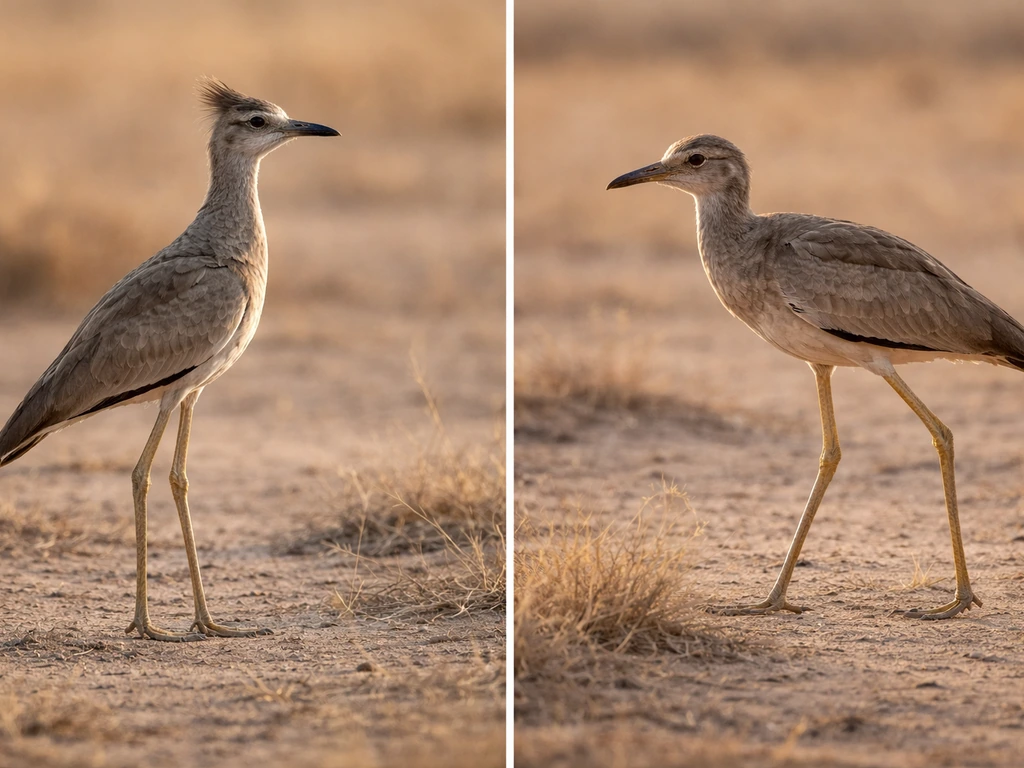
Why people mix these two up in the first place
The confusion is mostly ecological. Both birds are long-legged, ground-hunting birds of open habitats, and the seriema is frequently described as 'the South American counterpart of the African secretary bird. BirdForum Opus also notes that the red-legged seriema can resemble the secretary bird, which helps explain why they are often confused blank" rel="noopener noreferrer">Both birds are long-legged, ground-hunting birds of open habitats. ' That framing is useful for understanding their ecological roles, but it plants the idea that they look alike, which they really don't once you get a clear view. Add to that the fact that most people encounter them in photos rather than in the field, and it's easy to focus on the shared 'eagle-body-on-stork-legs' silhouette and tune out the details that actually separate them. The long legs, upright stance, and open-country lifestyle check the same boxes at a glance, and that's where the mis-ID starts.
There's also a naming problem. Neither 'seriema' nor 'secretary bird' is a common, familiar name for most casual bird watchers, so people searching for one sometimes land on the other and assume it must be close enough. They're not even closely related: seriemas are in their own order (Cariamiformes), while the secretary bird is a raptor in the order Accipitriformes. The resemblance is convergent evolution, not shared ancestry.
Physical differences: size, shape, plumage, and bill
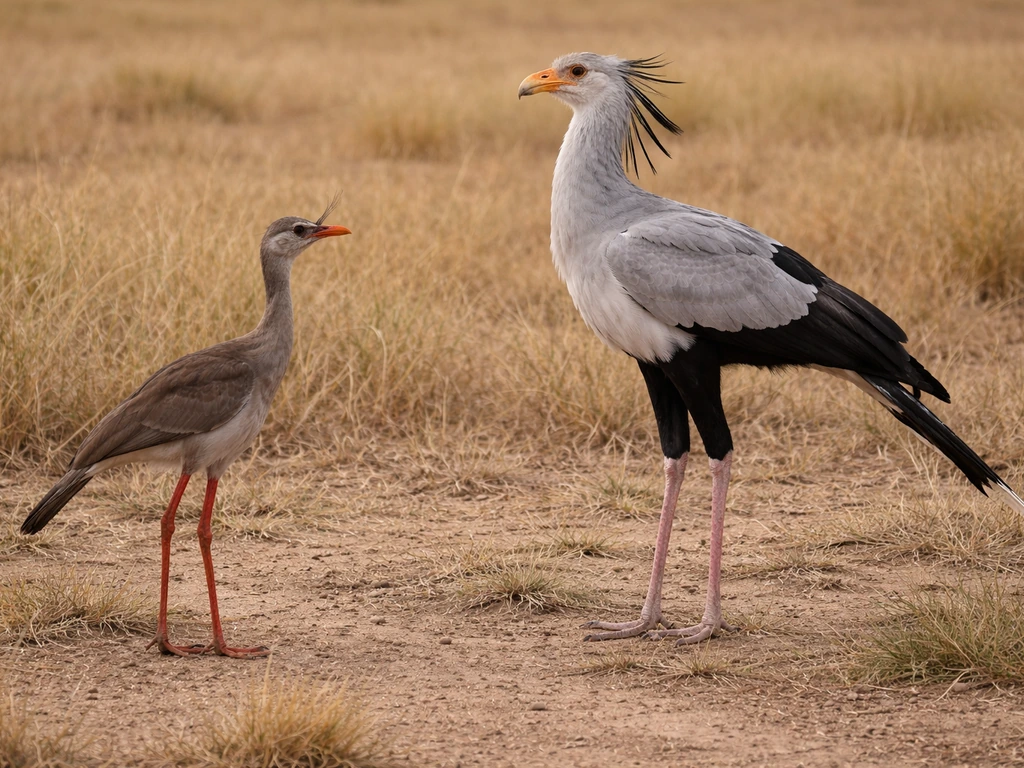
Size is the bluntest separator. The red-legged seriema stands about 60 cm tall. The secretary bird comes in at roughly 125 to 150 cm tall. That's more than twice the height. If you're in a situation where you can judge scale, this alone should resolve your ID.
| Feature | Red-legged Seriema | Secretary Bird |
|---|---|---|
| Height | ~60 cm | ~125–150 cm |
| Crest position | Frontal, above bill base (loose, brushy) | Back of head (long black quill-like feathers) |
| Bill color | Bright red | Blue-grey with orange-red facial skin around eye |
| Leg color | Bright red | Pink-red, very long (nearly twice as long as similar-sized ground birds) |
| Body plumage | Finely barred and vermiculated dark brown and black | Grey body, black flight feathers and scapulars, white underparts |
| Overall build | Slender, medium-sized ground bird | Large raptor body on extremely long, crane-like legs |
The plumage patterns are genuinely different once you see them. Seriemas are covered in fine dark barring and vermiculation, giving them a streaky, brown-patterned look throughout. Secretary birds are much cleaner: a pale grey body, sharply contrasting black on the wings and leg feathering, and a white underside. The secretary bird looks almost graphic in its contrast; the seriema looks earthy and mottled. The secretary bird's crest is also hard to miss up close, those long black quills fanning from the back of the head like a handful of loose feathers stuck behind the ear. The seriema's crest is softer and sits right at the forehead, almost like a bad hair day above the bill.
Behavior and feeding: how each bird hunts
Both birds are terrestrial hunters, which is the core of the ecological comparison, but their actual hunting methods look different in the field. The secretary bird is famous for its stomping technique: it walks steadily through grass and uses powerful, rapid foot strikes to stun or kill prey. It targets snakes, lizards, grasshoppers, mice, and birds' eggs, with snakes being a headline item. If you want a simple way to remember the differences, this secretary bird vs python comparison is a handy reference. Watching a secretary bird work a patch of grassland, you'll see a deliberate, almost rhythmic stride punctuated by sudden hard stamps.
The seriema hunts differently. It grabs vertebrate prey, then beats it repeatedly against the ground or throws it against a hard surface to subdue it. Think of how a shrike handles prey, but louder and more dramatic. Seriemas eat lizards, snakes, frogs, small mammals, and large insects. Both birds tackle similar prey categories, but the seriema's bill-based, thrashing kill method contrasts with the secretary bird's leg-based stomping. If you're watching feeding behavior, the method itself is a reliable cue.
Habitat and geographic range: different continents, similar landscapes

This is the cleanest separator of all. If you're in South America, specifically in Brazil, Bolivia, Argentina, Paraguay, or Uruguay, and you're looking at a tall, crested, long-legged ground bird in open country, it's a seriema. The blank" rel="noopener noreferrer">red-legged seriema (Cariama cristata) is widely distributed across South America, from central/eastern Brazil to eastern Bolivia and Paraguay, and through Uruguay and central Argentina. The secretary bird does not exist there. Conversely, if you're in sub-Saharan Africa, the seriema is not an option. Secretary birds are widespread across open grasslands and savannas south of the Sahara, and they're non-migratory, so they tend to be present year-round wherever suitable habitat and prey persist.
Within those ranges, their habitat preferences are similar enough to reinforce the 'ecological counterpart' label. Seriemas favor grasslands, savanna, dry open woodland, and thorny scrub, especially across the Brazilian cerrado and adjacent regions. Secretary birds use open grasslands, savanna, and drier shrubland, avoiding dense forests. Both are birds of wide-open spaces where they can walk and see. In terms of habitat type, if you stripped the continent labels, you'd be describing nearly the same landscape.
Flight, movement, and calls: cues you can use at a distance
How they move on the ground
The secretary bird has a distinctive striding gait that stands out even before you get a good look at the head. Its legs are remarkably long, nearly twice as long as those of other ground birds of comparable body mass, and it covers ground with a purposeful, high-stepping walk. The seriema also has long legs for its size, but given that it's a much smaller bird overall, the visual impression at a distance is quite different. The secretary bird strides like it owns the savanna; the seriema's movement is quicker and more furtive.
Flight behavior
Both species prefer running to flying when alarmed, but the secretary bird is a capable flier and will soar, particularly during courtship display flights where it performs pendulum-style aerial displays with guttural croaking. The seriema is a weak flier relative to its body and rarely takes to the air unless pressed. When it does fly, its flight is typically low and brief before it drops back to the ground.
Calls
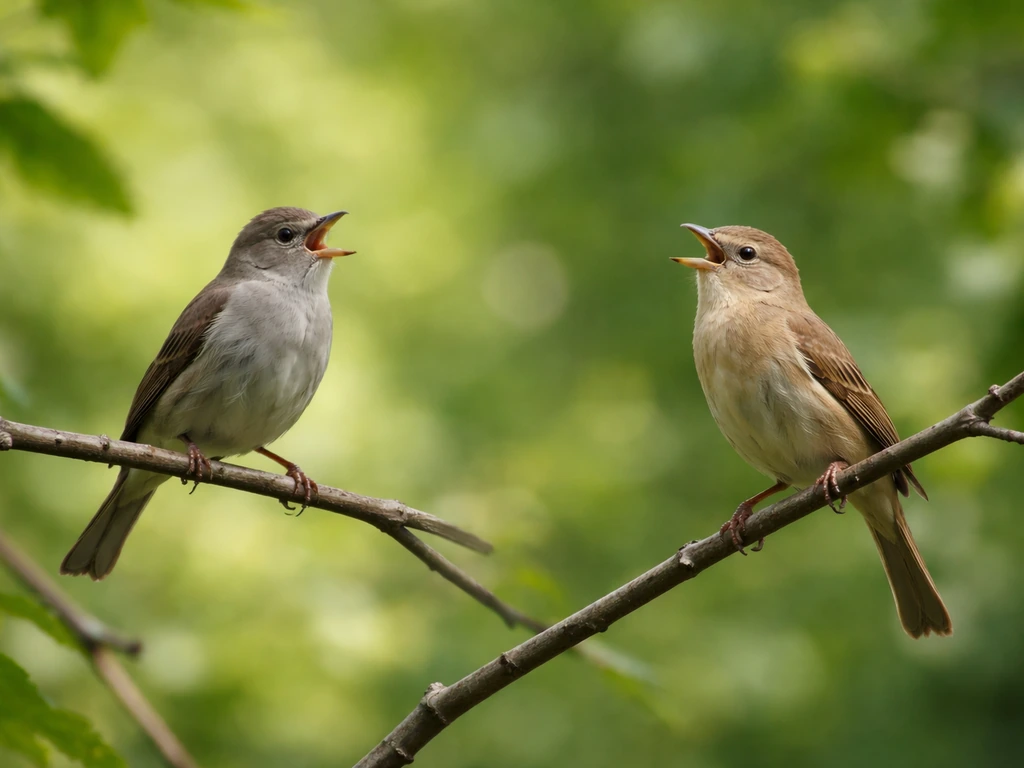
Calls are one of the most reliable field cues you have, and these two species sound nothing alike. A quick way to get the bird siren vs harpy distinction right is to compare how each one calls and hunts in the field. The red-legged seriema produces a loud, carrying, barking song that pairs or groups often perform as a duet chorus in the early morning. It has been described as a cross between the bark of a young dog and the clucking of turkeys, and it can carry several kilometers in open country. Once you hear it, you will not forget it. The secretary bird, by contrast, gives a deep guttural croak, described as a roaring groan at high intensity, and a high-pitched croak when alarmed. During courtship display flights, it produces repeated guttural croaking. The tonal difference is stark: the seriema is yappy and loud; the secretary bird is low and grunting.
Breeding and family behaviors
Secretary birds build large, flat nests at the tops of thorny trees and lay clutches of one to three white, unmarked eggs. Juveniles look similar to adults but have browner plumage, grey barring on the white underwing and undertail coverts, and shorter central tail feathers. If you're trying to ID a secretary bird and the bird looks a bit dull or brownish compared to what you expected, it may be a juvenile, and the grey-barred underwing is the confirmation cue.
Red-legged seriemas are pair-bonded birds with strong vocal ties to their territory. Their breeding season is marked by the loud duet singing mentioned above, which serves both pair-bonding and territorial functions. Nests are typically built in low shrubs or trees, much lower than the secretary bird's treetop platform. The breeding behaviors of both species are complex, but for field ID purposes, the seriema's habit of paired, loud, dawn-chorus barking is one of the most reliable signs you're in seriema territory.
Quick ID checklist and common mistakes to avoid
Use this in the field
- Check the continent first. South America means seriema. Sub-Saharan Africa means secretary bird. This alone resolves most IDs.
- Look at the crest. Frontal crest above the bill base, soft and brushy = seriema. Long black quill-like feathers from the back of the head = secretary bird.
- Check bill and leg color. Bright red bill and red legs = seriema. Blue-grey bill with bare orange-red facial skin and pink-red legs = secretary bird.
- Judge overall size. If the bird looks medium-sized and slender, seriema (~60 cm). If it looks very large and statuesque at 125 cm or more, secretary bird.
- Read the plumage pattern. Finely barred and vermiculated brown = seriema. Clean grey body with black wings and contrasting white underparts = secretary bird.
- Listen for the call. Loud yapping/barking duet at dawn = seriema. Deep guttural croak or roaring groan = secretary bird.
- Watch the feeding method. Thrashing prey against the ground with the bill = seriema. Stomping prey with the feet = secretary bird.
Mistakes people commonly make
- Relying on habitat type alone: both birds use open savanna and grassland, so habitat similarity will not separate them.
- Treating 'long legs + upright posture + open country' as enough for an ID: this description fits both species and several unrelated birds.
- Misreading the crest position: observers who notice 'a crest' without clocking where it sits on the head can swap the two species. Always check whether the crest is above the bill or behind the crown.
- Confusing juvenile secretary birds: juveniles are browner and have shorter tail projections, so they can look less 'classic.' Check the grey-barred underwing and the crest placement rather than relying on the grey body color alone.
- Over-relying on the 'ecological counterpart' framing: yes, they fill similar roles, but they are not the same bird, not closely related, and not on the same continent.
If you're exploring other comparisons involving the secretary bird, it's worth knowing it gets visually confused with several other large birds depending on context: its raptor body draws comparisons to eagles, its terrestrial habits invite comparison to ostriches and bustards, and its snake-hunting reputation puts it alongside other formidable predators. Because a secretary bird is also often compared with other large ground birds, a quick check of kori bustard vs secretary bird can help you confirm the right species bustards. This is a common mix-up because secretary birds can resemble ostriches when you only catch a quick view of their body shape and stance. If you are still unsure after checking the crest and range, compare the secretary bird vs eagle look and behavior to spot the differences quickly. A secretary bird vs harpy eagle comparison can also help you separate raptor look-alikes if you only have a brief view. The seriema, meanwhile, sits in a category of its own in South America, with no close relatives and a surprisingly powerful voice for its size. Once you've locked in the crest position, the bill color, and the range, these two birds become easy to separate and hard to confuse again.
FAQ
What’s the most reliable cue if I only see one bird for a second in a photo or video?
If you only have a brief glimpse, prioritize the crest and bill color first. A seriema’s loose, brushy crest sits in front above the bill base, while a secretary bird’s black, quill-like crest fans out from the back of the head. Scale helps, but crest position usually resolves the ID faster than measuring body size.
Can plumage pattern be enough to tell them apart when the crest is hidden?
Yes, but the ID can still be nailed down by the pattern and underside. Seriemas look finely streaked and mottled all over, while secretary birds have a pale grey body with sharply darker wings, leg feathering, and a contrasting white underside. If the bird looks “graphic” in contrast, it is more likely secretary bird than seriema.
Do their flight styles differ enough to help with ID?
In the Seriema vs Secretary Bird comparison, wing shape and flight are supporting cues, not primary ones. The seriema is typically a weak flier that stays on the ground, whereas a secretary bird can soar, especially during courtship displays. If you see sustained soaring, that strongly points to secretary bird.
How can I use sound to identify them if I cannot see the crest clearly?
Their calls are distinct even across distance, but wind and recording quality can mask details. As a rule, seriema calls are loud, bark-like, and often duet in early morning, while secretary birds give low guttural croaks and a deep roaring groan during intense moments. If you can match the sound to “barking duet” versus “low croak,” you’ll usually be correct.
What if the secretary bird looks browner than the typical adult description?
Juvenile secretary birds can look duller and browner than adults, which can make the contrast seem less crisp. Look specifically for the grey barring on the underwing and undertail areas in juveniles, and then confirm with overall structure (large, high-stepping stride) and African range.
If they both look like ground hunters, how do I tell which hunting method I’m watching?
You can still be misled by the shared long-legged silhouette. The fastest correction is to check hunting behavior: secretary birds stun prey with deliberate stomping, often a rhythmic stride punctuated by hard foot strikes, while seriemas subdue prey by grabbing and thrashing or striking it against the ground or a hard surface.
What should I do if I find a sighting that seems outside their usual ranges?
Range is the safest “tie-breaker,” but be careful with strays and captivity. If you truly are outside South America (Brazil, Bolivia, Argentina, Paraguay, Uruguay for red-legged seriema) you should assume seriema is unlikely, and outside sub-Saharan Africa you should assume secretary bird is unlikely. For travel footage, verify whether the video was from a zoo, wildlife park, or rehabilitation center.
Which other birds are most likely to trick me, and what single check prevents the mistake?
Yes, there are look-alikes for each bird, but the decisive features remain the same. For secretary birds, quickly rule out eagle-like raptors by checking terrestrial hunting and the back-of-head quill crest. For seriemas, rule out generic “stork-like” birds by checking the smaller size relative to secretary birds and the crest position above the bill.
If I can’t see the plumage closely, how can I use posture and movement to distinguish them?
Watch for the “scale + posture + movement” combo. Secretary birds look more than twice as tall as red-legged seriemas and stride with a tall, high-stepping gait that covers ground quickly, while seriemas move quicker and more furtively on the ground. If you can estimate height and observe stride style, the ID becomes much more confident.
Can nesting behavior or egg appearance help, even if I’m not seeing the adult birds well?
If you’re trying to ID from a nest or eggs, they offer a helpful edge case. Secretary birds build large, flat nests high in thorny trees and lay small clutches of one to three white, unmarked eggs, while seriema nests are typically lower shrubs or trees and are associated with the seriema’s dawn duet territorial calling. So location within the habitat and the local soundscape can both matter.
Next Articles

Shark vs Bird: How They Differ and Who Would Win in Nature
Shark vs bird: evidence-based comparison of anatomy, behavior, habitats, likely outcomes, and key FAQs.

Godzilla vs Kong Bird: Identify the Exact Bird Lookalike
Disambiguate and ID the exact bird behind searches like Godzilla vs Kong bird using field marks, habitat, range, behavio

Batman vs Bird: Identify the Animal and Tell Them Apart
Learn what Batman vs bird means and use field marks, behavior, and habitat to ID the right animal fast.