
If you searched 'giant bird of paradise vs bird of paradise' and landed here confused, there's a good chance you're actually dealing with two completely different things: an actual bird versus a tropical plant. The 'giant bird of paradise' is most commonly the name people use for Strelitzia nicolai, a towering South African plant with white flowers, not a bird at all. The 'bird of paradise' can refer to either the orange-and-blue Strelitzia reginae plant or to the actual Paradisaeidae family of birds native to New Guinea. A quick way to sort it out is to compare crane flower vs bird of paradise, since the plant names often get mixed up online. So before anything else, you need to figure out which category you're in. Once you know that, the real comparison becomes clear.
Giant Bird of Paradise vs Bird of Paradise: How to Tell

Quick ID: Which Bird (or Plant) Are You Actually Looking At?
The first thing to do is settle whether you're looking at a bird or a plant. This sounds obvious, but the naming situation is genuinely chaotic. 'Bird of paradise' and 'giant bird of paradise' are used as common names for both plants in the Strelitzia genus and birds in the Paradisaeidae family, and they overlap heavily in image searches and casual conversation.
- If it's a tall plant with white or orange-and-blue flowers shaped like a bird's head, you're looking at a Strelitzia plant, not a bird.
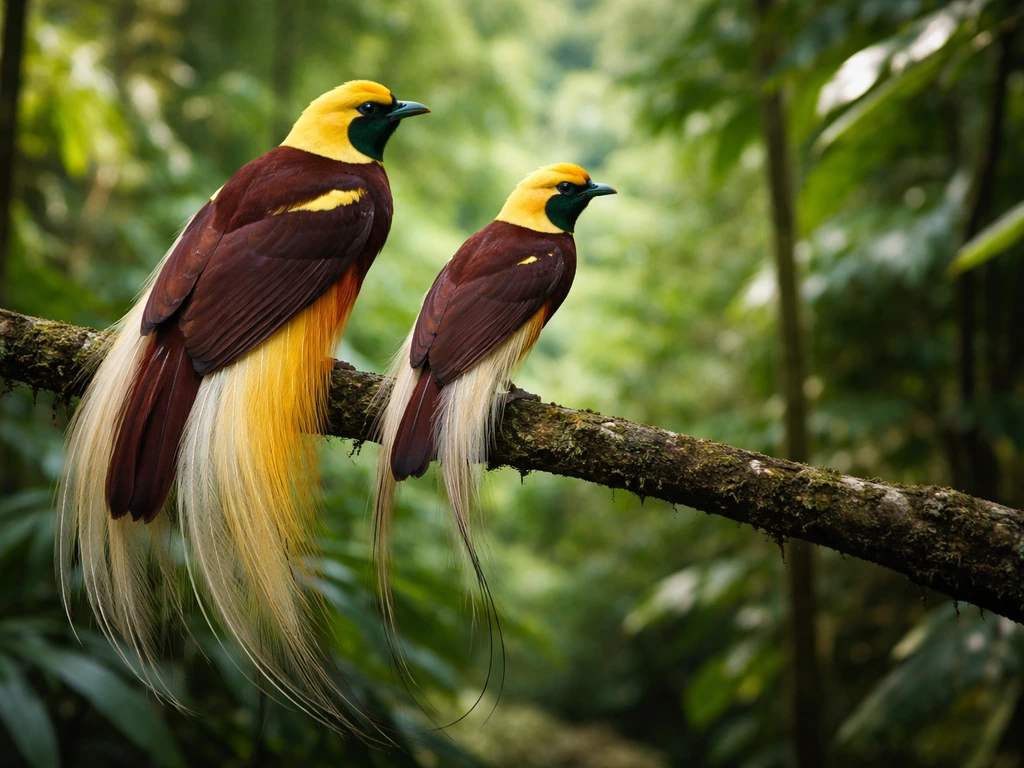
- If it's an actual living bird with feathers, a beak, and plumes, you're looking at a member of the Paradisaeidae family, native to New Guinea.
- 'Giant bird of paradise' in the plant world almost always means Strelitzia nicolai, which can grow 20 to 30 feet tall and produces white blooms.
- 'Bird of paradise flower' usually means Strelitzia reginae, the smaller orange-and-blue species you see in bouquets and gardens.
- In the bird world, the most referenced species are the greater bird of paradise (Paradisaea apoda) and the lesser bird of paradise (Paradisaea minor), both from New Guinea.
The 'white bird of paradise' label adds another layer of confusion. Strelitzia nicolai is often sold under that exact name, and Strelitzia alba (a related species) also produces fully white flowers. Neither is a bird. If someone online is raving about their 'white bird of paradise,' they almost certainly mean the plant. Once you've established you're dealing with actual birds, the comparison between greater and lesser (or other Paradisaeidae species) becomes straightforward.
Giant Bird of Paradise vs Regular Bird of Paradise: Size and Range
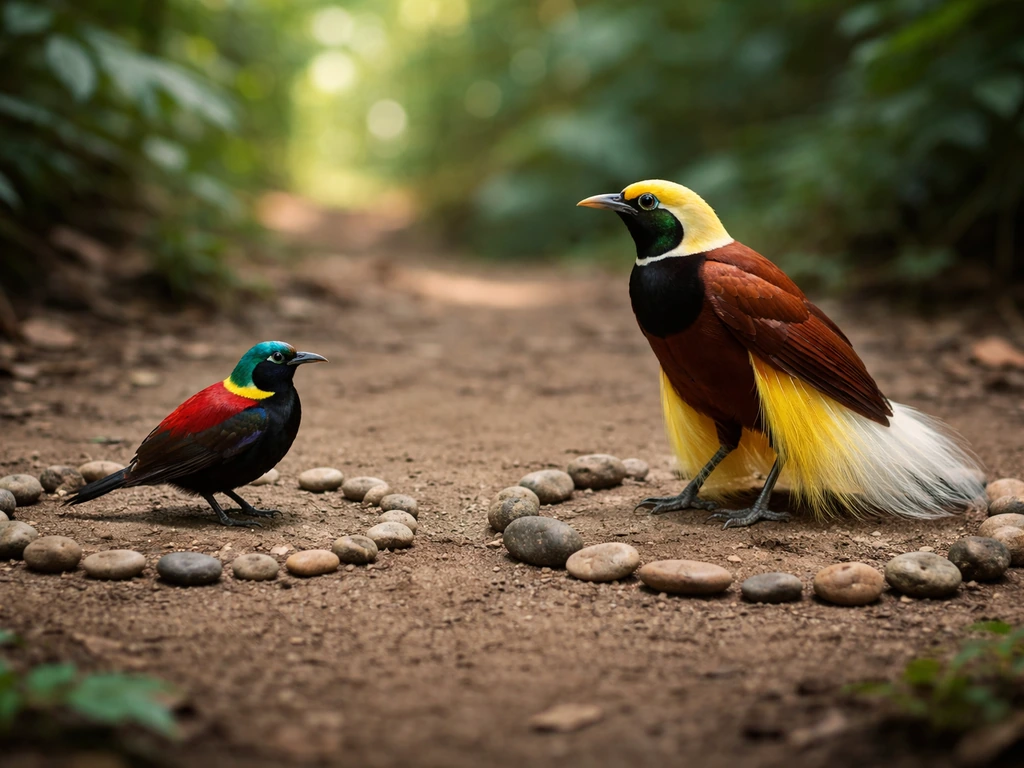
Within the actual bird family Paradisaeidae, the size range is remarkable. The king bird of paradise tops out at around 15 cm, while the black sicklebill can reach 110 cm. Most of the well-known species sit somewhere in the middle, and 'giant' isn't really a recognized common name for any single bird species in the family. That said, if someone is comparing a 'giant' bird of paradise to a 'regular' one in the context of real birds, they're usually contrasting the greater bird of paradise (Paradisaea apoda) with the lesser bird of paradise (Paradisaea minor).
| Feature | Greater Bird of Paradise (Paradisaea apoda) | Lesser Bird of Paradise (Paradisaea minor) |
|---|---|---|
| Scientific name | Paradisaea apoda | Paradisaea minor |
| Approximate size | Larger of the two; males including plumes can measure around 43 cm | Slightly smaller overall build |
| Native range | Southwestern and southern New Guinea, Aru Islands | Northern, northwestern, and western New Guinea; also near Huon in the east |
| Altitude range | Up to around 900-950 m | Sea level up to around 1,500 m |
| Plume color | Rich golden-yellow flank plumes | Yellow flank plumes, slightly paler tone |
The Aru Islands range is one of the clearest geographic separators. If you're looking at a bird spotted in the Aru Islands or the southwestern lowlands of New Guinea, that's squarely Paradisaea apoda territory. The lesser bird of paradise has a broader northern and northwestern distribution and shows up at higher elevations more reliably. The lesser bird-of-paradise (Paradisaea minor) is distributed throughout forests of northern New Guinea and nearby islands such as Misool and Yapen blank" rel="noopener noreferrer">The lesser bird of paradise has a broader northern and northwestern distribution. Range alone won't always settle an ID since the species do overlap, but it's a strong starting point.
Plumage and Key Visual Markers (Including the White Bird of Paradise)
Both the greater and lesser bird of paradise males are visually stunning, and their plumage is your best field tool. Here's what to focus on, piece by piece.
Greater Bird of Paradise (Paradisaea apoda)
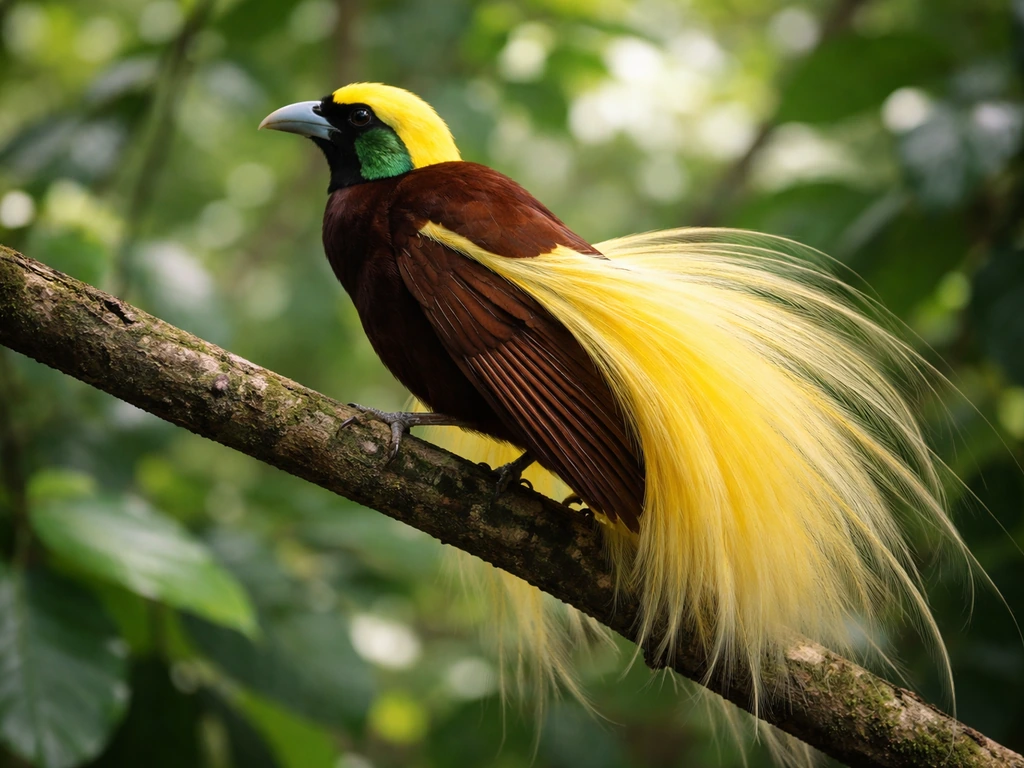
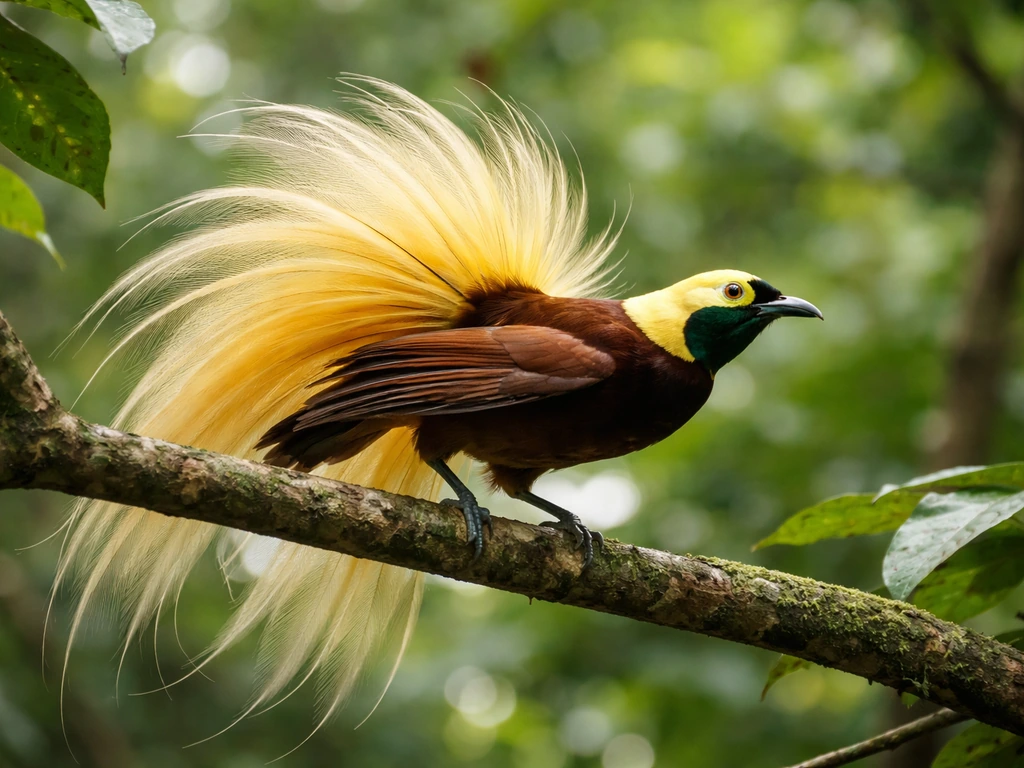
- Males have a dark maroon-brown body with a yellow crown and an iridescent green face and throat.
- The long, wispy flank plumes are the signature feature: a warm golden-yellow that fans out dramatically during display.
- Bill is bluish-grey, eyes are yellow.
- Females are much plainer: brown overall with a darker head and no ornamental plumes.
Lesser Bird of Paradise (Paradisaea minor)
- Males share the yellow crown and green throat, but the body tone is similar maroon-brown.
- Flank plumes are yellow but can appear slightly paler or more lemon-toned compared to the richer gold of apoda.
- Central tail wires are long and bare-shafted, as in the greater species.
- Overall the two species look extremely similar in photos, which is why range and size context matter so much.
What About the 'White Bird of Paradise'?
There is no widely recognized 'white bird of paradise' within the Paradisaeidae bird family. When you see this phrase, it almost always refers to Strelitzia nicolai, the large plant that can reach 7 to 8 meters tall with woody stems and clumps spreading up to 3.5 meters wide. The flowers look like a bird's head with white petals and pale blue structures, which is where the name comes from. Strelitzia alba, another species, produces fully white flowers and adds to the confusion. Both are plants native to southern Africa, including coastal dunes and forests in areas like KwaZulu-Natal, Mozambique, Zimbabwe, and Botswana. If someone asks you to compare a 'white bird of paradise' to a 'giant bird of paradise,' they are almost certainly comparing two plants, not two birds.
Behavior and Courtship Differences
This is where the birds really diverge from each other, and where they diverge completely from anything plant-related. Courtship behavior in the Paradisaeidae family is some of the most elaborate in the animal kingdom, and it's one of the most reliable ways to confirm which species you're watching.
Greater Bird of Paradise Courtship
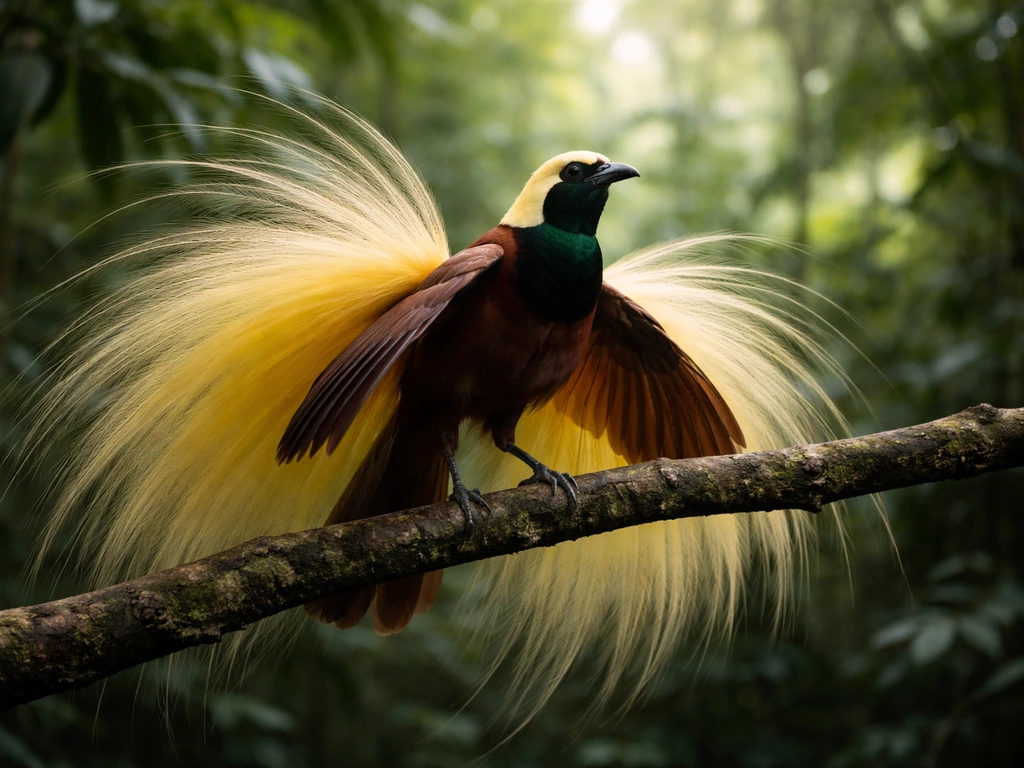
Males gather at traditional display trees called leks, where they compete for female attention. The display involves raising and fanning those long golden flank plumes into a full cascade, bowing forward, and calling loudly. Multiple males may display simultaneously, creating an almost surreal visual spectacle. The females approach, evaluate, and choose. It's an active, competitive, and highly visible process.
Lesser Bird of Paradise Courtship
The lesser bird of paradise uses a very similar lek-based system. Males gather, display their plumes, and vocalize to attract females. The core mechanics are the same, and to a casual observer the two species' displays can look nearly identical. The differences are subtle: timing, specific call notes, and the exact shade of plume color are the things to watch. If you're filming or photographing a display in northern New Guinea at mid to high elevations, you're probably looking at the lesser species.
What 'Behavior' Looks Like for the Plants
If you're in the plant camp, the interesting behavioral dynamic is pollination. Strelitzia nicolai is pollinated by sunbirds, which land on the flower structure and inadvertently pick up pollen. Strelitzia reginae has a similar sunbird relationship, and there's even documented nectar-thief behavior where sunbirds bypass the pollination mechanism to steal nectar without transferring pollen. Strelitzia reginae (bird of paradise) is known for showy orange-and-blue flowers and is described as reaching about 6 feet at maturity by the Chicago Botanic Garden. It's genuinely interesting biology, but it's not bird courtship in any meaningful sense.
Habitat, Diet, and Where to Spot Them
If you want to see an actual bird of paradise in the wild, you're going to New Guinea. There's no shortcut here. Both the greater and lesser bird of paradise live in tropical rainforest, and neither is found naturally anywhere else in the world. The greater bird of paradise favors lowland and hill forest in southwestern New Guinea and the Aru Islands, generally below 900 to 950 meters. The lesser bird of paradise ranges more widely across the north and northwest, from sea level up to around 1,500 meters, which means you can encounter it at higher elevations more often.
Both species eat fruit as a primary food source, supplemented by insects and other small invertebrates. They forage in the forest canopy and midstory, which makes them easier to hear (males are loud during display season) than to spot. Early morning is the best time for display observation at lek sites. Guided tours with local experts in Papua New Guinea or Indonesian Papua are genuinely the most reliable way to get good views.
The Strelitzia plants, by contrast, are found in the wild along the coastal dunes and forests of southern Africa. In cultivation they've spread worldwide, which is why you might see a 'giant bird of paradise' plant in a Californian garden or a Florida landscape with no New Guinea connection whatsoever.
How to Confirm Your ID with Photos and Calls
Whether you're working from a photo you've taken or something you've seen online, here's a practical checklist for nailing the identification.
- Step one: Is it a plant or a bird? If there's a stem, leaves, and flowers, it's a Strelitzia. If it has feathers and a beak, proceed to step two.
- Step two: Check the location. New Guinea (Papua New Guinea or Indonesian Papua) means you're in bird of paradise territory. Southern Africa means Strelitzia plant territory.
- Step three: For birds, look at the flank plumes. Long, wispy, golden-yellow plumes in a fanned display narrow you to the Paradisaea genus immediately.
- Step four: Check the range map. Aru Islands or southwestern New Guinea points to Paradisaea apoda. Northern or northwestern New Guinea with higher elevation points to Paradisaea minor.
- Step five: Listen for calls. Greater bird of paradise has a loud, repetitive 'wawk' call that carries well through the forest. Lesser bird of paradise has a similar but distinct call pattern. Cross-reference with recordings on Cornell Lab's Macaulay Library or Xeno-canto.
- Step six: Compare your photo to verified reference shots. Look at the specific shade of the flank plumes, the face and throat color, and the bare-shafted tail wires. These are the most reliable visual separators.
- Step seven: If you're still unsure, post to a platform like iNaturalist or a regional birding group with GPS data and multiple photos. Community experts can usually confirm within hours.
Common Misidentifications to Avoid
The biggest misidentification trap is conflating the plant with the bird. In the same way, a parrot flower vs bird of paradise comparison often comes down to whether the plant has true Strelitzia-style bird head flowers or just a superficially similar look. Someone searching 'giant bird of paradise' almost certainly gets plant results first, and the Strelitzia nicolai images look close enough to Strelitzia reginae that people start confusing those too. Neither is a bird. A secondary trap is assuming any large, plumed bird in a photo from Southeast Asia or Australia is a bird of paradise. Wallace's standardwing and riflebirds (which live in Australia) are related but distinct. And within the Paradisaea genus, the greater and lesser are close enough that casual identification from a single blurry photo is unreliable. Use range, elevation, call recordings, and verified photo comparisons together, not just one cue alone.
It's also worth knowing that the broader comparison landscape around bird of paradise names gets even wider when you include plants. That wider context includes how people often compare a lego bird of paradise lookalike with the real plant options like orchid and similar “bird of paradise” varieties giant bird of paradise. The orange-and-blue Strelitzia reginae is the classic 'bird of paradise flower,' and topics like heliconia vs bird of paradise or crane flower vs bird of paradise come up regularly because these plants share visual similarities and overlapping common names. If you're trying to decide between a peace lily and a bird of paradise plant, the leaf shape and growth habits are the fastest clues peace lily vs bird of paradise. If your confusion is plant-focused rather than bird-focused, those comparisons go into much more botanical depth than this guide does.
For bird identification specifically: trust range data, use audio recordings to cross-check, and compare your photos against verified specimens rather than Google image results, which mix plants and birds freely. In a Reddit thread about the Xeno-canto app, some iPhone users reported problems autoplaying call playlists and suggested troubleshooting like opening a single recording first Xeno-canto app autoplay call playlists on iPhone. If you're working from a photo and you can see golden flank plumes in a display posture in a New Guinea forest setting, you're looking at the real thing.
FAQ
If I only saw a “giant bird of paradise” photo, how can I quickly tell whether it’s a plant (Strelitzia) or a real bird?
Look for the “bird-head” flower shape and woody clumps, those point to Strelitzia (especially nicolai or alba). A real bird photo should show an actual perched or displaying bird body, and if there are golden flank plumes held up and fanned during a lek, that is a strong bird indicator. If the image is of a single flower on a plant, it is almost certainly not the bird.
What should I do if a website calls Strelitzia nicolai a “white bird of paradise” and also mentions “giant”?
Treat both phrases as plant marketing. “White bird of paradise” is commonly used for Strelitzia nicolai, and the “giant” part usually refers to plant size (height and spread), not any bird species. Cross-check with flower color (white petals plus pale blue structures) and whether the picture shows a large outdoor plant rather than a bird in habitat.
Are there any real birds whose common name includes “giant” for the Paradisaeidae family?
Not in a widely standardized way. When people say “giant” in casual bird talk, they often mean greater bird of paradise versus lesser bird of paradise. If the source does not clearly specify Paradisaea apoda or Paradisaea minor, it is safer to interpret “giant” as “greater.”
How reliable is geographic location (New Guinea vs elsewhere) for distinguishing greater or lesser bird of paradise?
It is highly useful for separating birds from plants, because neither greater nor lesser bird of paradise occurs naturally outside New Guinea. Within New Guinea, location helps but does not fully solve it, because distributions can overlap. In practice, combine location with elevation (lower elevations for greater, broader and higher range for lesser) and with call or display timing.
If I hear a bird calling but cannot see the display, what extra clue can help confirm which species it is?
Use audio for call structure, not just loudness. Greater and lesser species can have similar “lek” contexts, so the practical confirmation step is to compare your recording’s call notes or cadence against a known reference for Paradisaea apoda and Paradisaea minor. If you cannot confirm calls, treat the ID as tentative even if the site is “probably New Guinea.”
What’s the easiest field sign during display that points to lesser versus greater bird of paradise?
Watch the exact plume color and the sequence timing during the fan-and-bow display, not just the presence of golden flank plumes. The two species can look nearly similar in motion, so subtle differences in call timing and plume shade are usually what you need. If you are photographing, capture a short burst of both the plume posture change and the call.
Can I identify either bird species from leaves, fruit, or general forest setting alone?
Usually no. While both species primarily eat fruit and forage in the canopy and midstory, those signs are shared with many rainforest birds. For reliable identification, you need either a confirmed display behavior at a lek, a good call recording, or an identifiable plume-and-posture view during courtship.
Are there any cases where a plant search result will look like a “bird of paradise” bird?
Yes, the most common confusion is with “bird of paradise” flowers and lookalike plant blooms, where the flower silhouette resembles a bird head and people mentally map it to the bird. Another frequent mistake is assuming any large, plumed bird photo in Southeast Asia or Australia is “bird of paradise,” when it could be a different family entirely. Use the context of the subject (flower vs bird body) and the location claim.
If I am in the wrong category, do I risk mixing up plant species too, like nicolai vs reginae?
Definitely. Even within plants, Strelitzia nicolai and Strelitzia reginae get confused because both are sold under “bird of paradise” names. A practical fix is to check the flower characteristics (nicolai’s commonly sold as white with pale blue structures) and the overall plant habit (large clumping, woody-stem form for nicolai versus the more compact, classic orange-and-blue “bird flower” reputation for reginae).
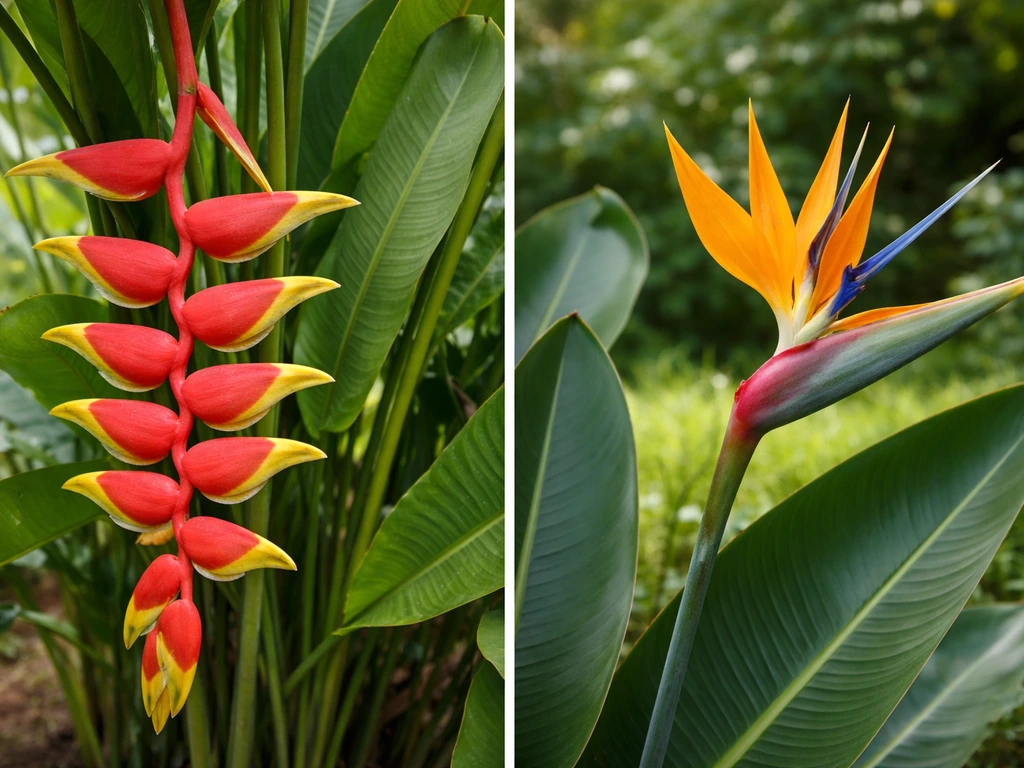
Heliconia vs bird of paradise: how to spot bracts, leaves and blooms at a glance, confirm identity, and care properly.
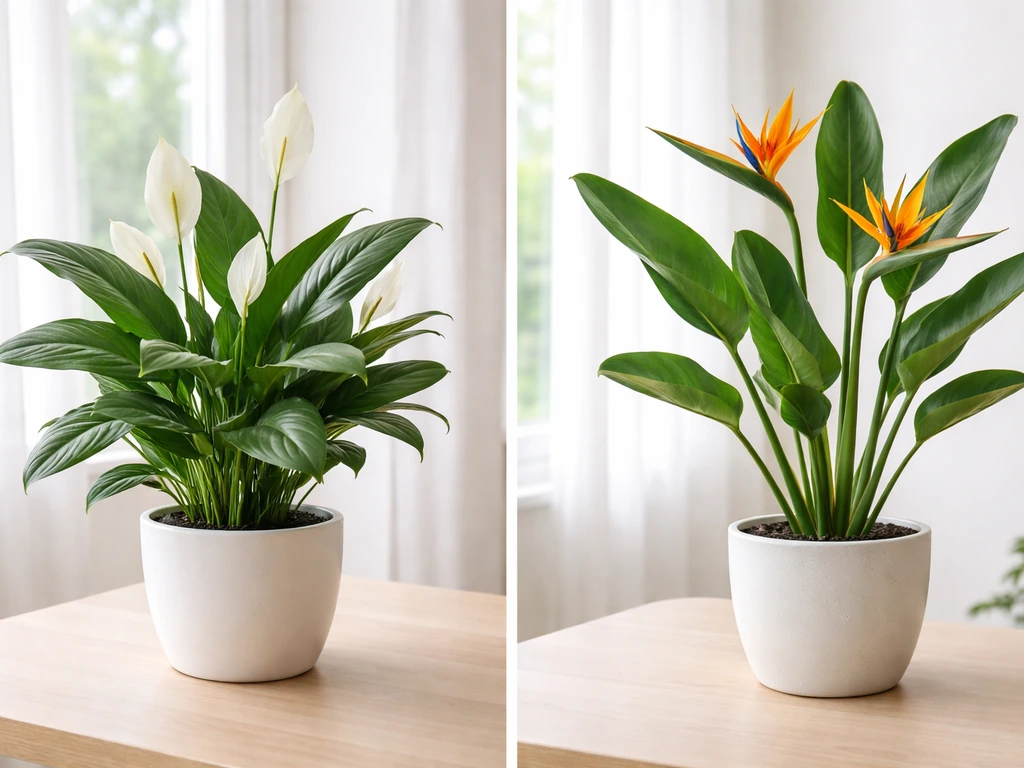
Peace lily vs bird of paradise: quick ID, bloom differences, side-by-side care, pet safety, and troubleshooting tips.
Learn what Batman vs bird means and use field marks, behavior, and habitat to ID the right animal fast.