Are heliconia and bird of paradise the same plant?
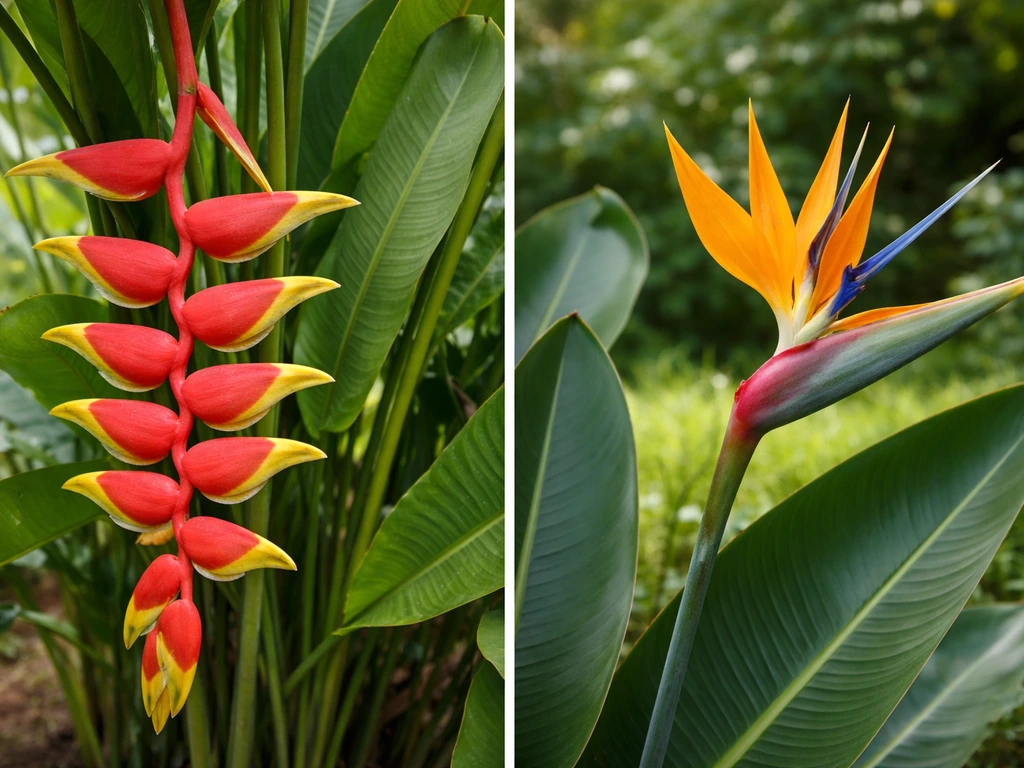
No, heliconia and bird of paradise are not the same plant. They are two entirely different genera from two different plant families, native to different parts of the world. What makes this confusing is that heliconia was once literally called "false bird of paradise" in the nursery trade, and the two plants share a broadly tropical look that fools a lot of people. But once you know what to look for, telling them apart takes about thirty seconds.
What each plant actually is
"Bird of paradise" almost always refers to Strelitzia reginae, the orange-and-blue flowering plant native to the Cape Provinces and KwaZulu-Natal in South Africa. It belongs to the family Strelitziaceae. The common name comes directly from its flowers, which genuinely look like a bird's head with an extravagant plumage crest. Strelitzia is also sometimes called "crane flower," which tells you everything about the visual effect it creates. The crane flower vs bird of paradise comparison digs into that naming overlap further, but for now just know that when someone says "bird of paradise" in a garden center, they mean Strelitzia.
Heliconia is a completely separate genus, the only one in the family Heliconiaceae. It is primarily a Neotropical plant, native to Central and South America, though its range extends from there across to parts of the Pacific including Sulawesi and Samoa. The genus contains roughly 225 species, with around 180 formally described. Common names for heliconias include "lobster claw," "wild plantain," and yes, historically, "bird of paradise" or "false bird of paradise," which is exactly where the confusion starts.
How to tell them apart at a glance
The fastest way to separate these two plants is to look at the inflorescence structure. They are genuinely different in almost every visual respect once you know what the key features are.
The flowers and bracts
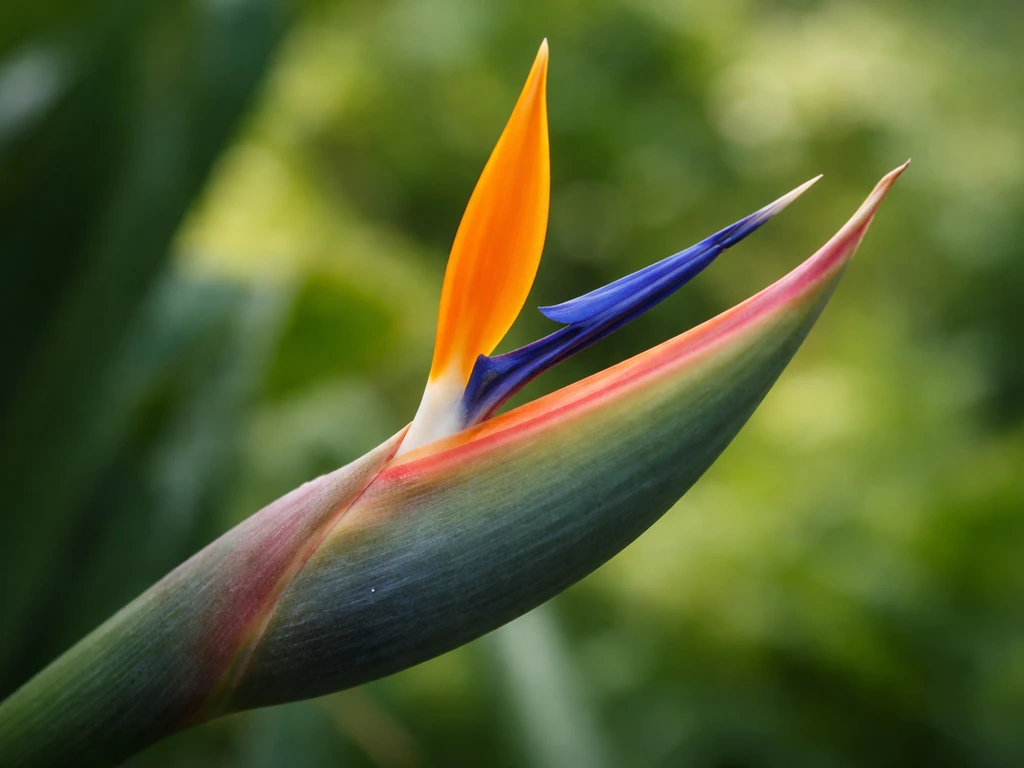
Strelitzia reginae produces its flowers on long stalks that emerge from a stout, boat-shaped bract called a spathe. The flowers themselves come out of that spathe one at a time and have three orange sepals plus three purplish-blue petals (sometimes white). The whole arrangement sits horizontally at the top of the stalk and really does look like a colorful bird's head peering over a green boat. The spathe is firm and beak-like in texture, which is a reliable tactile cue if you can touch the plant.
Heliconia works completely differently. The showy part of a heliconia is the bracts themselves, not the petals. The bracts are large, rigid, and brilliantly colored, typically red, orange, or yellow, sometimes with green tips. The actual flowers are small and tucked inside those bracts. Heliconia stricta, for example, has an erect inflorescence about 30 cm long with two ranks of orange-red bracts tipped in green, which is why the common name "lobster claws" fits so well. The bract arrangement can be distichous (two-ranked, in a flat zigzag pattern) in some species, or spiral in others depending on how the rachis twists as the plant matures. That zigzag or staircase pattern of bracts is one of the most reliable field markers for heliconia.
Leaves and overall plant size
Strelitzia reginae is a relatively compact plant. It grows in a clumping form with long-petioled, paddle-shaped leaves that are blue-green and leathery. The plant stays manageable in a garden or container setting. Strelitzia nicolai, the giant white bird of paradise, is a different story entirely, with woody stems reaching 7 to 8 meters tall and clumps spreading up to 3.5 meters wide. But the species most people mean when they say "bird of paradise" (S. reginae) is not a towering plant.
Heliconias are often much larger and more lush. Their foliage looks like a big banana or canna plant, with broad, oblong leaves arranged in a fan. The leaf shape is part of why heliconia gets mixed up with bird of paradise: both have large tropical leaves that look superficially similar in garden center photos. But in person, a mature heliconia in a tropical garden is almost always a significantly bigger plant than a standard bird of paradise, and the leaf arrangement has a denser, more dense-canopy feel to it.
Side-by-side comparison
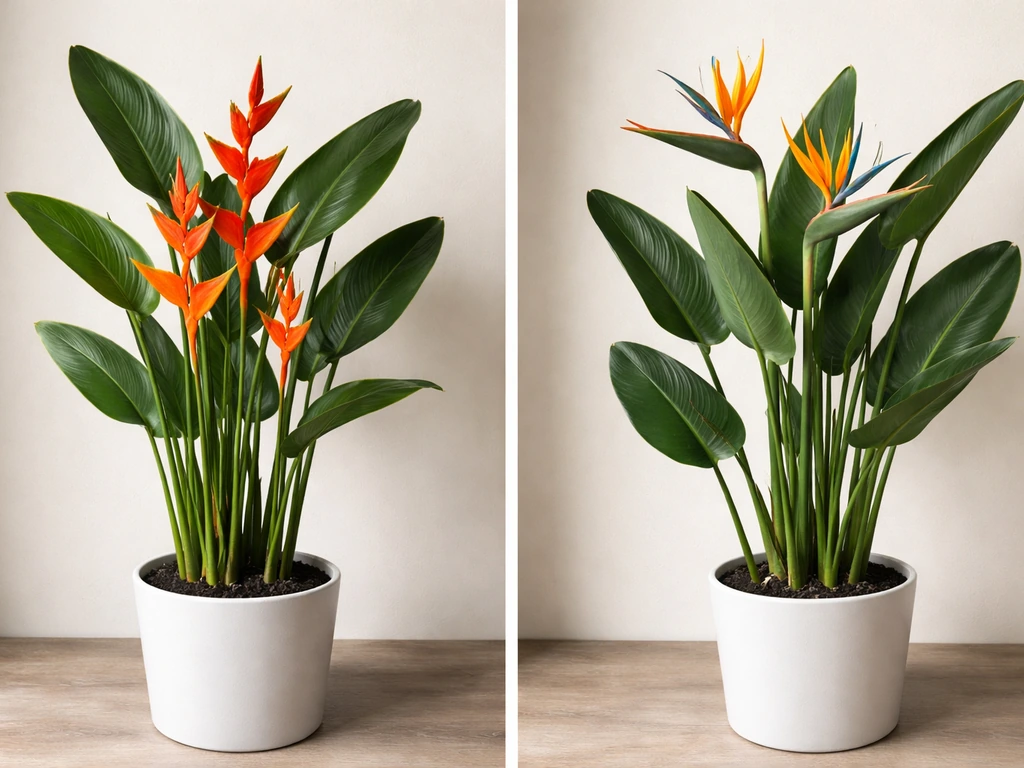
| Feature | Heliconia | Bird of Paradise (Strelitzia reginae) |
|---|
| Plant family | Heliconiaceae | Strelitziaceae |
| Native range | Neotropics (C./S. America), Pacific islands | South Africa (Cape Provinces, KwaZulu-Natal) |
| Inflorescence type | Bracts are the showy part; small flowers inside bracts | Flowers emerge from a boat-shaped spathe |
| Bract arrangement | Distichous (two-ranked) or spiral along rachis | Single horizontal spathe at stalk tip |
| Flower colors | Bracts: red, orange, yellow, green-tipped | Orange sepals, purplish-blue or white petals |
| Leaf appearance | Large, broad, banana-like | Long-petioled, paddle-shaped, blue-green |
| Typical size | Often 1–6+ meters depending on species | Around 1–2 meters (S. reginae) |
| Care: light | Part shade to filtered sun preferred | Sun to part sun; tolerates part shade |
| Care: water | Prefers consistent moisture | Drought tolerant when established |
Why people keep mixing these two up
The confusion has a real historical root. UF/IFAS Extension has documented that the vernacular name "bird of paradise" was erroneously applied to heliconia species at some point in horticultural history. The Charlotte County UF/IFAS Extension explicitly records that heliconia was sold and marketed as "false bird of paradise" for years. When common names jump between unrelated plants like that, confusion gets baked into the hobby for generations.
There are also a few genuine visual similarities that make the mistake easy to understand. Both plants have large, tropical-looking foliage. Both produce boldly colored inflorescences. When you see either plant in a photo without scale or detail, especially a young specimen, the broad leaves and bright colors read as "tropical showstopper" in a way that makes them hard to separate. The confusion is almost entirely based on superficial similarity of foliage, as noted in botanical extension resources, rather than any actual structural overlap in the flowers.
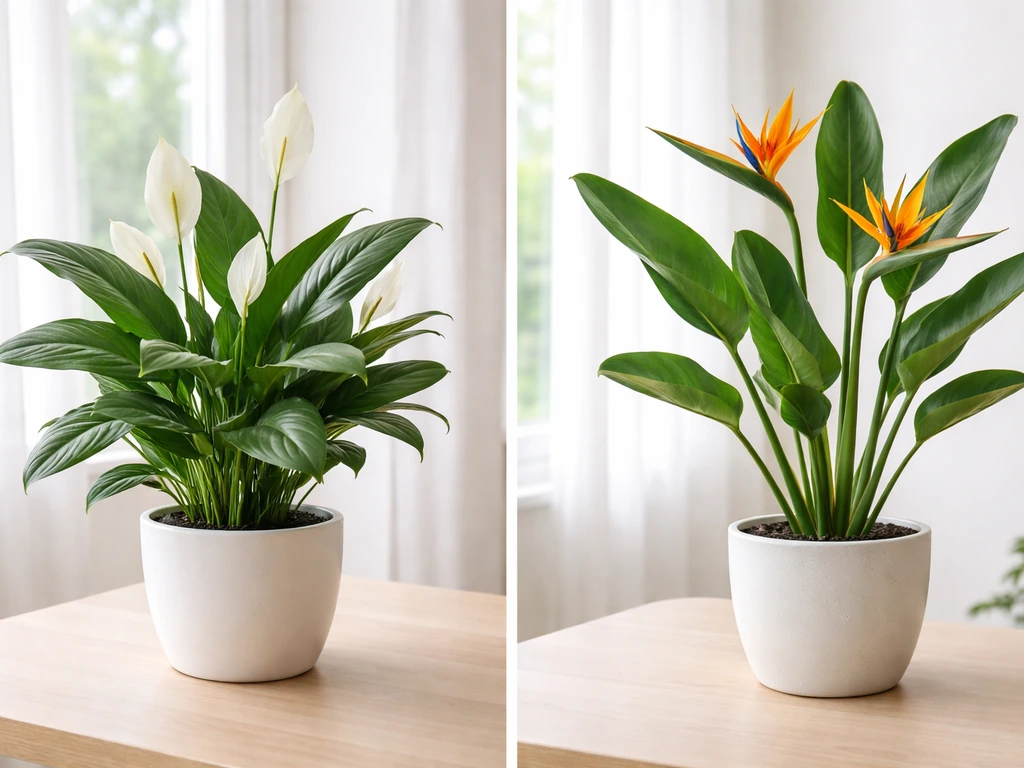
Naming traps also come from related plants in the same orbit. If you've ever stumbled across the peace lily vs bird of paradise debate, you know that "bird of paradise" as a name gets attached to several unrelated plants. The same happens with canna lily vs bird of paradise comparisons, where large tropical foliage fools people into conflating plants from totally separate families. Once a popular common name gets loose in the garden trade, it tends to stick to anything that looks remotely similar.
The botanical relationship (and why the names mean what they mean)
Heliconia and Strelitzia are not closely related in any meaningful sense, despite being placed near each other historically. Both belong to the order Zingiberales, which is the same large grouping that includes gingers, bananas, and cannas. That shared order explains the banana-like foliage both plants tend to have. But within Zingiberales, they split into entirely different families: Heliconia goes into Heliconiaceae (its own family with just the one genus), and bird of paradise goes into Strelitziaceae. Heliconia is the only genus in the monotypic family Heliconiaceae, so the family name directly refers to Heliconia Heliconia goes into Heliconiaceae. The Heliconia Society International explicitly separates these two families and treats them as distinct horticultural categories.
The name "bird of paradise" for Strelitzia comes from the flowers themselves, which mimic the appearance of birds-of-paradise (the actual birds). The orange-and-blue coloring and the way the petals fan out from the spathe genuinely resembles a tropical bird in flight or display. For heliconia, the "bird of paradise" label was more of a marketing borrowing than an accurate description. The lobster-claw and staircase-bract arrangement of heliconia doesn't look much like a bird at all. If you're curious how this naming issue plays out across similar-looking Strelitzia relatives, the giant bird of paradise vs bird of paradise comparison covers how even within the Strelitzia genus there's confusion between species.
It's also worth noting that parrot flower vs bird of paradise is another common naming tangle in this space, showing how the "exotic tropical bird" metaphor gets borrowed across multiple plant groups. The further you dig into tropical ornamentals, the more you find that vivid bird references in common names do not imply any botanical connection.
How to confirm which plant you actually have
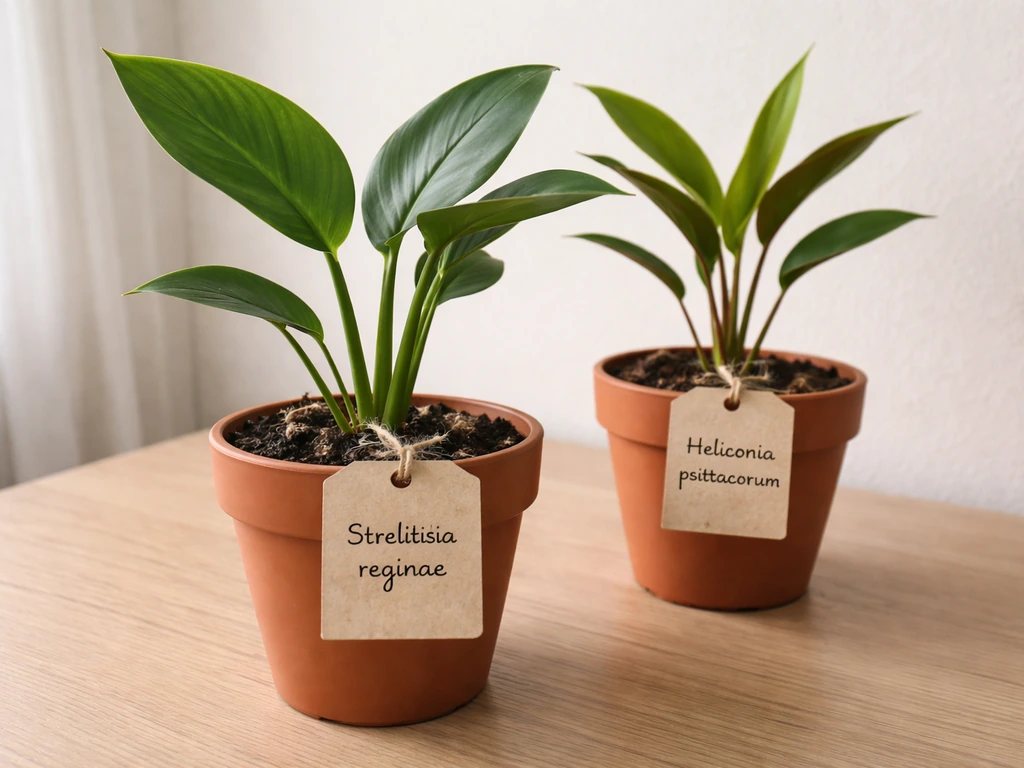
If you're standing in front of a plant right now and need to confirm its identity, work through this checklist:
- Check any label or tag for a Latin name. If you see Strelitzia reginae or Strelitzia nicolai, it's bird of paradise. If you see Heliconia psittacorum, Heliconia stricta, or any other Heliconia species, it's heliconia.
- Look at the inflorescence. If the showy part is a set of stacked, boat-shaped bracts arranged in a zigzag or staircase pattern (like lobster claws), it's heliconia. If the showy part is a single horizontal spathe with flowers emerging from it in orange and blue, it's bird of paradise.
- Check the flower colors. Orange sepals with purplish-blue or white petals pointing upward from a boat-shaped green spathe: bird of paradise. Brightly colored bracts (red, orange, yellow, often green-tipped) with tiny flowers peeking out between them: heliconia.
- Look at leaf size and shape. Very large, banana-plant-style leaves in a fan arrangement: lean toward heliconia. Compact, paddle-shaped blue-green leaves on long individual petioles: lean toward bird of paradise.
- Search for the plant online using its Latin name plus "care" to get accurate watering and light guidance. Heliconia and Strelitzia have noticeably different care needs, especially around water and sun.
- If you only have a photo, zoom in on the bract arrangement. The distichous (two-ranked) or spiral stacking of heliconia bracts is distinctive and does not appear in Strelitzia.
For search purposes: use "Heliconia care" or "Heliconiaceae tropical" if you've confirmed heliconia. Use "Strelitzia reginae care" or "bird of paradise plant" if you've confirmed it's the South African species. Avoid searching generic terms like "bird of paradise plant" alone because results will mix both genera together and make the confusion worse. You might also find it useful to look at lego bird of paradise vs orchid as a fun example of just how broadly the "bird of paradise" name gets applied, even beyond living plants.
What to do once you know which plant you have
Care is genuinely different between these two plants, so getting the ID right matters beyond just curiosity. Strelitzia reginae is drought tolerant once established and does well in full sun to part sun. You can let the soil dry out between waterings and the plant will not suffer for it. It also handles part shade. Heliconia, by contrast, comes from humid tropical forest environments. It wants consistent moisture, higher humidity, and filtered or partial sun rather than blasting full sun in a dry climate. Getting the watering cadence wrong is probably the most common care mistake people make after misidentifying their plant.
If you have bird of paradise (Strelitzia), focus on well-draining soil, moderate fertilizing during the growing season, and patience: plants often take several years to bloom from a young division. If you're in a frost-prone area, it tolerates brief cold but does not like a hard freeze. If you have heliconia, prioritize warmth, moisture, and a wind-sheltered spot. Most heliconia species need genuine tropical or subtropical conditions to perform well outdoors, though some compact species like Heliconia psittacorum handle container growing in warmer climates with reliable watering.
Either way, once you have the Latin name confirmed, you have everything you need to look up species-specific guidance. The common name confusion melts away the moment you're searching for Strelitzia or Heliconia specifically, and you'll find accurate, reliable care information that actually matches the plant in front of you.