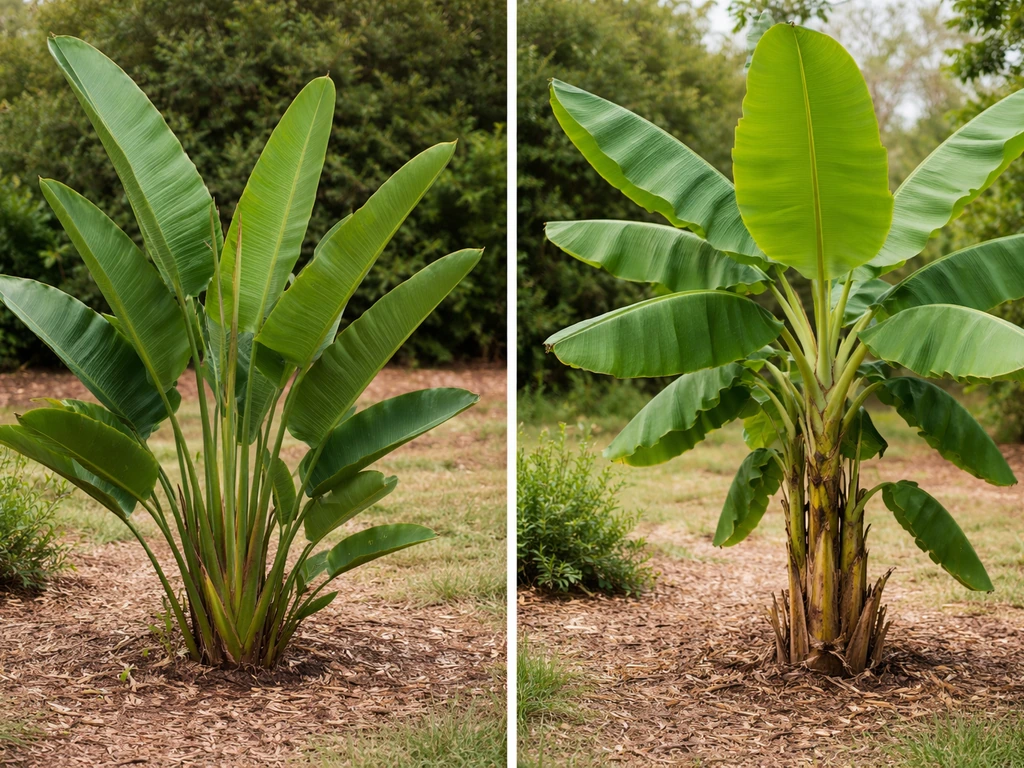
Here's the thing that trips people up immediately: neither the "Mexican bird of paradise" nor the "Pride of Barbados" is actually a bird. Both are flowering plants, specifically tropical shrubs in the legume family, and they look strikingly similar to each other. If you searched this comparison expecting to find two bird species, that confusion is completely understandable given the names, but this guide is going to clear everything up fast. You'll walk away knowing exactly which plant is which, why people mix them up, and how to tell them apart with confidence whether you're looking at a garden, a photo online, or a label at a botanical garden or zoo.
Mexican Bird of Paradise vs Pride of Barbados: How to Tell Them Apart

Marcus Hendricks
20 Apr 2026
What These Names Actually Refer To
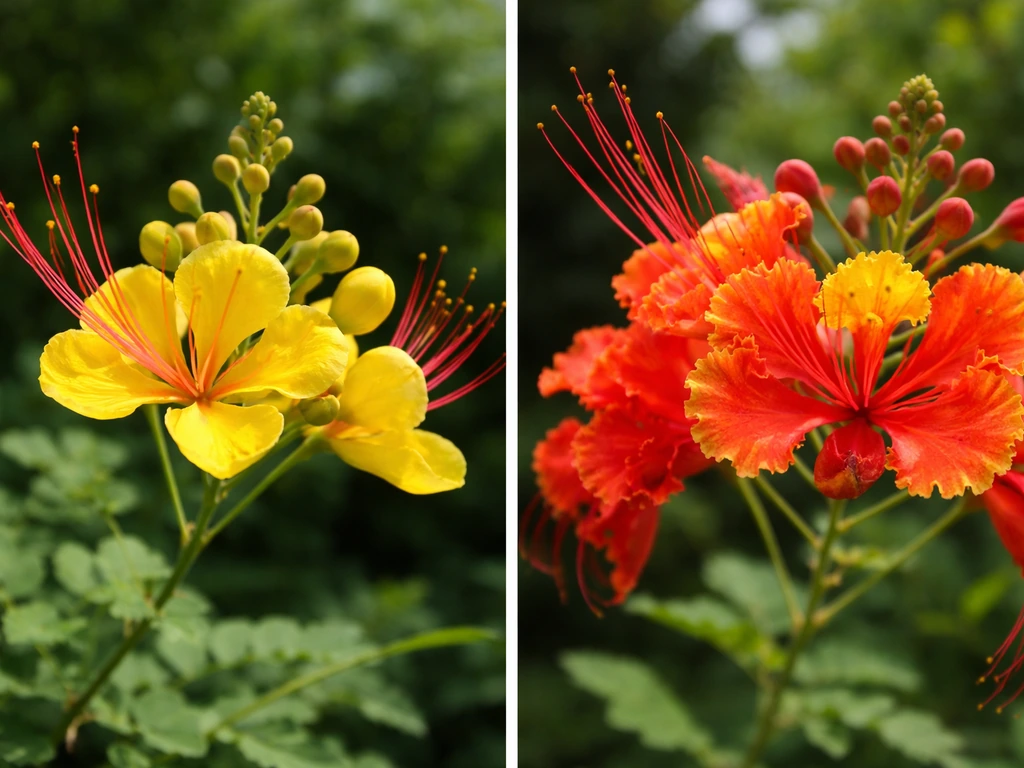
"Mexican bird of paradise" is the common name most frequently tied to the plant species Erythrostemon mexicanus, which is also listed in older references under its basionym Caesalpinia mexicana. The "bird of paradise" part of the name comes from the showy, tropical-looking flowers that loosely resemble the birds called birds of paradise. It's a yellow-flowering shrub native to northeastern Mexico and commonly cultivated across the American Southwest and Texas.
"Pride of Barbados" is the established common name for Caesalpinia pulcherrima, a separate but closely related species. It's recognized under that name by authoritative sources including the U.S. Fish & Wildlife Service and Flora of North America. Despite being called "Pride of Barbados," the plant is widely distributed throughout tropical regions worldwide and is one of the most popular ornamental shrubs in warm-climate gardens globally. It's also sometimes called "red bird of paradise" in casual usage, which is a major source of confusion.
So the core issue is this: both plants belong to the same genus group (formerly both listed under Caesalpinia), both go by variations of "bird of paradise," and both are sold in nurseries and planted in similar climates. The names overlap enough that even experienced gardeners mix them up regularly.
Size, Shape, and Overall Appearance Side by Side
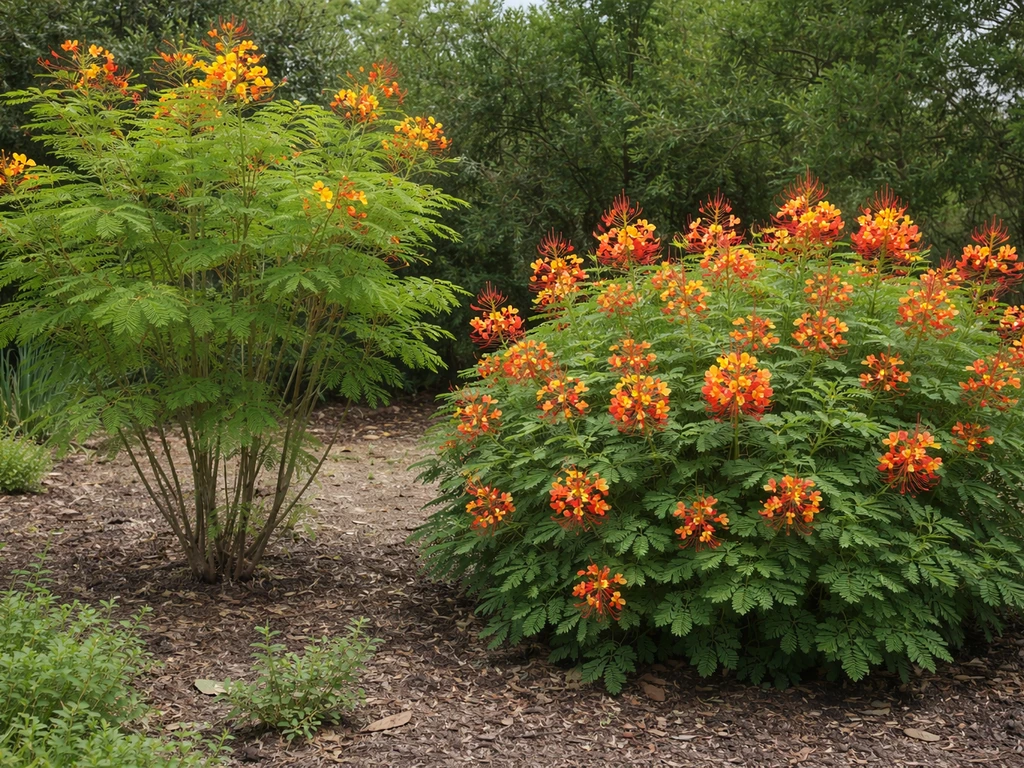
When you stand in front of both plants, the first difference you'll notice is size and growth habit. Mexican bird of paradise (Erythrostemon mexicanus) tends to grow as a large shrub or small tree, often reaching 10 to 15 feet tall at maturity, sometimes taller under ideal conditions. It has a more tree-like structure with a defined trunk or multi-stem base and an upright, somewhat airy canopy.
Pride of Barbados (Caesalpinia pulcherrima) is typically bushier and more compact, usually topping out around 6 to 12 feet, though it can reach similar heights in frost-free climates. Nurseries like V&P Nurseries also describe Caesalpinia pulcherrima, commonly called “Pride of Barbados,” as a feathery, fern-like shrub with bright orange/yellow flowers and long red stamens Pride of Barbados (Caesalpinia pulcherrima). It tends to be wider relative to its height, with a denser, more shrubby silhouette and fine, feathery, bipinnate leaves that give it a delicate, fern-like texture. Both plants have similar leaf structure overall, but Pride of Barbados often looks lusher and more layered at first glance.
| Feature | Mexican Bird of Paradise | Pride of Barbados |
|---|---|---|
| Scientific name | Erythrostemon mexicanus (syn. Caesalpinia mexicana) | Caesalpinia pulcherrima |
| Typical height | 10–15 ft, sometimes taller | 6–12 ft, sometimes taller in tropics |
| Growth habit | Large shrub to small tree, upright | Dense, bushy shrub, spreading |
| Flower color | Bright yellow | Red-orange with yellow edges, or all yellow in some cultivars |
| Flower long stamens? | Yes, yellow stamens | Yes, long red stamens extending well beyond petals |
| Leaf texture | Bipinnate, fine and feathery | Bipinnate, fine and feathery (similar) |
| Native range | Northeastern Mexico | Tropical Americas, widely naturalized |
| Common climate use | Southwest US, Texas, desert gardens | Tropical and subtropical gardens worldwide |
Quick-ID Feature Checklist
If you need a fast answer in the field or from a photo, flower color is your fastest and most reliable clue. Check the specific flower traits for Pride of Barbados, including orange-red-yellow blooms with very long red stamens, wrinkled petals, and an opening pattern from the bottom of the panicle upward. Here's what to check in order:
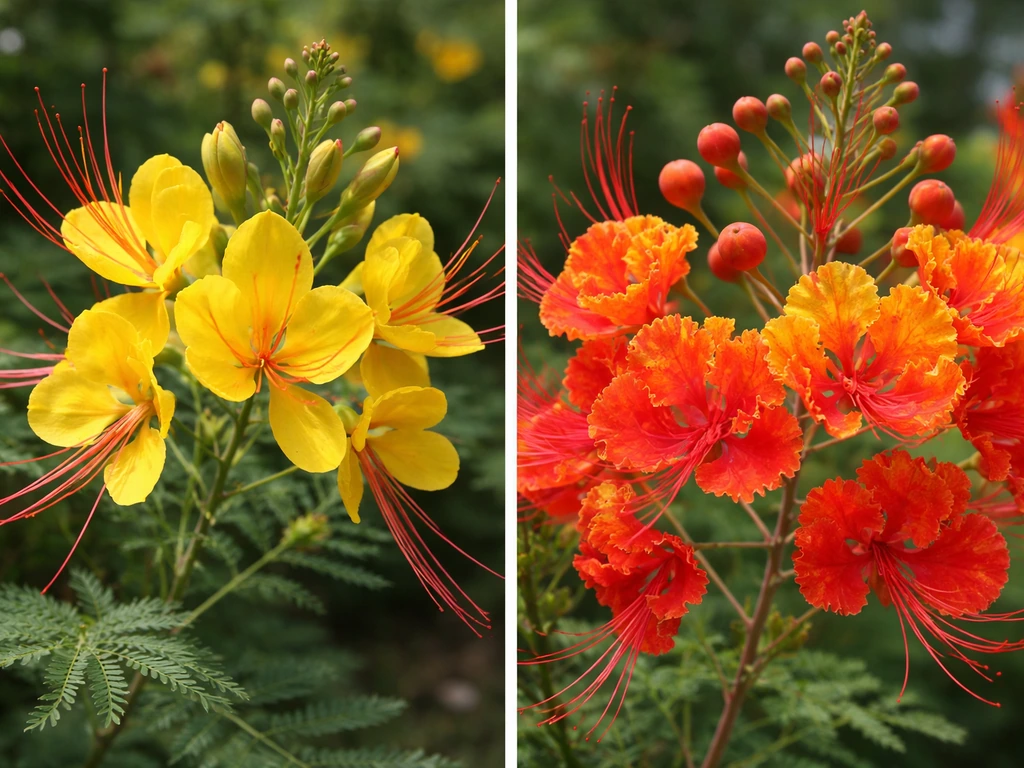
- Flower color first: Mexican bird of paradise produces pure yellow flowers. Pride of Barbados produces red-to-orange flowers with ruffled yellow petal edges (though some cultivars can be mostly yellow, which complicates this).
- Stamen length and color: Both have dramatic long stamens, but Pride of Barbados stamens are typically vivid red and extend dramatically beyond the petals. Mexican bird of paradise stamens are yellow and shorter relative to petal size.
- Overall plant structure: If it looks more like a small tree with a clear trunk, lean toward Mexican bird of paradise. If it looks like a wide, rounded shrub, lean toward Pride of Barbados.
- Petal edges: Pride of Barbados petals often have a distinctly ruffled or crinkled edge, which is a useful detail visible in good photos.
- Location and label: If you're in a botanical garden or zoo, check the label for the scientific name. Any Caesalpinia pulcherrima reference means Pride of Barbados. Erythrostemon mexicanus or Caesalpinia mexicana means Mexican bird of paradise.
How They Behave in the Garden (and What You'd Notice in the Field)
"Behavior" for plants comes down to seasonal patterns, growth response, and how they interact with their environment. Mexican bird of paradise is more cold-tolerant and often behaves as a semi-evergreen to evergreen shrub-tree in mild climates. In parts of Texas and the Southwest it keeps its foliage through winter and blooms heavily in spring and summer. It's also notably drought-tolerant once established, which is why it's popular in desert landscaping.
Pride of Barbados is a faster grower and a more aggressive bloomer across warm months, often producing flowers nearly continuously from late spring through fall in tropical and subtropical climates. It dies back to the ground in areas that experience frost but rebounds vigorously from the roots. This die-back and regrowth pattern is one reason nurseries sometimes label it differently depending on the region, adding to naming confusion.
Both plants are strong attractors of hummingbirds and butterflies, which is part of why they show up in butterfly gardens, zoo enclosures, and aviaries. If you're seeing one of these plants in a setting with birds nearby, don't let the bird activity mislead you about which plant species it is. The name is about the flower's resemblance to bird-of-paradise birds, not about any special relationship with specific bird species.
Range and Habitat: Where Each One Actually Grows
Mexican bird of paradise is native to northeastern Mexico, particularly the states of Nuevo León, Tamaulipas, and nearby regions. In cultivation it thrives across the American Southwest, including Arizona, New Mexico, and Texas, where the hot, dry conditions suit it well. You'll find it most commonly in desert-adapted landscapes, xeriscape gardens, and along roadsides in USDA hardiness zones 8b through 11.
Pride of Barbados has a much wider distribution. While its exact origin is debated (it's been so widely cultivated for so long that pinning down a precise native range is difficult), it's naturalized across tropical and subtropical regions worldwide, from the Caribbean and Central America to South Asia, Africa, and the Pacific Islands. In the United States it's common throughout Florida, Hawaii, the Gulf Coast states, and the Southwest. The "Barbados" in its name references its prominence in Caribbean horticulture, but it's not exclusively from there.
The overlap zone where both species are commonly planted is the American Southwest and Texas, which is exactly why the confusion between them is so frequent in those regions. If you're outside that overlap zone, geography alone can sometimes give you a strong clue: a garden in Tucson, Arizona might have either one, but a garden in coastal Florida is far more likely to have Pride of Barbados.
Confirming the ID from Photos or a Zoo and Aviary Label
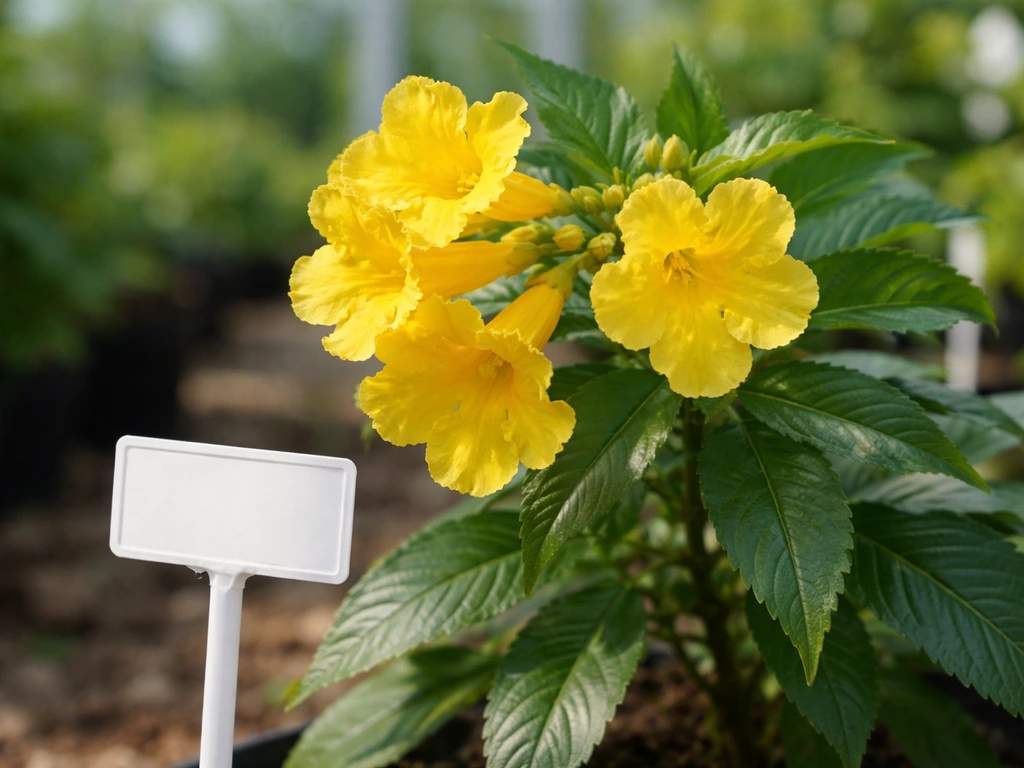
Photos are often where this confusion starts, because someone sees a gorgeous tropical shrub in bloom and searches "bird of paradise" without knowing which species they're looking at. Here's how to work through it from a photo:
- Look at the flower color in the clearest photo you have. Pure yellow across all petals points to Mexican bird of paradise. Red or orange petals with yellow ruffled edges points to Pride of Barbados.
- Zoom in on the stamens. Long, dramatically projecting red stamens are a strong indicator of Pride of Barbados. Yellow stamens that don't project as far lean toward Mexican bird of paradise.
- Check the plant's overall form relative to surroundings. A plant with visible trunk structure and upright height is more likely Mexican bird of paradise.
- If the photo was taken in a zoo or botanical garden, look for a species sign in the background or ask staff for the binomial (two-part scientific) name. A label reading 'Caesalpinia pulcherrima' means Pride of Barbados; 'Erythrostemon mexicanus' or 'Caesalpinia mexicana' means Mexican bird of paradise.
- For online photos, reverse image search using Google Lens or a plant ID app like iNaturalist. Both tools use flower color and shape effectively and will usually return the correct species-level match within seconds.
At zoos and aviaries specifically, these plants are often used as habitat enrichment or landscape plants near bird exhibits, since they attract hummingbirds and other wildlife. Don't assume the plant name is tied to any bird exhibit nearby. Ask for the plant label or check a posted plant list if the facility provides one.
Common Mix-Ups, Misconceptions, and Your Best Next Steps
The biggest misconception driving this search is the assumption that "Mexican bird of paradise" and "Pride of Barbados" refer to bird species. They don't. They're both flowering plants, and understanding that unlocks the whole comparison. Once you know you're comparing two plants in the same genus, the differences become manageable. If you are also weighing it against a houseplant, the bird of paradise vs monstera section will help you compare leaves, growth habits, and care needs at a glance.
A second common mix-up involves the name "red bird of paradise," which is casually used for both Caesalpinia pulcherrima (Pride of Barbados) and for Erythrostemon gilliesii (a different species entirely). If you're seeing "red bird of paradise" in a nursery or online, always ask for the scientific name to confirm which plant you're actually dealing with. The red bird of paradise vs Mexican bird of paradise distinction is another closely related comparison worth exploring if you're sorting through multiple species in this group. The red bird of paradise vs Mexican bird of paradise comparison can help you confirm which Caesalpinia or related species your nursery is actually selling.
It's also worth noting that the broader "bird of paradise" label is used across completely different plant families. The large tropical plant known as Strelitzia reginae (the orange and blue flower that looks like a crane) is a completely unrelated plant that shares the common name. If you've been looking at comparisons involving white bird of paradise or giant bird of paradise plants, those belong to an entirely different genus and family from the Caesalpinia group discussed here. If you are comparing white bird of paradise options, check the scientific name to make sure you are not mixing unrelated genera.
Here's what to do next based on your situation:
- If you're trying to ID a plant in your garden or a photo: Start with flower color. Yellow equals Mexican bird of paradise. Red-orange with yellow edges equals Pride of Barbados. Use iNaturalist or Google Lens to confirm.
- If you're buying a plant at a nursery: Ask for the scientific name. Don't rely on common names alone since labeling practices vary widely by region and retailer.
- If you saw this in a zoo or botanical garden and want to be certain: Check the exhibit's official plant list or ask a staff member for the binomial name on the plant tag.
- If you're researching range: Use USDA Plants Database or Flora of North America. Search 'Erythrostemon mexicanus' for Mexican bird of paradise and 'Caesalpinia pulcherrima' for Pride of Barbados to see authoritative distribution maps.
- If you want to capture a good ID photo: Get a clear close-up of the open flowers (including stamens), a shot of the full plant showing its overall shape and height, and a photo of any visible label. Those three images will give any plant ID tool or expert everything they need.
Bottom line: flower color is your fastest field clue, scientific name is your definitive confirmation, and geography gives you useful context when the other clues are unclear. If you're still stuck between bird of paradise vs banana tree, check the leaf structure and growth form rather than the nickname flower color is your fastest field clue. These two plants are genuinely similar, but once you know what to look at, the ID becomes straightforward.
FAQ
If the plant is not called out as Erythrostemon mexicanus or Caesalpinia pulcherrima, what label details should I look for at a nursery?
Ask for the scientific name on the tag, or the full botanical synonym. Older labels may list Caesalpinia mexicana for the Mexican bird of paradise, and Pride of Barbados should appear as Caesalpinia pulcherrima. If the tag only shows a common name like “red bird of paradise,” treat it as unconfirmed until you see the scientific name.
Do these plants look different before they flower, or is flower color always required?
Flower color is the quickest clue, but you can often narrow it down by habit. Pride of Barbados usually looks denser and more shrub-like with a layered, ferny look from bipinnate leaves. Mexican bird of paradise more often has a small-tree or multi-stem structure with a clearer trunk-like form and a more upright, airier canopy.
What should I do if I see a “Pride of Barbados” plant in bloom but the flowers aren’t the typical yellow or red range?
There are ornamental variations, and stress can also change flower appearance. The practical step is to verify the scientific name, because nurseries sometimes mix labels between these closely related “bird of paradise” plants. If you cannot confirm the name, compare the overall silhouette (compact and bushy vs small tree), and look for how the plant behaves through cooler months in your area.
How can I use location and climate to avoid misidentifying them when I’m outside Texas or the American Southwest?
In cold-prone areas, Pride of Barbados is more likely to die back to the ground and regrow from roots after frost. Mexican bird of paradise is generally more likely to hold foliage in mild winters and behave as semi-evergreen. Geography helps, but behavior through the first winter in your yard is often the most reliable “real-world” clue.
Is it possible these plants got cross-labeled because of their shared “bird of paradise” marketing name?
Yes. The common marketing term overlaps heavily, and some retailers reuse names without updating taxonomy. The safest approach is to photograph the tag and the entire plant for your records, then confirm with the scientific name. If you planted already, you can re-check when the next flowering cycle starts.
Do the two plants attract the same birds and pollinators, and can that confuse identification?
Both can attract hummingbirds and butterflies, so bird presence is not a dependable ID tool. Use wildlife as a contextual hint only. For identification, prioritize flower traits, plant size and structure, and confirmation of the scientific name.
What’s the easiest way to confirm “red bird of paradise” when I see it online or at a garden center?
“Red bird of paradise” is commonly used for more than one species in this group. Always require the scientific name. If it lists Caesalpinia pulcherrima, it matches Pride of Barbados, but if it lists a different species name, the plant may not be the same thing even if the flowers look similar.
If the plant looks like a small tree, does that automatically mean it’s Mexican bird of paradise?
Not automatically. Some Pride of Barbados plants can grow taller in frost-free climates and can mimic a more upright shape. Still, the typical tendency is Mexican bird of paradise having a more defined trunk or multi-stem base and an upright canopy, while Pride of Barbados usually stays wider and denser relative to height.
What should I do if I’m trying to ID from a single photo where the leaves are blurry or the flowers aren’t fully visible?
Use a two-step approach: first, focus on structure (bushy compact canopy vs more tree-like form) and leaf texture (denser ferny bipinnate appearance is often Pride of Barbados). Second, if the flower is partially visible, compare the overall flower color and shape rather than relying on the “bird of paradise” wording in the caption. If you can, request a photo of the whole plant plus a close-up of a single mature flower.