The confusion is extremely common, especially when plants are young or seen from a distance. Both produce large, tropical-looking leaves that read as "exotic" to most people. But once you know what to look for structurally, the two plants are actually quite different. This guide walks you through every reliable clue, from leaves and growth habit to flowers and garden spacing, so you can confidently tell them apart today.
Key differences in leaves, growth habit, and overall look
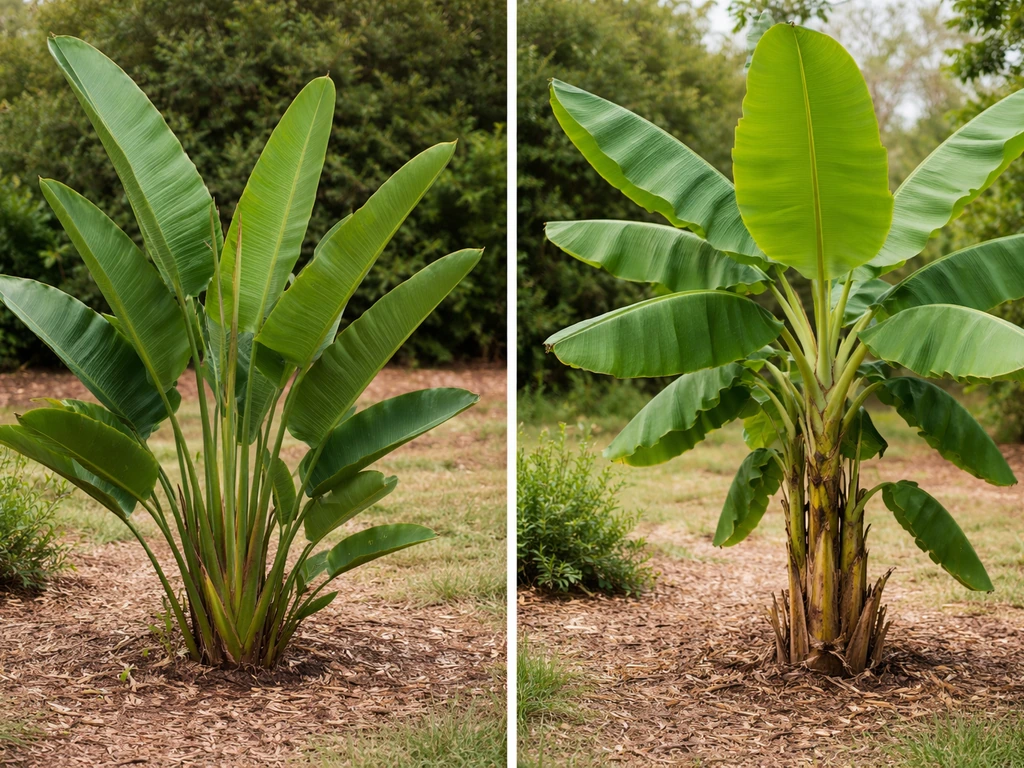
The leaf is your single best identifier at a glance. Banana leaves are enormous, oblong, and emerge rolled up from the center of the pseudostem. They unfurl one at a time and can reach several feet in length, sitting on long petioles with a prominent midrib running the full length. The surface is smooth and somewhat waxy, and older leaves will develop characteristic splits along the midrib in windy conditions. Bird of paradise leaves (across all Strelitzia species) are also large and paddle-shaped, but they hold themselves upright and rigid on stiff petioles that emerge from the base of the plant rather than from a central trunk. That upright, almost sculptural posture is a dead giveaway.
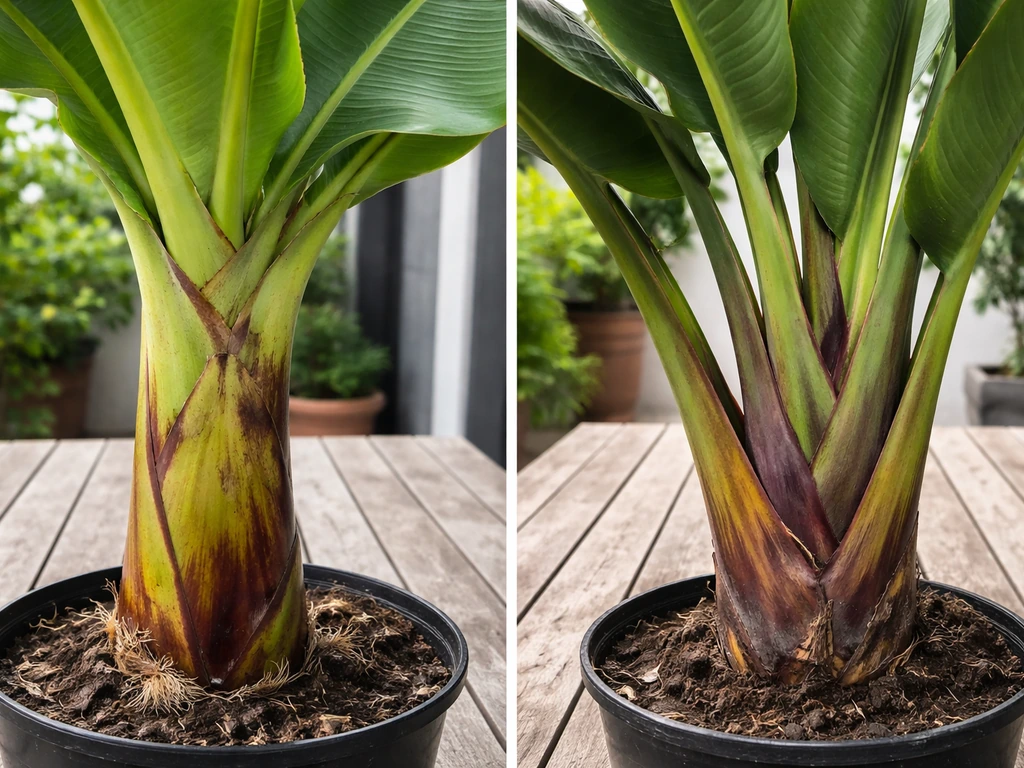
Growth habit is where the two diverge even more clearly. A banana plant is technically a giant herbaceous perennial, not a tree at all. Its so-called trunk, the pseudostem, is described by botanists as a false trunk formed by tightly rolled leaf bases. The plant rises as leaves emerge, the inflorescence is actually carried inside this structure as the plant grows, and each pseudostem produces only one terminal inflorescence before the cycle starts again from a new sucker. Bird of paradise plants grow in a very different way: compact clumping plants with no pseudostem, sending up stiff individual leaf stalks and, when mature, flower stalks from the same basal clump.
At a silhouette level, the contrast is dramatic. A mature banana has a single towering column of rolled leaf bases topped by a fountain of arching, often tattered leaves. A bird of paradise looks more like an oversized, perfectly organized bouquet of leaves fanning out from the ground, with flowers (when present) rising on their own separate stems from within the clump.
Plant variety spotlight: white bird of paradise and giant bird of paradise
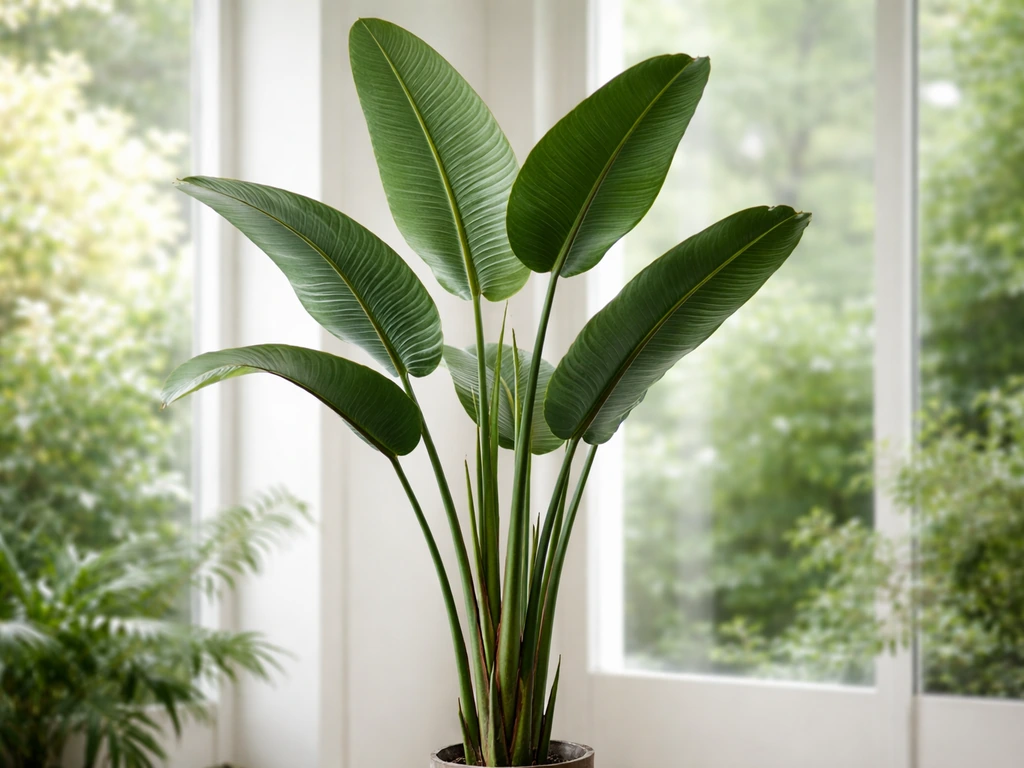
This is where people get especially confused, because Strelitzia nicolai, commonly called the white bird of paradise or giant bird of paradise, grows tall enough to look genuinely tree-like. According to Wikipedia, Strelitzia nicolai develops erect woody stems that can reach about 7 to 8 meters (23 to 26 feet) and spreads in clumps as wide as 3.5 meters (about 11 feet). Some nursery sources put the mature height even higher, around 30 feet with an equally wide spread at maturity. That kind of scale absolutely gets mistaken for a banana tree, especially when the plant is seen casually or in a neighbor's yard.
The key distinction even at that scale: Strelitzia nicolai develops actual woody stems (not a pseudostem), the leaves fan out in a flat, palm-like arrangement from the tops of those stems, and the overall look is cleaner and more architectural than a banana. If you want to dig into exactly how the large-growing varieties stack up against each other, the comparison of white bird of paradise vs bird of paradise is worth reading alongside this guide. The smaller Strelitzia reginae tops out at around 5 feet tall, making it easy to rule out as a banana look-alike once you know the typical heights involved.
Banana plant height varies quite a bit by species. Musa basjoo, the hardy banana, is frequently grown in temperate gardens and has a pseudostem that dies back to the ground in winter in USDA zones 5 through 8 but can re-sprout from rhizomes that are cold-hardy to about minus 10°F with good mulching. Ornamental varieties like Musa acuminata 'Dwarf Cavendish' reach about 3 meters (10 feet) with a spread of around 1.2 meters (4 feet), while many standard-size tropical bananas grow considerably taller, making them obvious stand-ins for a small tree in a warm-climate yard.
Comparing flowers: what you'll see and when
The flowers are where bird of paradise earns its name, and they look nothing like a banana inflorescence. Strelitzia reginae produces the iconic crane-like flower: a horizontal, boat-shaped green spathe (the bract) from which blue and orange petals emerge in a combination that really does suggest a tropical bird in mid-flight. UF/IFAS specifically describes the bloom as a combination of blue petals and other flower parts, not a single plain petal, which is why the flower has that layered, sculptural look. When you see one in bloom, there's no plant on Earth it resembles less than a banana flower.
A banana inflorescence, by contrast, is a large pendant structure that hangs downward from the top of the pseudostem. It's encased in large reddish-purple bracts that peel back to reveal double rows of flowers underneath. Male and female flowers appear in sequence on the same structure, with female flowers (the ones that develop into fruit) appearing first. Individual clusters of fruit are called "hands" and individual fruits are "fingers." The entire structure, before and during fruiting, looks more like an exotic vegetal pendant than anything bird-like.
If the plant in question hasn't flowered yet, you obviously can't use the bloom as an ID clue. That's exactly why the structural cues covered in the previous sections matter so much. Young birds of paradise and young banana plants at the same size range look their most similar before flowering age, so lean on the trunk structure, leaf posture, and base organization to tell them apart.
How to tell them apart in the garden: size, structure, and spacing cues
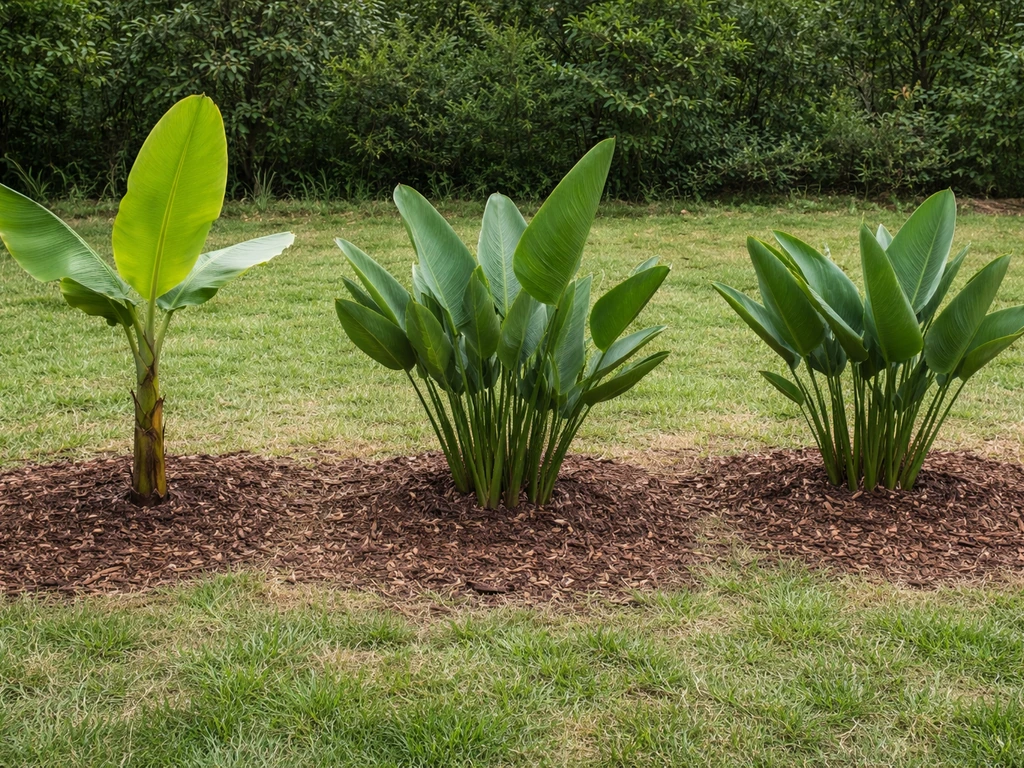
Spacing can actually give you a useful context clue about what someone planted intentionally. UF/IFAS recommends 24 to 36 inches of spacing for Strelitzia reginae in a landscape setting. Banana plants are typically spaced much further apart: nursery guidance for Musa basjoo suggests 4 to 6 feet between plants. If you're looking at a tightly planted border of similar-looking plants about 2 to 3 feet apart, that's a strong signal you're looking at bird of paradise, not banana. A banana planting at that density would be genuinely crowded.
Structure at ground level is another reliable tell. Reach down (carefully) and feel the base of the plant. A bird of paradise base will feel firm and fibrous, with individual leaf stalks you can distinguish and separate. A banana pseudostem will feel notably softer and more layered, almost like unwrapping tight rolls of paper. If the plant produces suckers or offshoots at the base, both plants do this, but a banana's suckers emerge close to the pseudostem and have the same soft, rolled-base texture from day one.
Looking at the leaf arrangement from above also helps. Bird of paradise leaves fan out in one plane, like a hand of cards fanned flat. Banana leaves come off the pseudostem in a spiral arrangement around the central column. When you look straight down at the plant from above, the spiral vs. flat-fan difference is quite clear. If you've been comparing bird of paradise with elephant ear plants for your garden, the same leaf-arrangement logic applies there too.
Side-by-side comparison
| Feature | Bird of Paradise (Strelitzia reginae) | Giant Bird of Paradise (Strelitzia nicolai) | Banana (Musa basjoo / typical) |
|---|
| Mature height | ~5 ft | 23–30 ft | Varies; 10–20+ ft depending on species |
| Trunk type | No true trunk; clumping stalks | Erect woody stems | Pseudostem (false trunk of rolled leaf bases) |
| Leaf arrangement | Flat fan from base | Flat fan from top of stems | Spiral around central pseudostem |
| Flower look | Blue and orange crane-like bloom | White and blue bird-like bloom | Pendant with reddish bracts; fruit follows |
| Flower direction | Upright, horizontal spathe | Upright, horizontal spathe | Downward-hanging inflorescence |
| Recommended spacing | 24–36 inches | 8–10 ft (typical) | 4–6 ft |
| Cold hardiness | USDA zones 10–11 | USDA zones 9–11 | Rhizome hardy to -10°F (zones 5–8 with mulch) |
| Trunk feel | Firm, fibrous stalks | Firm, woody | Soft, layered, spongy |
Similarities and common mix-ups
The most honest thing to say here is that the confusion is entirely understandable, not a sign someone isn't paying attention. Both plants have large, paddle-shaped leaves with a prominent midrib. Both create a bold, lush, tropical impression. Both are commonly planted in warm-climate gardens and are often seen side by side in landscapes. Neither plant looks remotely like a temperate shrub, so if you don't have a reference point for either, the similar leaf silhouette is a genuine source of confusion.
People also frequently assume that if a plant is very tall and has big leaves, it must be a banana tree. That's exactly the assumption that trips people up with Strelitzia nicolai, the giant bird of paradise. At 20 to 30 feet with large, arching leaves at the top of a tall stem, it hits many of the same visual notes as a tall banana in someone's peripheral vision. The misconception runs the other direction too: people sometimes call banana plants "bird of paradise" because both get labeled under the broad category of "tropical plants" in general conversation.
Another common mix-up is with similarly tropical-looking plants that share the same garden space. If you've ever tried to sort out the differences between bird of paradise and monstera, you'll recognize the same pattern: large, architectural leaves that read as "tropical" from a distance, but structurally quite distinct up close. The rule of thumb is always to get close, check the base, and look at how the leaves actually attach before deciding.
One thing people incorrectly assume is that the bird of paradise is just a smaller banana. It's not a smaller version of anything banana-related. The two plants are in completely different plant families. Strelitzia belongs to the family Strelitziaceae, while bananas belong to Musaceae. The resemblance is a matter of convergent adaptation to similar growing conditions, not botanical kinship.
Choosing the right one for your yard
Your climate is the first filter. Strelitzia reginae thrives in USDA zones 10 through 11, and while it can survive slightly cooler conditions with frost protection, it's fundamentally a warm-climate plant that won't tolerate hard freezes. UF/IFAS fact sheet FPS-563 lists USDA hardiness zones for Strelitzia reginae as 10 through 11 USDA zones 10 through 11. Musa basjoo, on the other hand, has a rhizome that's cold-hardy to about minus 10°F when properly pruned and heavily mulched, and it's grown successfully up to USDA zone 6a. If you're in a cold or temperate climate and want that tropical look, banana is the more realistic choice for outdoor planting.
Space is the second filter. Strelitzia reginae is genuinely compact at 5 feet tall and 2 to 3 feet wide, making it a reasonable choice for a smaller garden bed, a patio container, or a border accent. Strelitzia nicolai at 30 feet with a 30-foot spread is a serious commitment of space, more appropriate as a standalone specimen or a large privacy screen. Banana plants at standard size sit somewhere in between, but their spreading rhizomes and tendency to produce multiple suckers mean they can expand a planting area over time if not managed.
If your primary goal is a dramatic flower show, bird of paradise wins clearly. The blooms are long-lasting, visually striking, and appear reliably on mature plants. UF/IFAS notes that Strelitzia reginae is also fairly tolerant of soil conditions and needs little water once established, which makes it a low-maintenance choice in the right climate. Banana plants in temperate climates rarely flower or fruit, and in tropical climates the inflorescence is dramatic but doesn't have the same ornamental staying power as a bird of paradise bloom.
For pure tropical drama on a budget of space, Strelitzia reginae is the practical choice for warm climates. For cold hardiness and maximum scale, Musa basjoo delivers. If you want the giant bird-of-paradise look without going the banana route, Strelitzia nicolai gives you genuine tree-scale architecture with the added benefit of those stunning white and blue flowers. Just plan the space accordingly.
If you're still narrowing down exactly which bird of paradise species fits your yard, it's worth exploring how the different Strelitzia varieties compare to each other. For example, the Mexican bird of paradise vs pride of barbados comparison covers a related group of plants that often appear in the same warm-climate garden contexts, and the red bird of paradise vs Mexican bird of paradise breakdown can help you sort through the flowering shrub options that also carry the "bird of paradise" common name. Knowing exactly which plant you have (or want) before you buy saves a lot of replanting.
Quick decision guide: if you see X, it's likely Y
- Soft, spongy column of a trunk with leaves emerging from the very top in a spiral: banana (Musa species)
- Stiff, upright leaf stalks fanning from the ground with no real trunk, plant under 6 feet: Strelitzia reginae (common bird of paradise)
- Tall woody stems 20 to 30 feet with large paddle leaves fanning at the top and white/blue flowers: Strelitzia nicolai (giant or white bird of paradise)
- Large pendant inflorescence hanging downward from the top, encased in reddish-purple bracts: banana
- Upright horizontal spathe with orange and blue layered petals: Strelitzia reginae in bloom
- Plant dies back to the ground in winter but returns from the base each spring: almost certainly a banana (Musa basjoo) in a cold climate
- Spacing of about 2 feet between plants in a neat border: likely Strelitzia reginae