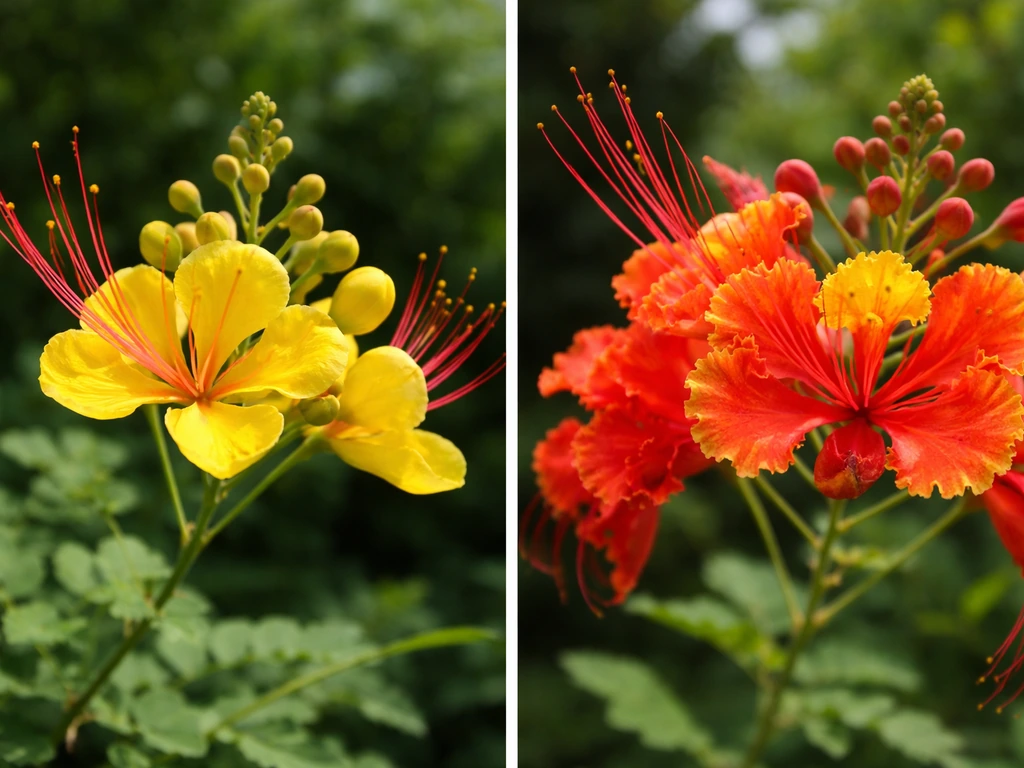
If you're staring at a plant labeled 'bird of paradise' and wondering whether it's the same thing as the 'white bird of paradise,' here's the short version: they're related but different species. The classic bird of paradise is Strelitzia reginae, a compact plant with iconic orange-and-blue flowers. The white bird of paradise is most commonly Strelitzia nicolai, a much larger, tree-like plant with white sepals and a bluish-purple tongue rather than orange petals. UF/IFAS tree fact-sheet material for Strelitzia nicolai emphasizes these white-flowered identification traits, including the bluish-purple tongue/flower coloring blank" rel="noopener noreferrer">white sepals and a bluish-purple tongue. And if someone calls a plant a 'false bird of paradise,' they're almost certainly talking about blank" rel="noopener noreferrer">Heliconia (usually Heliconia psittacorum), which just looks similar but belongs to a completely different plant family. Once you know what to look for, telling them apart takes about 30 seconds.
White Bird of Paradise vs Bird of Paradise: Key IDs


Quick ID guide: key features to tell them apart
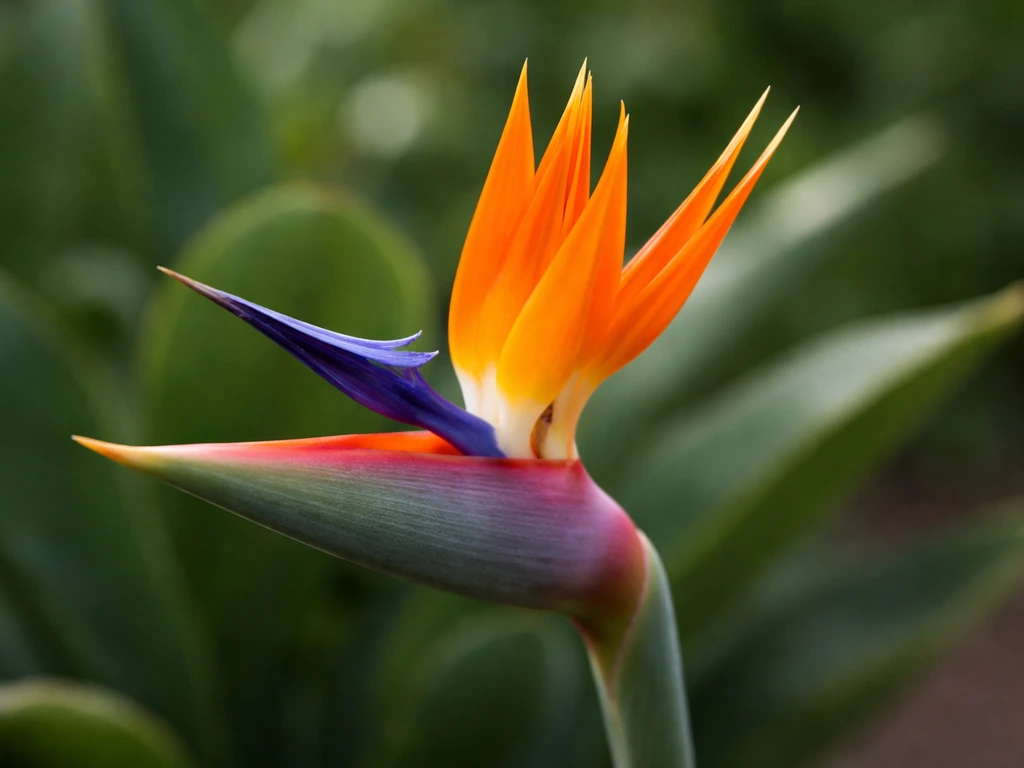
Start with the flower color. If you see vivid orange sepals with purplish-blue petals folded into a crest that genuinely looks like a bird's head and beak, you're looking at Strelitzia reginae, the true bird of paradise. The two blue petals are actually fused and folded over the reproductive structures, which is a unique structural detail you won't find in lookalikes. If the flowers are white with a hint of bluish-purple on the tongue and the whole plant towers 7 to 8 meters with a trunk and large paddle-like leaves fanning out at the top, that's Strelitzia nicolai, the white (or giant) bird of paradise. If the inflorescence is made of brightly colored bracts stacked vertically with small tubular flowers peeking out, and the plant grows low and bushy, you've got a Heliconia, the false bird of paradise.
- Orange + blue flower crest, compact shrub (under 2 m): Strelitzia reginae (true bird of paradise)
- White sepals + bluish-purple tongue, tree-like habit up to 7–8 m: Strelitzia nicolai (white / giant bird of paradise)
- Fully white flowers, simpler single inflorescence (not stacked): Strelitzia alba (also called 'white bird of paradise,' coastal South Africa)
- Colorful bracts stacked vertically, small tubular flowers, tropical rainforest plant: Heliconia psittacorum (false bird of paradise)
- Enormous fan of leaves at the top of a tall trunk, white flowers, palm-like silhouette: Ravenala madagascariensis (traveller's palm, another frequent lookalike)
True bird of paradise vs false bird of paradise (what 'false' actually means)
The label 'false bird of paradise' gets applied informally to any plant that catches people off guard because its flowers look similar to Strelitzia at a glance. In practice, it almost always refers to Heliconia, especially Heliconia psittacorum, which botanic gardens explicitly call 'false bird-of-paradise' as an official common name. Heliconias are native to the Amazon rainforest and other moist tropical regions, and their flowers are technically modified leaves (bracts) rather than the true spathe-and-crest structure you see in Strelitzia. The resemblance is real, but the architecture is fundamentally different: Heliconia inflorescences stand erect with colorful bracts stacked up the stem, while Strelitzia's flowers emerge from a horizontal, boat-shaped bract (called a spathe) and form that distinctive bird-head profile. If you are comparing a Mexican bird of paradise plant to related lookalikes, double-check the flower structure and the Latin name to stay accurate. If you suspect a red bird of paradise or a Mexican bird of paradise, compare the flower traits side by side to get the correct species red bird of paradise vs mexican bird of paradise.
Ravenala madagascariensis, the traveller's palm, also gets lumped into 'false bird of paradise' territory because its large white flowers have structural similarities to Strelitzia, and in landscaping contexts it's sometimes mislabeled. But Ravenala is in its own genus entirely and is iconic for its enormous fan-shaped leaf arrangement at the top of a tall trunk. It's endemic to Madagascar, where it's pollinated by lemurs rather than the sunbirds that visit Strelitzia nicolai. If the silhouette looks more like a giant fan on a pole than a clumping shrub or tree, Ravenala is your answer.
White bird of paradise vs other bird-of-paradise types (the full picture)
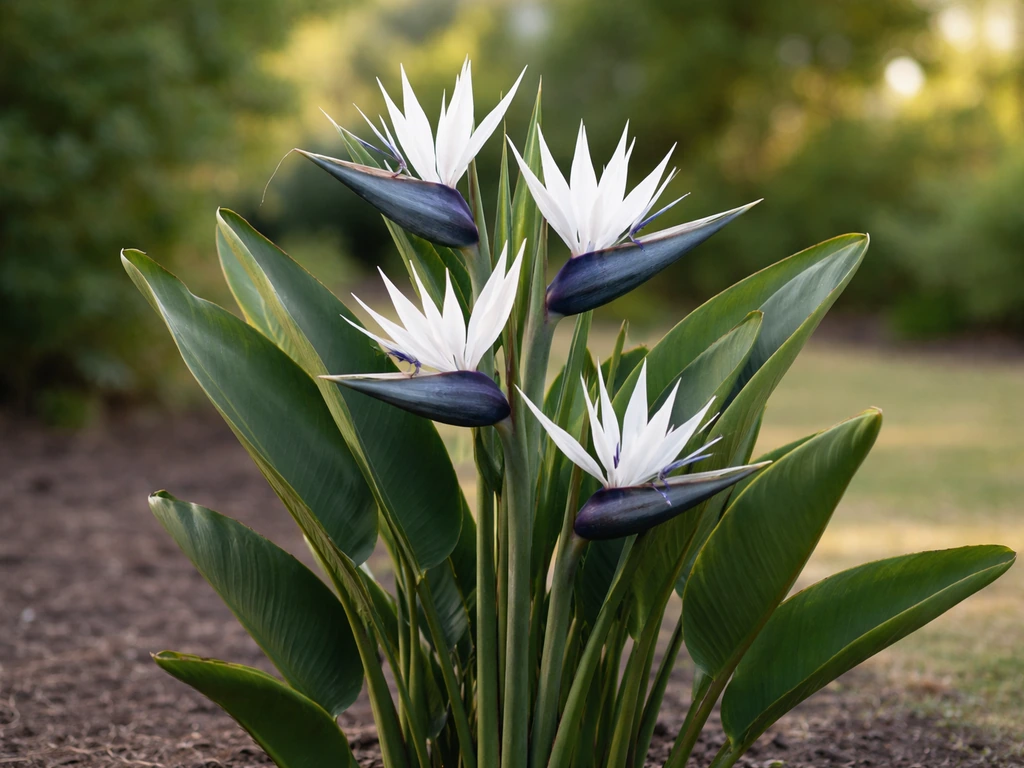
The name 'white bird of paradise' actually applies to two different Strelitzia species, and this is where a lot of confusion stacks up. In nurseries and landscaping across the U.S., 'white bird of paradise' almost always means Strelitzia nicolai, the giant species that reaches tree-like proportions. But botanically, Strelitzia alba is the one with truly, fully white flowers, and it's a different species endemic to the Garden Route coastal regions of South Africa. The distinction matters if you're trying to make a precise ID: S. nicolai flowers show some blue coloration (the bluish-purple tongue), while S. alba flowers are fully white with no blue tones. S. alba also produces a simpler, single inflorescence rather than the stacked multiple partial inflorescences you see on S. nicolai.
Strelitzia reginae has a white-flowered variety as well, which adds another layer of confusion for people comparing photos. The standard reginae has orange sepals and blue petals, but that orange can occasionally appear muted or cream-colored in certain lighting or cultivars. The bottom line: if flowers are clearly orange and blue, think reginae. If they're white (with or without blue tones) and the plant is large or tree-like, think nicolai. If the flowers are fully white with no blue at all and the inflorescence is simple rather than stacked, consider S. alba.
Side-by-side comparison
| Feature | Strelitzia reginae (Bird of Paradise) | Strelitzia nicolai (White Bird of Paradise) | Strelitzia alba (White Bird of Paradise) | Heliconia psittacorum (False Bird of Paradise) | Ravenala madagascariensis (Traveller's Palm) |
|---|---|---|---|---|---|
| Flower color | Orange sepals, blue-purple petals | White sepals, bluish-purple tongue | Fully white, no blue tones | Colorful bracts (orange, red, yellow), small tubular flowers | Large white flowers |
| Plant size | 1–2 m tall | 7–8 m tall, clumps to 3.5 m wide | Similar large tree form to nicolai | 1–2 m, clumping perennial | Up to 10+ m tall |
| Plant habit | Compact clumping shrub | Tree-like with woody stems | Tree-like | Low bushy tropical perennial | Single trunk with fan of leaves at top |
| Inflorescence structure | Horizontal boat-shaped spathe, bird-head crest | Dark blue bract, stacked partial inflorescences | Simple single inflorescence, no stacking | Erect stacked colorful bracts, tubular flowers | Upright, large white flowers in leaf bases |
| Natural range | South Africa (Eastern Cape) | South Africa, Mozambique | Garden Route, South Africa (coastal) | Amazon rainforest, tropical Americas | Madagascar |
| Typical habitat | Coastal scrub, rocky slopes | Coastal forest, forest margins | Coastal forest, South Africa | Moist tropical forest, wet regions | Madagascar forests and disturbed areas |
| USDA hardiness zones | 10–11 | 9B–11 | 10–11 (approx.) | 10–12 | 10–12 |
| Pollinated by | Sunbirds, nectar birds | Sunbirds (year-round) | Sunbirds | Hummingbirds (in Americas) | Lemurs (Madagascar) |
| Key ID shortcut | Orange + blue bird-head flower, compact size | White + purple, tall tree form | Fully white flower, simple inflorescence | Stacked bracts, no bird-head look | Fan-palm silhouette, totally different shape |
Where you'll see them: geography and typical habitats
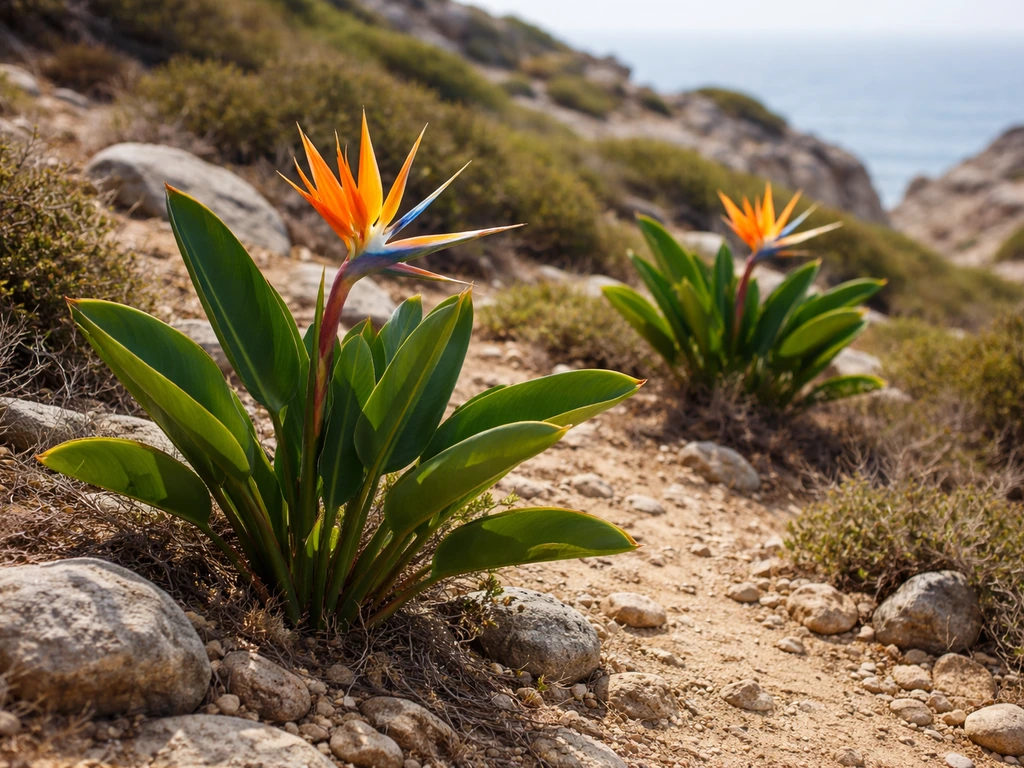
In the wild, all true Strelitzia species originate from South Africa. Strelitzia reginae grows naturally in the Eastern Cape on rocky coastal slopes and scrubby terrain. S. nicolai is found along coastal forests and forest margins in South Africa and into Mozambique. S. alba is the most restricted of the three, limited to the Garden Route coast of South Africa. Outside their native range, all three have been widely planted in warm-climate gardens worldwide, particularly in California, Florida, Hawaii, and the Mediterranean. In the U.S., both reginae and nicolai are commonly grown in USDA zones 10 to 11, though nicolai can tolerate down to zone 9B.
Heliconia psittacorum, the false bird of paradise, is native to the Amazon basin and the broader tropical Americas. It thrives in moist, humid tropical environments and is also widely cultivated in tropical gardens globally. You'll rarely see it in the same landscaping context as Strelitzia in drier subtropical climates, since it needs consistently wet conditions. Ravenala is strictly from Madagascar in the wild and is cultivated in tropical gardens worldwide as a dramatic ornamental. If you're in Florida or Southern California and see a tall fan-shaped plant that looks palm-like with bird-of-paradise-style flowers, Ravenala is a real possibility worth checking.
Common confusion and mistakes (and how to avoid them)
The biggest mistake people make is using the name 'bird of paradise' as if it covers one plant. If you're still unsure, comparing bird of paradise vs elephant ear side by side can help you rule out unrelated lookalikes. Nursery labels, common garden names, and even some extension publications use 'bird of paradise,' 'white bird of paradise,' and 'giant bird of paradise' in overlapping ways. Specifically, the name 'white bird of paradise' gets applied to both S. nicolai (the tree-form with white-and-blue flowers) and S. alba (the smaller range species with fully white flowers). If you buy a plant simply labeled 'white bird of paradise' at a U.S. nursery, it's almost certainly nicolai, not alba, because alba is far less commonly cultivated outside its native South Africa.
Another frequent mix-up: people see a tall, tropical-looking plant with bright bracts and assume it's a bird of paradise when it's actually a Heliconia. The giveaway is the inflorescence structure. Heliconia bracts stack up vertically and the actual flowers are small tubes peeking out from between the bracts. There's no bird-head crest, no horizontal spathe, and no folded blue petal covering reproductive structures. Similarly, people sometimes confuse Strelitzia with banana plants (Musa species) or even monstera when they're looking at foliage alone rather than flowers, since the large paddle leaves of S. Comparisons between bird of paradise and banana trees are common, so it helps to know what to look for once you see the flowers. nicolai can look superficially similar. Flower structure always settles the debate. It's worth noting that comparisons between bird of paradise and banana trees, or bird of paradise and monstera, are common enough to deserve their own attention when you're working from foliage-only photos.
One more mistake worth flagging: assuming that any pale or cream-colored Strelitzia flower means you have S. alba. S. nicolai's white sepals can look very white in photos, especially if the blue tongue isn't prominent. Check for any blue or purple coloration anywhere in the flower. If there's none at all, and the inflorescence is a single simple unit rather than stacked, then S. alba becomes a real candidate. If there's any blue, you're looking at nicolai.
Next steps: how to confirm your ID with photos, field marks, and trusted sources
The most reliable confirmation workflow starts with a clear photo of the flower, not just the leaves. Foliage alone is genuinely ambiguous across Strelitzia species and lookalikes. Get a close-up of the inflorescence that shows the bract color, sepal color, and any petal or tongue color. For S. reginae, you're looking for the orange-and-blue bird-head crest emerging from a horizontal green-and-purplish spathe. For S. nicolai, target the dark blue bract, the white sepals fanning out, and the blue-purple tongue. For S. alba, the entire flower should be white with no blue tones.
- Photograph the flower close up: show bract color, sepal color, petal or tongue color, and inflorescence shape (horizontal vs erect vs stacked).
- Note the plant's overall size and habit: compact shrub under 2 m points to S. reginae; tree-like form 7–8 m with woody stems points to S. nicolai; erect bushy tropical clump points to Heliconia; fan on a single tall trunk points to Ravenala.
- Check the flower architecture: does it have the bird-head crest with fused blue petals folded over the center? That's the definitive Strelitzia true-bird-of-paradise marker.
- Use the Latin name, not just the common name, when searching for verification. Search 'Strelitzia nicolai' or 'Strelitzia reginae' rather than 'white bird of paradise' alone to avoid getting mixed results.
- Cross-reference your location: if you're in a U.S. garden, alba is unlikely; if you're in a moist tropical garden and the plant is low and bushy with colorful bracts, Heliconia is the top candidate.
- For definitive confirmation, run your photo through iNaturalist or compare it against verified images on university extension sites like UF/IFAS or NC State Extension, which explicitly tie common names to Latin species.
The Latin name is your anchor. Official sources from the U.S. Fish & Wildlife Service, UF/IFAS, and NC State Extension all tie 'bird of paradise' as a common name specifically to Strelitzia reginae and 'white bird of paradise' to S. nicolai, not to any other genus. Once you match your photo's field marks to the right Latin name, the ID becomes solid and you can trust it regardless of what the nursery tag says.
FAQ
Can “white bird of paradise” mean Strelitzia alba or Strelitzia nicolai in the real world?
In U.S. nurseries, it almost always refers to Strelitzia nicolai. Strelitzia alba is the true fully white South Africa species, but it is far less commonly sold outside its native region, so you should treat an unlabeled or generic “white bird of paradise” tag as nicolai unless the Latin name says alba.
How can I tell S. nicolai from S. alba if the flowers look mostly white in a photo?
Do a “blue check” on the flower itself (not the leaves). S. nicolai typically shows bluish-purple coloration on the tongue area, even if photos overexpose the sepals. If there is absolutely no blue or purple tone anywhere on the flower and the inflorescence is a single simpler unit, S. alba becomes the better candidate.
What if the plant is huge and tree-like but the flowers are not appearing yet?
Without flowers, you lose the most reliable IDs because leaf shape can be misleading. In that case, use growth form plus future verification: look for a tree-form Strelitzia silhouette (single trunk or trunk-like base with a crown) and plan to re-check once an inflorescence opens, since flower structure is what separates Strelitzia from lookalikes like Heliconia and Ravenala.
How do I distinguish Heliconia (“false bird of paradise”) from Strelitzia if I only see the bracts?
Heliconia bracts stack vertically up the stem, and the smaller tubular flowers peek between them. Strelitzia flowers come from a more horizontal, spathe-associated structure that produces the bird-head profile, with fused blue petals forming the crest and a tongue area.
Is Ravenala (traveller’s palm) ever confused with white bird of paradise?
Yes, especially when photos show white blossoms. The quick practical separator is the overall silhouette, Ravenala looks like a tall trunk with a dramatic fan of leaves at the top. Strelitzia usually presents as a shrub-like clump or tree-like crown without that classic single giant fan-on-a-pole look.
What should I check if the nursery label uses “bird of paradise” but not “white” or “giant”?
Treat it as ambiguous until you confirm the Latin name. “Bird of paradise” is commonly used for Strelitzia reginae, but labels vary by retailer. If the tag does not specify the species, rely on a flower photo later, or confirm by obtaining a close-up of the inflorescence when it blooms.
Can Strelitzia reginae have a white-flowered variety, and how does that affect ID?
It can. A white or cream-leaning reginae can make orange-and-blue identification harder, especially under certain lighting or cultivar conditions. That’s why you should not rely only on “not orange.” Confirm by comparing the overall flower architecture to the species pattern, and look for the distinct bird-head crest structure typical of reginae when flowers are open.
What is the most reliable photo to bring to a plant identification check?
A close-up of the open inflorescence is the key. Make sure the photo shows (1) bract and sepal colors, (2) whether any tongue or petal area is blue or purple, and (3) whether the flower is a single unit or part of a stacked, multi-part arrangement.
Are there environmental clues that can help me rule out Heliconia?
Yes. Heliconia prefers consistently moist, humid conditions. If you are in a climate where plants would dry out strongly between watering, and the specimen is thriving without high humidity, Heliconia becomes less likely than a Strelitzia species, though you still need flower confirmation to be sure.
Does USDA zone or temperature tolerance affect which “bird of paradise” I should expect?
It can help you narrow possibilities. In the U.S., Strelitzia reginae and S. nicolai are commonly grown around USDA zone 10 to 11, with nicolai sometimes tolerating down toward 9B. If your conditions are much colder or much drier than that range, the plant you see may be something else or a special cultivar grown in protected conditions.
Mexican Bird of Paradise vs Pride of Barbados: How to Tell Them Apart
Quick ID guide comparing Mexican bird of paradise and Pride of Barbados by look, range, and behavior.