
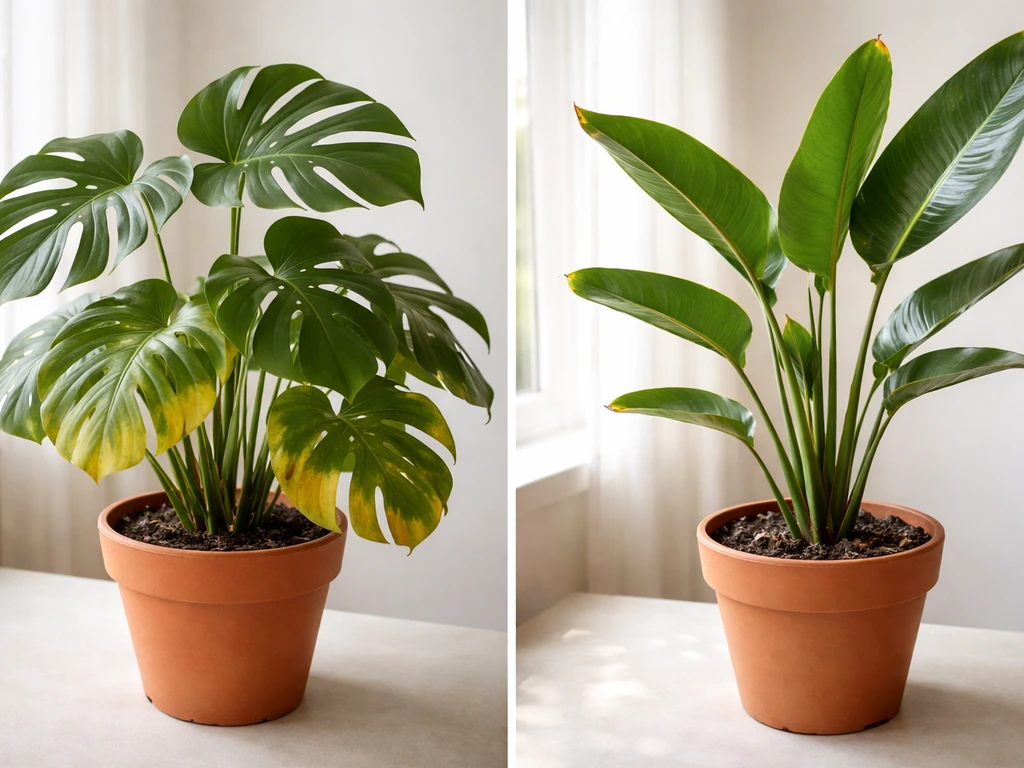
Despite the name, Bird of Paradise is a plant, not a bird, and so is Monstera. Both are popular tropical houseplants that get mixed up constantly, but once you know what to look for, they are easy to tell apart. Monstera deliciosa has large, heart-shaped leaves with distinctive holes and splits (called fenestrations), and it grows as a spreading vine or climber. Bird of Paradise (Strelitzia) grows upright in a fan-shaped clump with smooth, paddle-like leaves and no holes. If your plant has holes in the leaves, it is almost certainly Monstera. If it looks more like a tropical palm or banana tree standing tall, you are looking at a Bird of Paradise.
Bird of Paradise vs Monstera: Identify and Choose the Right Plant

Marcus Hendricks
13 May 2026
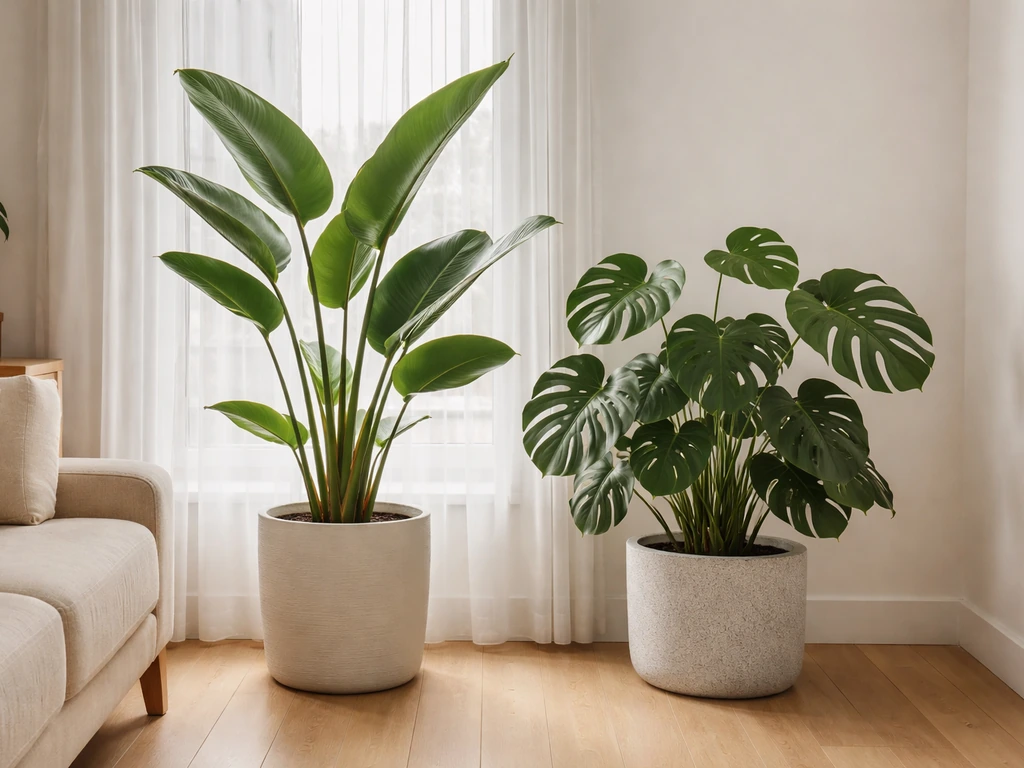
Quick ID: Tell Them Apart at a Glance
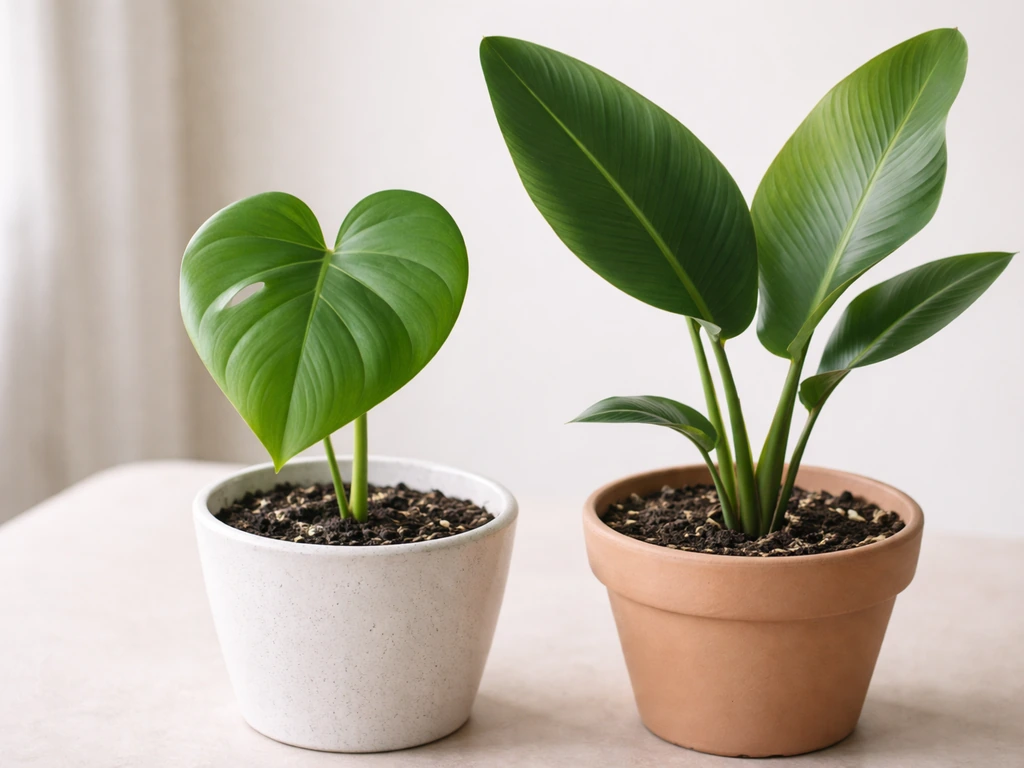
The fastest way to figure out which plant you have is to look at two things: the leaves and the overall shape of the plant. Monstera leaves are unmistakable once they mature because they develop fenestrations, those natural holes and deep splits that give the plant its nickname "Swiss cheese plant. " Young Monstera plants start with solid, heart-shaped leaves, but those holes appear as the plant matures.
Bird of Paradise leaves, on the other hand, are always solid with no holes or splits. They are long, oval paddles on stiff upright stalks, arranged in a fan shape like a deck of cards. The whole plant stands up tall and rigid, while Monstera sprawls, climbs, and leans wherever it can find support.
| Trait | Monstera deliciosa | Bird of Paradise (Strelitzia) |
|---|---|---|
| Leaf shape | Heart-shaped, deeply lobed | Long oval paddle, smooth edges |
| Fenestrations (holes/splits) | Yes, on mature leaves | Never |
| Growth habit | Vining, climbing, spreading | Upright clump or tree-like |
| Stem type | Flexible, produces aerial roots | Stiff stalks or woody trunk |
| Flowers indoors | Rarely | Sometimes, after 3-5+ years |
| Typical indoor height | Up to 8-10 ft with support | 6-8 ft (Strelitzia reginae), 20+ ft (S. nicolai) |
Leaf Structure and Growth Habit
Monstera deliciosa leaves start as whole, unbroken hearts when the plant is young, but as it matures and gets more light, those leaves begin to split along the edges and develop internal holes. A healthy, mature Monstera leaf can reach 18 to 24 inches across, and the fenestrations can be dramatic. The plant grows on flexible stems that produce aerial roots, which in the wild let it climb trees. Indoors, it will happily climb a moss pole or spread across a shelf. The overall vibe is lush, jungle-y, and horizontal as much as vertical.
Bird of Paradise has a completely different architecture. Strelitzia reginae, the common orange-flowered species, is a clumping plant that grows from a rhizome and sends up individual stalks, each topped with that smooth, upright paddle leaf.
The whole plant fans out like a hand of playing cards. Strelitzia nicolai, the giant white Bird of Paradise, takes this further and develops actual woody stems, eventually looking more like a small banana tree than a houseplant. Both species hold themselves erect and rigid, with no tendency to vine or sprawl. If you have seen a banana tree or elephant ear plant, you will recognize the family resemblance in Bird of Paradise leaves.
There is also a strong visual similarity to the banana tree, which is worth keeping in mind when you are trying to ID an unfamiliar plant.
Flowers: What to Expect and When
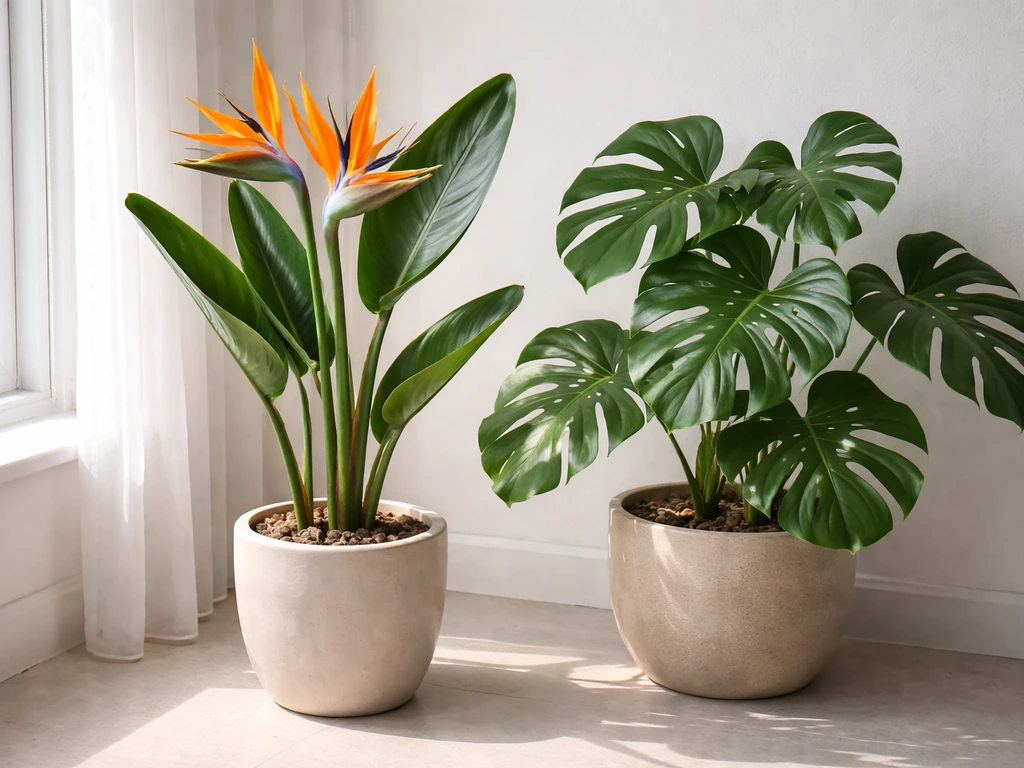
This is where the two plants could not be more different. Bird of Paradise earns its dramatic name because of its flowers: the orange and blue blooms of Strelitzia reginae look almost exactly like an exotic tropical bird in flight, with a bright orange crown and deep blue beak-like petals. Getting there takes patience though. Grown indoors from a young plant, you are typically waiting three to five years before the first flower appears, and that is only if the plant gets enough bright direct light. Strelitzia nicolai produces larger white and dark blue flowers but is even slower to bloom indoors and is mostly grown for its foliage.
Monstera, by contrast, does not flower indoors under normal home conditions. Full stop. In the wild, Monstera produces a cream-colored spathe and can even produce edible fruit (the name "deliciosa" refers to this fruit), but you are extremely unlikely to see that in a living room. If you are choosing between these plants specifically because you want flowers, Bird of Paradise is your only realistic option, and you need to plan for the right conditions from day one.
Light, Water, and Soil: The Care Matchup
Light Requirements
Light is the biggest practical difference in caring for these two plants. Monstera is genuinely adaptable. It prefers bright, indirect light but tolerates medium light better than almost any other large tropical plant. A spot a few feet back from a bright window works well. Too much direct sun will scorch the leaves; too little light will stop new fenestrations from forming and slow growth significantly.
Bird of Paradise wants as much direct sun as you can give it. If you are comparing the red bird of paradise versus the Mexican bird of paradise, pay close attention to the specific Strelitzia species you have, since flower traits and mature size can differ. Strelitzia reginae especially needs at least four to six hours of bright direct light per day to grow well and flower. A south- or west-facing window is ideal. In lower light, it just sits there, barely growing, and will never bloom. If your home does not get strong direct sun, this is a serious limitation to consider before buying a Bird of Paradise.
Watering and Humidity
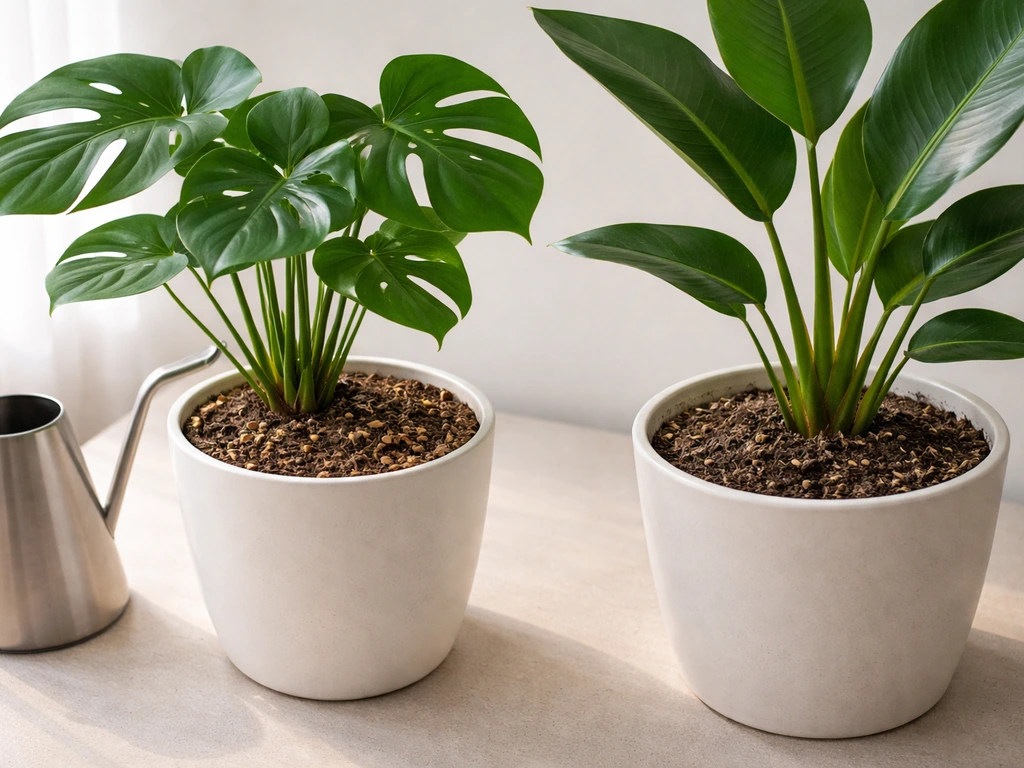
Monstera likes consistent moisture but is very sensitive to overwatering. Root rot is one of the most common problems, so let the top inch or two of soil dry out between waterings and make sure the pot drains freely. BBC Gardeners World Magazine also flags root rot as a key risk for Monstera root rot as a key risk factor. It appreciates humidity above 50 percent but handles average household humidity reasonably well. Occasional misting or a nearby humidifier helps, especially in winter.
Bird of Paradise is more drought-tolerant once established. Water it deeply and then let the soil dry out more thoroughly before watering again. It is far less forgiving of waterlogged roots than Monstera. Humidity matters less for Bird of Paradise than it does for Monstera, making it a better fit for drier climates or heated homes in winter.
Soil Preferences
Both plants want well-draining soil, but for different reasons. Monstera does well in a peat- or coir-based mix with added perlite for drainage, keeping roots moist but never soggy. Bird of Paradise prefers a loamy, well-draining mix that dries out between waterings. A standard potting mix with extra perlite or grit works for both, though Bird of Paradise handles slightly sandier soil better. Neither plant does well in dense, compacted soil.
Size, Growth Rate, and Space Planning
If space is a real constraint, Monstera is the more manageable choice. In a typical home, a Monstera will reach six to eight feet tall if given a pole or wall to climb, and you can control its spread by not providing support or by pruning. It grows at a moderate to fast pace with good light, easily putting out a new leaf every few weeks during the growing season.
Bird of Paradise can get surprisingly large. Strelitzia reginae typically reaches four to six feet indoors, which is workable, but Strelitzia nicolai is a whole different situation. It can hit six to eight feet indoors but has the potential to go much further, and its leaves are enormous, easily three feet long each. The S. nicolai variety especially needs a big open space with high ceilings. Growth rate for Bird of Paradise is slower than Monstera overall, particularly in lower light conditions. It also dislikes being repotted frequently, and it can actually bloom better when slightly root-bound, so you will not be moving it around every year.
| Factor | Monstera deliciosa | Bird of Paradise (Strelitzia reginae) | Bird of Paradise (Strelitzia nicolai) |
|---|---|---|---|
| Typical indoor height | 6-10 ft with support | 4-6 ft | 6-8+ ft |
| Leaf size | Up to 24 in wide | 12-18 in long | 2-3 ft long |
| Growth rate | Moderate to fast | Slow to moderate | Slow to moderate |
| Light needed | Bright indirect | Bright direct (4-6 hrs) | Bright direct (4-6 hrs) |
| Flowers indoors | Rarely/never | Yes, after 3-5 yrs | Rarely indoors |
| Space needed | Medium, manageable | Medium | Large, high ceilings |
Common Problems and How to Fix Them
Monstera Troubleshooting
- Yellow leaves: Almost always overwatering or poor drainage. Check that the pot has drainage holes and that you are letting the top layer of soil dry before watering again.
- No fenestrations on new leaves: Usually a light problem. Move the plant closer to a brighter window. Younger plants also just need time to mature before splits appear.
- Brown leaf tips: Low humidity or inconsistent watering. Increase humidity with a pebble tray or humidifier, and try to maintain a more consistent watering schedule.
- Leggy, sparse growth: Not enough light. Monstera needs at least moderate bright indirect light to produce dense, healthy foliage.
- Pests: Spider mites and mealybugs are the most common. Wipe leaves down regularly and treat with neem oil or insecticidal soap at the first sign of infestation.
Bird of Paradise Troubleshooting
- Split or torn leaves: This is actually normal for Bird of Paradise, especially near windows where air movement occurs. It is not a sign of damage or disease.
- Brown leaf edges: Usually underwatering, low humidity, or fluoride buildup in tap water. Try filtered or rainwater and increase watering frequency slightly.
- No growth or very slow growth: Almost always a light problem. Bird of Paradise needs direct sun to thrive. If it is just sitting there, it needs a brighter spot.
- No flowers after several years: Insufficient light, plant is too young, or it needs to be slightly root-bound. Avoid repotting unless absolutely necessary, and maximize sun exposure.
- Root rot: Less common than in Monstera but it happens. Make sure the soil drains well and you are not watering before the soil has dried adequately.
- Pests: Scale and spider mites are the main culprits. Clean leaves regularly and inspect the base of stems where pests tend to hide.
Which One Should You Actually Buy?
The right choice comes down to your light situation, your space, and honestly, how much effort you want to put in. Here is how to think through it.
Choose Monstera if: you have bright indirect light (or even medium light), you want fast, satisfying growth, you have a moderate amount of wall or shelf space, and you are not specifically chasing flowers. Monstera is also more forgiving for beginners. It adapts, it communicates clearly when something is wrong, and it puts out new leaves regularly enough that you always feel like you are making progress.
Choose Bird of Paradise if: you have a very sunny spot, ideally a south- or west-facing window with direct sun most of the day, you have a large space with high ceilings (especially if you are considering S. nicolai), and you are willing to wait years for flowers in exchange for a truly dramatic, sculptural plant. Mexican bird of paradise vs pride of barbados is another popular comparison when you are deciding between similar tropical stunners, so it helps to check leaf and growth differences before you buy. If you want to grow it outdoors in a warm climate, Bird of Paradise is an excellent choice and will reward you with those iconic blooms much more reliably than it would indoors.
If you are still on the fence, consider your honest answer to one question: how much direct sun does your space get? If the answer is less than four hours of actual direct sun per day, go with Monstera. If you have a genuinely sun-drenched room or a warm outdoor patio, Bird of Paradise will be worth the wait. Both plants are rewarding in their own right, and if you find yourself drawn to the Bird of Paradise family specifically, it is also worth exploring the differences between orange and white varieties, or how the common orange Bird of Paradise compares to regional relatives like the Mexican Bird of Paradise.
FAQ
My plant is young and the leaves do not have holes yet. How can I tell whether it is Monstera or Bird of Paradise?
Look for two clues together: leaf shape and plant “posture.” If the plant sends up upright, paddle-like leaves from a fan-shaped clump, it is almost certainly Bird of Paradise. If it spreads or climbs with heart-shaped leaves that develop holes or deep splits over time, it is Monstera. If the leaves look solid today, wait, because young Monstera can be solid before fenestrations appear.
Can Monstera develop holes quickly, or are holes sometimes caused by damage?
Yes, if it is actually Monstera, the fenestrations will usually increase with age and better light. If you see holes on a plant with upright, rigid paddles (not climbing heart-shaped leaves), the odds are higher it is not Monstera. Also note that true Monstera “Swiss cheese” splits typically come along the leaf margins and expand, rather than looking like random damage from pests or mishandling.
How do I know whether I am watering correctly for each plant?
Treat both plants similarly at first, but don’t “overcorrect” with watering changes. For Monstera, the mistake is letting it dry too long or waterlogged too long, either can slow new growth. For Bird of Paradise, the common error is staying too wet (root rot risk). A safe decision aid is to water Monstera when the top inch or two is dry, and water Bird of Paradise only when the soil dries more thoroughly than that.
Is there any chance my Monstera will bloom indoors if I give it the right care?
If you want flowers, Bird of Paradise is your realistic choice, but flowering success depends on light consistency, not just total brightness. Aim for sustained direct sun daily (especially for Strelitzia reginae). Monstera is essentially a no-flower indoor bet under normal home conditions, so buying it specifically for bloom usually leads to disappointment.
What happens if I buy a Bird of Paradise for a bright room, but not a lot of direct sun?
If your space only has low to medium light, Bird of Paradise will often stall, keeping leaves and overall size much smaller than expected. Monstera tolerates medium light better and still tends to push new growth, though fenestrations may develop more slowly. Before buying, measure your room by hours of direct sun, not by how “bright” the room feels.
How can I choose between Strelitzia reginae and Strelitzia nicolai for my home?
The most helpful “species check” is the mature size. Strelitzia reginae usually stays more manageable indoors, while Strelitzia nicolai can become a large, woody-stem plant with very big leaves and needs open space. If you don’t have high ceilings or room to accommodate leaf size, choose carefully before committing to S. nicolai.
Can I use the same potting mix and watering routine for Monstera and Bird of Paradise?
Yes. Both grow best in airy, well-draining mixes, but the drying schedule differs. Monstera prefers soil that stays more evenly moist between waterings, while Bird of Paradise benefits from drying farther down. If you use the same potting mix for both, adjust only the watering depth and frequency, and prioritize drainage (holes in the pot, fast draining mix).
Which plant handles winter heating and dry air better?
Bird of Paradise generally tolerates lower humidity better once established, so it is often the better choice for heated, drier homes. Monstera tends to respond more noticeably to humidity changes, especially when you are trying to support vigorous growth and new splits. If you run heat in winter, consider skipping extra humidity for Bird of Paradise, but be more proactive with Monstera.
How often should I repot each plant, and does repotting affect growth or flowering?
Bird of Paradise is usually the more “hands off” choice. It typically dislikes frequent repotting, and it may actually be happier when slightly root-bound. Monstera can handle repotting more regularly, especially if you are refreshing a compacted mix, but it still benefits from not being moved too often. A practical rule is to repot only when roots fill the pot or the mix breaks down, not on a calendar.
Are Monstera or Bird of Paradise safer for pets than the other?
If pets are a factor, treat both as potentially risky and check specific species before bringing them home. In general houseplant culture, Monstera is known for irritating compounds if chewed, and Strelitzia can also be problematic for pets. If you have curious pets, keep the plants out of reach regardless of which one you choose and contact a vet for guidance if ingestion occurs.
Next Article
White Bird of Paradise vs Bird of Paradise: Key IDs
Side-by-side ID guide to tell true bird of paradise from false types, then white bird of paradise vs others.
