Gastornis and terror birds (phorusrhacids) are not the same creature, not closely related, and not even from the same time period or continent. Gastornis was a massive, deep-beaked bird from the Eocene of Europe and North America, most likely an herbivore that crushed seeds and tough plant material. Terror birds were a separate South American lineage (family Phorusrhacidae) that dominated their ecosystems across the Miocene and into the Pleistocene, and most evidence points to them being active, fast-running predators. The confusion is understandable: both were enormous, flightless, and look intimidating in museum reconstructions. But once you know what to look for, telling them apart is actually pretty straightforward.
Gastornis vs Terror Bird: Key Differences, Diet, and Checklist

Marcus Hendricks
18 May 2026
Quick identity check: Gastornis vs terror bird overview
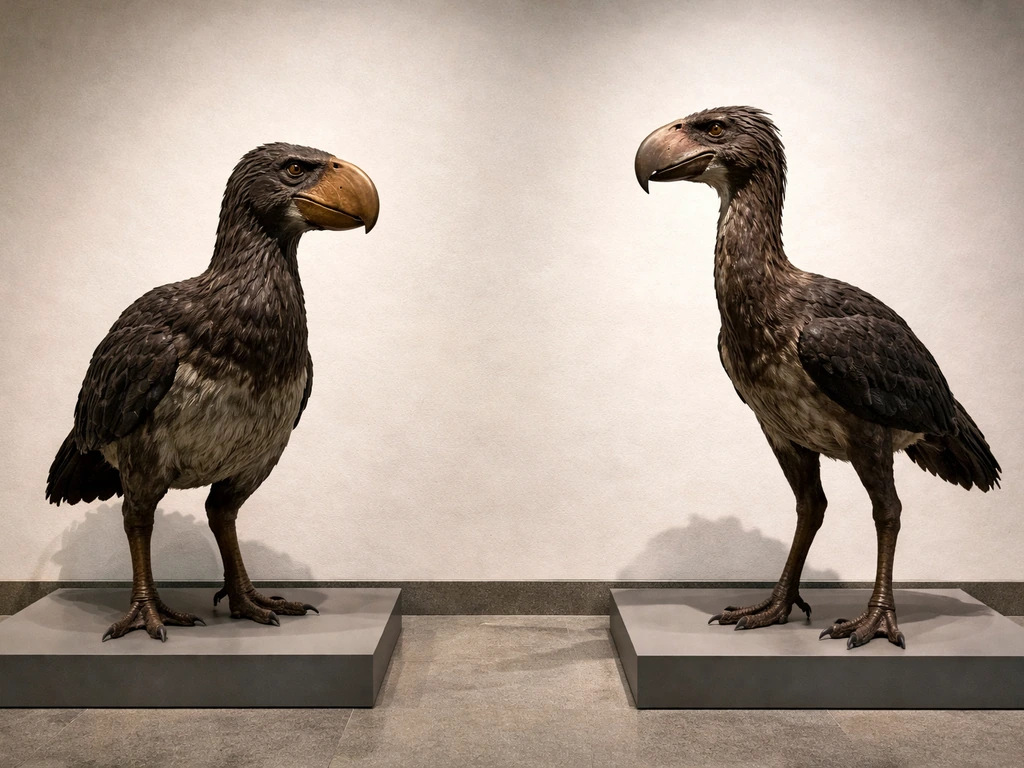
Gastornis is a genus belonging to the order Gastornithiformes, with fossils found across the late Paleocene and Eocene of Europe and North America, including as far north as Ellesmere Island in the Canadian High Arctic. It was a heavily built bird with a massive, deep, rounded beak and relatively short legs for its size. Terror birds are a colloquial name for the family Phorusrhacidae, a diverse group of large, carnivorous South American birds with multiple genera: Phorusrhacos, Kelenken, Titanis, and several others. They lived primarily from the Miocene through the Pleistocene. Titanis, one of the few phorusrhacids to reach North America, appeared in the early Pliocene to early Pleistocene, millions of years after Gastornis had already gone extinct.
| Feature | Gastornis | Terror Birds (Phorusrhacids) |
|---|---|---|
| Classification | Order Gastornithiformes | Family Phorusrhacidae (within Cariamiformes) |
| Time period | Late Paleocene to Eocene (~56–34 Ma) | Eocene to Pleistocene (~60–1.8 Ma), peak in Miocene |
| Geographic range | Europe, North America (incl. Arctic) | Primarily South America; Titanis reached North America |
| Diet (consensus) | Likely herbivorous (seed/fruit crushing) | Likely active predators (some genera); possibly mixed |
| Beak shape | Deep, massive, rounded, no hooked tip | Hooked at the tip, laterally compressed, raptorial |
| Locomotion style | Graviportal (heavy, weight-bearing) | Cursorial (fast running), digitigrade |
Size, build, and locomotion differences
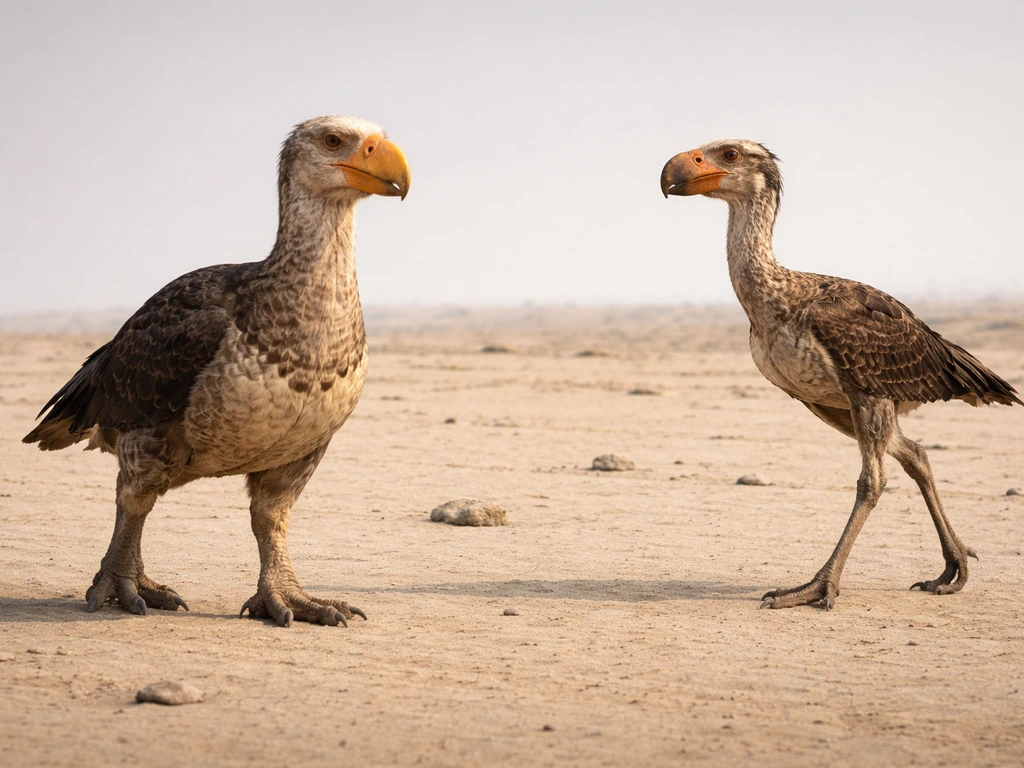
Both groups produced genuinely large birds, but their builds tell very different stories. The largest Gastornis species, G. giganteus, stood around 2 meters tall and weighed roughly 130 kg. It was a stocky, barrel-chested animal with relatively short lower limbs given its overall mass, which is a pattern seen in graviportal animals built for stability and power rather than speed. Research on tarsometatarsus dimensions specifically classifies large gastornithids as graviportal, meaning they moved more like a heavily loaded truck than a sports car. Gastornis was not built to chase anything down.
Terror birds varied more across their family tree, but the best-known genera were built for speed. Phorusrhacos stood nearly 2.4 meters tall and weighed around 130 kg, broadly similar to Gastornis in those raw numbers. Kelenken, the largest phorusrhacid on record, would have exceeded that. Titanis estimates range from about 1.4 to 2 meters in height with some body mass estimates exceeding 300 kg, though those figures come with uncertainty because the remains are fragmentary. What sets terror birds apart locomotively is their long, powerful legs built for running, and trackway evidence suggests at least some phorusrhacids ran on two toes while using a third for pinning prey, more like a large hawk than a big, plodding ground bird.
Head and beak shape: how to tell by silhouette
This is the fastest way to separate the two groups in any illustration or reconstruction. Gastornis has a beak that is best described as an enormous, rounded nutcracker. It is very deep front-to-back, very tall, and blunt at the tip with no significant hook. Diagnostic features include a distinct nasofrontal hinge on the skull and lateral projections at the base of the upper beak, as well as variation in the width of the mandibular symphysis across species.
The same kind of name-based confusion shows up in “death bird vs death rite bird,” where the labels can obscure what people actually mean. The overall effect is a head that looks almost comically massive relative to the body, like someone attached a boulder where the face should be. Crucially, the beak tip is not hooked.
Terror bird skulls are built on completely different engineering principles. Phorusrhacos had a skull nearly 65 centimeters long, making it one of the largest bird skulls ever found. The upper beak ends in a sharp, strongly hooked tip, and the beak is laterally compressed, meaning it is narrow side-to-side and deep vertically, giving a blade-like profile rather than the rounded bulk of Gastornis. The mandibular symphysis in phorusrhacids is robust and built to withstand the stresses of striking prey. In silhouette, a terror bird head looks vaguely like a giant falcon or hawk head scaled up to absurd proportions. A Gastornis head looks like nothing alive today.
Feeding style and likely diet: the predator vs herbivore debate
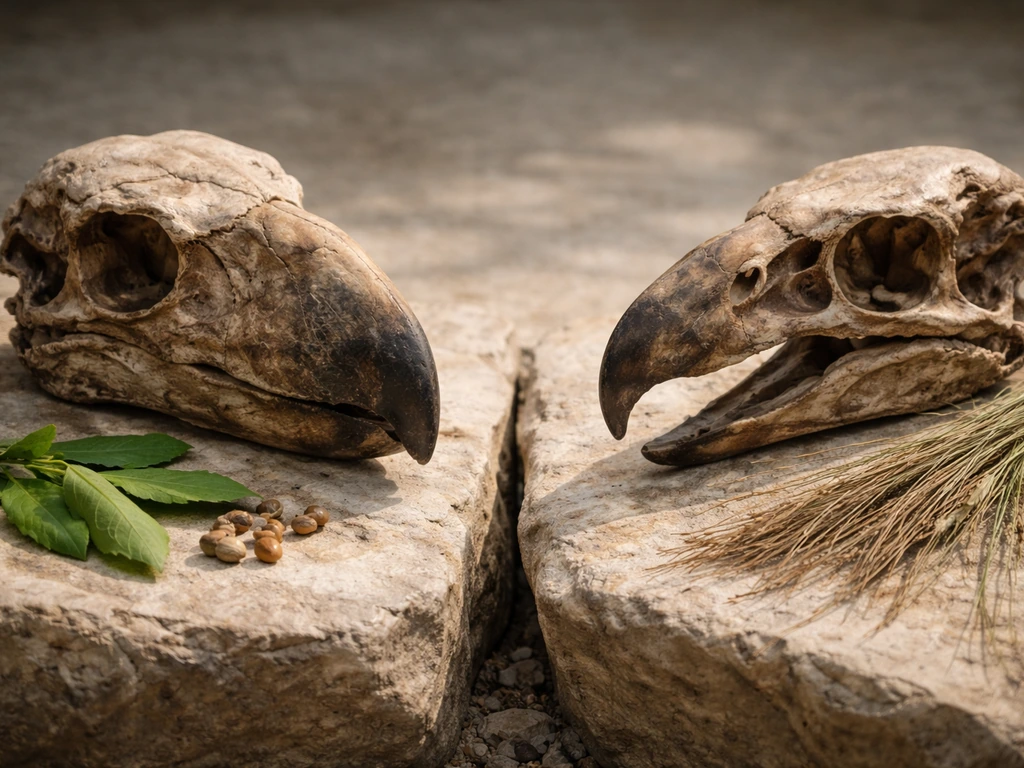
The diet question is where things get genuinely interesting, and where popular depictions have been most wrong, especially for Gastornis. For decades, Gastornis was reconstructed as a terrifying predator that hunted early horses like Hyracotherium. That story has largely been dismantled. [Carbon isotope analysis of Gastornis remains shows signatures consistent with a plant-heavy diet](https://www.
nationalgeographic. com/science/article/giant-prehistoric-bird-crushed-seeds-not-little-horses), specifically the kind of isotopic pattern you get from crushing seeds and thick-skinned fruits rather than eating meat. Its beak anatomy supports this too: that deep, powerful beak is far better suited to cracking tough seeds and plant material than to killing and dismembering prey. The Chuckanut Formation footprints also show no evidence of hooked claws, which you would expect on an active predator.
The current scientific consensus leans strongly toward herbivory, or at the very least, non-obligate carnivory.
Terror birds are a more complicated story internally. The popular image is of a uniform, terrifying apex predator, and for many genera that is probably accurate. The hooked beak, the fast-running build, the robust skull designed to absorb impact strikes, and the predator-style trackways all point toward active hunting. But the phorusrhacid family had many members spread across tens of millions of years, and assuming they were all identical apex predators is oversimplifying things.
Smaller genera may have taken a wider range of prey, and carrion opportunism was almost certainly part of the picture for at least some species, as it is for most large terrestrial predators today. The skull shape similarities between phorusrhacids and modern scavenging raptors suggest some degree of behavioral overlap.
Comparative rationale for linking diet and jaw-muscle architecture to cranial and jaw shape in living raptors is also used to discuss whether similar fossil morphology reflects scavenging versus predation [skull shape similarities between phorusrhacids and modern scavenging raptors](https://pubmed. ncbi. nlm. nih.
gov/25826066/).
Habitat and geographic range comparisons
Gastornis lived during the Eocene greenhouse world, a period when global temperatures were significantly warmer than today. Its remains have been found across Europe and North America, including the early Eocene of Ellesmere Island in the Canadian High Arctic, which at that time was a warm, forested environment. The consistent association with forested or wooded Eocene habitats matches the herbivory hypothesis well: a heavy, slow-moving bird with a nut-cracking beak makes a lot more sense in a forest full of seeds and fruits than on an open plain.
Terror birds were primarily a South American phenomenon, reflecting the continent's long period of isolation during the Cenozoic. Phorusrhacos is associated with Patagonian localities in the Miocene. Kelenken comes from the Collón Curá Formation in Argentina, a Middle Miocene deposit with fluvial and lacustrine environments set in a landscape dominated by open habitats. That open-environment context fits the cursorial, long-legged body plan well. Titanis is the outlier: when South America connected to North America via the Isthmus of Panama around 3 million years ago, Titanis made it north and persisted into the early Pleistocene in what is now the southeastern United States.
Behavior and ecology: hunting vs foraging
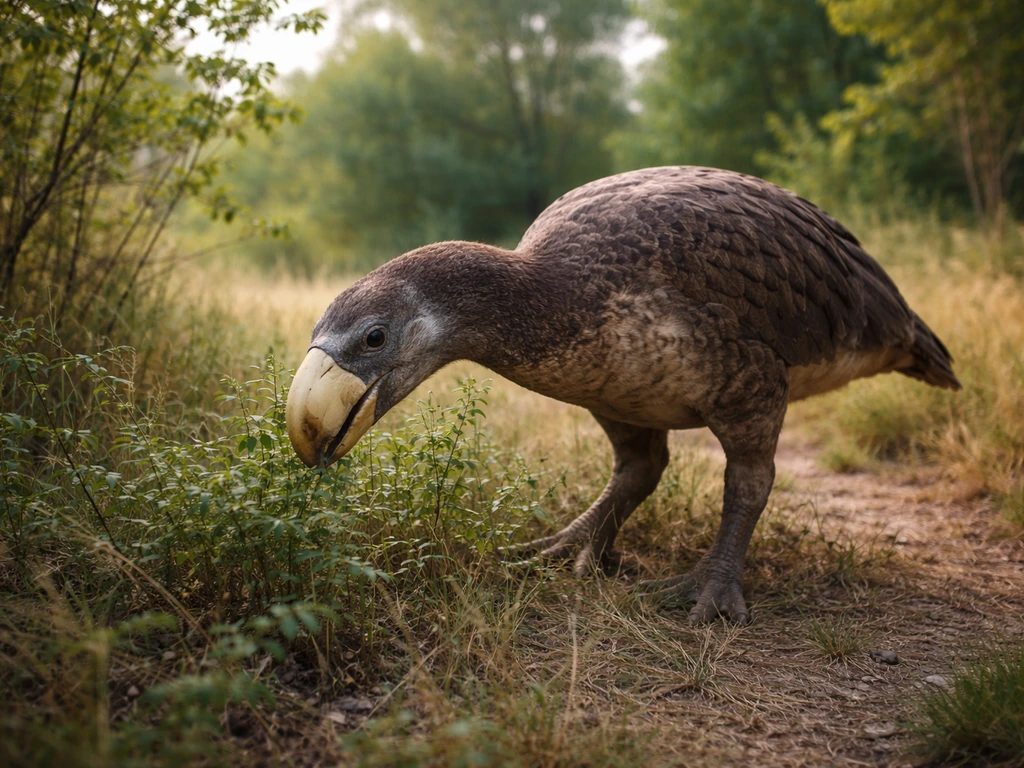
Gastornis, based on everything the fossils tell us, was probably a forager rather than a hunter. A graviportal body, a blunt non-hooked beak, isotopic evidence of plant material, and footprints without hooked claws all point toward an animal that moved slowly through forested environments eating seeds, fruits, and possibly roots or tubers. It filled an ecological role somewhat analogous to a very large, flightless parrot or a prehistoric equivalent of a cassowary, though without the cassowary's defensive weaponry.
Terror birds, particularly the large open-habitat genera like Kelenken and Phorusrhacos, were almost certainly active hunters. Biomechanical modeling supports the idea that phorusrhacids could run fast enough to chase down prey. The two-toed running trackways with a third digit used for pinning prey suggest a hunting technique more like a large raptor than a generalist scavenger. Studies using mechanical models to estimate maximum running speed suggest these birds were genuinely fast. In South America, before the Great American Biotic Interchange brought placental carnivores like jaguars and pumas into the picture, phorusrhacids occupied the apex predator niche that big cats fill today. That is a very different ecological story from Gastornis.
What fossils actually prove (and where the misconceptions come from)
One of the biggest sources of confusion here is that popular media has treated both Gastornis and terror birds as interchangeable "giant scary prehistoric birds," often blending traits from multiple species into a single composite reconstruction. The same kind of “looks similar so it must be the same” thinking shows up in human comparisons to terror birds, so if you are curious about the popular matchup, this is where you should start: terror bird vs human.
That is worth pushing back on directly. Fossil evidence is fragmentary by nature. We know what bones looked like. We can infer muscle attachment and rough body proportions.
Isotope analysis can hint at broad dietary categories. Trackways give us locomotion clues. But we cannot watch these animals live, and reconstructing exact behavior from bones always involves some inference.
The pits in gastornithid skulls that were once interpreted as tooth sockets have been reidentified as openings for large neurovascular canals, which is a good example of how quickly fossil interpretations can shift. The old predator story for Gastornis was built partly on misidentified anatomical features and the assumption that a big scary bird must have been a predator. The isotope and footprint evidence changed that picture substantially.
For terror birds, overcorrection in the other direction has also happened: some researchers and commentators have pushed back so hard against the apex predator stereotype that they have undersold the genuine evidence for active predation in the larger genera. The honest answer is that different phorusrhacid species probably had different ecological roles, just as modern raptors range from tiny insect-eaters to ocean-going fish hunters.
It is also worth noting that Gastornis and terror birds were not contemporaries in the same ecosystem. They lived on different continents, in different geological periods, and never interacted. Any comparison between them is purely academic, which is fine, but it means framing them as competitors or as variants of the same ecological type is misleading. If you have seen pop-science comparisons like “terror bird vs dodo,” this same idea of misleading analogies helps explain why those matchups can get oversimplified.
How to compare them yourself: a quick field-style checklist
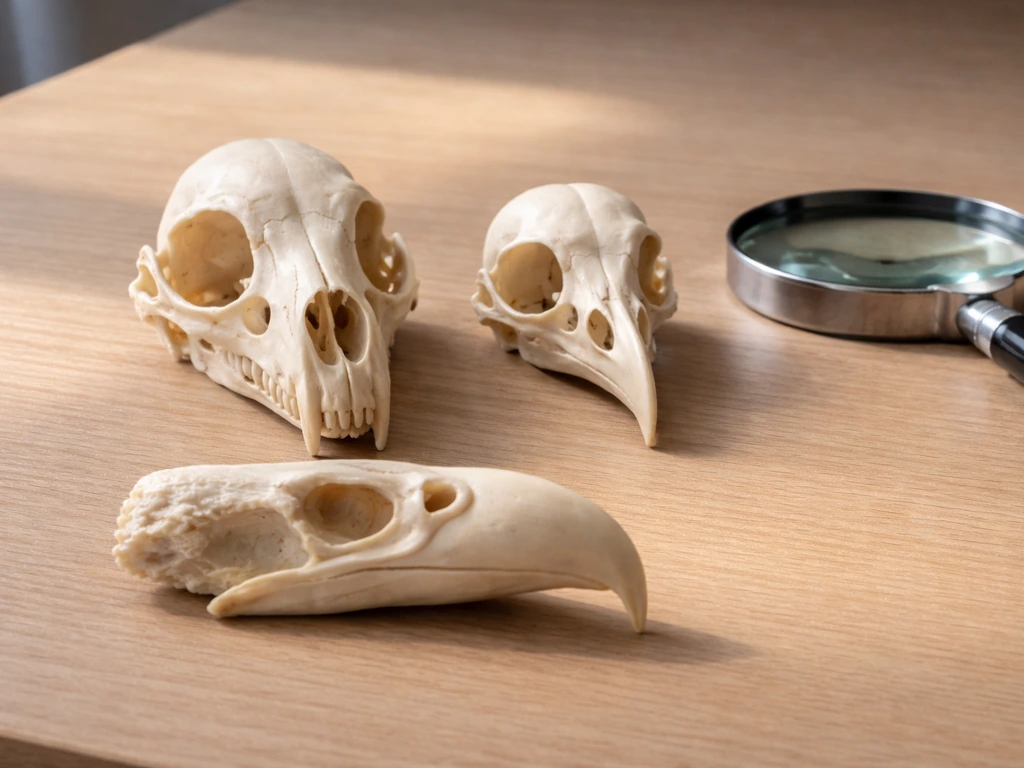
If you are looking at a reconstruction, illustration, or museum exhibit and trying to figure out which animal you are looking at, run through this checklist in order. It works reliably for the vast majority of images you will encounter.
- Check the beak tip first. Is it hooked like a hawk or falcon? If yes, you are almost certainly looking at a phorusrhacid terror bird. If the tip is blunt or rounded with no hook, it is likely Gastornis.
- Look at the beak's overall shape. Gastornis has a deep, bulky, rounded beak that looks like it could crush rocks. Terror bird beaks are tall but laterally narrow, blade-like, and more compressed side-to-side.
- Look at the legs. Long, lean, obviously built for running: terror bird. Shorter and heavier relative to body mass, more column-like: Gastornis.
- Check the timeline and location in any caption or label. Eocene, Europe or North America: Gastornis. Miocene to Pleistocene, South America (or Titanis in the southern US): terror bird.
- If a skull length is given and it is around 65 cm or longer with a hooked tip, that points strongly to one of the larger phorusrhacids like Phorusrhacos or Kelenken.
- If the description mentions isotope analysis suggesting herbivory or seed-cracking, or footprints without hooked claws: Gastornis.
- Be skeptical of any reconstruction that calls a blunt-beaked giant bird a predator without isotopic or trackway evidence, or that treats all terror birds as identical apex predators regardless of genus or size.
Key takeaways at a glance
- Gastornis and terror birds are not related: they belong to completely different bird orders and evolved their large size independently.
- Gastornis was almost certainly an herbivore or non-obligate omnivore; the old predator story is largely discredited by isotope data and anatomy.
- Terror birds (phorusrhacids) were a diverse family; the largest genera were probably apex predators, but the group as a whole likely included ecological generalists.
- The single fastest visual identifier is beak shape: blunt and rounded (Gastornis) versus hooked and blade-like (phorusrhacids).
- Locomotion was fundamentally different: graviportal and slow for Gastornis, cursorial and fast for most large terror birds.
- They never coexisted: different continents, different geological periods, separated by millions of years.
- Fossil interpretation has limits; behavior and diet inferences are probabilistic, not certain, and reconstructions in media often mix traits across multiple species.
If you want to keep exploring in this space, it is worth knowing that terror birds have been compared to other prehistoric and modern animals in ways that reveal a lot about how ecosystems worked before humans. How a terror bird would have stacked up against a sabertooth cat or a large primate tells you something about predator niches that no longer exist today. That kind of predator-niche comparison is often what people mean when they search for terror bird vs sabertooth sabertooth cat. And Gastornis itself deserves more attention as an example of convergent evolution: a giant, flightless, herbivorous bird that superficially resembles predators it has nothing to do with, which is a pattern that shows up repeatedly in bird evolution across different continents and time periods.
FAQ
Can you reliably tell Gastornis and terror birds apart from a photo or museum illustration?
Yes, if you focus on the head first. Gastornis should have a tall, deep, rounded beak with no meaningful hook at the tip, while terror birds should show a laterally compressed beak that ends in a sharp, hooked point.
What if the image shows both a hooked beak and a very deep skull, could it be mislabeled?
It probably is. A truly hooked terror-bird beak is a strong indicator of Phorusrhacidae, but Gastornis can be depicted with exaggerated “predator” features in older reconstructions, so check for beak shape consistency rather than just overall size.
Were any Gastornis species actually carnivores, even if not obligate predators?
The evidence favors plant-heavy diets, but the data is more nuanced than a simple yes or no. Carbon isotopes and beak function support seed and tough plant processing, and footprints lacking hooked-claw signals point away from active hunting, though occasional non-plant intake cannot be ruled out.
Do terror birds always count as apex predators, or could some have been scavengers?
Not all phorusrhacids necessarily hunted in the same way. Smaller genera may have targeted a wider prey range, and carrion opportunism is plausible in at least some lineages, especially where competition with other large predators existed.
How much do missing fossils affect whether we call a specific animal a hunter or a forager?
A lot. Fragmentary remains can skew estimates of body mass, leg length, and bite mechanics, so researchers often lean on multiple proxies together (skull engineering, trackways, isotopes, and habitat context) rather than a single “gotcha” trait.
What footprints or trackway details matter most for locomotion and behavior?
Look for evidence consistent with two-toed running plus a third digit used for pinning in terror birds. For Gastornis, the absence of hooked-claw indicators on track-related evidence supports slower foraging rather than a rapid pursuit-and-grip strategy.
Why do some researchers argue over whether terror birds were “fast,” if fossils cannot directly show speed?
They estimate running speed using biomechanical modeling from leg proportions and joint constraints, then compare the results to trackway patterns. Uncertainty remains, but when multiple lines of evidence align (leg design, inferred gait, and trackway layout), the “fast runner” interpretation becomes more robust.
Could Gastornis and terror birds ever have coexisted, making the comparison literal instead of academic?
No. Gastornis is from the Paleocene to Eocene in Europe and North America, while terror birds are primarily Miocene through Pleistocene in South America, with Titanis reaching North America much later. They never overlap in time and space.
How do habitat clues help when the fossil material is incomplete?
Habitat associations can act as a tiebreaker. Gastornis fossils are repeatedly linked with warmer, forested Eocene settings, which matches a nut-cracking, seed and fruit processing lifestyle. Many larger terror-bird localities point to more open environments that fit cursorial hunting.
If a reconstruction shows an enormous flightless bird, what other “quick checks” can I do besides beak shape?
Check leg proportions and posture. Gastornis is described as relatively shorter-limbed and graviportal, suggesting stability over chase, while terror birds are typically presented with long, powerful legs optimized for running, often with a more raptor-like head profile.
What is the most common mistake people make when comparing Gastornis vs terror birds?
They blend traits from different species and eras into a single composite “giant scary bird,” then treat it as a real animal. The safest approach is to decide whether it matches the beak engineering and diet proxies for one group before making behavioral claims.
If I see a “terror bird vs human” or “terror bird vs dodo” style matchup, how should I interpret it?
Use it as a popularity comparison, not a science claim. The underlying purpose is usually to illustrate broad predator versus prey themes, but real ecological roles differ by species, region, and time, so the matchup can oversimplify the fossil-based evidence.
Next Articles
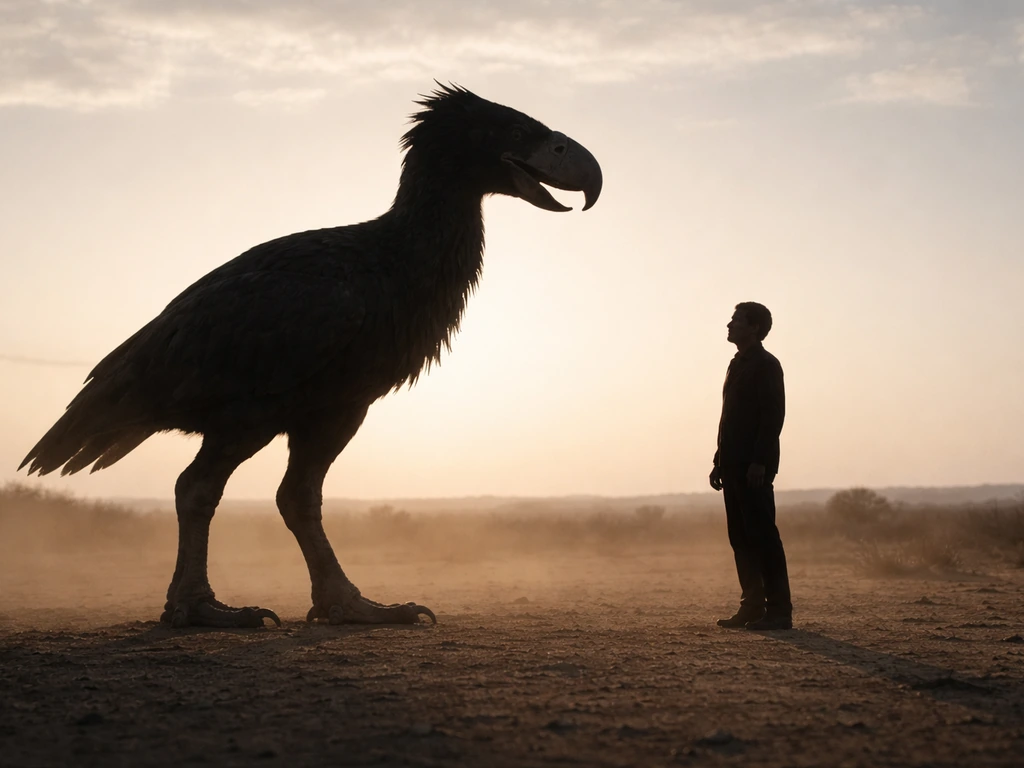
Terror Bird vs Human: Size, Diet, Movement, and Facts
Terror bird vs human comparison: size, beak and claws, movement and diet, plus what fossils do and don’t show about atta

Godzilla vs Kong Bird: Identify the Exact Bird Lookalike
Disambiguate and ID the exact bird behind searches like Godzilla vs Kong bird using field marks, habitat, range, behavio

Batman vs Bird: Identify the Animal and Tell Them Apart
Learn what Batman vs bird means and use field marks, behavior, and habitat to ID the right animal fast.