A terror bird (a phorusrhacid) would have stood taller than most humans, weighed as much as a large bear, and hunted with a rigid, hatchet-like beak built for precise downward strikes. Humans, by contrast, are medium-sized omnivores who use tools and culture to compensate for modest physical strength. The two never actually met: current fossil evidence places the last large phorusrhacids well over a million years before the first humans arrived in the Americas. So the "could it attack a human" debate is fascinating, but it's a thought experiment, not a historical event.
Terror Bird vs Human: Size, Diet, Movement, and Facts

Marcus Hendricks
17 May 2026
What "terror bird" actually means
"Terror bird" is a popular nickname for Phorusrhacidae, a family of extinct, mostly flightless, large-bodied predatory birds that lived across South America (and briefly North America) during the Cenozoic era. They are not dinosaurs, not mythological creatures, and not a single species. Scientists recognize five subfamilies and dozens of genera, ranging from turkey-sized sprinters in Psilopterinae to genuinely enormous apex predators in Phorusrhacinae and Brontornithinae. The group spans roughly 60 million years of evolutionary history, from the Paleocene through the Pleistocene.
Some of the most well-known genera include Kelenken guillermoi, which had a skull roughly 71.6 cm long and lived in Patagonia around 15 million years ago during the middle Miocene; Andalgalornis steulleti, the subject of detailed CT-based biomechanical studies that revealed how the beak worked; and Titanis walleri, which crossed into North America during the Great American Interchange and survived in what is now the southern United States until roughly 2 to 4 million years ago. Titanis is especially interesting in the terror-bird-vs-human context because it got closest geographically to where humans eventually lived, but improved dating of the Olla Formation specimens pushes its extinction well before any human presence.
How their bodies compare to ours
This is where the comparison gets genuinely striking. Phorusrhacids were built on a completely different physical plan from any living bird or from a human. Here is how the anatomy stacks up across the key features.
Size and overall build
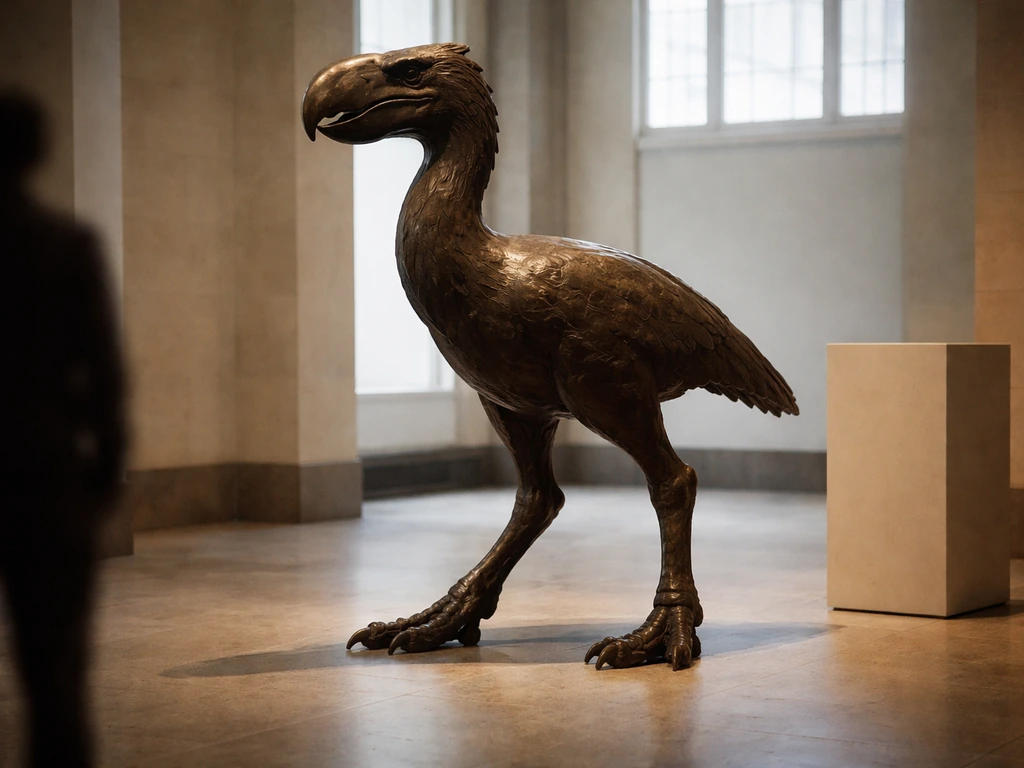
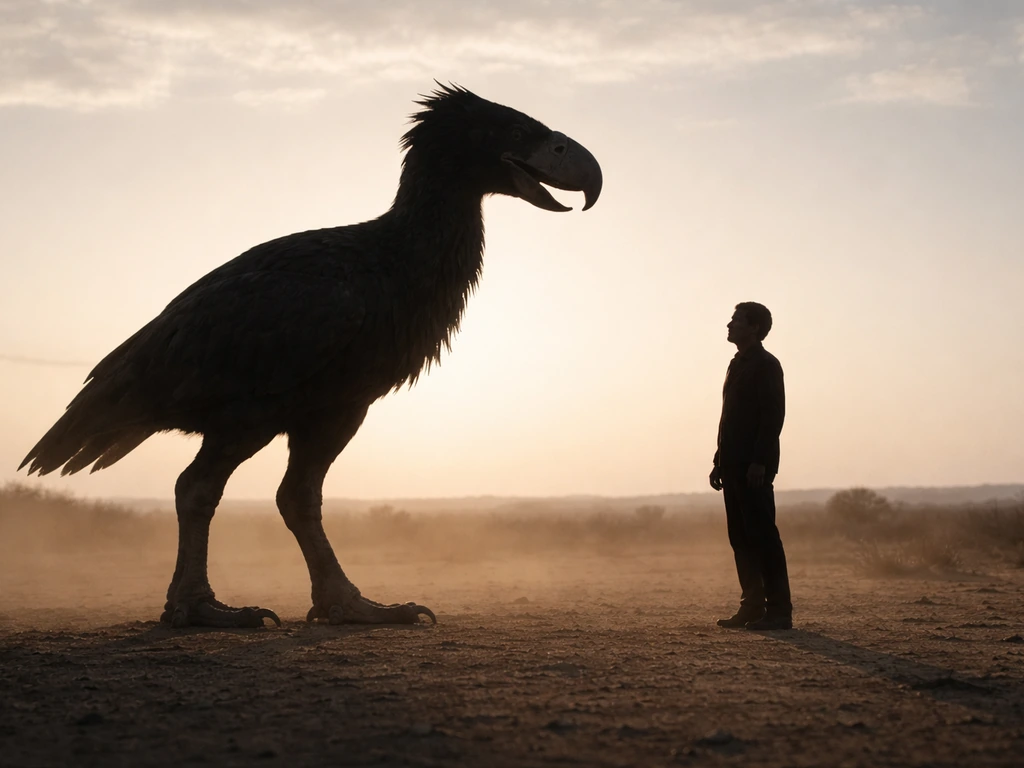
The largest phorusrhacids were enormous. Titanis, though known from fragmentary specimens (an incomplete lower leg bone and toe elements), is estimated at roughly 1.4 meters tall and over 300 kg, though those numbers are model-based and vary by study because the holotype is so incomplete. Kelenken was likely taller. Average modern humans stand about 1.7 meters tall and weigh 60 to 80 kg. So a large terror bird was roughly comparable in height but potentially three to five times heavier, with that mass concentrated in a compact, muscular, forward-leaning body plan very different from our upright stance. Even smaller phorusrhacids in the 50 to 100 kg range would have been formidable animals.
Skull and beak
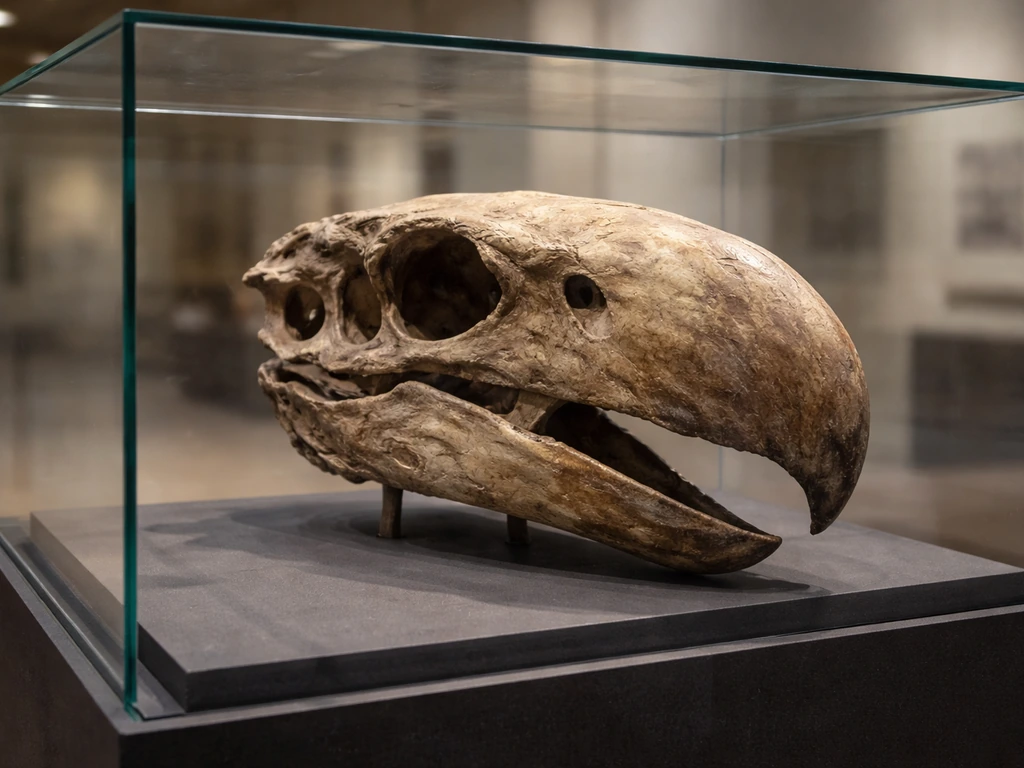
The terror bird skull is one of the most distinctive structures in all of paleontology. It was laterally flattened, rigidly fused (joints that are mobile in most birds were replaced by thick bone), and ended in a massive hooked beak. CT scans and biomechanical modeling of Andalgalornis show that this skull was engineered to withstand strong vertical forces but was actually relatively weak under lateral (side-to-side) loads. That tells us the beak was built as a hatchet, not a clamp. Human skulls, by comparison, are rounded, lightly built cranial vaults housing a large brain, with small flat teeth adapted to an omnivorous diet. We have no beak, no hooked structure, and no cranial weapon.
Limbs and claws
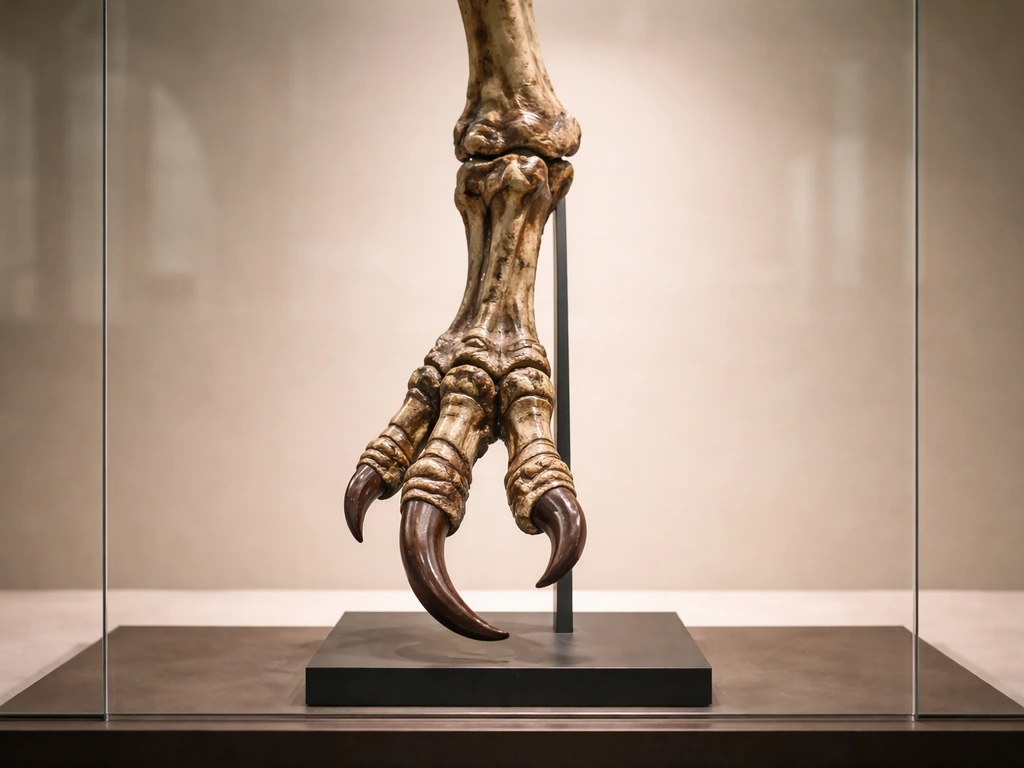
Terror birds had powerful hindlimbs with long tarsometatarsal bones (the "foot-leg" segment), which in fast-running taxa like Kelenken implies considerable speed potential. The second toe bore a curved, sickle-like claw that was kept elevated during normal walking, much like the famous raptorial claws of dromaeosaurid dinosaurs. Front limbs were reduced, vestiges of wings that could not generate flight. Humans have two functional arms with grasping hands, flat nails, and bipedal legs built for endurance locomotion rather than bursts of pursuit speed.
| Feature | Terror Bird (Phorusrhacidae) | Modern Human |
|---|---|---|
| Height | ~1.0–2.0 m (varies by genus) | ~1.7 m average |
| Body mass | ~50–300+ kg (model-based estimates) | ~60–80 kg average |
| Skull/head | Laterally flat, rigidly fused, large hooked beak | Rounded braincase, small omnivore teeth, no beak |
| Front limbs | Vestigial wings, not functional for flight or grasping | Functional arms with grasping hands |
| Hind limbs | Long tarsometatarsus, sickle claw on second toe | Moderate legs built for endurance walking/running |
| Locomotion | Fast terrestrial biped, ground-bound | Upright biped, endurance runner |
| Diet | Carnivore/predator inferred from beak mechanics | Omnivore using tools and cooking |
| Flight | Flightless (most or all taxa) | Not applicable |
How they moved and hunted versus how humans operate
Terror birds were dedicated terrestrial predators. Hind-limb morphometry studies (using femur, tibiotarsus, and tarsometatarsus measurements) suggest different genera occupied different ecological niches: faster, slender-legged taxa like Kelenken likely pursued prey across open ground, while heavier taxa like Brontornis, with proportions implying slower locomotion for enormous body mass, may have relied on power over speed. It is worth noting that the same researchers caution that bone proportions alone are not perfectly reliable for distinguishing locomotor habits, so treat any single "top speed" headline with skepticism.
The hunting strategy inferred from skull mechanics is particularly vivid. Rather than clamping down and wrestling prey to the ground (which would create the dangerous side-to-side loads the skull could not handle well), Andalgalornis and likely its relatives delivered rapid, precise downward strikes and then retreated, repeating until prey was subdued. Researchers have described this as an "outside fighter" style: think repeated targeted jabs rather than a bear hug. For small prey, they may have simply swallowed it whole. For larger animals, the precision requirement was critical because a struggling large animal pushing sideways against that rigid beak could have damaged it.
Humans move completely differently. We are endurance animals: slow top speed but capable of sustained effort across enormous distances, historically using that capacity to run prey to exhaustion. More importantly, humans rely on tools, coordinated group behavior, and accumulated cultural knowledge rather than raw anatomical weapons. A human does not need a hooked beak because a human can pick up a rock, set a trap, or throw a spear. That cognitive and technological gap is arguably the biggest difference between the two, even more than the physical size difference.
Diet: dedicated predator versus flexible omnivore
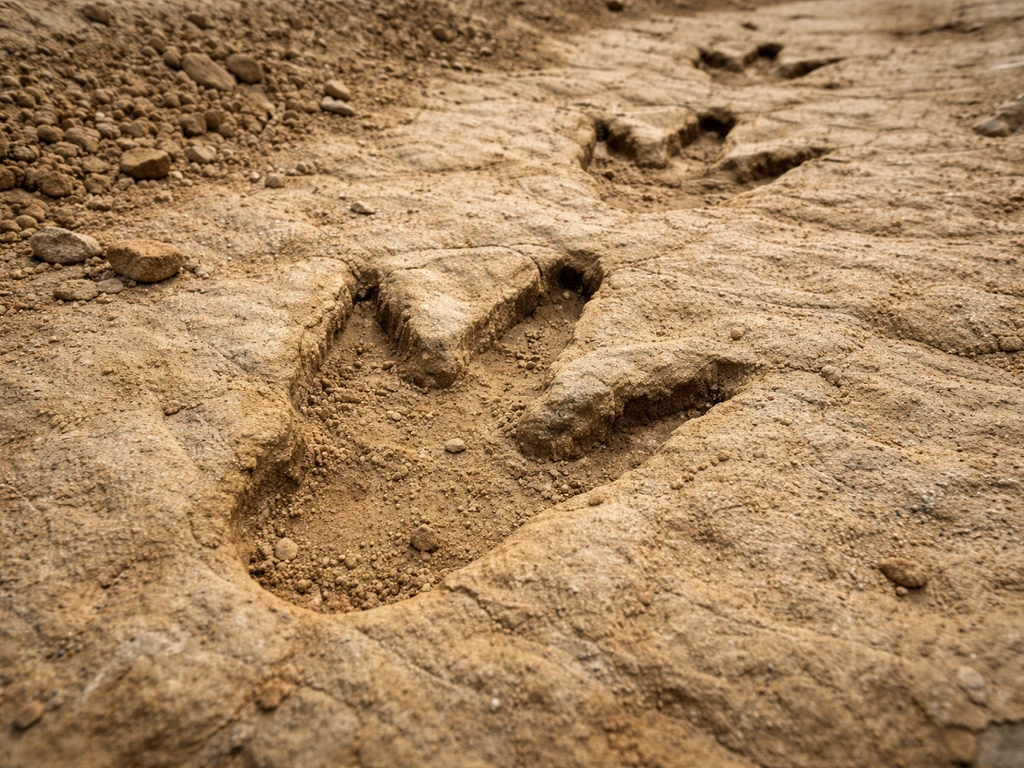
Phorusrhacid diet is inferred primarily from functional morphology rather than direct gut contents, so confidence about specific prey is limited. What the beak, skull, and limb anatomy consistently point to is carnivory: these were predators and possibly scavengers, not plant-eaters. Body size probably correlated with prey size. Smaller taxa in Psilopterinae likely specialized in small vertebrates, while larger phorusrhacids (Phorusrhacinae) were probably capable of taking relatively large prey. Trace fossils (footprints) provide additional ecological context, showing these birds moving through specific environments, though footprints cannot directly prove what they ate.
One important reality check: terror birds were not invincible. A fossilized terror bird bone bearing bite marks consistent with a large caiman shows that phorusrhacids were occasionally prey themselves, or at least that other apex predators competed with them and sometimes won. The ecosystem they occupied was not a simple hierarchy with the terror bird at the top of everything.
Human diet is almost the opposite in terms of flexibility. We evolved as omnivores, consuming plants, animals, fungi, and processed foods across every biome on earth. We do not have anatomical weapons for hunting but compensate entirely through technology: fire, tools, agriculture, and food storage. The dietary contrast is stark: a terror bird was a specialized carnivore locked into a predator niche by its anatomy; a human is a generalist whose diet is defined almost entirely by culture and circumstance.
Could a terror bird actually attack a human? Clearing up the myths
This question comes up constantly, and the honest answer is: we do not know, because humans and terror birds almost certainly never shared the same time and place. Current fossil evidence, including improved magnetostratigraphy and radiometric dating of Titanis-bearing formations, pushes the extinction of large phorusrhacids to more than roughly 1.5 million years before humans arrived in the Americas. The geographic overlap some people assume ("Titanis was in North America, so it could have met early humans") does not survive scrutiny once you look at the actual dates.
That said, as a thought experiment grounded in anatomy and behavior, here is what the evidence actually suggests. A large phorusrhacid encountering a human-sized animal would have the mechanical tools to cause serious or fatal injury. The downward strike behavior, the hooked beak, and the sickle claw are all dangerous structures. However, the same biomechanical analysis that reveals the beak's power also reveals its limitation: it required precision. A large, struggling human who grabbed the bird's neck or managed lateral force on the skull could, in theory, counteract the animal's primary weapon. And a human with even a basic tool (a stick, a rock) changes the calculus dramatically.
The "movie monster" framing of terror birds as relentless, invincible killing machines is not supported by the science. These were real animals shaped by ecological pressures, with genuine vulnerabilities (caiman predation being a documented example), behavioral strategies constrained by their anatomy, and no particular reason to pursue a novel, unfamiliar bipedal animal like a human when easier prey was available. Aggression toward humans is an assumption with zero fossil support. Wild animals in general attack humans primarily out of defense, competition for food, or mistaken identity, not as a strategy.
Where terror birds lived and what the fossils actually show
Phorusrhacids are known primarily from South America, where they occupied the continent as apex predators for tens of millions of years during the Cenozoic. Key fossil localities anchor the timeline concretely. The Santa Cruz Formation in Patagonia (late Early Miocene) yields early phorusrhacids including Phorusrhacos. The Collón Curá Formation, also Patagonian, dates to the middle Miocene around 15.5 to 13.8 million years ago and is where Kelenken guillermoi was found. La Venta in Colombia, dated to roughly 13.8 to 12 million years ago, is a rich tropical Miocene site associated with phorusrhacid remains. Titanis walleri fossils come from the Olla Formation in the Anza-Borrego Desert area of southern California, dated by magnetostratigraphy and tuff analysis to roughly 4 to 2 million years ago.
Trace fossils add a behavioral dimension. Footprints assigned to phorusrhacids (including Rionegrina pozosaladensis from the Late Miocene) preserve digit and claw impressions that give researchers indirect data about how these birds moved through their environments. The third toe impression details visible in some trackways, for example, help connect skeletal anatomy to real locomotor behavior in ways that bone measurements alone cannot.
What fossils cannot show directly is prey identity, precise speed, or behavioral intent. Every behavioral claim about terror birds, including the hatchet-strike model, is an inference from mechanical properties of preserved bone. That is solid science, but it is inference, and it is worth being clear about that distinction when you encounter sensational headlines.
Quick comparison: terror bird vs human at a glance
Here is a fast checklist for keeping the key contrasts straight, whether you are settling a debate or just want the facts organized clearly. If you are comparing how different birds relate to human culture, it helps to distinguish a terror bird from the separate concept of a death rite bird terror bird vs death rite bird. If you are also curious about the terror bird vs dodo comparison, the same “fossil evidence first” mindset applies. In a direct terror bird vs sabertooth comparison, the outcome would hinge on size, reach, and whether the sabertooth could avoid or withstand the beak strike terror bird vs human.
- Terror birds are extinct phorusrhacid birds from the Cenozoic Americas; humans are living primates who arrived in the Americas long after most phorusrhacids were gone.
- Large terror birds matched or slightly exceeded human height but were potentially 3 to 5 times heavier, with mass concentrated in a forward-leaning predator body plan.
- The defining feature of a terror bird skull is cranial rigidity and a massive hooked beak built for precise downward strikes, not side-to-side wrenching; human skulls house a large brain and support an omnivore's flat teeth.
- Terror birds hunted using a strike-and-retreat strategy ("outside fighter" style) supported by CT and biomechanical modeling; humans hunt using tools, coordination, and endurance rather than anatomical weapons.
- Diet was carnivorous/predatory in phorusrhacids, inferred from beak and skull mechanics; human diet is omnivorous and shaped almost entirely by technology and culture.
- The sickle claw on the second toe is a key phorusrhacid identifier, kept elevated during walking and used as a strike/grip weapon; humans have flat nails with no offensive function.
- No fossil evidence supports any direct human-terror bird encounter; improved dating of Titanis specimens places the last large phorusrhacids well before human arrival in the Americas.
- Terror birds were not invincible; caiman bite marks on terror bird fossils show they faced real predatory threats from other animals.
Where to go from here
If you want to go deeper than headlines, the two most useful primary sources are the CT-based biomechanical analysis of Andalgalornis steulleti feeding mechanics (published in PLOS ONE and available via PMC) and the hind-limb morphometry paper published in the Transactions of the Royal Society of Edinburgh (available via Cambridge Core). Both give you the actual measurements and methods behind the behavioral claims, rather than the simplified version you see in news articles. Museum reconstructions, particularly at natural history museums with South American fossil collections, are also excellent because they show skeletal proportions at scale, which makes the size comparison to a human immediately intuitive.
When you see a claim about terror bird speed, size, or behavior, ask one question: what is the fossil evidence actually measuring? If the answer is a limb bone ratio, a CT scan result, or a biomechanical model, that is solid. If the answer is "it looked scary in a documentary," it is not. The same critical approach applies to the human comparison: the absence of fossil evidence for any encounter is not a gap waiting to be filled by imagination. It is a real, meaningful fact about when and where these animals lived. For related comparisons that put terror birds in broader context, the side-by-side with Gastornis, the matchup against sabertooth cats, and the contrast with the dodo all help clarify just how unusual and ecologically specific phorusrhacids really were.
FAQ
How reliable are the terror bird size estimates compared with a human’s size?
For fragmentary specimens like Titanis, height and weight are model-based, not directly measured. That means the comparison can shift by hundreds of kilograms depending on the method and assumptions about missing body segments and proportions, so treat any single “exact weight” claim as an estimate range rather than a fact.
Did terror birds hunt by forcefully clamping prey, like some modern birds?
The hatchet-strike model implies the beak was better suited to repeated downward targeting than side-to-side gripping. If prey tried to lever the skull laterally, it could exceed what the fused skull and cranial mechanics were built to handle, which is why “bear-hug clamp and wrestle” is likely wrong.
Could a human realistically survive a terror bird encounter just by grabbing the neck or stopping the strike?
In the thought experiment, lateral control is the key because the skull seems mechanically weak under side-to-side loads. But a real encounter depends on distance, coordination, and whether the human can apply force at the right moment, without being struck first, and even then a tool changes outcomes more than bare-hand grappling.
Would a tool work better as a throw, a stab, or a barrier?
Given the bird’s danger point is the hooked beak and its downward strike pattern, tools that create spacing or interfere with strike timing (long reach, barriers) generally matter more than hand-held close-contact tools. Projectiles or thrown rocks could also reduce the need for direct grappling, especially because repeat strikes would require the animal to commit its head and torso forward.
Is it possible that some humans and terror birds overlapped in time somewhere else besides the Americas?
This article’s timeline focus is where humans first arrived in the Americas. If you move the question to other continents, you still run into the core issue of separate fossil and human arrival histories, and terror birds as a group are primarily tied to South America, with only brief North American presence, so overlaps are still unlikely.
What can footprints actually tell us about terror bird behavior, and what can they not?
Tracks can indicate gait and how the digit and claw were loaded, which helps connect bones to movement style. They cannot identify prey, measure exact speed reliably in the way television claims do, or prove a specific hunting tactic, because trackways preserve locomotion not intent.
Were terror birds strictly carnivores, or could they have eaten carrion sometimes?
The anatomy consistently supports carnivory, and scavenging is plausible in many predator guilds. However, direct diet proof is limited because gut contents are rare and functional inference cannot uniquely distinguish active hunting from opportunistic feeding, so “carnivore and possibly scavenger” is safer than “always hunted everything alive.”
If terror birds were apex predators, why is there evidence they were bitten by caimans or otherwise competed with other predators?
“Apex” means they were often near the top, not unbeatable. Competition and predation can occur when size, habitat, age, or opportunity shifts, a fossil bite mark is consistent with occasional losses or contested kills, and it implies the ecosystem was not a simple one-direction hierarchy.
How should I interpret “top speed” headlines for terror birds?
Bone proportions and limb segment ratios can suggest locomotor potential, but they do not equal measured sprint speed. Studies often include caveats that the same proportions may reflect different ecological strategies, so headlines should be read as broad capability, not a specific number.
Does being bipedal help a human match a running predator like a terror bird?
Humans are endurance-oriented, but endurance helps over time and distance, while terror birds likely relied on bursts of precise targeting. In a short, close-range encounter, bipedality alone does not guarantee an advantage, whereas tool use can quickly change the fight dynamic by reducing the predator’s effective strike opportunities.
What’s the biggest mistake people make in terror bird vs human debates?
Projecting modern “monster” behavior onto extinct animals without fossil support. The article’s key caution is that aggression toward humans is not demonstrated, behavioral claims come from biomechanics of preserved anatomy, and the absence of evidence for direct encounters is itself a meaningful constraint.
Next Article
Nighthawk Bird vs Whippoorwill: Field ID Guide
Side-by-side field ID for nighthawk vs whippoorwill: size, silhouette, habitat, flight, calls, and quick checklists.