Kelenken is a specific genus of terror bird, not a separate animal competing with the group. When you see 'Kelenken vs terror bird,' what you're really asking is how this one particular giant stands out from the rest of the phorusrhacid family it belongs to. The short version: Kelenken guillermoi had the largest bird skull ever found, at around 71 cm from beak tip to the back of the skull, a set of unique cranial features no other phorusrhacid shares, and long legs built for serious ground-level pursuit. Once you know what to look for, it's actually one of the easier terror birds to identify from fossil material.
Kelenken vs Terror Bird: Key Differences and How to Tell Them Apart

Marcus Hendricks
28 Apr 2026
What 'Kelenken' and 'Terror Bird' Actually Mean
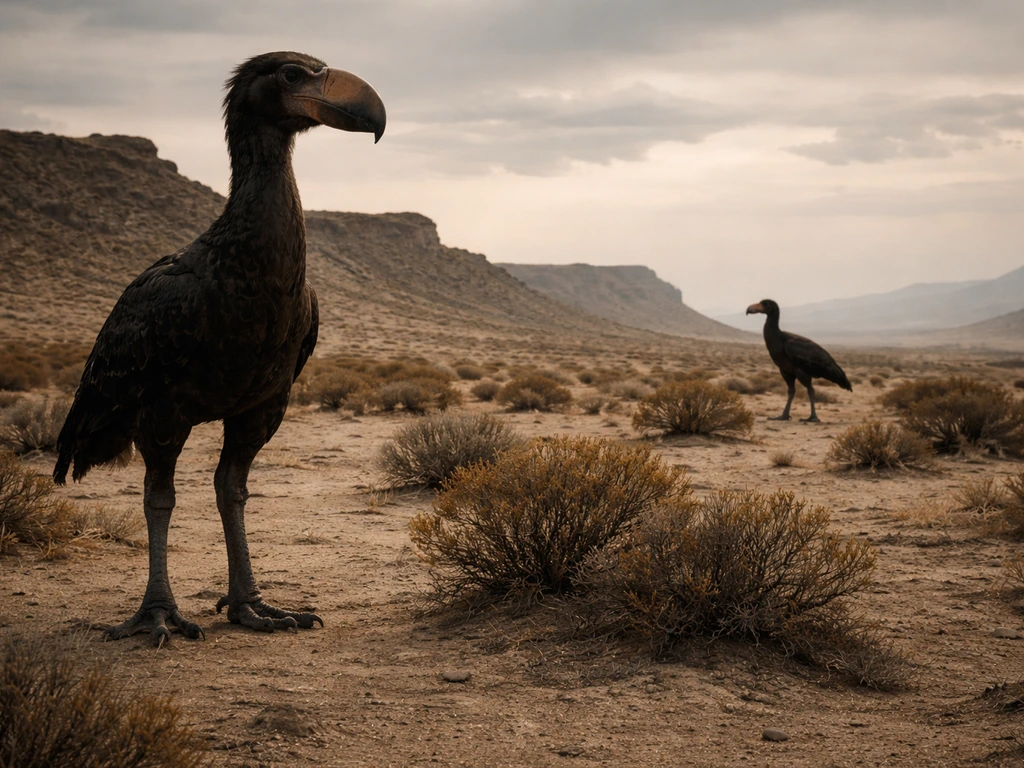
This is the most important thing to clear up before anything else. 'Terror bird' is a popular nickname for the entire extinct family Phorusrhacidae, a group of large, flightless, carnivorous birds that dominated South America through much of the Cenozoic era. There were many genera and species within that family: Phorusrhacos, Titanis, Andalgalornis, Paraphysornis, and others. Kelenken is just one of them.
Kelenken guillermoi was formally named and described in 2007 by Sara Bertelli, Luis M. Chiappe, and Claudia Tambussi in the Journal of Vertebrate Paleontology (27(2):409–419). It was erected as a new genus and species based on a single holotype specimen: a remarkably preserved skull and some postcranial material, including a tarsometatarsus (the long lower leg bone). That specimen number is BAR 3877-11, and it came from Patagonia, Argentina. So when someone asks 'Kelenken vs terror bird,' the most precise version of that question is really 'how does Kelenken compare to other phorusrhacids?'
Where They Lived and Where They Fit on the Family Tree
Kelenken's fossils come from the Collón Curá Formation in Patagonia, and the material is dated to the Langhian stage of the Middle Miocene, roughly 15 million years ago. Patagonia was the heartland of phorusrhacid evolution, and finding Kelenken there puts it squarely in the core South American distribution of the family. Most terror birds were South American, with the notable exception of Titanis walleri, which made it into North America. Kelenken, by contrast, is a classic South American giant.
Within the phorusrhacid family tree, Kelenken belongs to a lineage of large-skulled, heavy-billed forms. It's not a primitive outlier or a weird branch: it represents an extreme expression of the body plan the whole family was trending toward in terms of skull size and cranial robustness. Think of the phorusrhacids as a spectrum from smaller, more lightly built runners to the massive, bone-crushing heavyweights. Kelenken sits firmly at the heavyweight end of that spectrum.
Skull, Beak, and Body: The Numbers That Matter
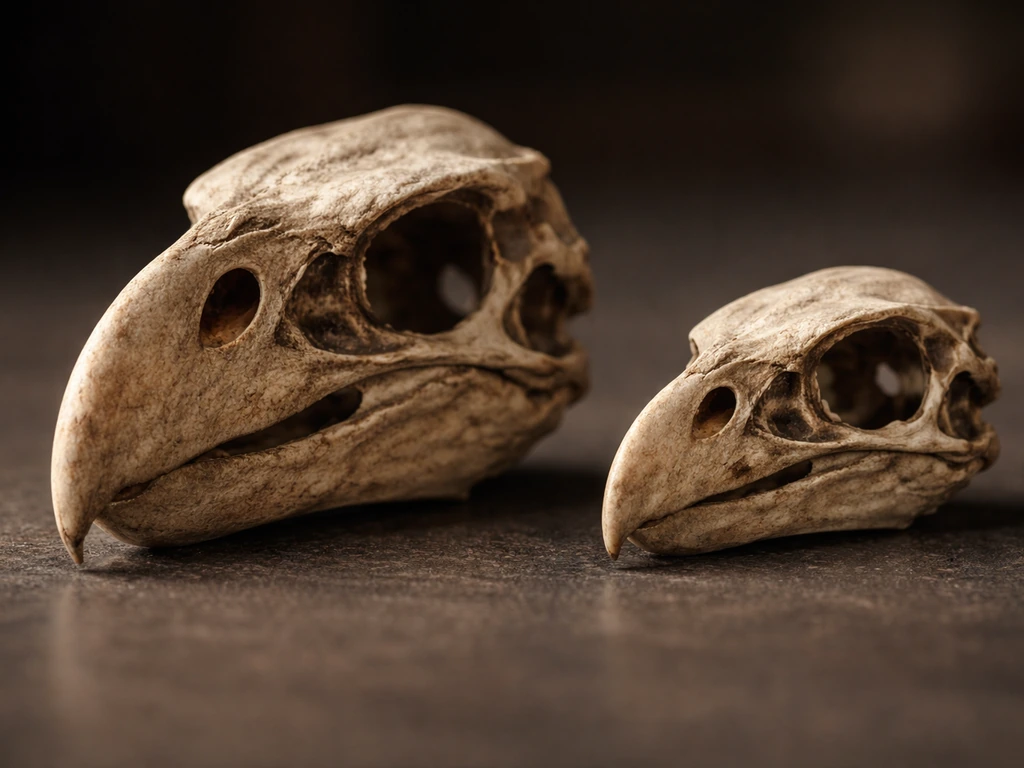
If you want to identify Kelenken from other terror birds, the skull is your single best starting point. At approximately 71 cm long, the holotype skull is the largest known bird skull on record, period. No other phorusrhacid comes close in terms of raw cranial length. But size alone isn't the diagnostic feature paleontologists use: what makes Kelenken distinct are specific osteological details that are preserved in the fossil itself.
- Supraorbital ossification: Kelenken has a distinctive bony ridge above the eye socket that fits into a socket of the postorbital process. This is a hard, preserved feature, not an artistic interpretation.
- Foramen magnum shape: The opening at the base of the skull (where the spine connects) is almost triangular in Kelenken, which differs from the shape seen in other phorusrhacids.
- Skull length: ~71 cm from beak tip to the sagittal nuchal crest, making it the record holder for bird skull size.
- Tarsometatarsus: Long and well-preserved in the holotype, providing direct limb proportion data rather than estimates from incomplete material.
- Overall body size: Kelenken is estimated to have stood around 2.5 to 3 meters tall, putting it among the very largest phorusrhacids alongside forms like Phorusrhacos.
Compare this to smaller or medium-sized terror birds like Andalgalornis, which had a more lightly built skull with proportionally different beak curvature, or to Titanis, where the skull material is fragmentary enough that direct comparison is difficult. The key takeaway: Kelenken's diagnostic anatomy comes from bone, not from artwork. The original 2007 paper includes photographs and interpretive drawings of both the skull and tarsometatarsus, which means you can actually check reconstructions against the real fossil evidence.
| Feature | Kelenken guillermoi | Other Large Phorusrhacids (e.g., Phorusrhacos, Andalgalornis) |
|---|---|---|
| Skull length | ~71 cm (record-breaking) | Smaller; varies by genus, generally under 60 cm |
| Supraorbital ossification | Rounded edge fitting into postorbital socket | Absent or differently configured |
| Foramen magnum shape | Almost triangular | More rounded or differently shaped |
| Tarsometatarsus | Long, well-preserved in holotype | Variable; often incomplete in other taxa |
| Estimated height | ~2.5–3 m | Varies: Andalgalornis ~1.4 m; Phorusrhacos ~2.5 m |
| Known range | Patagonia, Argentina (mid-Miocene) | Across South America; Titanis in North America |
How They Hunted and What They Ate
Terror birds as a group are understood to have been apex predators, and the biomechanics research backs that up in interesting ways. A key study on Andalgalornis (published in PLOS One) used mechanical analysis to show that phorusrhacids had lost cranial kinesis, meaning their skulls were essentially rigid rather than flexible the way many modern birds' skulls are. That rigidity made them better suited for powerful, forceful beak strikes rather than the kind of flexible, gripping bite you see in raptors like eagles.
For Kelenken specifically, bite force estimates using CT and finite element analysis approaches have put the figure at around 133 newtons at the bill tip. That sounds modest compared to a crocodile, but the functional interpretation isn't about sustained crushing force: it's about a rigid skull delivering fast, axe-like downward strikes to stun or kill prey. Think of the beak as a weapon for repeated, precise impacts rather than a clamp.
Given Kelenken's enormous skull and beak size, it was almost certainly targeting larger prey than a smaller terror bird like Andalgalornis would have. The prey available in Patagonia during the mid-Miocene included various native South American ungulates and rodents. Kelenken's size and weaponry suggest it could have taken on some of the larger animals in that ecosystem, though direct fossil evidence of predation is, as always, hard to come by. Smaller phorusrhacids probably focused on smaller vertebrates and large invertebrates.
How They Moved and Where They Hunted
All phorusrhacids were flightless and ground-dwelling, so locomotion is really about running efficiency and habitat preference rather than anything aerial. Research on hind-limb morphometry across the phorusrhacid family (published via Cambridge Core) has shown that femur, tibia, and tarsometatarsus proportions can be used to infer substrate preferences and locomotor style across different terror bird species, and that these proportions vary meaningfully across the family. A Cambridge Core study of hind-limb morphometry in phorusrhacids (Earth and Environmental Science Transactions of the Royal Society of Edinburgh) analyzes femur, tibia, and tarsometatarsus proportions to infer functional implications for substrate preferences and locomotor lifestyle femur, tibia, and tarsometatarsus proportions can be used to infer substrate preferences and locomotor style across different terror bird species.
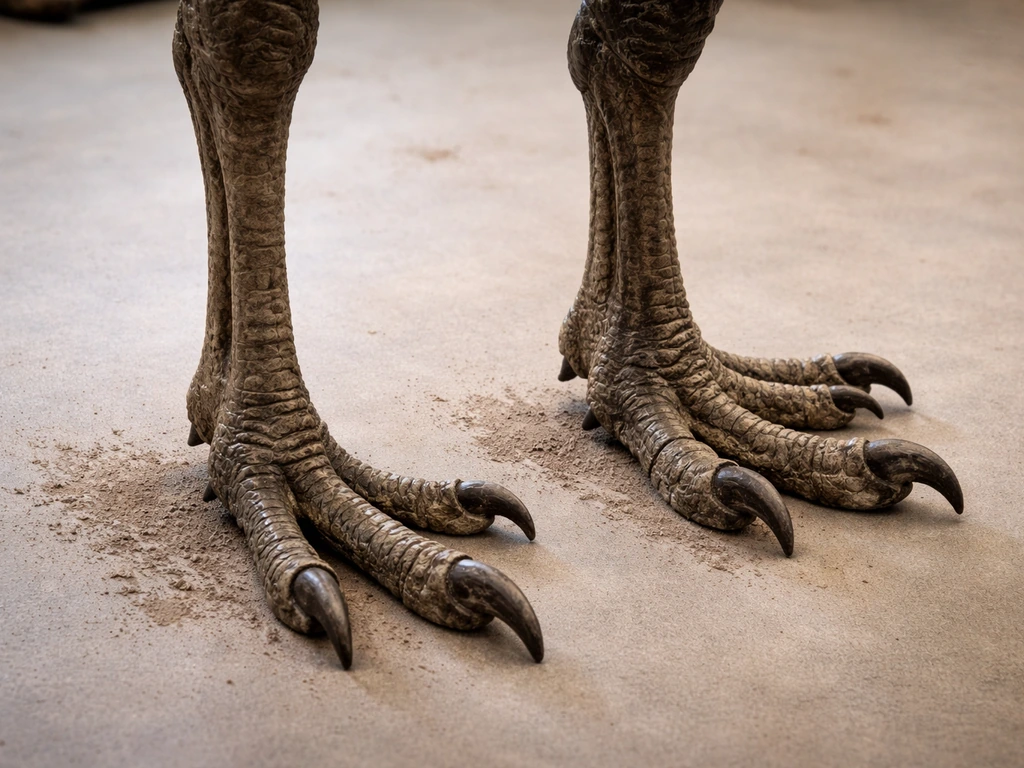
Kelenken had a long tarsometatarsus, which is the kind of lower-leg proportion generally associated with cursorial animals, meaning animals built for efficient running rather than slow, heavy plodding. That makes sense for an open-country predator: Patagonia during the Miocene was largely open terrain, and a long-legged bird running down prey on flat or semi-open ground is exactly what the anatomy implies. Smaller terror birds with different limb proportions may have been better adapted to more varied or enclosed habitats, though the family as a whole seems to have favored open environments.
Identifying Kelenken from Fossils and Reconstructions
Here's the practical guide for actually distinguishing Kelenken when you're looking at fossil photos, museum displays, or artistic reconstructions. The original 2007 description paper is your gold standard: it includes direct photographs of the skull (BAR 3877-11) in multiple views, plus dorsal and plantar views of the tarsometatarsus. If a reconstruction claims to depict Kelenken, it should be consistent with those documented proportions.
- Check the skull size first. If it's roughly the size of a horse's head, you're in Kelenken territory. No other known phorusrhacid had a skull approaching 71 cm.
- Look for the supraorbital ridge detail. In Kelenken, there's a distinct bony projection above the eye socket that fits into the postorbital process. This is a specific osteological trait, not an artistic flourish.
- Examine the beak shape. Kelenken's beak is deeply hooked and massive, consistent with its skull size. Smaller terror birds like Andalgalornis have proportionally different beak curvatures.
- Look at the leg proportions. Long, slender lower legs (tarsometatarsus) relative to body size are consistent with Kelenken's cursorial build.
- Be skeptical of pure silhouette comparisons. Scale and overall shape can look similar across large phorusrhacids. The skull details and leg proportions are more diagnostic than body outline alone.
One important caution: some phorusrhacid skulls from other taxa were poorly preserved or disintegrated before proper study, which means comparisons with those species are inherently limited. Kelenken is actually in a better position than many terror birds when it comes to having reliable diagnostic material to work from.
Common Misconceptions and How to Untangle Them
Misconception 1: Kelenken is 'the' terror bird
This is the most common confusion, and it's understandable because Kelenken is dramatic enough to dominate popular coverage. But treating Kelenken as synonymous with all terror birds is like treating the blue whale as synonymous with all whales. Phorusrhacidae was a diverse family with multiple body sizes, skull shapes, and probable ecological niches. The terror birds were not one monolithic form.
Misconception 2: All terror birds looked and behaved the same
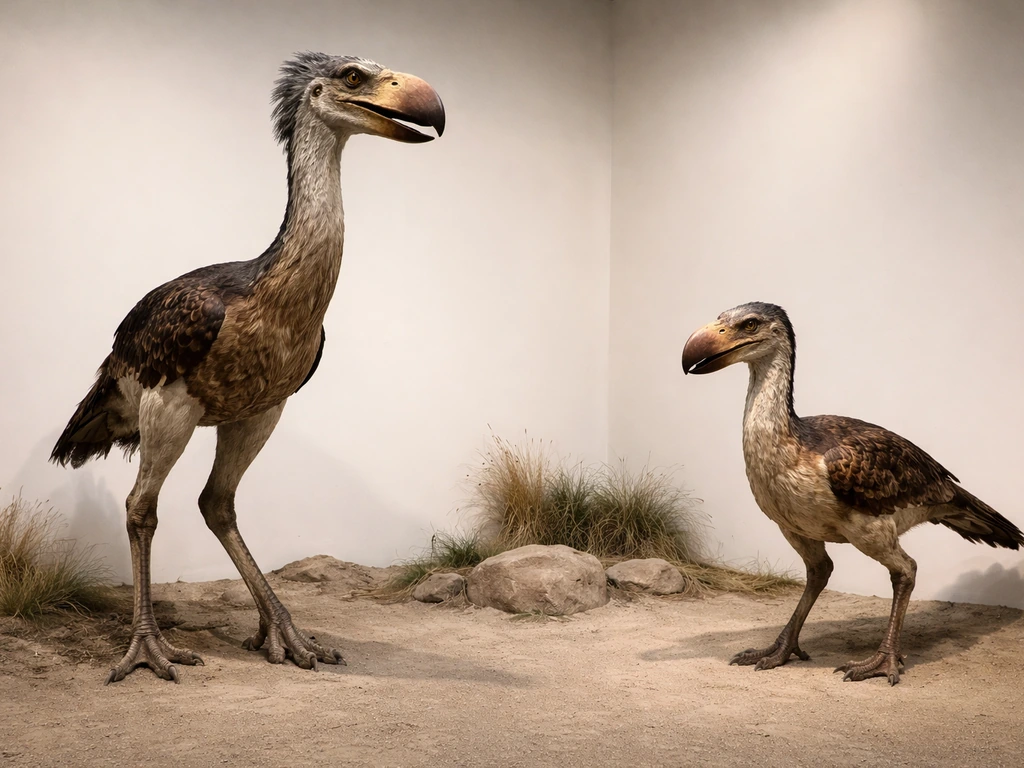
They didn't. A small phorusrhacid like Psilopterus (roughly chicken-to-turkey-sized) was doing something very different ecologically than Kelenken. A common way to frame that comparison is in a “terror bird vs shoebill” style showdown, where the real focus is how anatomy and ecology differ Kelenken. Limb morphometry research shows real variation in locomotor style and likely habitat preference across the family. If you're comparing terror birds, you need to specify which ones, because the differences are substantial.
Misconception 3: Reconstructions are as reliable as fossils for identification
Artistic reconstructions are interpretations. The actual diagnostic features for Kelenken come from preserved bone: the skull morphology, the supraorbital ossification, the foramen magnum shape, and the tarsometatarsus proportions. A profile silhouette of a large hooked-beak bird doesn't reliably distinguish Kelenken from Phorusrhacos or even a large non-phorusrhacid bird. Always trace back to the skeletal evidence.
Misconception 4: Kelenken is comparable to modern cassowaries or ostriches
Popular science writing sometimes reaches for cassowary or ostrich analogies when describing terror birds. These comparisons can be useful for conveying size and flightlessness to a general audience, but they break down quickly in terms of anatomy, diet, and behavior. Phorusrhacids were dedicated carnivores with rigid, weapon-like skulls. Cassowaries and ostriches are omnivores or herbivores with very different cranial architecture. For systematic comparisons, stick within Phorusrhacidae unless you have specific osteological reasons to go outside it.
Misconception 5: Kelenken was the apex predator in every terror bird scenario
Kelenken's fossil record is limited to the Miocene of Patagonia. It was not a universal or timeless 'ultimate' terror bird: it was the largest known skull holder in a specific time and place. Other terror birds like Titanis lived in different times and places, and comparisons with mammalian predators like Smilodon (which lived in a different geological period) are ecological reconstructions, not direct observations. The same applies when comparing terror birds against other prehistoric animals like Utahraptor, which lived tens of millions of years earlier in a completely different ecosystem.
The Clearest Way to Think About Kelenken vs Other Terror Birds
If you walked away remembering just a few things, make it these: Kelenken is a genus within the terror bird family, not a competitor to it. It had the largest skull of any known bird, with specific cranial features that preserve well and are genuinely diagnostic. Its long legs suggest a cursorial, open-country hunter. And the entire phorusrhacid family was more diverse than popular media usually shows, ranging from turkey-sized to Kelenken-sized, with different limb proportions, skull shapes, and likely ecological roles.
For anyone going deeper into terror bird comparisons, whether that's Kelenken alongside contemporaneous megafauna, or how different phorusrhacids stacked up against other large predators of their era, the most reliable approach is always the same: start with preserved skeletal features, not reconstructions or size estimates alone. The bones tell the real story, and for Kelenken, the bones are unusually good.
FAQ
Is “Kelenken vs terror bird” a debate about whether Kelenken is a separate animal or just part of the terror bird group?
Kelenken is a genus within the terror bird family (Phorusrhacidae), so the comparison is between Kelenken and other phorusrhacid genera, not between Kelenken and “terror birds” as a whole.
What if I only find or see a beak or partial skull, can I still tell Kelenken from other terror birds?
Partial material makes it harder. Kelenken identification is strongest when you can compare preserved cranial osteology and relative proportions, especially the skull features that were documented from the holotype, not just the general “giant hooked-beak” silhouette.
Why do some sources misidentify Kelenken in museum displays or reconstructions?
Most mislabels come from relying on size alone or from broad “terror bird” artwork. If a display does not match the known holotype proportions and documented skull traits, treat it as an artistic interpretation rather than a reliable ID.
How much does preservation matter for comparing Kelenken to other phorusrhacids?
It matters a lot. Some phorusrhacid skulls are fragmentary or poorly preserved, so direct skull-to-skull comparison can be limited. Kelenken is comparatively easier because the diagnostic material is better represented in the original specimen set.
Could Titanis be mistaken for Kelenken, since both are large terror birds?
They can be confused in broad overviews, but they differ in geography and in the quality of comparable skull material. Titanis is also outside the typical South American core range, and fossil constraints can prevent confident head-to-head anatomical matching.
Do limb proportions alone prove Kelenken’s habitat or hunting style?
They suggest it, but they do not prove it. Long lower-leg proportions support a more cursorial, open-ground interpretation, yet habitat and prey choice remain inferences unless you have additional contextual evidence like associated fauna or more complete postcranial material.
How reliable are bite force numbers like the 133 newtons at the bill tip?
They are model-based estimates from CT and finite element approaches, useful for functional comparisons, but they depend on assumptions about tissue properties, loading conditions, and how the skull was reconstructed. Use them as directional evidence for “rigid, impact-based” feeding rather than as an exact biological measurement.
What prey did Kelenken likely target, and can we find direct evidence?
Based on size and weapon-like cranial mechanics, larger prey than smaller phorusrhacids is a reasonable inference. Direct predation traces are difficult to obtain, so diet remains probabilistic unless bite marks or other direct taphonomic evidence are found.
If I’m comparing Kelenken to other “big predators,” which comparisons are most appropriate?
Stay grounded in the same time and place when possible, and prioritize anatomical and functional context. Ecological comparisons to very different eras (like older raptors) or different periods (like mammalian sabertooths) are still reconstructions, not direct observations.
Next Articles
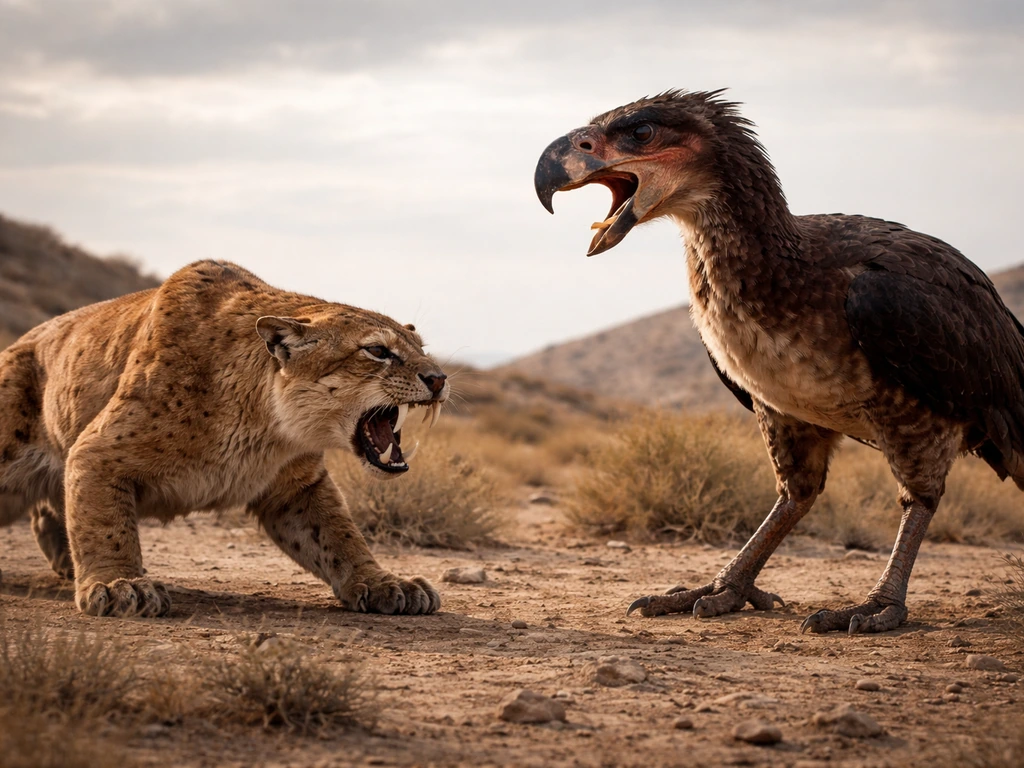
Smilodon vs Terror Bird: Key Differences and How to Tell Them Apart
Side-by-side guide to tell Smilodon saber cat from terror bird: traits, size, habitats, hunting, and diet myths.

Godzilla vs Kong Bird: Identify the Exact Bird Lookalike
Disambiguate and ID the exact bird behind searches like Godzilla vs Kong bird using field marks, habitat, range, behavio

Batman vs Bird: Identify the Animal and Tell Them Apart
Learn what Batman vs bird means and use field marks, behavior, and habitat to ID the right animal fast.