The "snake bird" is the anhinga (or darter, depending on your region), and yes, it genuinely does look like a cormorant at first glance. Both are large, dark waterbirds that dive for fish and perch with their wings spread to dry. But once you know what to look for, they're surprisingly easy to separate. The single fastest clue: the anhinga has a long, fan-shaped tail and a thin, dagger-straight bill, while the cormorant has a short tail and a hooked bill with bright orange facial skin. If you can see those two things, you're done.
Snake Bird vs Cormorant: Quick Field ID Guide

Marcus Hendricks
4 May 2026
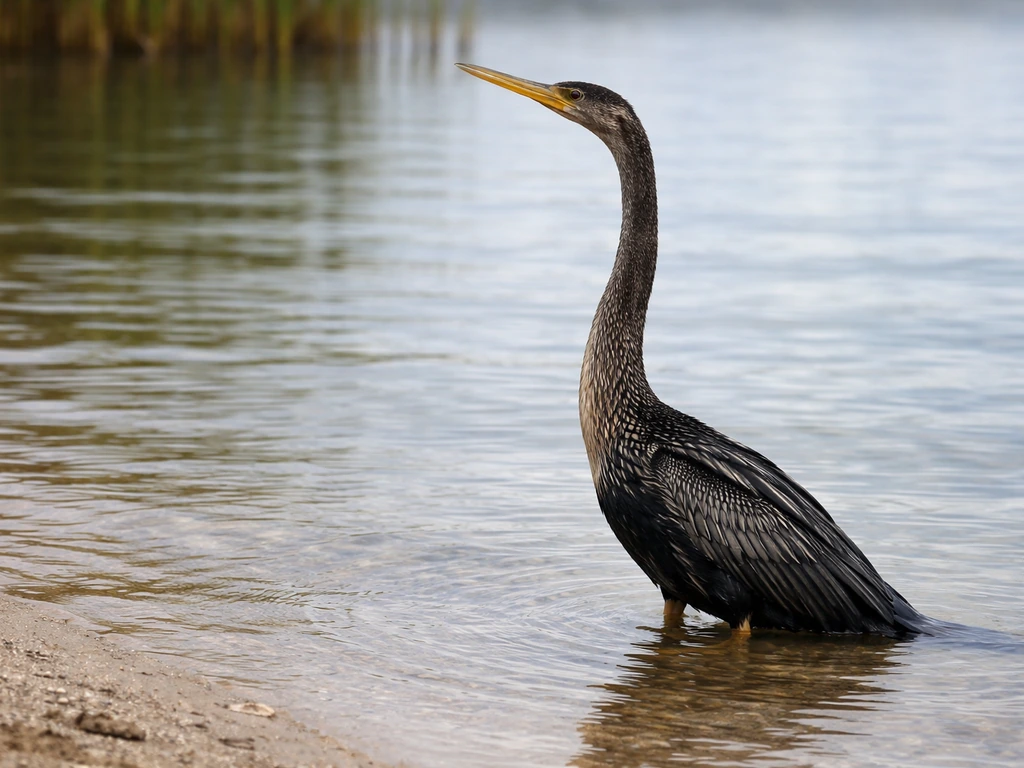
What people mean when they say "snake bird"
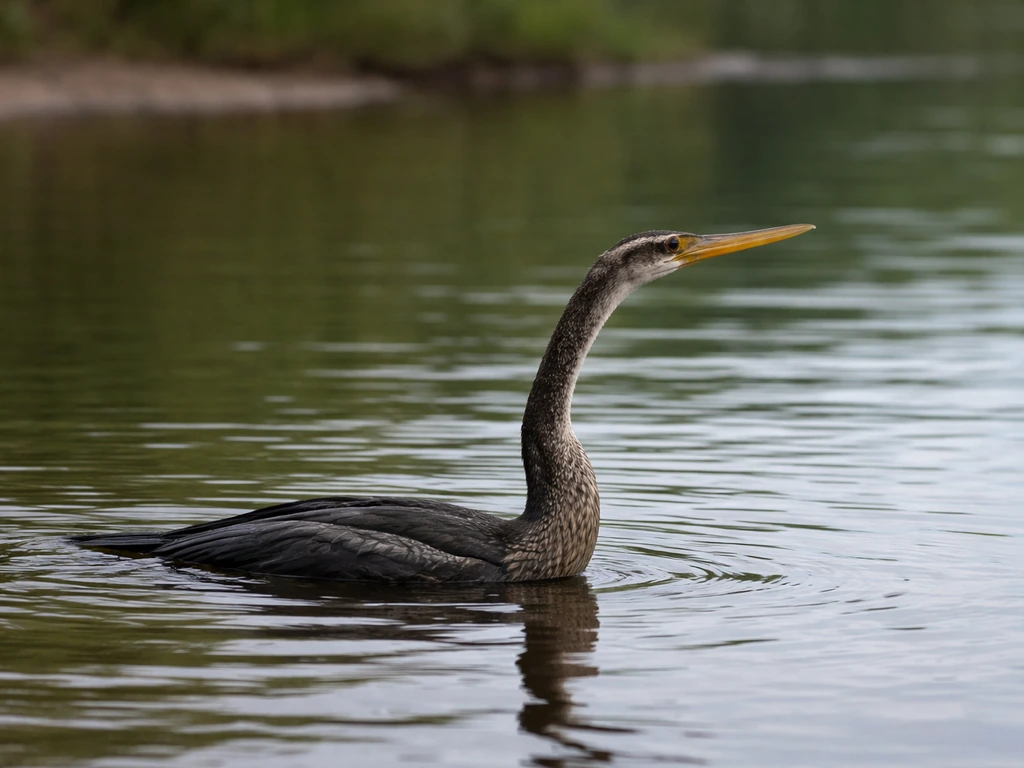
"Snake bird" is a folk name, not a formal species name, but it almost always refers to birds in the family Anhingidae, which includes anhingas (found in the Americas) and darters (found across Africa, Asia, and Australia). The name comes from how they swim: the body sinks below the surface while the long neck and head stick up above the waterline, exactly like a water snake gliding through a marsh. The word "anhinga" itself comes from the Tupi language, and the snake-like swimming posture is literally the reason the name exists.
In North America, "snake bird" refers specifically to the Anhinga (Anhinga anhinga). In South Asia, Africa, and Australia, the same nickname gets applied to the Oriental Darter, African Darter, and Australasian Darter. All of these birds belong to the same family and share the core traits that make them look snake-like. This article focuses on the comparison most North American and international readers are actually puzzling over: anhinga versus cormorant. But the ID logic applies equally well if you're looking at any darter species anhinga versus cormorant. But the ID logic applies equally well if you're looking at any darter species.
Size, silhouette, and posture: the fastest ID path
Both birds are big. An anhinga runs about 35 inches long, while a Double-crested Cormorant is comparable in body size but reads differently in the field because of proportional differences. The anhinga looks stretched and slender, almost like someone took a cormorant and pulled it from both ends. The cormorant is stockier, more compact, and sits heavier in the water.
The silhouette is where the difference really jumps out. An anhinga has a long, S-curved neck that it often holds kinked, a long pointed tail that fans out visibly, and slender overall proportions. When it's soaring overhead, that fan-shaped tail spread wide is a dead giveaway. A cormorant in flight shows a shorter, stubbier tail and a more uniform, cigar-like body profile. On a perch, the anhinga looks almost prehistoric: elongated, with the tail drooping or fanned out, and the neck often pulled back in that distinctive S-curve.
| Feature | Anhinga (Snake Bird) | Cormorant (Double-crested) |
|---|---|---|
| Overall length | ~35 inches | ~28-35 inches |
| Body shape | Long, slender, stretched | Stocky, compact |
| Neck posture | Long S-curve, often kinked | Thick, less pronounced curve |
| Tail | Long, fan-shaped, obvious | Short, barely noticeable |
| Perched posture | Upright, elongated, tail drooping | Hunched, stockier stance |
| In-flight silhouette | Spread fan tail, slim wings | Stubby tail, broader body |
Face and bill: the two cues that close the case
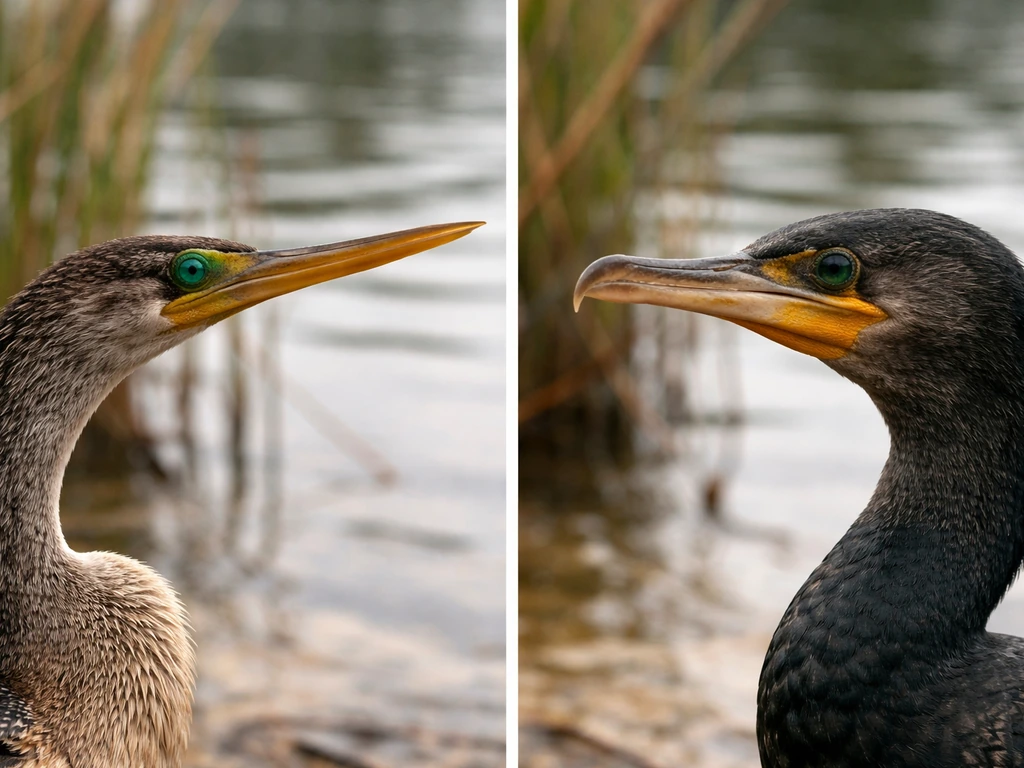
If you can see the bird's head clearly, you don't need anything else. The anhinga has a long, thin, straight bill that comes to a sharp point, like a stiletto or a fine dagger. There's no hook at the tip. The cormorant has a longer bill with a distinct hook at the tip, and the base of the bill is surrounded by bright orange or yellow bare skin (called the gular pouch or gular area) that you can spot even at a distance. That orange facial patch is a signature look for the Double-crested Cormorant, and it's completely absent on the anhinga.
The anhinga's bill is also proportionally narrower relative to its head, giving the head-and-neck profile an almost snake-headed appearance. When you add the long, thin neck to that narrow pointed bill, you really do see why people came up with the snake bird nickname. The cormorant's head looks rounded and blunt by comparison, with the bill feeling heavier and more hooked.
Wing and tail patterns to confirm in the field
Adult anhingas, especially males, have distinctive white streaks and spots on their wings and upper back. The Everglades NPS describes these as "silver patches on the wings," and that's exactly what they look like in the right light: bright, contrasting white edgings and streaks across the dark wing coverts. Female anhingas have a buff or tan head and neck instead of the dark greenish-black of the male, which makes them look even more different from cormorants at a glance.
Cormorants are essentially all dark, with very little patterning on the wings. The Double-crested Cormorant is black across the back and wings with a slight bronze or greenish gloss in good light, but there are no white patches, streaks, or spots on the upper wing surface. If you see a dark waterbird with obvious white wing markings, you're almost certainly looking at an anhinga.
The tail comparison is also reliable. The anhinga's tail is long enough to be obvious even in low-detail views, and it often fans out like a turkey's tail when the bird is sunning or just landing. Cormorant tails are short and stiff, not fan-shaped, and don't spread visibly.
How they hunt: spearing vs. chasing
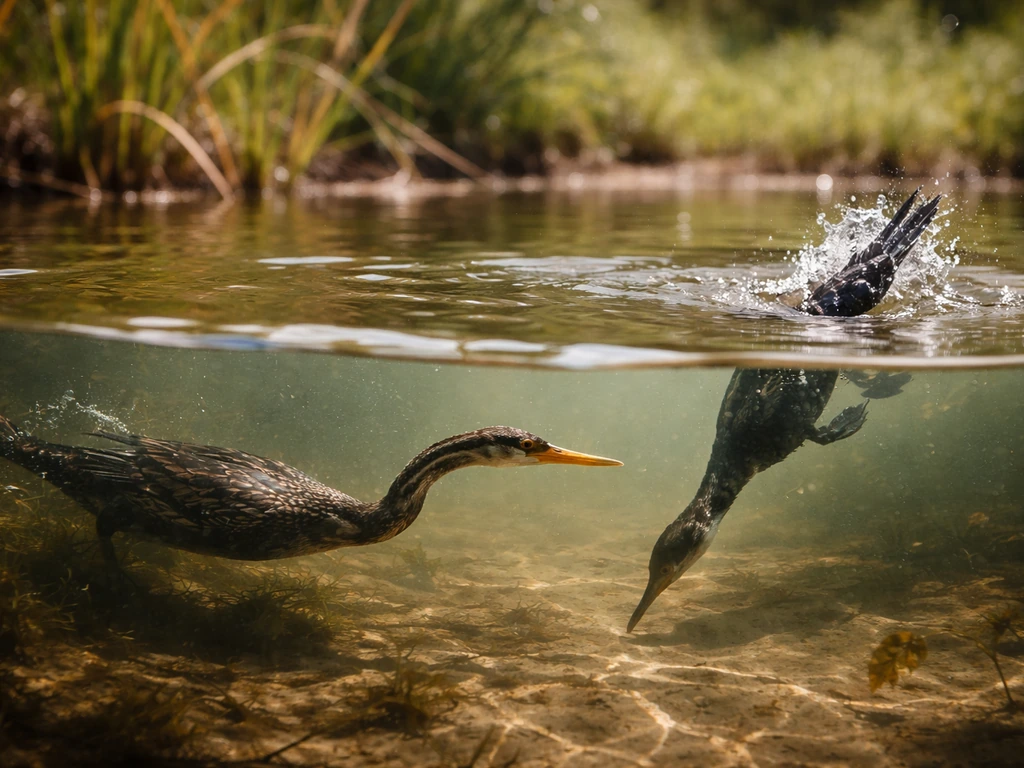
This is where the "snake bird" name really earns its keep. The anhinga doesn't grab fish the way most waterbirds do. It stalks prey underwater, moving slowly and deliberately, then strikes with a rapid extension of that long S-curved neck, literally spearing the fish with its dagger bill. The bill is closed, pointed, and used like a javelin. This is why the neck has that kinked S-shape, it's a coiled spring for a lightning-fast strike. Once it surfaces with a fish, the anhinga tosses it into the air and catches it headfirst before swallowing.
Cormorants hunt completely differently. They dive from the surface and actively chase prey underwater, propelling themselves with their feet (and sometimes their wings) in a pursuit dive. They grab fish with that hooked bill rather than spearing them. The result is a more athletic, chasing style of hunting versus the anhinga's patient, ambush-style strike. If you're watching a bird underwater (or watching its behavior just before and after diving), this distinction can help confirm your ID.
After diving, both birds spread their wings to dry, which is the classic pose people recognize from wildlife photos. Neither species has fully waterproof feathers, so this wing-drying behavior is shared. However, the Stanford Birds essay on spread-wing postures contrasts this by stating that blank" rel="noopener noreferrer">anhinga primarily use the posture for thermoregulation, while cormorants use it mainly for drying wings. However, anhingas are particularly reliant on it. The Everglades NPS notes they use this posture to absorb solar energy for thermoregulation. After a long foraging session, an anhinga will sit with its back to the sun, wings fully outstretched, for an extended period. Cormorants do the same thing but often more briefly and in groups.
Habitat and range: where each bird is likely to be
Anhingas are freshwater specialists. They prefer shallow, slow-moving, sheltered water like swamps, marshes, and quiet backwaters where they can stalk prey without fighting a current. The Everglades is a classic anhinga stronghold for exactly this reason. In North America, they're found from the southeastern United States through Central and South America, and they're most commonly spotted in Florida, Texas, Louisiana, and other Gulf Coast states. They're rarely seen on open ocean or large exposed lakes.
Cormorants are far more flexible. The Double-crested Cormorant ranges across essentially all of North America, from the Aleutian Islands down to Mexico and Florida. They're common on inland lakes, rivers, reservoirs, and coastal areas equally. If you're looking at a large dark diving bird on a big open lake, a reservoir, or a coastal bay, cormorant is statistically the better first guess. If you're in a swampy, shallow, tree-lined freshwater marsh in the South, start with anhinga.
| Factor | Anhinga (Snake Bird) | Double-crested Cormorant |
|---|---|---|
| Preferred habitat | Freshwater marshes, swamps, slow backwaters | Lakes, rivers, reservoirs, coastal bays |
| Water type | Mostly freshwater, sheltered | Fresh and saltwater, open or sheltered |
| North American range | Southeastern U.S., Gulf Coast, tropics | All of North America, coast to coast |
| Typical perch | Isolated tree, shrub over water | Rocks, pilings, trees, often in groups |
| Social behavior | Often solitary or small groups | Typically colonial, often in large flocks |
Quick ID checklist and common mistakes
When you spot a large dark waterbird and aren't sure what you're looking at, run through these questions in order. You'll usually land on the right answer by question three.
- Is the tail obviously long and fan-shaped? If yes, lean strongly toward anhinga.
- Is the bill straight and dagger-pointed, or hooked at the tip with orange facial skin? Dagger = anhinga. Hook + orange = cormorant.
- Are there white streaks or spots on the upper wing? White wing markings = anhinga. All dark = cormorant.
- Is the bird in a shallow freshwater swamp or marsh in the southern U.S.? More likely anhinga. Open lake, reservoir, or coastal area? More likely cormorant.
- Is the neck extremely long and kinked into an S-shape? More pronounced S = anhinga. Shorter, thicker neck = cormorant.
- Is the bird a female with a tan or buff head and neck? That's an anhinga. Cormorants are dark-headed in both sexes.
The mistakes that trip people up most
The most common error is seeing a dark bird spreading its wings on a post or branch and assuming cormorant, because that's the more familiar species in most of North America. Both birds use this pose, so the wing-spread posture alone tells you nothing. You need to check the tail length and bill shape while the bird is sitting still.
The second common mistake is misreading the swimming silhouette. When an anhinga swims with its body submerged and only the neck above water, it looks nothing like a cormorant. That low, snaking profile is almost unmistakable once you've seen it. But if someone spots just the head and neck from a distance without recognizing the behavior, they may log it as a cormorant simply because cormorants are more expected. If a bird looks like a water snake swimming through a marsh, stop and look again. That's almost certainly an anhinga doing exactly what gave it its name.
Female anhingas also confuse beginners because the buff neck and head make the bird look two-toned and less like the classic "dark waterbird" image. Some people mistake them for completely different species entirely. If you see a dark-bodied bird with a pale tan head and neck, a long pointed bill, and obvious white wing spots, that's a female anhinga, not a mystery bird.
This kind of confusion between similar-looking waterbirds is a recurring theme with aquatic species. If you're also comparing other coastal birds, you might be wondering how an albatross bird differs from a seagull albatross bird vs seagull. If you are branching out to other look-alikes, a good next step is comparing an egret bird vs pelican as well Anhinga versus cormorant. The same attention to silhouette, bill shape, and habitat that separates anhingas from cormorants applies when working through other waterbird pairs, whether you're sorting out herons from egrets, ibis from egrets, or other long-necked birds that share wetland habitats.
FAQ
If I only get a quick, distant look, how can I tell snake bird (anhinga/darter) from a cormorant?
Use behavior to break ties: if the bird glides forward with its body low and only the neck and head protruding, that strongly suggests snake bird (anhinga/darter). Cormorants more often show a more uniform “head and back” silhouette when they are swimming or moving between dives.
Do juvenile snake birds look less like an adult, and what should I check first?
Yes, young birds can confuse you because wing patterning and bill tone can be less obvious. In that case, prioritize two hard features that are typically consistent: tail length (anhinga/darter tail looks long and visible) and bill shape (anhinga has a thin, straight, dagger-like bill tip without a conspicuous hook).
Can wing-spread behavior help, or do both species look the same after diving?
Wing-spread drying is shared, but the timing can help. Anhingas often hold the wings fully out longer after foraging, especially when they are actively thermoregulating, while cormorants may dry briefly and then regroup. Still, confirm with tail and bill shape, not just duration.
What if the orange facial skin on the cormorant is not visible due to lighting or distance?
At night or in heavy shade, the orange facial skin on Double-crested Cormorants may be hard to see. Switch to secondary cues you can still read: cormorants typically have a shorter, stubbier tail with a more compact body profile, and they show a hooked bill tip compared with anhinga’s straight, dagger-like tip.
I saw a long-necked dark bird, but it might not be anhinga. How do I avoid misidentifying other waterbirds?
If you see a long neck, you still need to be careful, because other long-necked wetland birds can overlap. The quickest safeguard is this combo: long, fan-visible tail plus a straight, thin bill (anhinga/darter) versus a short tail plus a hooked bill and typically more uniform dark “cigar” posture (cormorant).
Is “snake bird” always an anhinga in my area, or could it be a different darter?
In North America, “snake bird” almost always means anhinga. “Darter” is more common internationally for similar birds in the same family, so the ID approach is the same, but your confidence should come from local range and the same core traits (tail length, straight dagger bill vs hooked bill, and wing spot patterning).
What if the bird is too far away for the bill details, what should I look at on the perch?
If the bird is perched and you cannot see the bill clearly, use silhouette order: first check tail (long and fanned or drooping for anhinga, short and stiff for cormorant). Next check neck posture, anhinga often holds an S-curve or neck pulled in a distinctive kink. Then, try to catch the gular area if it is a cormorant.
What are the most common field mistakes people make when they see a wing-spread dark diving bird?
Yes. The biggest trap is assuming “wing-spread equals cormorant.” Both species do it, so don’t lock the ID until you check tail length and bill tip shape while the bird is still. If you can, compare also the darkness of wing coverts, anhinga often shows obvious white streaks or spots on the upper wings, cormorants usually do not.
How much should habitat and location influence my ID, especially if the bird is partially obscured?
Cormorants can be frequent on large open water where anhingas usually are not, so habitat is a strong tiebreaker. If you are on a big exposed lake, reservoir, or coastal bay, start with cormorant; if you are in a shallow, tree-lined swamp or marsh edge, start with anhinga.
Can I confirm snake bird vs cormorant by how they hunt, and what exactly should I watch for?
Feeding style is a confirmation cue, not the first step. If you see a bird spear fish with a rapid neck thrust from a submerged stalk, that is anhinga. If you see pursuit and chasing underwater from the surface dive, that is more typical of cormorants.
Next Article
Shark vs Bird: How They Differ and Who Would Win in Nature
Shark vs bird: evidence-based comparison of anatomy, behavior, habitats, likely outcomes, and key FAQs.