Birds and lizards both have hips, but you can tell them apart at a glance once you know what to look for. A bird's hip region is a rigid, fused platform sitting high on the body, with legs that drop straight down underneath a compact, upright torso. A lizard's hips are lower, more loosely connected, and set at the sides of a flattened body, so the legs splay outward rather than hanging below. Those two posture differences alone will get you most of the way there in the field, even before you notice feathers or scales.
Bird Hip vs Lizard Hip: Quick Field ID Checklist

Marcus Hendricks
29 Apr 2026
What problem you're actually solving here
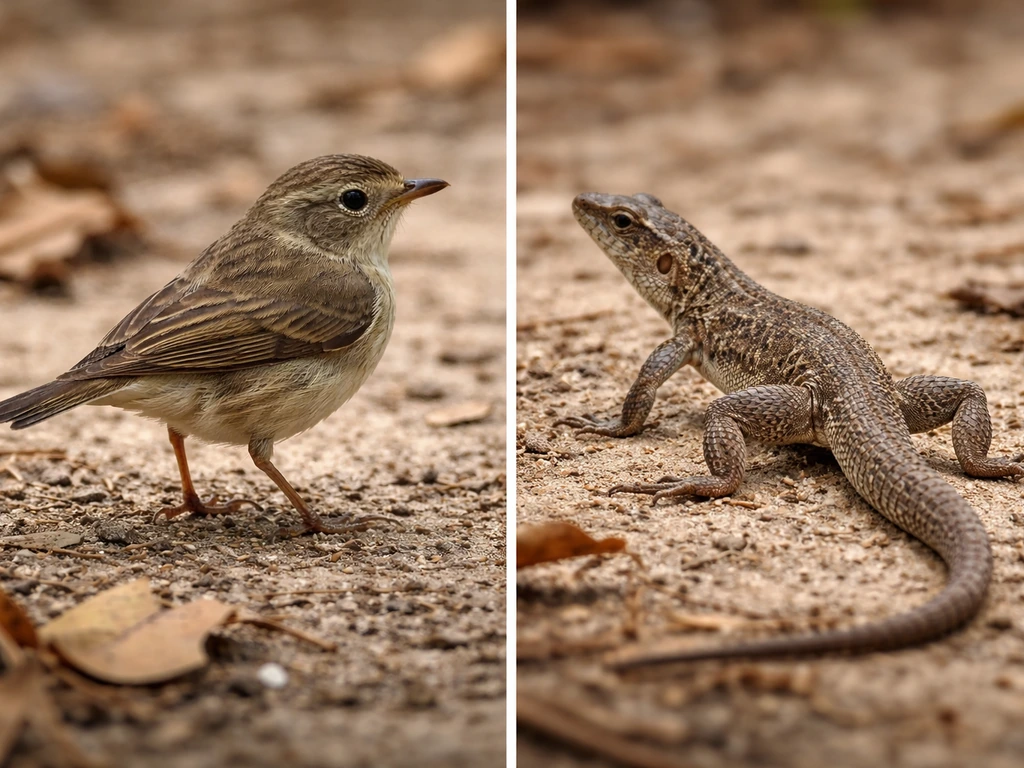
The confusion usually comes from looking at a silhouette or a partial photo and not being sure whether the leg-attachment zone and tail base you're seeing belong to a bird or a lizard. It matters because the "hip" area in both animals looks like a bulge or widening at the rear of the trunk, and from certain angles, especially side views at a distance, you can genuinely mix them up. This is especially true with small perching birds seen from behind (where the rump looks wide) or with compact lizards like skinks that hold their body relatively upright. The goal here is a reliable, field-ready checklist you can run through in under a minute.
Hip anatomy in birds vs lizards, without the jargon
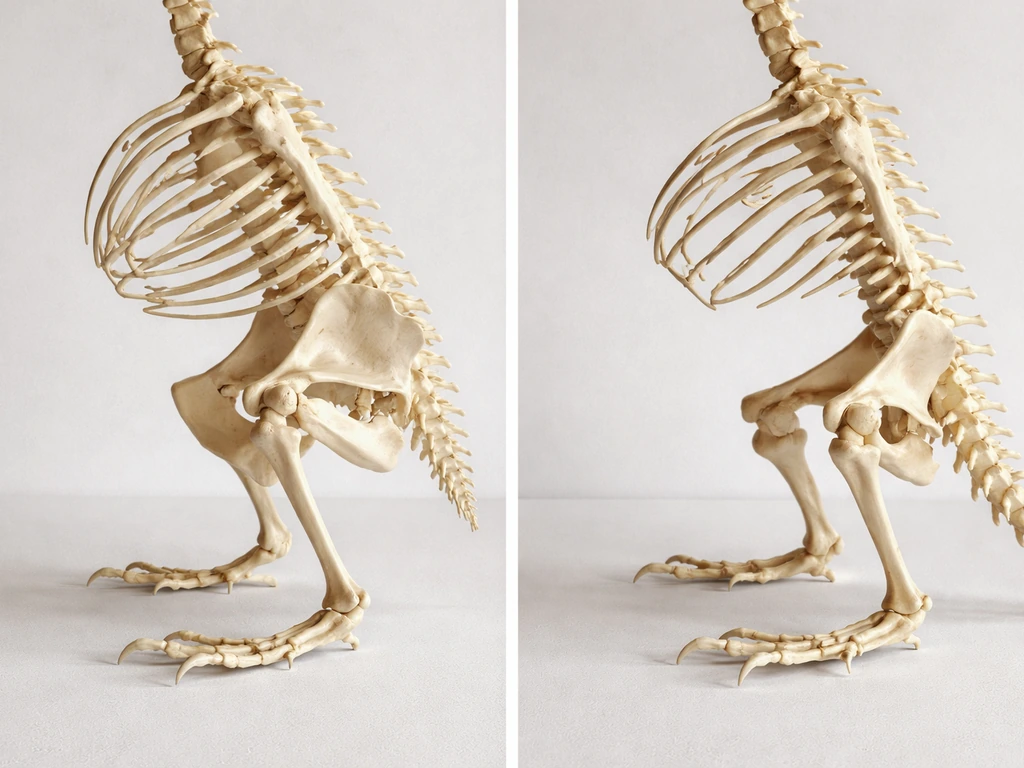
In a bird, what people call the "hip" is actually a fused bony platform called the synsacrum. Multiple vertebrae and the pelvic bones (ilium, ischium, and pubis) are all welded together into one rigid unit. Externally, this structure corresponds to the rump, that smooth, slightly rounded area just in front of the tail. The leg connects to this platform via the hip socket (the acetabulum), which is positioned on the lower side of this rigid block, tucking the femur under the bird's center of gravity. The whole arrangement is narrow and compact, which is why a bird's legs appear to come straight down from under its body.
In a lizard, the pelvic girdle is made of the same three bones (ilium, ischium, pubis), but they are not fused to the spine in the same rigid way. The ilium connects to just one or two sacral vertebrae rather than an extended fused block. Britannica describes that in birds the ilium extends and fuses with vertebrae to form the synsacrum, a part of the rigid avian pelvic complex The ilium connects to just one or two sacral vertebrae rather than an extended fused block.. This means the pelvis has more mobility and sits lower relative to the body profile. The acetabulum (hip socket) faces more to the side rather than downward, which is exactly why lizard legs spread outward. The tail base in lizards also sits at roughly the same level as the pelvis, rather than above it as in birds.
What a bird's hip region actually looks like in the field
You won't see the bones directly on a living bird, but the external anatomy gives you clear signals. The rump, which is the visible surface expression of the synsacrum, looks like a smooth, slightly domed area between the back and the tail. There's no visible joint or hinge there. The tail then extends from below the rump at a distinct attachment point, not from the same horizontal level as the legs. When you watch a bird stand, notice that both legs emerge from roughly the same point under the belly, close together, and the bird's weight sits directly over them.
- Legs hang nearly straight down from under the body, not angled outward
- The rump/hip area looks like a smooth dome or shelf, often covered in contour feathers
- The tail base attaches below and behind the rump, clearly separated from the leg attachment zone
- From a rear view, the bird looks narrow at the hip with legs close together
- From a side view, the body appears compact and the leg-to-body angle is close to vertical
- The center of mass sits directly above the feet, giving an upright, balanced posture
One thing that trips people up: the tail feathers in many birds fan out from the pygostyle, a small fused bone at the very end of the spine. This tail-feather attachment point is not the hip. The actual hip socket is much further forward, roughly under the trailing edge of the wing when the bird is at rest. Once you anchor "hip" to that spot and "tail base" to the rump/pygostyle area, you'll stop conflating the two.
What a lizard's hip region looks like in the field
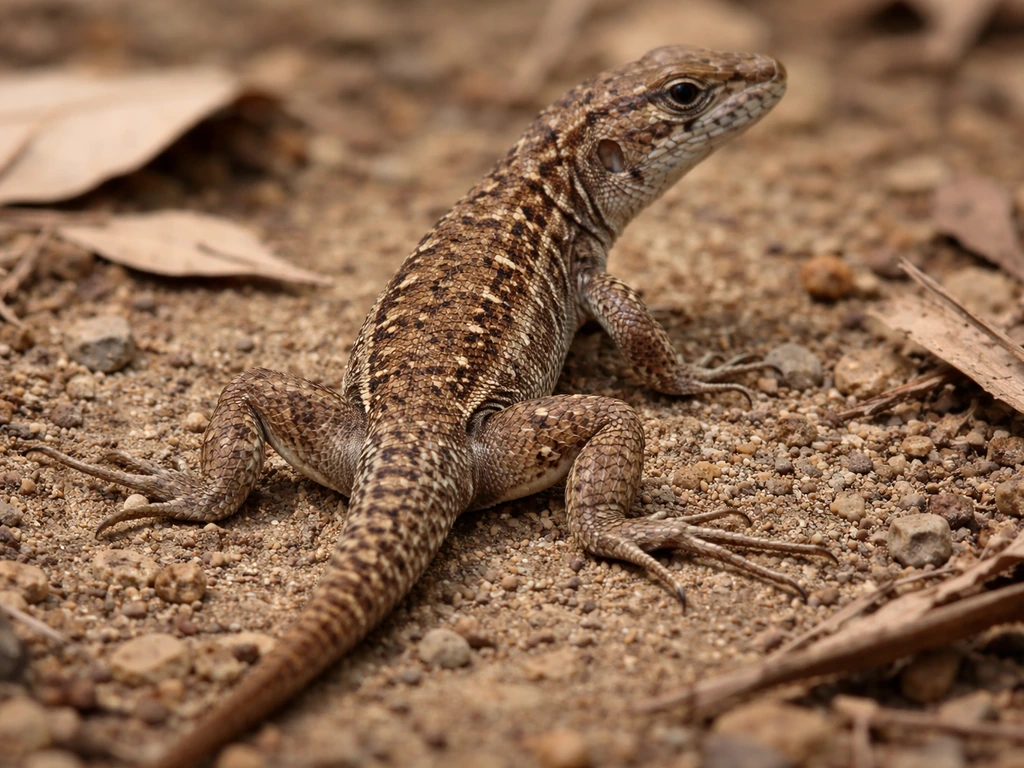
A lizard's hip region is where things get noticeably different. The hindlimbs attach at the sides of the body, not underneath it. Even when a lizard is standing still, the upper leg (femur) runs roughly horizontal before the lower leg drops down to the ground. This gives lizards their characteristic wide, low-slung look. The tail attaches directly behind the pelvis at the same body level, so there's a continuous horizontal line from hip to tail base rather than the distinct drop you see in birds.
- Hindlimbs splay outward from the sides of the body, not downward
- The femur runs roughly parallel to the ground before the knee bends downward
- The hip-to-tail transition is smooth and at the same horizontal level, not elevated
- From a rear view, the body looks wide at the hips with legs spread well apart
- From a side view, the body is flattened, low to the ground, and the belly often nearly touches the substrate
- There's a visible lateral bulge or widening at the hip region where the leg meets the body
Some lizards, like monitor lizards and certain agamas, can lift themselves higher off the ground, but even then the hindlimb still attaches at the side and spreads outward before going down. You can see this clearly at the hip junction when the animal moves. The tail also tends to be thick and muscular at the base, blending directly into the hip width without the separate "rump shelf" you'd see in a bird.
The cues that fool people most often
Leg position is the biggest source of confusion, and it usually happens with bad angles or quick glances. Here's how to avoid the most common misreads:
Body angle vs true stance
A bird crouching low, like a nightjar resting on the ground, can look surprisingly horizontal and lizard-like. But even then, its legs are still tucked under its body, not splayed to the sides. Conversely, an agama lizard basking with its body raised can look more upright than expected. The key check is leg direction from the hip: under the body (bird) or out to the side (lizard).
Tail base position
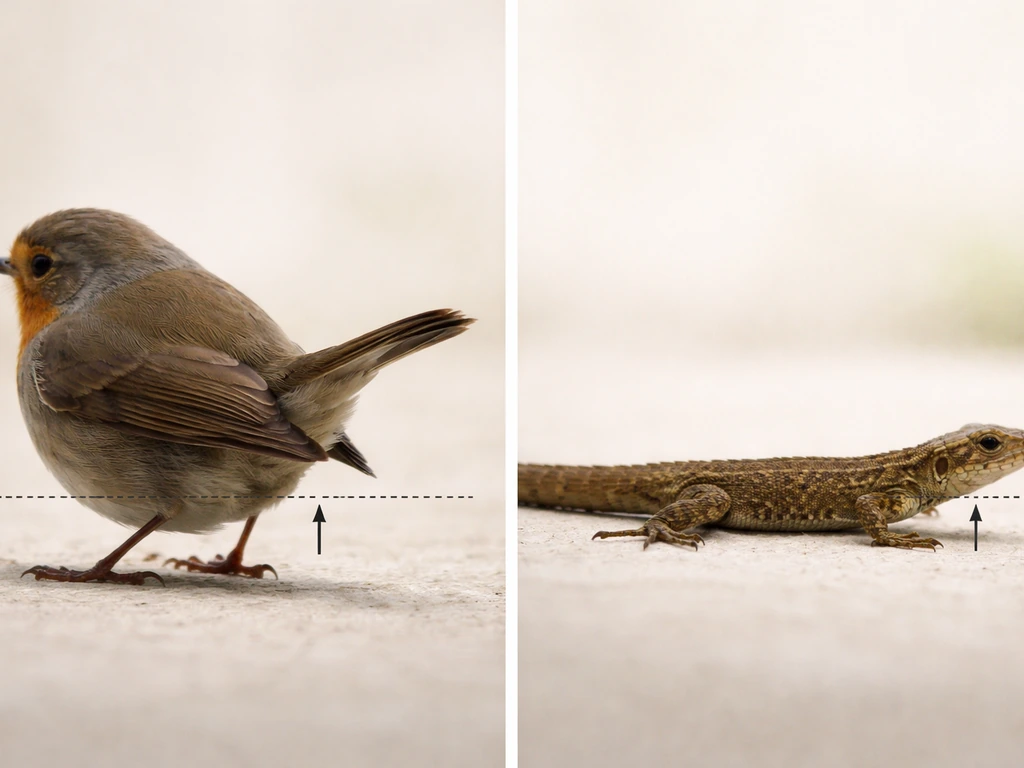
In birds, the tail base is visually higher than or at the same level as the leg attachment, because the rump forms a shelf above the leg socket. In lizards, the tail base and leg attachment are at the same horizontal plane. If you're looking at a rear or three-quarter view and the tail seems to flow directly from the same body level as the legs, you're almost certainly looking at a lizard.
Feathers vs scales hiding the hip zone
Bird feathers routinely hide exactly where the leg meets the body. The visible feather line can make it look like the leg attaches higher or further back than it actually does. With lizards, scales are tight to the body and the leg-to-hip junction is usually visible. If you can see a clean, unobstructed leg-to-body seam, you're likely looking at a lizard. If that junction is obscured by fluffed feathers, assume bird and look for other confirming cues instead.
Quick comparison table
| Feature | Bird | Lizard |
|---|---|---|
| Leg direction from hip | Straight down, under body | Outward to the side, then down |
| Hip/rump external look | Smooth dome (rump), feather-covered | Lateral widening, scales visible at junction |
| Tail base position vs legs | Tail base behind/below rump, clearly separated | Tail base at same horizontal level as hips |
| Body posture when standing | Upright, center of mass over feet | Low-slung, belly near substrate |
| Rear-view hip width | Narrow, legs close together | Wide, legs spread apart |
| Hip mobility/rigidity | Rigid fused platform (synsacrum) | More flexible, fewer fused vertebrae |
| Leg-to-body junction visibility | Often hidden by feathers | Usually visible through scales |
How to confirm your ID with photos and avoid misreads
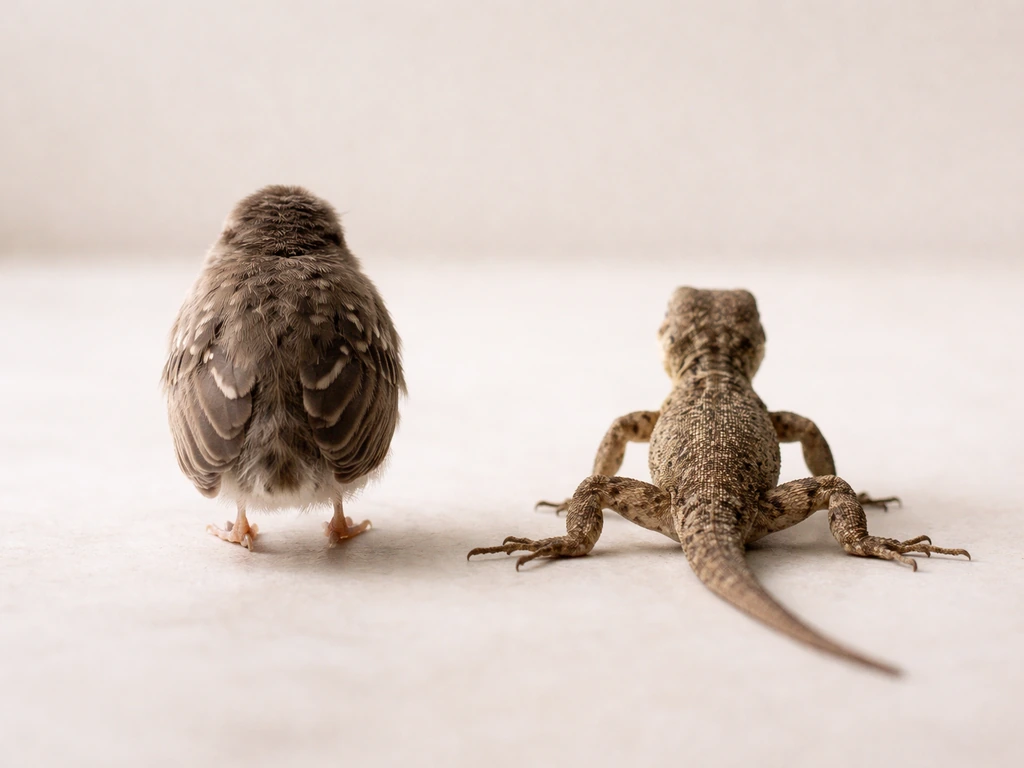
If you have the chance to take a photo or examine a specimen more carefully, here's how to get the most useful information:
- Shoot from directly behind the animal at the same height. This rear view immediately shows leg spread: close together (bird) vs widely splayed (lizard). It's the single most diagnostic angle for hip comparison.
- Get a clean side view with the full body in frame. You want to see where the leg emerges from the body and whether the tail flows continuously from that level or drops away from a raised rump.
- Look for the rump shelf. In a side photo of a bird, you should be able to identify a slight raised or domed area just in front of where the tail feathers begin. That shelf is the external expression of the fused synsacrum. Lizards don't have it.
- Check the knee direction on the standing animal. In birds, the first visible joint below the body (which looks like a backward knee but is actually the ankle) bends forward. In lizards, the true knee bends outward and then down.
- If you have a skeleton or museum specimen, find the acetabulum (hip socket). In birds it faces downward and slightly backward. In lizards it faces more laterally. You don't need calipers for this: just look at which direction the socket opening faces.
- Rule out the tail-base misread by identifying the pygostyle zone in birds. If you see stiff tail feathers fanning from a central point, that's the pygostyle area, well behind and below the true hip. Don't anchor your hip estimate there.
- For photo comparison, place a bird and lizard image side by side in a photo editor and draw a horizontal line through the hip and tail-base zones. In the bird image the rump will sit above the line; in the lizard image both hips and tail base will sit on or near the same line.
- When the hip zone is obscured by feathers or scales, look at posture and stance instead of trying to find the junction directly. Stance is reliable even when anatomy is hidden.
One last thing worth noting: this bird-hip vs lizard-hip distinction connects directly to some fascinating evolutionary history. If you want to see that big picture in bones, a bird vs dinosaur skeleton comparison highlights how pelvis shape and leg attachment changed over time. The classic dinosaur classification divided into "bird-hipped" (ornithischia) and "lizard-hipped" (saurischia) groups, and interestingly, modern birds actually descended from the lizard-hipped theropod lineage despite having what we now recognize as a very bird-like pelvis. Harry Seeley’s 1887 dinosaur classification used blank" rel="noopener noreferrer">hip structure to distinguish the “lizard hips” (Saurischia) from the “bird hips” (Ornithischia). If you find yourself going deeper into how bird skeletons compare to dinosaur skeletons, or how a T. A clear bird dinosaur skeleton comparison also helps you spot how the pelvis changed as feathers evolved in the theropod line bird skeletons compare to dinosaur skeletons. That comparison, often summarized as t-rex skeleton vs bird skeleton, is a useful way to keep the “hip” cues straight T. rex skeleton stacks up against a modern bird. If you want to go beyond hips, comparing the wider bird skeleton vs dinosaur skeleton differences can help confirm whether you are looking at a true theropod lineage. rex skeleton stacks up against a modern bird, there's a whole layer of hip-evolution story waiting there too.
For everyday field use, though, keep it simple: legs under body with a raised rump shelf means bird, legs out to the sides with a continuous hip-to-tail line means lizard. Run through the checklist above once or twice on known animals and it becomes automatic fast.
FAQ
What should I do if the animal is moving and the leg angle changes the hip look?
Use the hip test based on attachment, not on where the feet land. Pause mentally at the moment legs are closest to their normal stance, then check direction from the hip: bird legs come from under the belly (not splayed), lizard legs spread outward from the side. Also re-check the tail base level relative to the legs, since that stays more consistent than foot placement.
Can a bird ever look like it has outward, splayed legs?
Yes, in certain behaviors. When a bird is stepping sideways, wing-spreading, or using a “sit tall” posture, the legs can appear wider apart. The key difference remains that the hips still form a compact rump shelf and the leg sockets are tucked under the centerline, so you should see legs emerging from under the body rather than from the sides with a continuous hip-to-tail line.
How reliable is the “tail base level” cue if the tail is curled or held upright?
It gets less reliable when the tail is curled upward or wrapped around the body. In those cases, prioritize the leg direction cue (under-body for birds, side-spread for lizards) and the presence of a distinct rump shelf above the leg socket. If you can only see a straight rear view, look for whether the tail arises from below the rump (bird) or from the same horizontal plane as the pelvis (lizard).
What if I only see a rear or three-quarter silhouette and the feathers or scales blur details?
Try to locate the transition line where the tail begins relative to the rump. For birds, the rump looks like a smooth shelf, and the legs originate close together under the belly, even if the feather line hides the exact joint. For lizards, you typically get a more continuous body line where hip width and tail base align, and the leg-to-hip junction is less masked by a large, fluffy feather layer.
Do juveniles or small species make the cues harder to use?
Small size can reduce visible detail, but the posture geometry still holds. With tiny perching birds, the rump can appear wide from behind, so you should double-check leg emergence point (close under belly versus out to sides). With small skinks, the body can look upright, but the leg-to-body seam is often still visible, and the hip-to-tail base plane usually stays aligned.
How can I avoid confusing the pygostyle or tail-feather base with the hip area?
Do not anchor “hip” to any feathered tail-fan origin. Instead, find the rump shelf, then identify the tail starting point immediately behind it, and only use the spot where the legs tuck under the belly as the hip socket reference. A quick rule: in birds, the tail base sits at or below the rump shelf edge, while the leg sockets are clearly forward relative to the main tail attachment.
What’s the best single check if I’m in the moment and can only look for a few seconds?
Use the leg-direction rule. Birds: legs go down from under the body, close together at the hip. Lizards: legs attach at the sides and spread outward before going down. If you get that right, most “hip vs tail base” confusion resolves automatically.
If it’s a monitor lizard or an agama that can lift its body, will it break the lizard hip rule?
The stance can change how upright it looks, but the attachment pattern usually does not. Even when raised, monitors and agamas still have hindlimbs attaching at the sides, with an outward flare at the hip junction, followed by a drop. The tail base typically remains continuous with the pelvis width at the same body level rather than forming a distinct bird-like rump shelf.
Could this be confused with other animals like mammals or turtles?
Mammals usually have their hind legs under the body like birds, but the “rump shelf” concept and the bird-style tail origin geometry do not match, and mammals do not show the same outward side-hip pattern as lizards. Turtles and tortoises add a shell and a different rear anatomy, so your best move is to treat the checklist as lizard versus bird only, and confirm with obvious body plan cues (shell, limb attachment shape, and tail base relationship).
When should I switch from visual checks to examining a specimen or clearer photo?
If you cannot clearly see the leg-to-body junction, the tail base origin, or the rump shelf edge, the visual cues become ambiguous. In photos, shoot or zoom to a perpendicular rear or three-quarter angle where you can track the hip socket location relative to the wing rest point (birds) or where pelvis width lines up with the tail base (lizards).
What’s a quick practice method to get faster at this in the field?
Pick 5 known birds and 5 known lizards in your area, then do a two-step scan each time: first, decide bird or lizard using only leg direction from the hip. Second, confirm your choice with one extra cue, either the rump shelf for birds or the hip-to-tail same horizontal plane for lizards. After a few rounds, the decision becomes near-automatic even from partial angles.
Next Articles
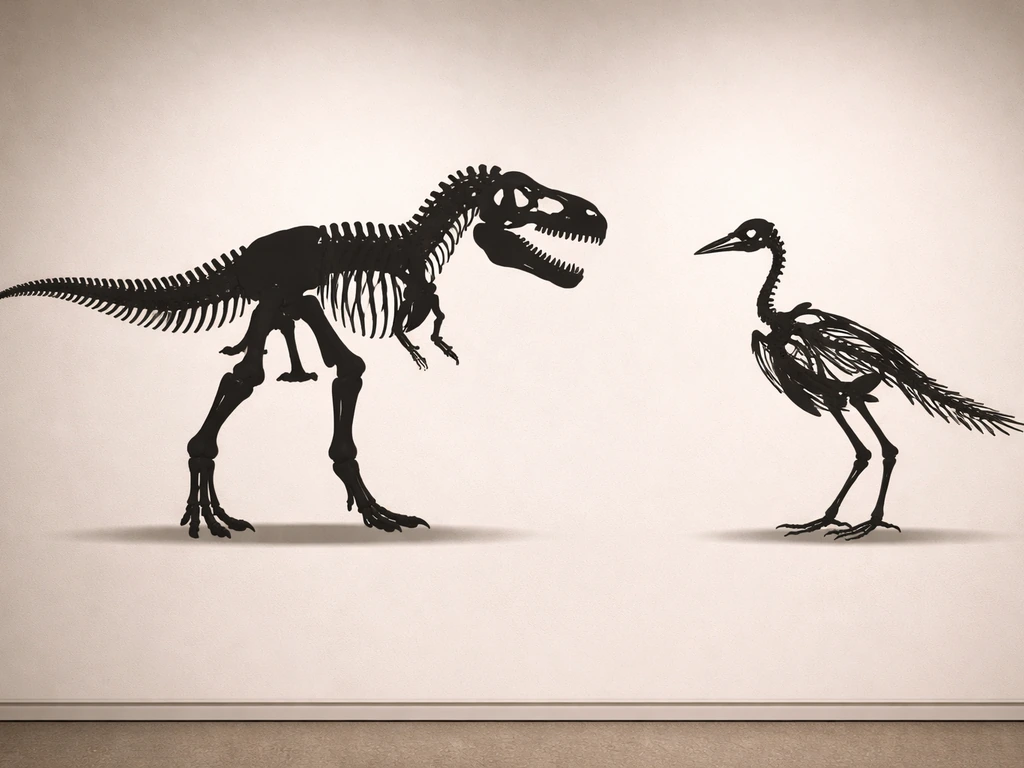
T-Rex Skeleton vs Bird Skeleton: How to Tell the Differences
Compare T rex and bird skeletons by skull, vertebrae, pelvis, limbs, feet, and tail mechanics to avoid misreads.
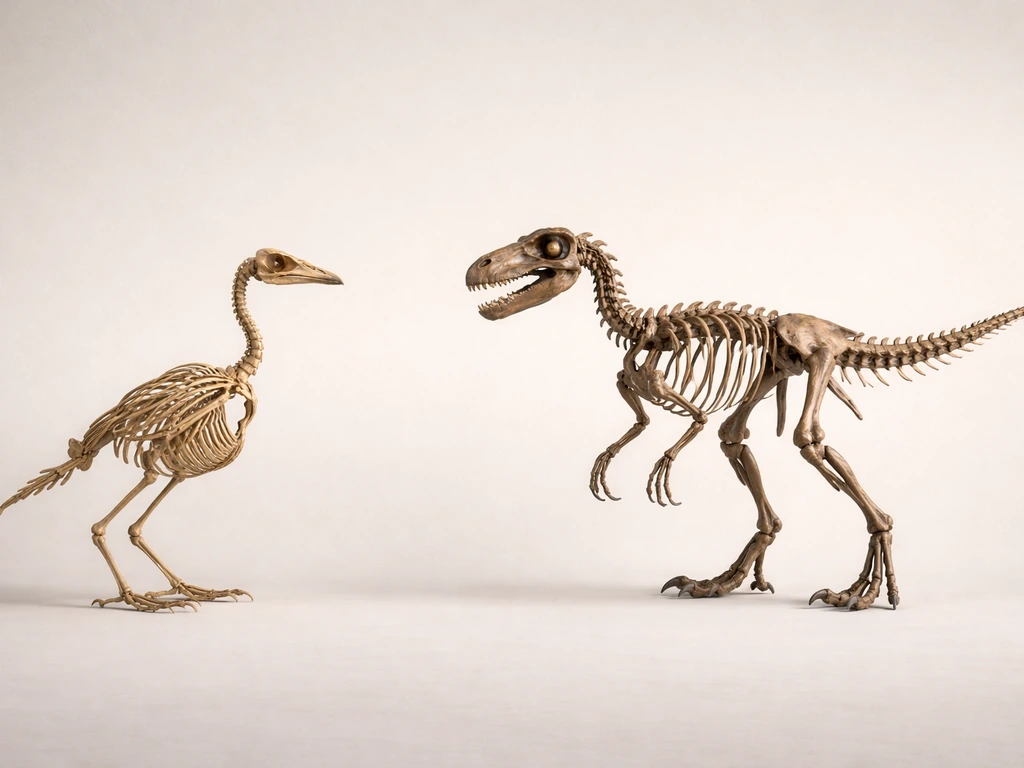
Bird vs Dinosaur Skeleton: Bone-by-Bone ID Guide
Learn bone-by-bone how to tell a bird skeleton from a dinosaur, using skull, wings, ribs, pelvis, and feet traits.
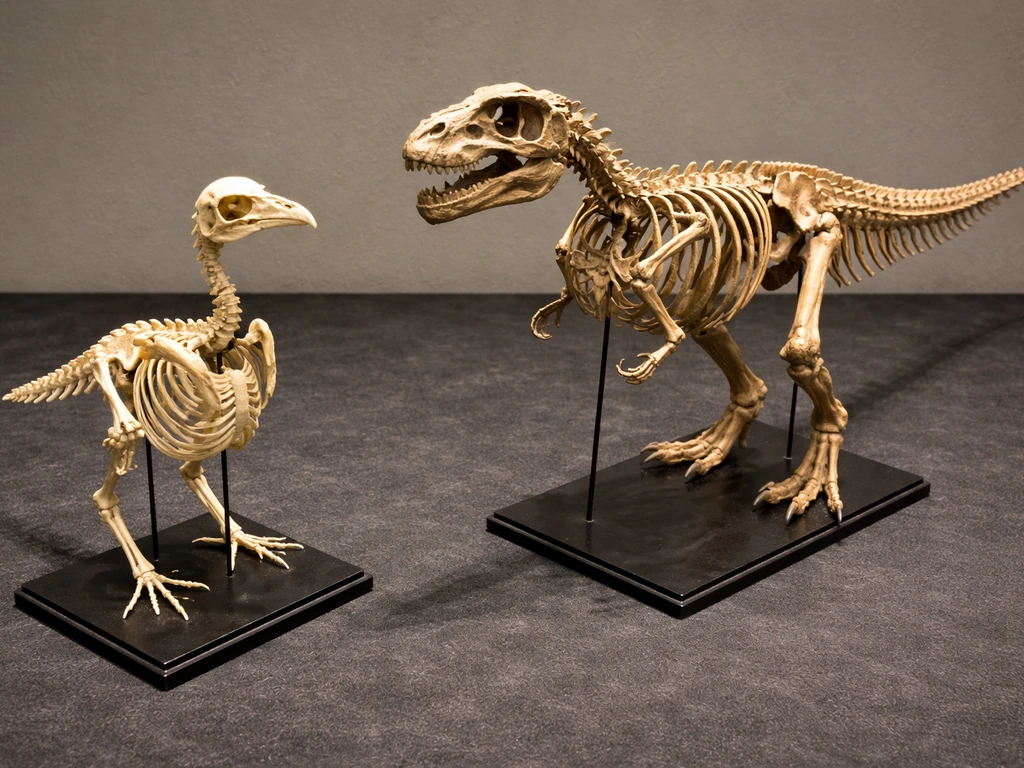
Bird Skeleton vs Dinosaur Skeleton: Skull and Bones Guide
Side by side bird vs dinosaur skeleton and skull guide with clear landmarks to tell them apart and avoid common misconce