What elephant birds were
Elephant birds belonged to the family Aepyornithidae and were native exclusively to Madagascar. They were not a single uniform species. Research published in peer-reviewed journals has identified unexpected diversity within the group, meaning different elephant bird taxa likely varied in body size, limb proportions, and the habitats they used. The genus Aepyornis is the most well-known, and Aepyornis maximus is the name attached to the largest specimens. Estimates from fossil studies put Aepyornis maximus at roughly 2.7 to 3 metres tall and weighing somewhere between 400 and 540 kg. That makes them the heaviest birds ever known to have lived, roughly double the weight of a large modern ostrich.
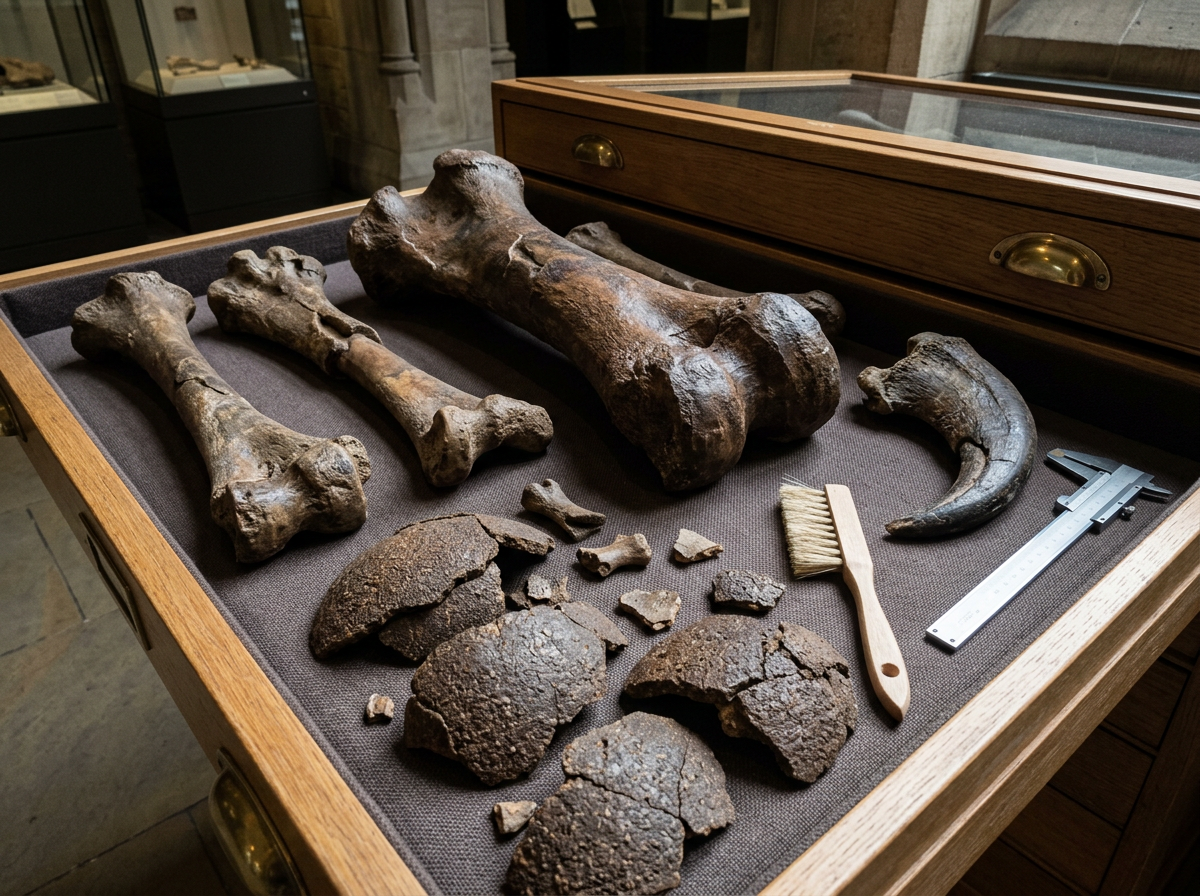
Everything we know about elephant birds comes from fossils and subfossils, including bones, eggshell fragments, and whole eggs. Their eggs are among the largest known amniote eggs ever recorded, and if you see an image of a genuinely enormous egg (far larger than any ostrich egg) labeled as coming from Madagascar, it almost certainly belongs to an elephant bird. Radiocarbon dating of subfossil deposits places their existence through the Late Pleistocene and into the Holocene, with humans likely overlapping with them for centuries before extinction. A fascinating recent finding is that ancient eggshell fragments alone, with no skeletal remains at all, were used to identify a previously unknown elephant bird lineage associated with wet, forested landscapes in northeastern Madagascar. So even fragments carry useful identification data.
Stable isotope analysis of Madagascar megafauna remains has given researchers another tool: by measuring carbon isotope values (δ13C) in bone collagen, scientists can infer whether a given elephant bird taxon was primarily a browser in forested environments or a grazer in open habitats. The taxon Aepyornis hildebrandti, for example, shows isotope values consistent with browsing, suggesting it lived in or near forested areas. This tells us elephant birds were not all the same ecologically, and it also tells us that at least some of them were adapted to habitat types quite different from the open savannas where ostriches thrive.
What ostriches are today
The common ostrich (Struthio camelus, Linnaeus, 1758) is the only living member of the genus Struthio and the largest living bird species on Earth. It belongs to Order Struthioniformes, Family Struthionidae. Ostriches are native to Africa, where they inhabit open arid and semi-arid environments such as savannas and the Sahel. You will not find wild ostriches naturally in Asia, Europe, Madagascar, or anywhere outside Africa (farmed ostriches are another matter). They are highly social animals, often found in groups, and they are well-studied for both their ecology and physiology.
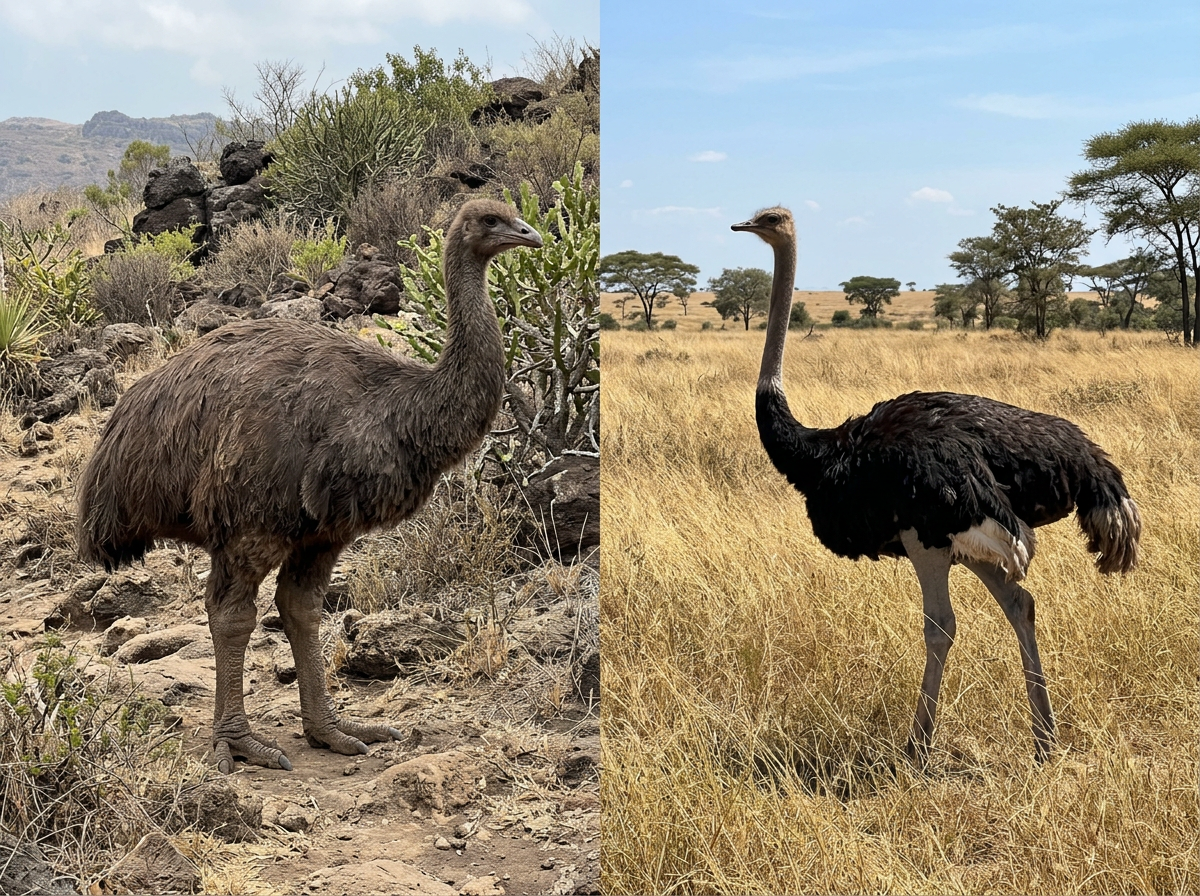
Adult ostriches typically weigh around 100 to 115 kg, with large males reaching up to about 150 kg, though historical comparisons have cited figures around 250 lb (roughly 113 kg) for adult males. They stand roughly 1.8 to 2.7 metres tall, with the tallest individuals approaching the lower end of elephant bird height estimates. Ostriches are fast runners: their powerful two-toed legs can cover up to 16 feet (about 4.9 metres) in a single stride. They are well adapted to hot, dry, open landscapes and can go without water for extended periods, though they do drink when water is available. Their diet is broad and opportunistic, including plants, seeds, insects, and small animals.
Size, appearance, and movement: the clearest differences
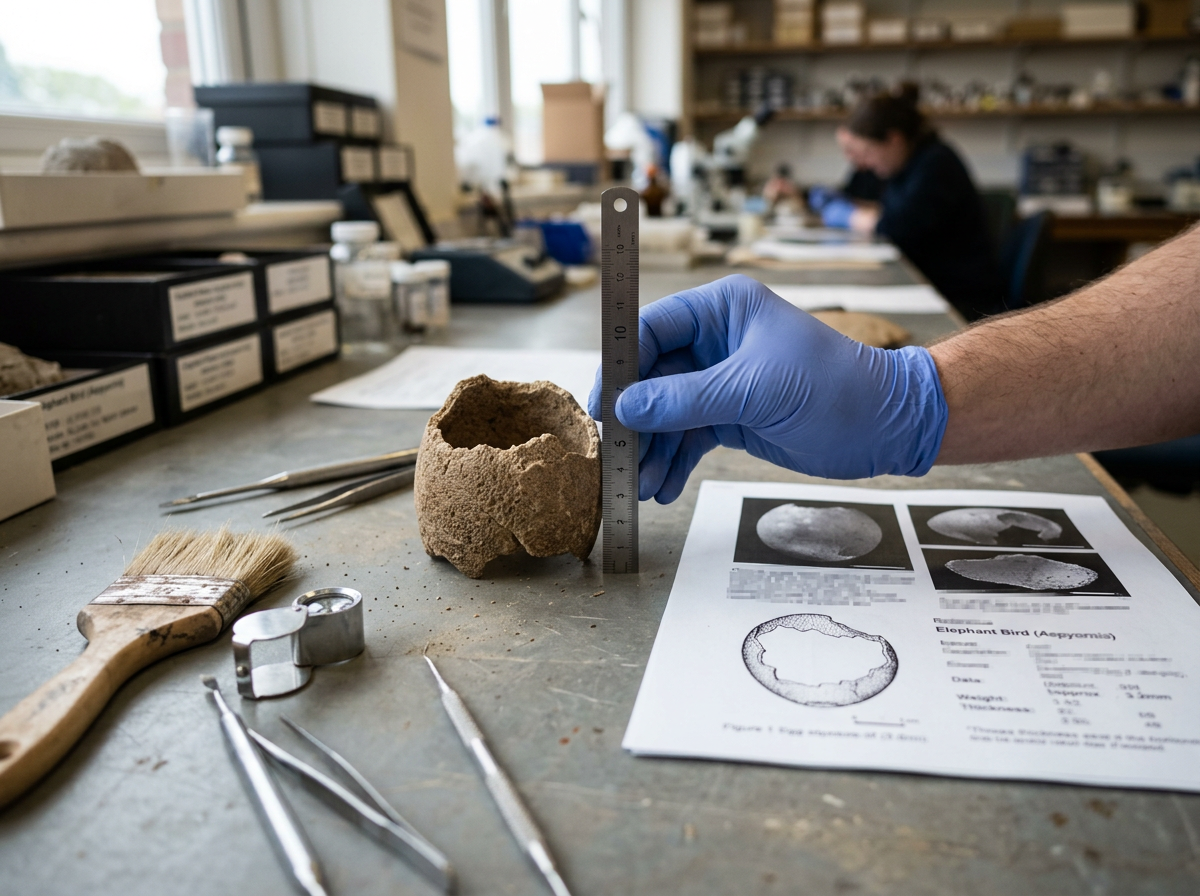
This is where the two birds diverge most obviously once you know what to look for. An adult elephant bird was built like a tank: massively heavy, with thick robust leg bones that imply a graviportal (slow, weight-bearing) locomotion style rather than the cursorial (fast-running) style of ostriches. Researchers use limb proportions and bone geometry from fossils to distinguish graviportal from cursorial ground birds, and elephant birds fall firmly in the slow-moving category. Ostriches, by contrast, are built for speed, with long slender legs and a nearly horizontal femur posture during walking that enables their remarkable stride length.
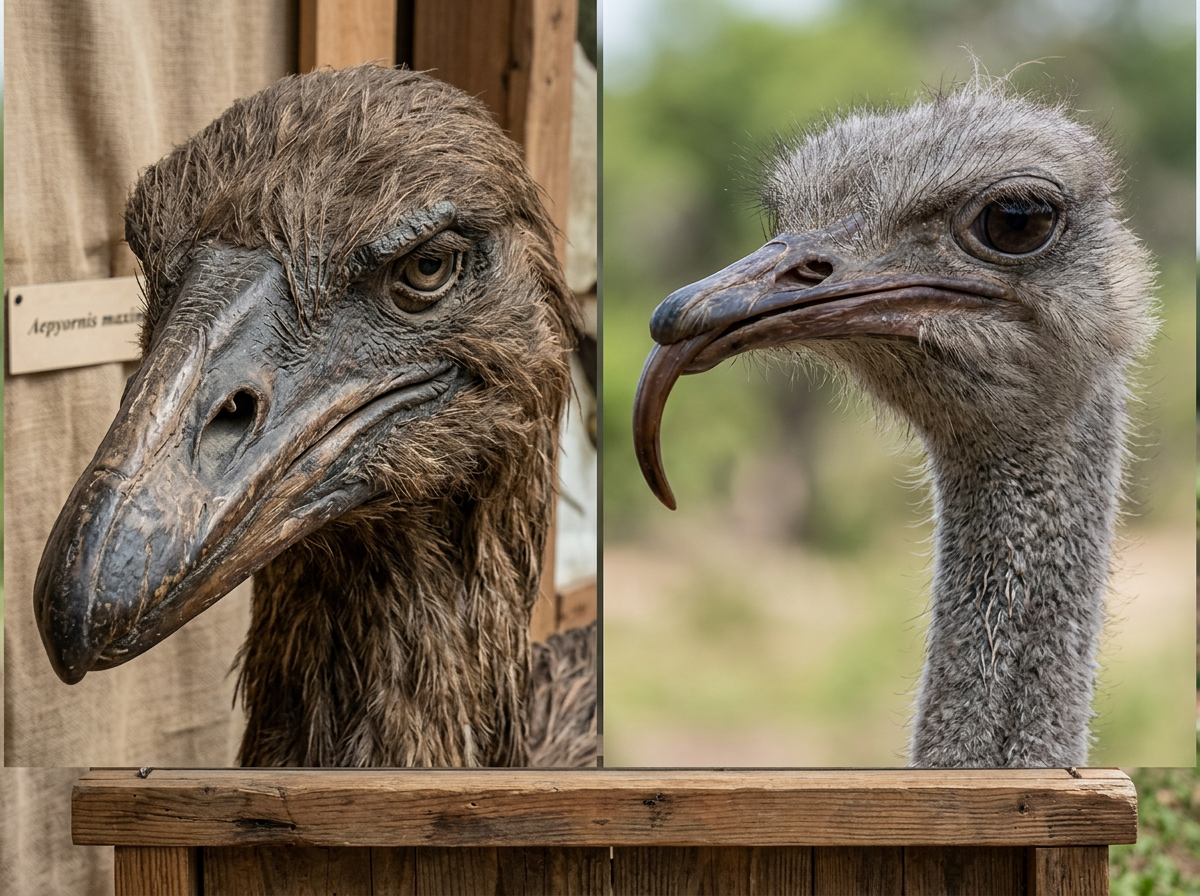
The beaks are a reliable visual marker. Elephant birds had straight, thick, conical beaks with a relatively straight skull profile. Ostrich beaks are flat and broad with a rounded tip. If you are looking at an illustration or reconstruction and the beak is short and cone-shaped, pointing straight forward, that is more consistent with an elephant bird. If the beak is wide and flat with a blunt rounded end, that is an ostrich.
Foot structure is another key difference. Ostriches are didactyl, meaning they have only two toes. This is unique among living birds and is one of the most cited diagnostic traits for the ostrich. Elephant birds had three toes, consistent with most other ratites. If you see a track or a foot diagram with two toes, it is an ostrich. Three toes points away from ostriches and is consistent with elephant birds or other ratites.
| Feature | Elephant Bird (Aepyornis maximus) | Ostrich (Struthio camelus) |
|---|
| Status | Extinct (Late Holocene) | Living |
| Height | Up to ~3 m | Up to ~2.7 m |
| Weight | 400–540 kg | ~100–150 kg |
| Toes | Three | Two (unique among living birds) |
| Beak shape | Straight, thick, conical | Flat, broad, rounded tip |
| Locomotion type | Graviportal (slow, weight-bearing) | Cursorial (fast runner) |
| Geographic range | Madagascar only | Africa (savannas, Sahel) |
| Egg size | Enormous (largest known amniote eggs) | Large but much smaller than elephant bird eggs |
| Closest living relative | Kiwi | No close living relatives among other ratites |
Diet and ecology: more different than you might expect
Ostriches are opportunistic omnivores. In the wild, they eat grasses, seeds, shrubs, fruits, flowers, and occasionally insects and small vertebrates. They are grazers adapted to open landscapes, and their ecology is tied to arid African savanna environments. They are also social, often moving in mixed herds with zebras and antelopes, which gives them an extra layer of predator detection.
Elephant birds, based on isotope evidence, were more varied in their dietary ecology depending on the taxon. Some, like Aepyornis hildebrandti, show carbon isotope signatures consistent with browsing in forested or mixed environments rather than open-country grazing. Others may have used more open habitats. This diversity in feeding strategy mirrors the habitat diversity implied by the different limb morphologies seen across elephant bird taxa. So while both birds were herbivore-leaning, the elephant bird picture is more complex, and at least some taxa appear to have been forest browsers rather than open-country grazers like the ostrich. If you are wondering how the two giant flightless birds compare, this guide also covers the elephant bird vs terror bird contrast.
It is also worth noting that ostriches have been extensively studied for their water physiology and can tolerate significant heat and dehydration stress, traits that make biological sense for a bird living in African savannas and the Sahel. Elephant birds lived on Madagascar, an island with diverse habitats from rainforest to spiny desert, which likely explains why different taxa adapted to different niches.
How to tell them apart in photos, fossils, or descriptions
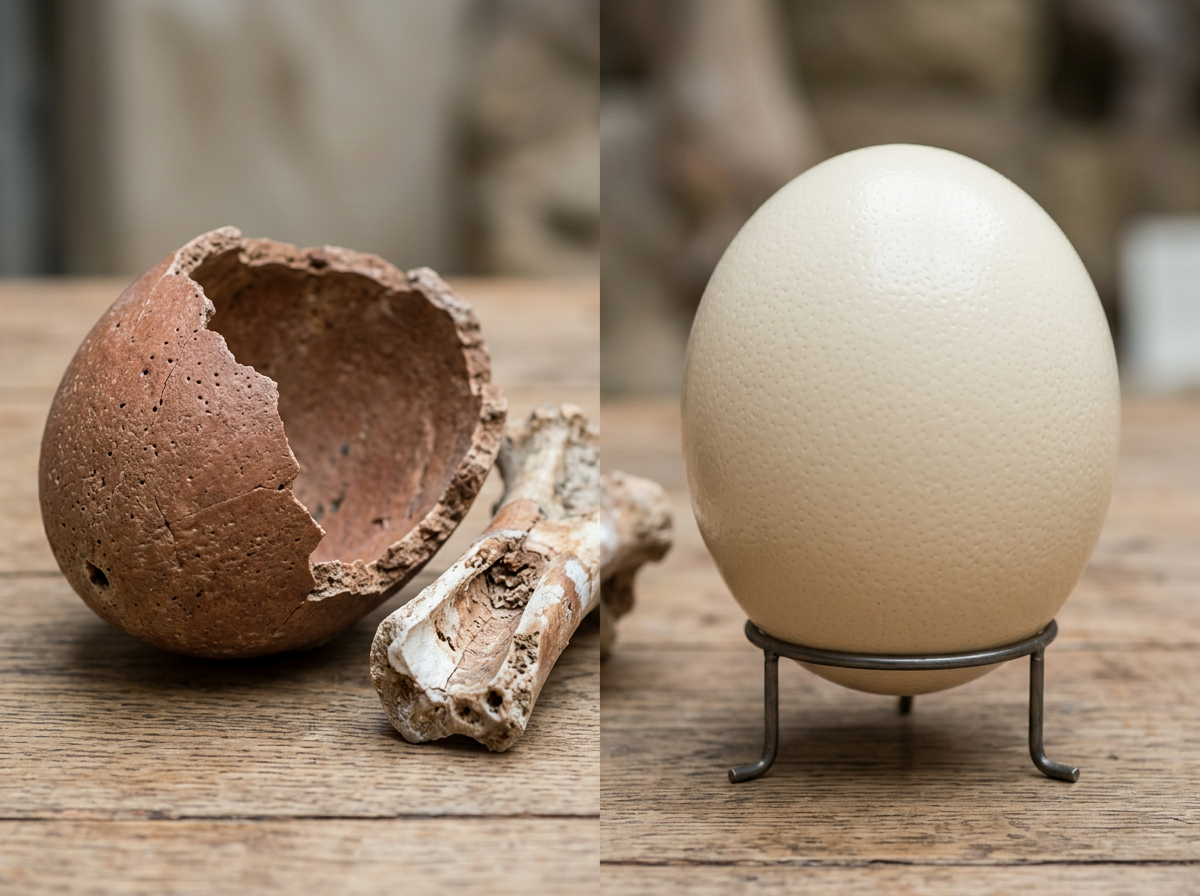
Here is a practical checklist you can run through whenever you are looking at an image, a museum specimen, a fossil reconstruction, or a written description and need to figure out which bird you are dealing with.
- Check whether the bird is alive or extinct. If it is alive and in Africa, it is an ostrich. Elephant birds are 100% extinct and were found only on Madagascar.
- Check the geographic label. Madagascar or Malagasy origin means elephant bird. African savanna or sub-Saharan Africa means ostrich.
- Count the toes. Two toes: ostrich, no question. Three toes: not an ostrich, and consistent with elephant bird or other ratites.
- Look at the beak. Flat, broad, and rounded at the tip: ostrich. Straight, thick, and conical: elephant bird.
- Compare the weight and build. If the description mentions weights above 300 kg or a massively stocky, low-slung body, you are looking at an elephant bird. Ostriches are large but rarely exceed 150 kg.
- Look at the egg if one is shown. Elephant bird eggs are vastly larger than ostrich eggs and are among the largest eggs of any animal ever recorded. If the egg dwarfs a human hand significantly more than an ostrich egg would, it is likely an elephant bird egg.
- Check the habitat described. Open savanna or semi-arid grassland in Africa: ostrich territory. Forest or mixed Malagasy habitat: elephant bird territory.
- Look at leg proportions. Long, slim legs with a running posture: ostrich. Thick, heavy, column-like legs suggesting slow movement: elephant bird.
- Check the DNA or taxonomy label. Aepyornithidae or Aepyornis = elephant bird. Struthionidae or Struthio = ostrich.
The confusion is completely understandable. Both birds are (or were) enormous, flightless, long-necked, and covered in shaggy feathers rather than the structured flight feathers of flying birds. Both belong to the broader group called ratites, which are flightless birds with a flat breastbone (no keel for flight muscle attachment). When most people think 'giant prehistoric flightless bird,' the ostrich is the mental reference point they already know, so the elephant bird gets mentally filed as 'like an ostrich but bigger and from the past.'
The evolutionary reality is more surprising. A landmark 2014 study sequencing mitochondrial genomes from two elephant bird specimens found that elephant birds are the closest relatives of the kiwi, not of ostriches. This was a genuinely unexpected result. Kiwis are tiny, nocturnal, and from New Zealand, making them look nothing like elephant birds. The relationship implies that the ancestors of both kiwis and elephant birds were present in the southern landmasses and dispersed across the ocean at some point, rather than being isolated by the breakup of Gondwana as older theories suggested. Ostriches, by contrast, sit near the base of the ratite family tree and are more distantly related to elephant birds than kiwis are.
If you are interested in how ratite birds evolved and diversified, it is worth looking at comparisons between related birds like the emu and ostrich, or between elephant birds and moa vs ostrich, which were another group of giant extinct ratites (this time from New Zealand). Moas are actually a separate topic entirely, and the moa vs ostrich comparison is a useful parallel exercise.
So which is which? A quick decision framework
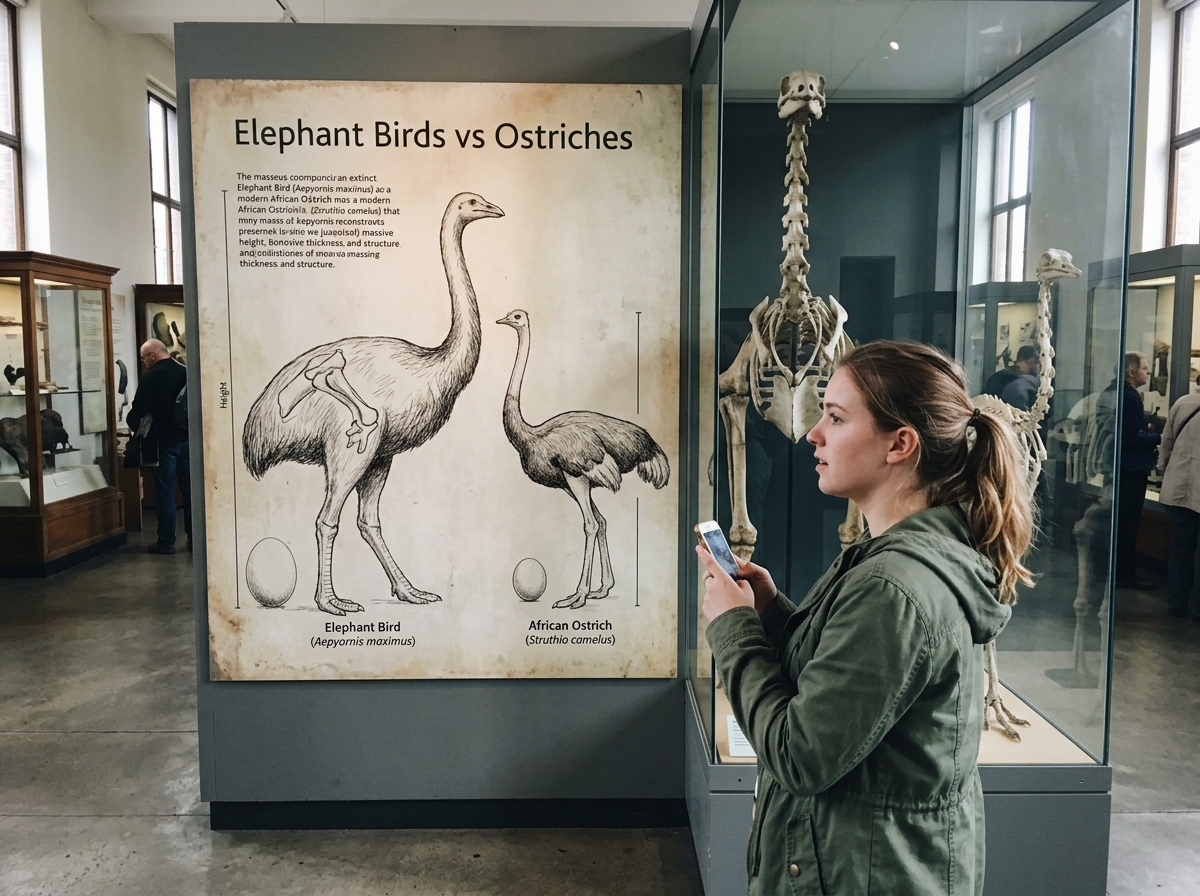
If you are studying ratite evolution and need to place these birds on a family tree: elephant birds go with kiwis (Aepyornithidae, sister to kiwis), ostriches go alone in Struthionidae at a different part of the palaeognath tree. They are not sister taxa.
If you are writing content or researching for a project: always specify that elephant birds are extinct and endemic to Madagascar, while ostriches are living and native to Africa. Do not treat them as interchangeable examples of 'giant ratites.' Their size difference alone (up to 540 kg vs roughly 150 kg maximum) makes the elephant bird dramatically more extreme.
If you are looking at a museum specimen or a fossil reconstruction and trying to identify it: run through the checklist above, starting with geography and then checking toes, beak shape, and body proportions. Those four checks will resolve almost every case without needing to look up taxonomy labels.
If you are just trying to satisfy general curiosity: the short version is that elephant birds were the heaviest birds that ever lived, lived on Madagascar, went extinct relatively recently, are most closely related to kiwis, and were probably slow-moving forest browsers (at least in some taxa). Ostriches are the largest living birds, live in Africa, are speed-adapted runners with a distinctive two-toed foot, and are more distantly related to elephant birds than you might expect. If you want a broader “giant bird” comparison, the topic of kittysaurus vs opila bird may also be relevant to how people group unusual prehistoric birds. If you want another “giant bird” grouping example alongside orange vs opila bird, see the quick decision framework here. Superficial similarity does not equal close relationship, and these two birds are a perfect example of that principle in action.
Where to go next if you want to dig deeper
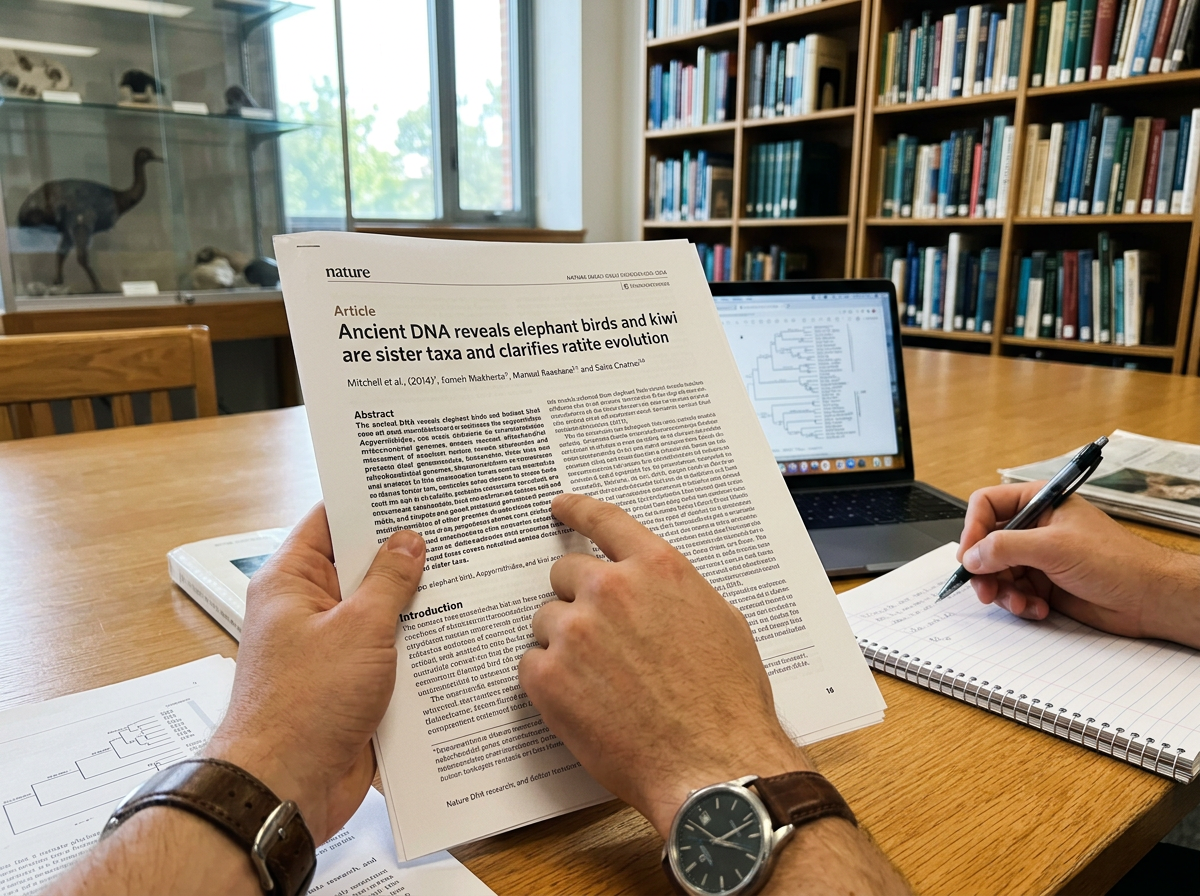
For the evolutionary side, the Mitchell et al. (2014) study on ancient mitochondrial DNA from elephant bird specimens is the foundational paper on their placement as sister to kiwis. It is accessible on PubMed. For size and morphological diversity within elephant birds, the Royal Society Open Science paper on unexpected diversity in Aepyornithidae lays out how different the various taxa actually were from each other. For diet, the stable isotope study on Madagascar's extinct megafauna gives you a data-driven look at browsing versus grazing guilds. For ostriches, the wild ostrich ecology and physiology review covers feeding behavior, water physiology, and habitat use in one place.
If these comparisons have you curious about other ratite matchups, comparisons between the emu and ostrich or between elephant birds and moas cover some of the same evolutionary ground from different angles and are worth reading alongside this one.