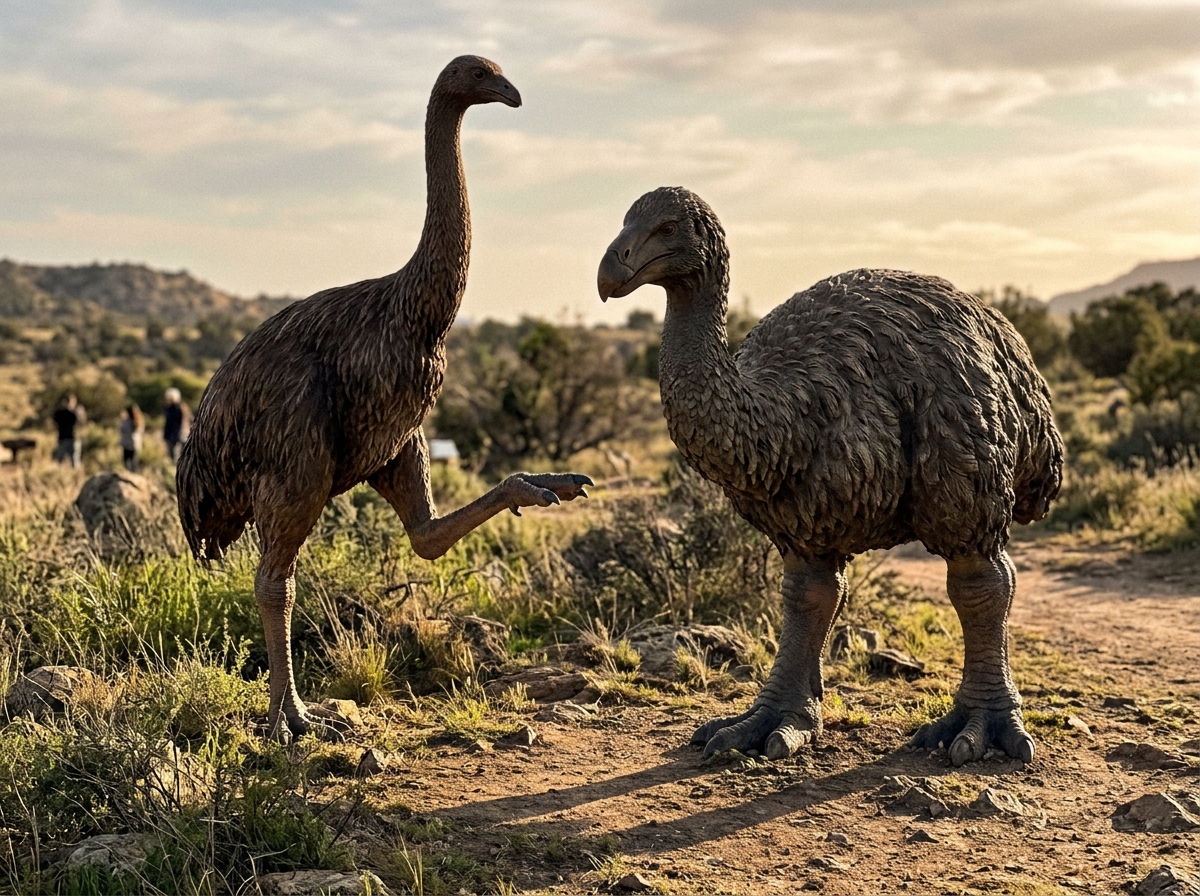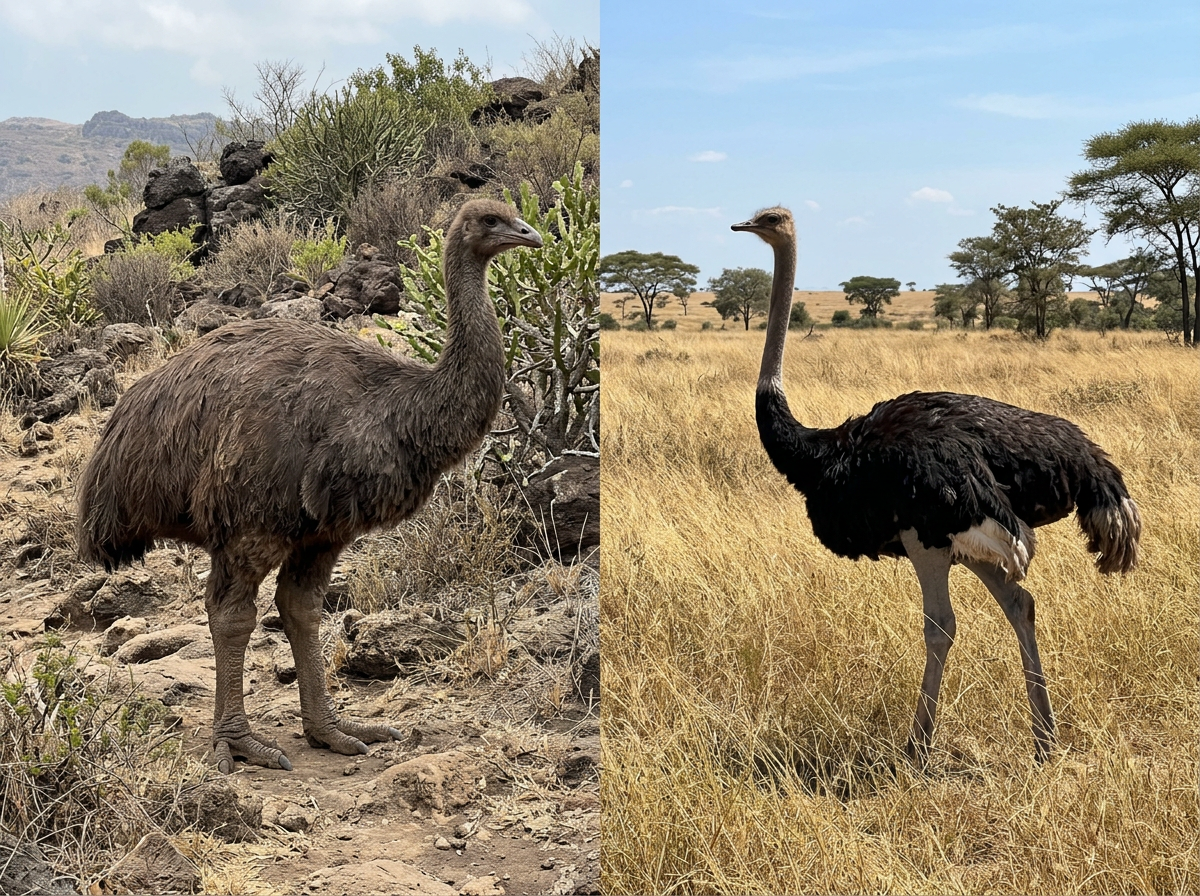
Terror birds and elephant birds are two completely different animals. They lived on different continents, in different time periods, ate different things, and looked nothing alike beyond the fact that both were large and flightless. If you've been wondering how to tell them apart, or why people keep lumping them together, I'll give you the direct answer right now and then walk through each comparison in detail.
Elephant Bird vs Terror Bird: Key Differences, Size, Habitat

Marcus Hendricks
22 Mar 2026
Quick ID: the fastest way to tell them apart
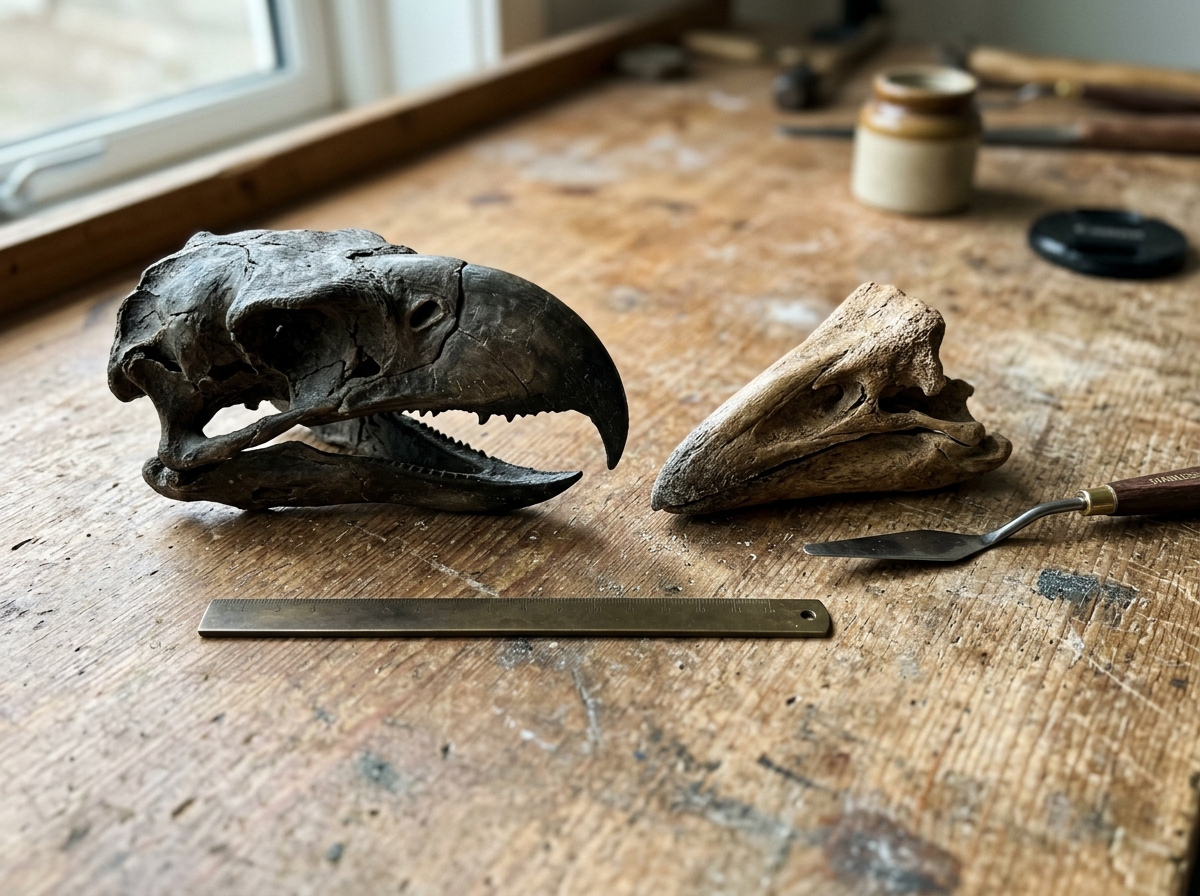
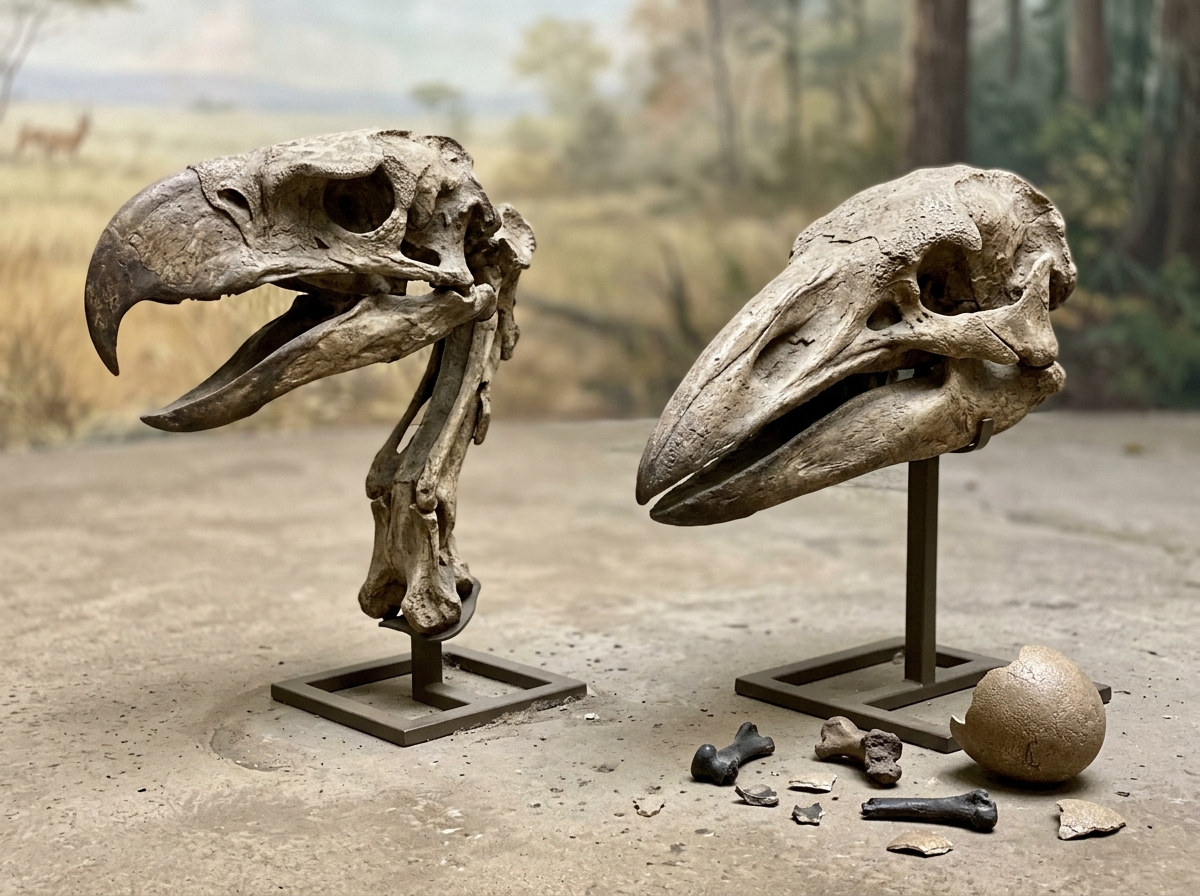
The single most useful visual clue is the beak. Terror birds (phorusrhacids) had a massive, hooked, raptor-like beak on a disproportionately large skull. Elephant birds (aepyornithids) had a straight, thick, conical beak on a small head that looked almost comically tiny relative to their enormous body. If you're looking at a reconstruction or a museum fossil and the head looks huge and menacing, that's a terror bird. If the head looks small and the bird looks built like an oversized ostrich or emu, that's an elephant bird. Those two visual cues alone will get you the right answer most of the time.
| Trait | Terror Bird (Phorusrhacidae) | Elephant Bird (Aepyornithidae) |
|---|---|---|
| Beak shape | Large, hooked, curved tip | Straight, thick, conical |
| Head size | Large relative to body | Small relative to body |
| Body build | Lean, long-legged, athletic | Massive, stocky, ostrich-like |
| Continent | South America (some into North America) | Madagascar only |
| Diet | Active predator | Herbivore (browser/grazer) |
| Skull rigidity | Rigid, non-kinetic (locked beak) | Standard ratite skull |
| Tallest known | ~1.5–1.8 m (some up to ~2.5 m) | ~3 m (Vorombe titan) |
| Heaviest known | ~180+ kg (largest species) | ~650–732 kg (Vorombe titan) |
| Time range | Early Cenozoic to late Pleistocene | Pleistocene to late Holocene |
| Extinction cause | Climate/ecological competition | Human arrival in Madagascar |
Where each bird lived
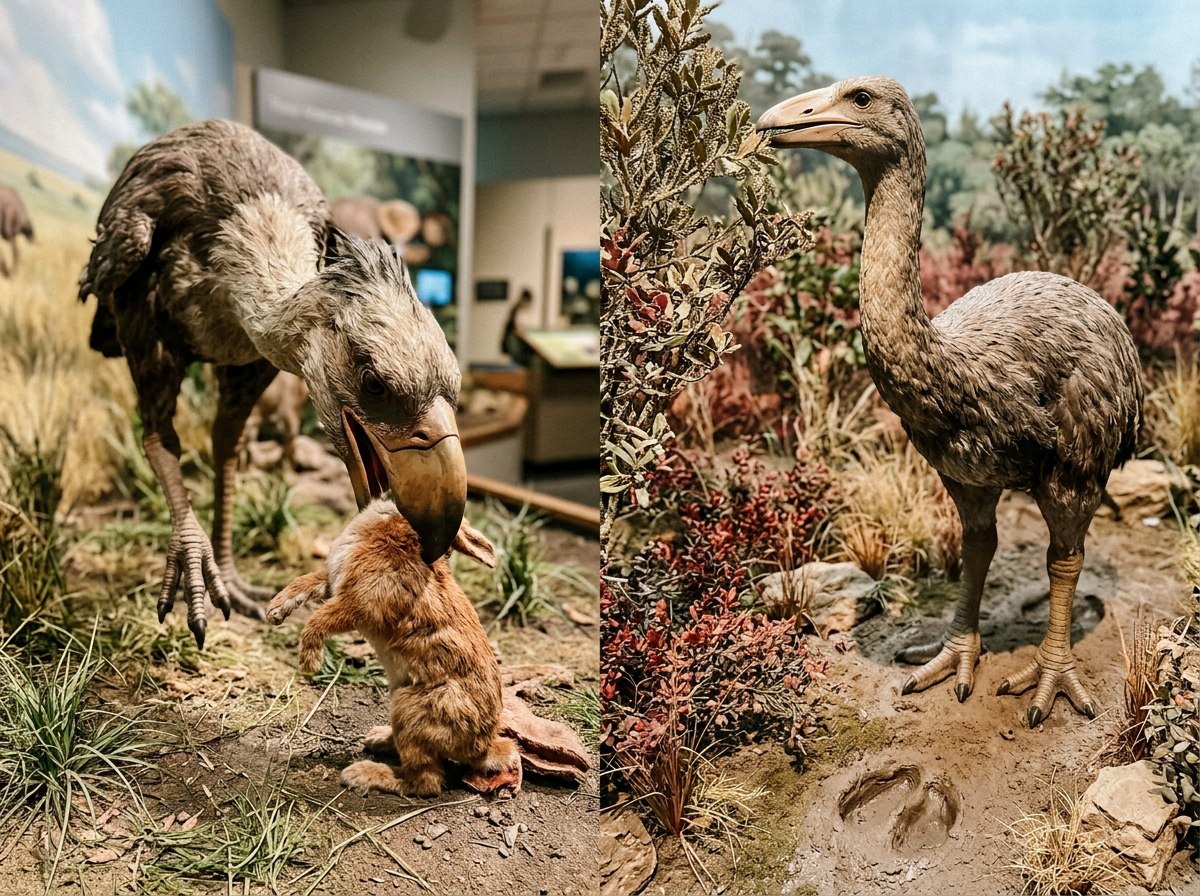
These two groups never shared a continent. Terror birds (phorusrhacids) evolved in South America and dominated its ecosystems across much of the Cenozoic. Fossil evidence places them across a wide range of South American environments, from the grasslands and open scrublands of Patagonia (Argentina) to the tropical-edge habitats of Colombia. Species like Phorusrhacos longissimus are well-documented from multiple Patagonian outcrops. One genus, Titanis, eventually crossed into North America after the formation of the Isthmus of Panama. Terror bird fossils have been found in formations like the Cerro Azul (Late Miocene) and the Cerro Boleadoras Formation (early to middle Miocene), which tells us they occupied grassland-like, open environments for much of their history.
Elephant birds, by contrast, never left Madagascar. Full stop. They're found nowhere else. Their subfossil remains turn up at sites including Ampasambazimba and Antsirabe on the central high plateau, and Ampoza near the southwestern edge. A 2023 Nature Communications study even identified a previously unknown elephant bird lineage purely from ancient eggshells recovered in northeastern Madagascar, suggesting that lineage occupied wet, forested landscapes in that region. So elephant birds weren't confined to a single habitat type: different species occupied different zones, from forested areas to more open, grassy landscapes in the south.
What they ate and how they behaved
This is where the contrast is sharpest. Terror birds were predators. The biomechanical evidence is pretty clear on this: their rigid skulls (the beak couldn't move relative to the braincase) were well-suited for delivering powerful, precise strikes to prey. Studies on Andalgalornis, a medium-sized phorusrhacid, modeled the forces at the beak tip and concluded the bird likely drove its hooked beak into prey with precision, avoiding the high lateral loads that would risk structural damage. Mechanical analysis of Andalgalornis steulleti feeding mechanics in a 2010 PLOS ONE study used fossil skull and CT-derived data to provide a detailed biomechanical rationale for its bite and feeding behavior. This is predator behavior, not scavenging. Larger phorusrhacine species probably took larger vertebrate prey, while the smaller psilopterine forms likely focused on smaller animals. Terror birds were the apex predators of their South American ecosystems for tens of millions of years.
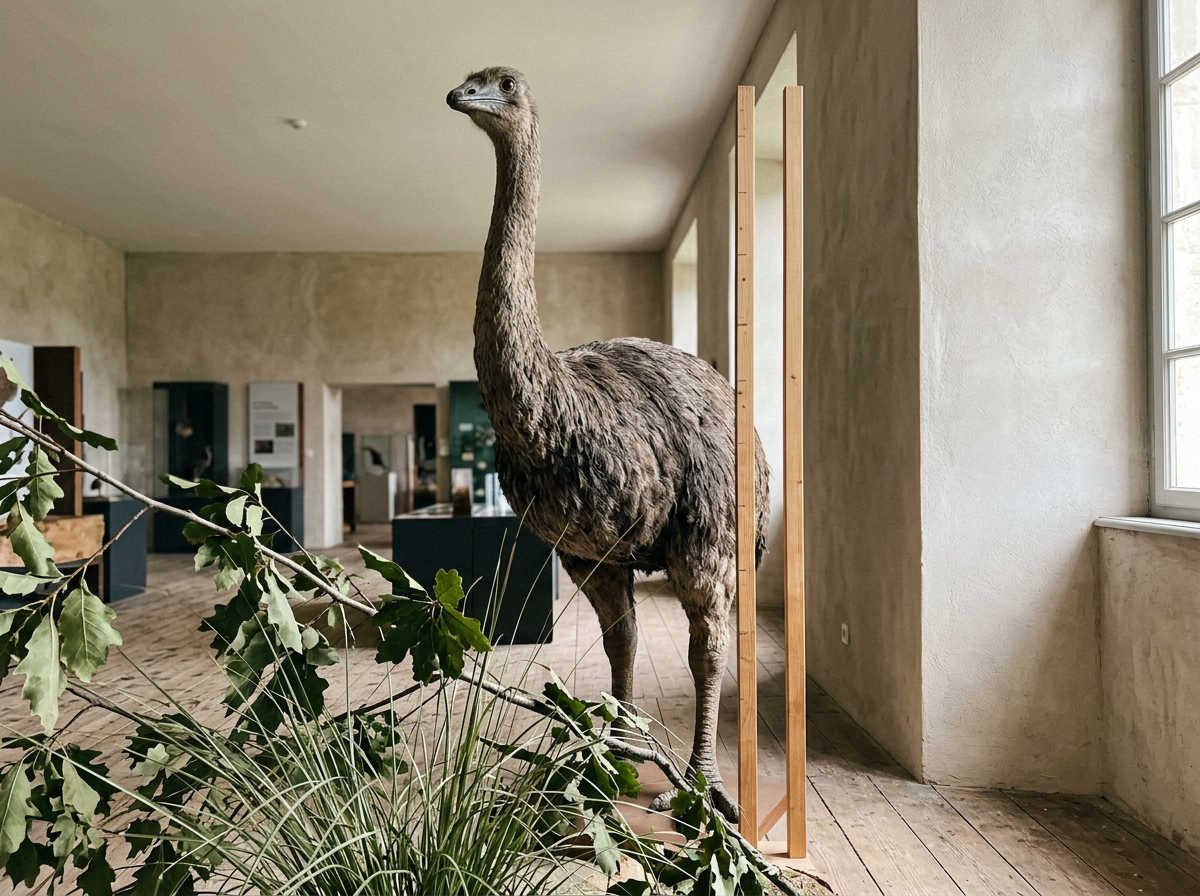
Elephant birds were herbivores. Isotope analysis of their eggshells (carbon and nitrogen values recorded in the eggshell carbonate reflect what the bird was eating) shows a split between browsing and grazing guilds across different species. Aepyornis maximus and Mullerornis modestus were likely browsers in forested environments, while Aepyornis hildebrandti appears to have been a mixed feeder with a significant grazing component (roughly 48% grazing by some estimates). Vorombe titan's diet is also interpreted within this browsing/grazing framework. These were big, plant-eating birds, roughly analogous to large ratites like ostriches in ecological role, though far bigger.
Size, weight, and physical traits
Size is one area where the two groups actually overlap in part, which adds to the confusion. But the overlap is misleading because the heaviest terror birds and the heaviest elephant birds are in completely different weight classes.
Terror bird size range
Phorusrhacids ranged from relatively small birds up to large, heavy predators. The largest terror birds, in the Phorusrhacinae subfamily, reached body masses of around 180 kg or more. Titanis, the North American species, had estimates placing it at over 300 kg by some sources, though estimates vary. These weren't the heaviest animals to ever walk around, but they were formidably built: long, powerful legs for speed, a large rigid skull, and that hooked beak. Terror birds also walked on two functional forward toes in a functionally didactyl posture, as confirmed by fossil footprints, which supports an interpretation of a fast-moving pursuit predator.
Elephant bird size range
Elephant birds blow terror birds out of the water in terms of sheer mass. Vorombe titan, currently recognized as the largest elephant bird species, stood around 3 meters tall and weighed on average about 650 kg, with femoral-based mass estimates pushing as high as 732 kg. Aepyornis maximus, long considered the largest, comes in at around 541 kg by femoral mass modeling. Even the newly identified northeastern lineage, known only from eggshells, is estimated at around 230 kg. Their eggs were correspondingly enormous: up to about 35 cm long, making them the largest eggs of any bird ever known. The body shape was stocky and robust, not built for speed or chasing prey. Think more along the lines of an oversized, heavy-set ostrich than anything predatory.
When they lived: the timeline
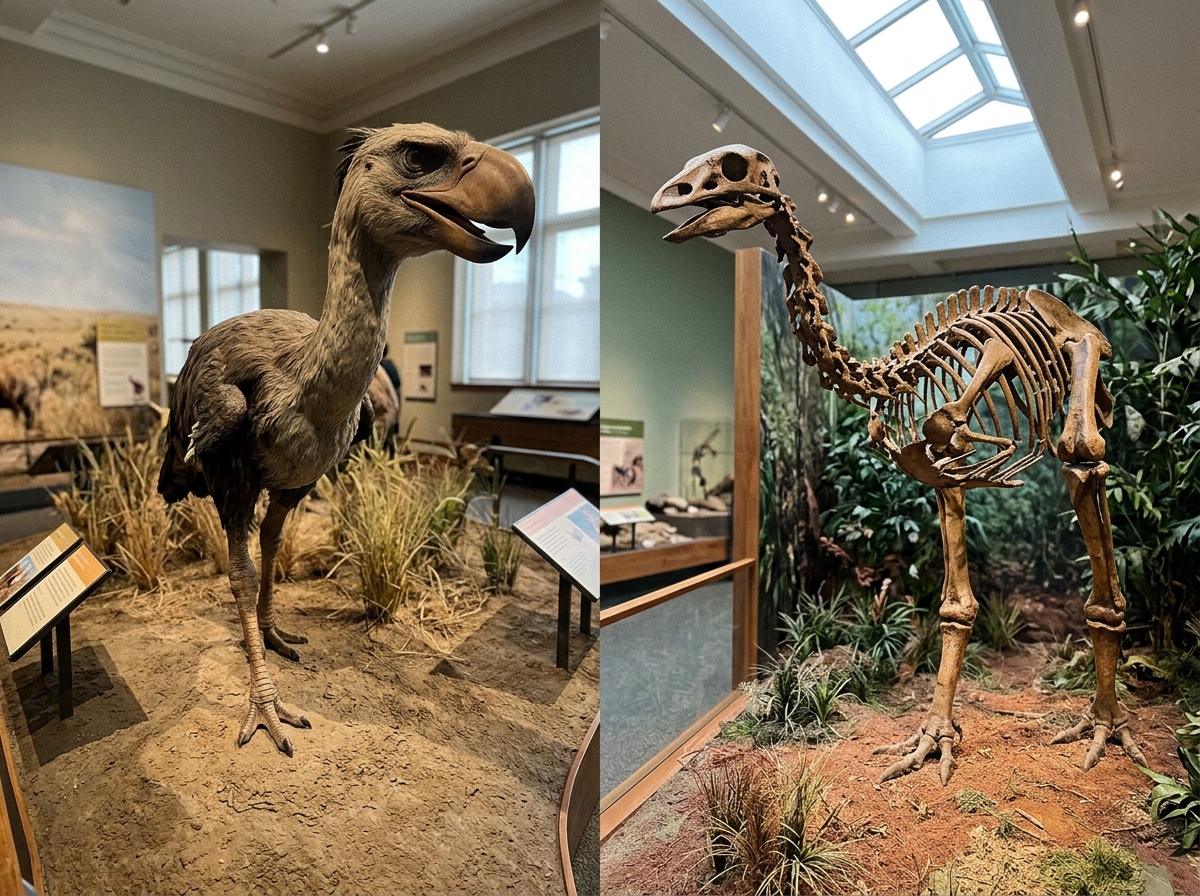
Terror birds had a much longer run than elephant birds. Phorusrhacids appeared in the fossil record in the early Cenozoic and persisted across tens of millions of years in South America. Some genera span remarkable time ranges: Devincenzia shows up from the Early Miocene (Deseadan) in Uruguay all the way through to a possible Early Pleistocene record. The small genus Psilopterus has fossil evidence from the Middle Oligocene to possibly as late as around 96,000 years ago in Uruguay. The family as a whole represents one of the longest-running apex predator dynasties in the bird fossil record.
Elephant birds have a much shorter and more recent timeline. They're known from the Pleistocene and Holocene of Madagascar. Some species survived well into the Holocene, with radiocarbon dating placing certain populations within historical memory. Britannica reports that the longest-surviving species, Aepyornis hildebrandti, persisted until roughly 1,300 to 1,560 years ago. Accounts in Malagasy folk memory may even preserve cultural traces of these birds, and there's archaeological evidence linking their decline directly to human arrival and habitat change in Madagascar. So elephant birds are genuinely recent by paleontological standards, far more recent than terror birds.
| Bird Group | Earliest Fossil Record | Latest Known Survival | Location |
|---|---|---|---|
| Terror birds (Phorusrhacidae) | Early Cenozoic (~60 Ma range) | ~96,000 years ago (smallest taxa) | South America, briefly North America |
| Elephant birds (Aepyornithidae) | Pleistocene | ~460–700 years ago (some estimates) | Madagascar only |
Why people mix them up in the first place
This one is actually pretty understandable. Both are famous examples of extinct giant flightless birds, both get substantial coverage in popular paleontology content, and both have dramatic names that signal size and danger. 'Terror bird' and 'elephant bird' both sound like something from a monster movie. When people search for one or hear about it, the other often comes up in the same context, and without a clear side-by-side comparison, the details blur.
There's also the naming problem. 'Elephant bird' sounds like it should be a predator or at least something fearsome, but it's actually named for its sheer size, not its behavior. Meanwhile 'terror bird' delivers exactly what the name promises: a predatory, aggressive bird. People sometimes assume the elephant bird was the dangerous one because 'elephant' implies enormous and threatening, when in reality it was a plant-eater. The terror bird was the killer.
Fossil-based media also plays a role. Both groups are frequently reconstructed in museum displays, documentaries, and online explainers, and without geographic context (South America vs. Madagascar) clearly stated, readers absorb the 'giant prehistoric bird' concept without the distinguishing details. The fact that neither group left living descendants (unlike, say, ostriches or emus, which are their closest modern relatives in the ratite lineage) means there's no familiar living reference point to anchor the comparison. If you've read about the elephant bird vs. If you're looking for a direct, side-by-side “opila bird” comparison before diving into more broader context, see opila bird vs banbaleena next. If you want the same kind of side-by-side clarity for a third giant flightless bird, compare the orange vs opila bird differences next. If you want the short version of how they compare to moa, check out elephant bird vs moa elephant bird vs.. ostrich discussion, you've probably already noticed that each comparison requires anchoring the elephant bird's traits fresh each time.
How to verify and go deeper
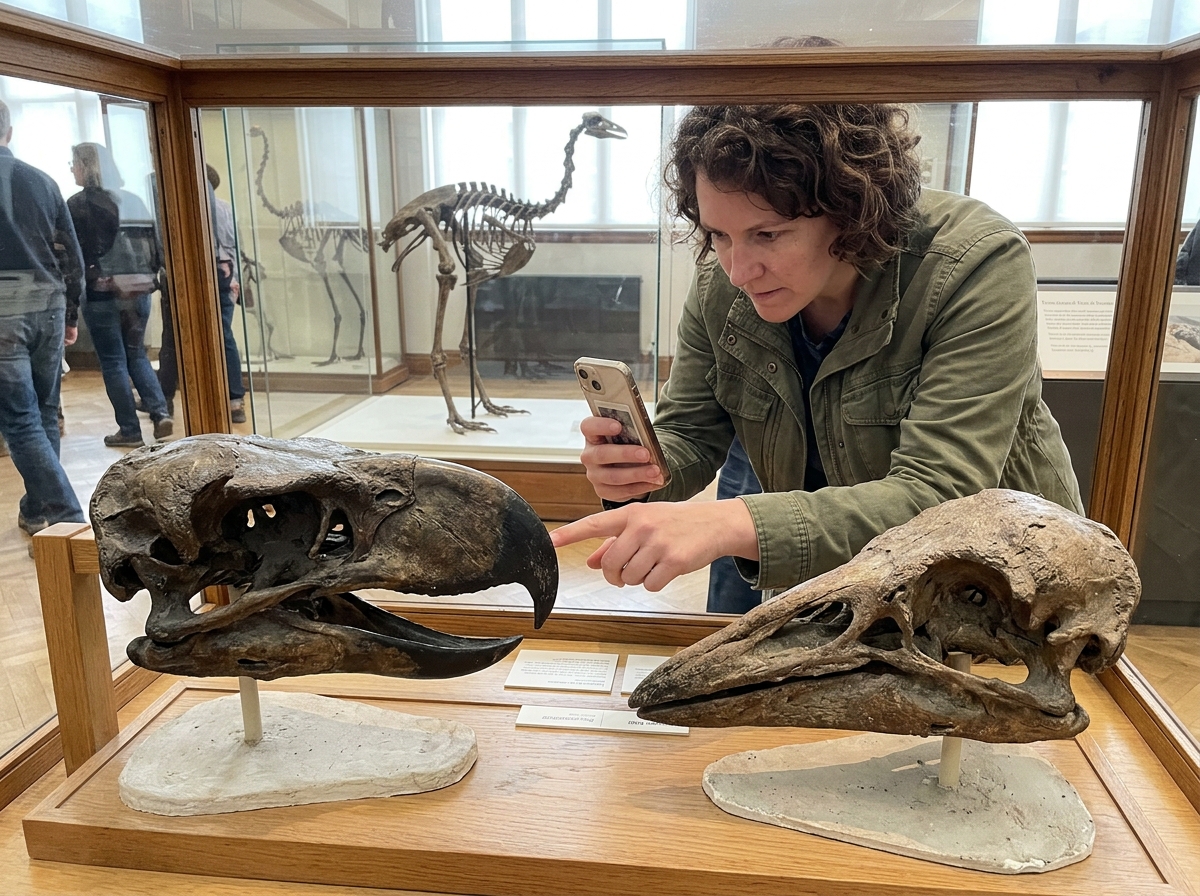
If you're looking at a reconstruction and want to confirm which bird you're dealing with, here's the quick checklist to run through:
- Check the beak: hooked and curved means terror bird; straight and conical means elephant bird.
- Check the head size relative to the body: disproportionately large skull points to phorusrhacid; small head on a massive body points to aepyornithid.
- Check the continent: any South American prehistoric giant flightless bird is likely a terror bird; anything from Madagascar is an elephant bird.
- Check the time period: if the content mentions Miocene or Oligocene South America, it's almost certainly a terror bird; if it mentions Holocene Madagascar, it's an elephant bird.
- Check the diet framing: 'apex predator' language confirms terror bird; 'browser' or 'grazer' language confirms elephant bird.
For reliable sources, the Florida Museum of Natural History's fossil project archive has solid terror bird paleobiology summaries grounded in biomechanical research. The Florida Department of Environmental Protection notes the Florida Museum’s involvement with curated fossil collections and also references the “Waller’s Terror Bird” sculpture the Florida Museum’s fossil project archive. For elephant birds, the 2023 Nature Communications eggshell study is a good recent anchor, and the PMC dietary isotope studies give you the best available picture of what different elephant bird species were actually eating. Museum natural history collections in Buenos Aires (for terror bird fossils) and Paris (for elephant bird material) are the primary physical references if you ever want to go that deep.
The short version: terror birds were South American predators with hooked beaks and rigid skulls that hunted prey for millions of years across the Cenozoic. Elephant birds were Madagascan herbivores with small heads and massive bodies that survived into near-historical times before humans likely drove them extinct. They share the 'giant flightless bird' label and not much else. For example, if someone brings up orange vs opila bird, it helps to compare the key traits side by side instead of relying on the shared "giant flightless bird" label. To round out the comparison, you can also look at how a moa bird stacks up against an ostrich moa bird vs ostrich. If you’re curious how they stack up against other similarly named giants, the kittysaurus vs opila bird comparison is a good next read.
FAQ
How can I tell elephant birds and terror birds apart from a museum display photo or illustration?
Not reliably. Both were flightless, so body size alone can mislead, and reconstructions can exaggerate head proportions. If you only have a photo or silhouette, focus on the head-to-body ratio and beak shape: terror birds typically show a large skull with a hooked beak, while elephant birds are usually drawn with a small head, thick straight conical beak, and a stocky body.
Are elephant birds and terror birds in the same evolutionary family, or are they unrelated giant flightless birds?
Terror birds belonged to phorusrhacids (often split into different subgroups based on size and anatomy), and they were built for striking rather than browsing. Elephant birds belonged to aepyornithids, and their anatomy and egg biology fit a terrestrial herbivore lifestyle. If you need a quick ID beyond appearance, use geography first (South America for terror birds, Madagascar for elephant birds).
Were terror birds always “hunters,” or could they have scavenged like some large birds?
Terror birds are sometimes described as “terror” because of their predator traits, but their actual behavior is debated in details like hunting speed versus ambush. The biomechanical evidence supports active predation (rigid skull and hooked beak suited for forceful strikes), but they would not have been identical to modern raptors in technique since they were fully flightless and likely used different pursuit or stalking strategies.
What’s the most common mistake people make when using beak shape to identify these birds?
A “beak size” judgment is most trustworthy when the specimen is preserved well enough to reflect the real skull outline. In poorly reconstructed fossils, the head may be scaled incorrectly, and some displays show speculative soft tissue, which can distort the apparent proportions. If your view depends on a reconstruction, double-check the beak orientation (hooked versus straight) rather than just the overall head size.
Did all elephant bird species eat the same kind of plants?
Elephant bird diets were not one-size-fits-all. Eggshell isotope patterns indicate different feeding guilds among species, including browsing-heavy and grazing-influenced strategies, and at least one lineage interpreted as mixed feeding. So you cannot assume all elephant birds ate only leaves, or only grass.
If scientists only find eggshells, how confident can they be about identifying a new elephant bird lineage?
Elephant bird eggs are often used for identification because they are so distinctive, but eggshell-only evidence has limits. Egg chemistry can suggest broad dietary patterns and local habitat signals, but it cannot by itself confirm every detail of the animal’s exact morphology. Treat eggshell-based discoveries as strong clues about lineage and ecology, not a full replacement for skeletal fossils.
Do fossils show that terror birds were fast runners, or is that mainly an assumption from their size?
Terror bird footprints and limb mechanics are consistent with fast terrestrial locomotion, but “speed” in a single number is not something you can measure directly from fossils. A better takeaway is functional: their foot posture and leg construction support efficient running, while their rigid skull-beak complex supports quick, forceful contact with prey.
If an animal in a picture looks “giant,” how can I estimate whether it’s more likely an elephant bird or a terror bird?
Even though the largest terror birds and the largest elephant birds overlap somewhat in the broad “giant flightless bird” category, their mass estimates and shapes differ. Elephant birds were stockier and heavier for their height, while terror birds were more leg-driven and built for predation. So if you’re trying to guess from overall body silhouette, look for a heavier, denser body plan versus a more streamlined pursuit-predator build.
Could the same fossil age or location contain both types?
Terror birds have a much deeper Cenozoic record, with multiple genera persisting for very long spans. Elephant birds are confined to Madagascar and are much more recent, with some evidence extending into the Holocene. A practical implication is that terror birds are far more likely to show up in older South American fossil layers, while elephant bird material should cluster in Madagascar and later time intervals.
Why do some websites claim both birds lived in the same place?
Yes, but only in the sense of internet confusion, not in actual paleontology. A key reality check is that terror birds and elephant birds did not share continents, so if a site is in South America, it should not contain elephant birds, and if it is in Madagascar, it should not contain terror birds. Mislabeling usually comes from swapped images, mixed museum context, or reconstruction reuse online.
Is there a living animal I can use as a reliable behavior or appearance reference for either one?
Because they are distant from modern species, there is no perfect “living model.” People sometimes compare ratites for general flightlessness, but elephant birds and terror birds are not the same kind of bird at all, so modern behavior analogies can mislead. For identification, stick to the article’s core anchors: beak shape and skull proportions (for appearance), and continent and time period (for context).