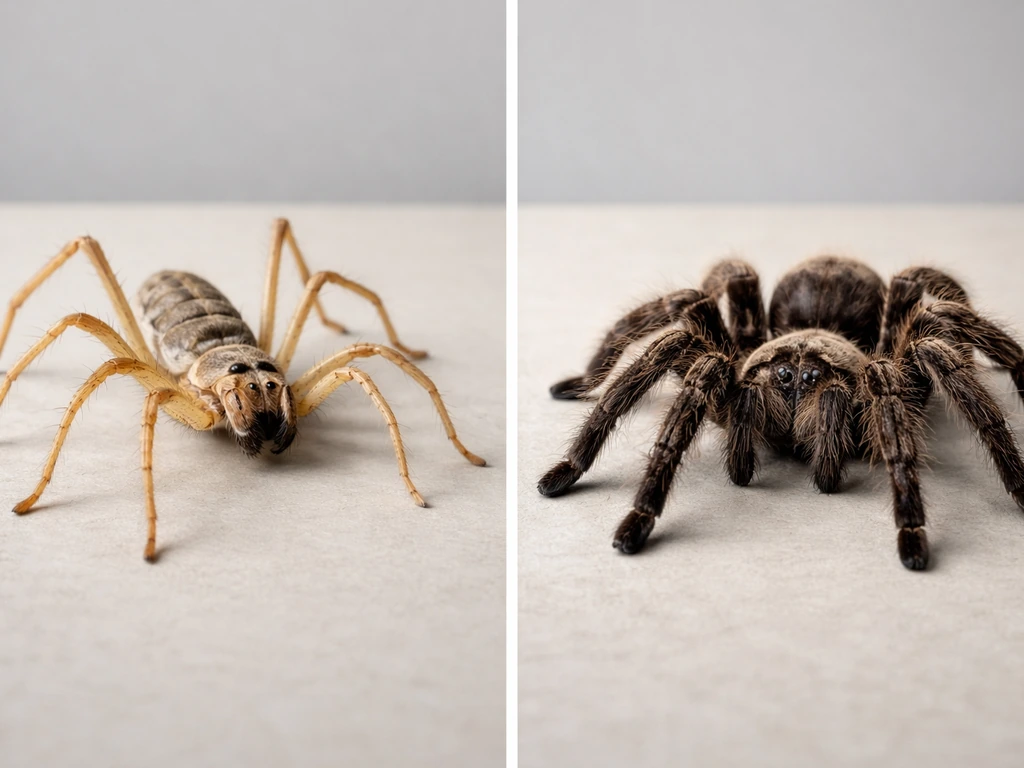
A camel spider and a goliath bird-eating tarantula are not even close relatives in terms of behavior, venom, or appearance, yet photos of both circulate online under the same breathless captions. If you spotted something large and hairy and you're trying to figure out which one you're looking at, here's the short answer: if it's dark brown, densely fuzzy all over, and the size of a dinner plate, you're probably looking at a goliath bird-eating tarantula. If it's tan or pale, moves with almost alarming speed, has a segmented body with two distinct sections that look almost insect-like, and has massive pincer-like jaws up front, that's a camel spider. They genuinely look different once you know what to focus on.
Camel Spider vs Goliath Bird-Eating Spider: ID, Danger, Myths

Marcus Hendricks
16 Apr 2026
Quick ID: camel spider vs goliath bird-eating spider
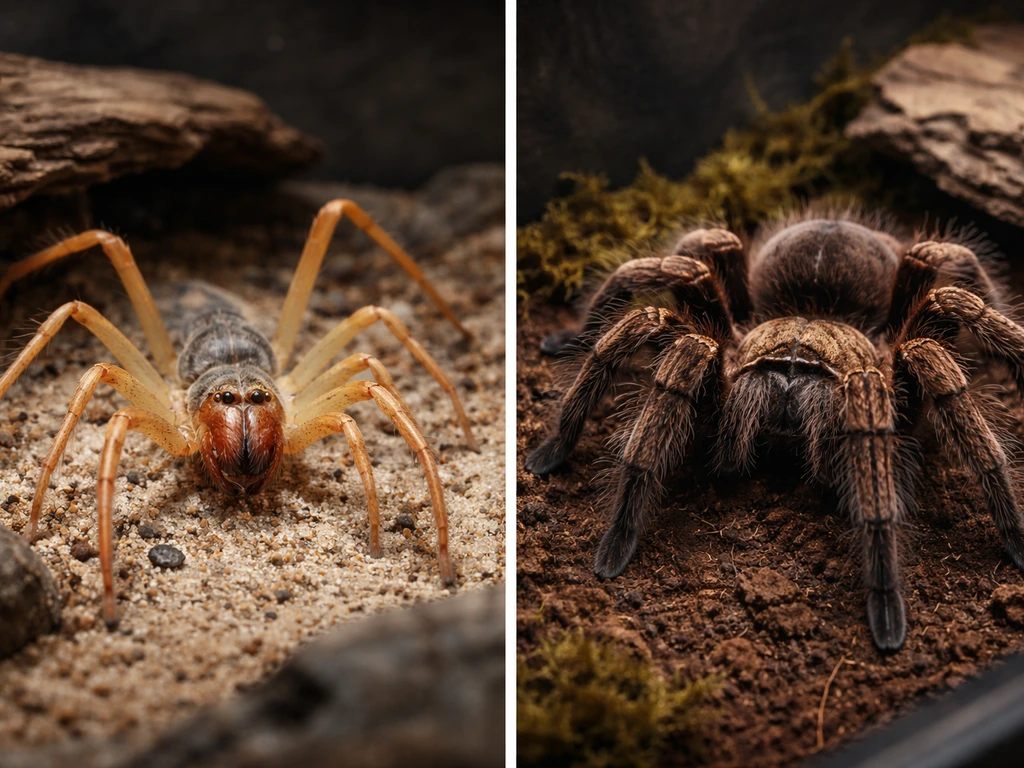
The confusion usually starts because both animals are large, eight-legged, and have a reputation for being terrifying. But side by side, they're easy to separate. The goliath bird-eating tarantula (Theraphosa blondi) is the animal most people mean when they say 'goliath bird-eating spider,' and it's a true spider. It can reach a body length of around 13 cm and a leg span of up to 30 cm.
It's covered in dense, bristly hairs, dark brown to black overall, and it moves slowly and deliberately. The camel spider (order Solifugae, also called wind scorpion or sun spider) is not a true spider at all.
It belongs to a separate arachnid order and looks distinctly different: it's usually tan, beige, or pale yellow, moves incredibly fast, and its most striking feature is the pair of enormous chelicerae, which are segmented, claw-like jaws at the front of its head that are proportionally huge compared to its body.
| Feature | Goliath Bird-Eating Tarantula | Camel Spider |
|---|---|---|
| Scientific group | True spider (Araneae, Theraphosidae) | Solifugae (not a true spider) |
| Body length | Up to ~13 cm | Up to ~15 cm (varies by species) |
| Leg span | Up to ~30 cm | Up to ~12–15 cm |
| Coloration | Dark brown to black, densely hairy | Tan, beige, or pale yellow, lightly haired |
| Defining feature | Dense urticating hairs on abdomen | Enormous segmented chelicerae (jaws) |
| Movement | Slow, deliberate | Very fast, erratic |
| Venom | Low-toxicity venom to humans | No venom glands at all |
| Habitat | South American rainforests (Amazon basin) | Deserts/arid regions worldwide, Middle East, SW USA |
| Web-spinning | No functional web | None |
| Diet | Insects, small vertebrates (rarely birds) | Insects, scorpions, small lizards |
One more thing worth clarifying: 'goliath bird-eating spider' and 'goliath bird-eating tarantula' refer to the same animal. The species is Theraphosa blondi, and the Smithsonian National Zoo uses that exact binomial to describe the goliath bird-eating tarantula. Depending on how strictly you define the 'goliath bird-eater' label, recent taxonomic work has also grouped in Theraphosa apophysis (the pinkfoot goliath) and Theraphosa stirmi under that informal umbrella. T.
apophysis looks very similar to T. blondi, reaching about the same size, though immature individuals can show a pinkish tint on the feet that fades with each moult. If you're looking at a photo where someone has labeled a 'goliath bird-eater,' it could technically be any of those three, but the ID tips below still apply.
The 'bird-eating' name is mostly a myth
The name comes from an 18th-century engraving, not from the spider's regular habits. National Geographic points this out directly: the birdeater label stuck after an illustration showed one eating a hummingbird, but in practice, this tarantula's actual diet is mostly insects and other invertebrates. It's an ambush predator, and yes, it can take small rodents, bats, snakes, and lizards when the opportunity comes up, but birds are not on the regular menu. The name is dramatic and memorable, which is exactly why it persisted for hundreds of years.
How dangerous is the goliath bird-eating tarantula to humans?
This is the question most people are really asking, and the honest answer is: not very dangerous at all, but not entirely harmless either. The real threat isn't the bite, it's the hairs.
The bite
Tarantula venom is generally of very low toxicity to humans. The Burke Museum is blunt about this: these spiders are not dangerous to people, and bites typically cause little more than initial pain and possibly mild muscle cramping. No human deaths due to tarantula venom toxicity have been reported in the clinical literature. A bite feels roughly like a bee sting at the site, according to MedlinePlus.
A clinical series studying bites from theraphosid tarantulas reported local pain as the most common outcome. That said, a defensive goliath bird-eater can rear up, expose its large fangs, and strike with enough force that the mechanical wound itself is worth respecting. If you get bitten, clean the wound, watch for signs of infection, and seek medical attention if pain escalates significantly or you feel unwell.
The urticating hairs: the real hazard
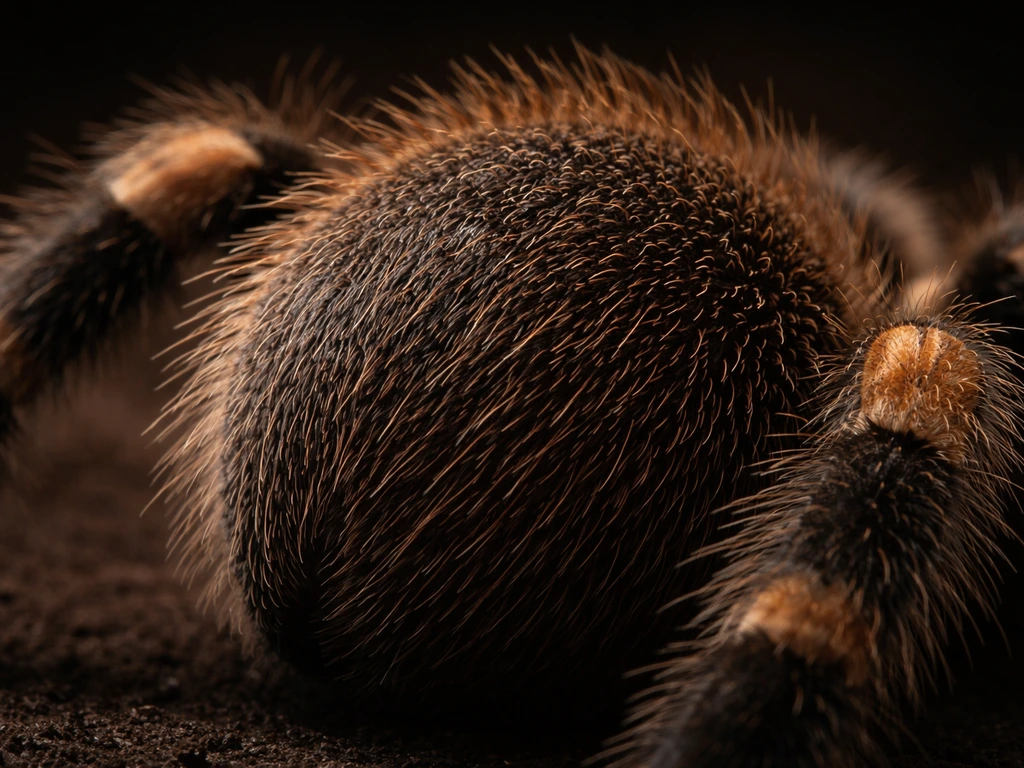
The abdomen of the goliath bird-eater is covered in urticating hairs tipped with barbs. When threatened, the spider can rub its back legs across its abdomen and flick a cloud of these hairs toward a threat. They cause skin irritation, respiratory irritation if inhaled, and can be particularly problematic if they get into your eyes. According to StatPearls, tarantula-related injury is more commonly due to urticating hairs than systemic envenomation.
If you get hairs on your skin, the Cleveland Clinic and MedlinePlus both recommend using sticky tape (duct tape, masking tape, or Scotch tape) pressed over the area and then pulled off quickly to remove the barbed hairs, followed by washing the area with soap and water. Don't rub the area, as that drives the barbs in deeper. If hairs get near your eyes, flush immediately with water and see a doctor.
Handling
Unless you're an experienced keeper, don't handle a goliath bird-eater. The defensive posture alone (rearing up and showing fangs) is a clear signal to back off. Even experienced tarantula keepers treat this species with significant respect because of the urticating hair risk, not the venom. The CDC Yellow Book, which covers travel medicine, confirms that tarantula bites may be painful but their venoms typically do not cause serious illness. You're far more likely to have a bad day from the hairs than from a bite.
Goliath bird-eating spider vs other predators
A lot of 'who would win' questions involve the goliath birdeater against other large or venomous animals. Here's a grounded look at the comparisons that come up most often.
Goliath bird-eating spider vs snake
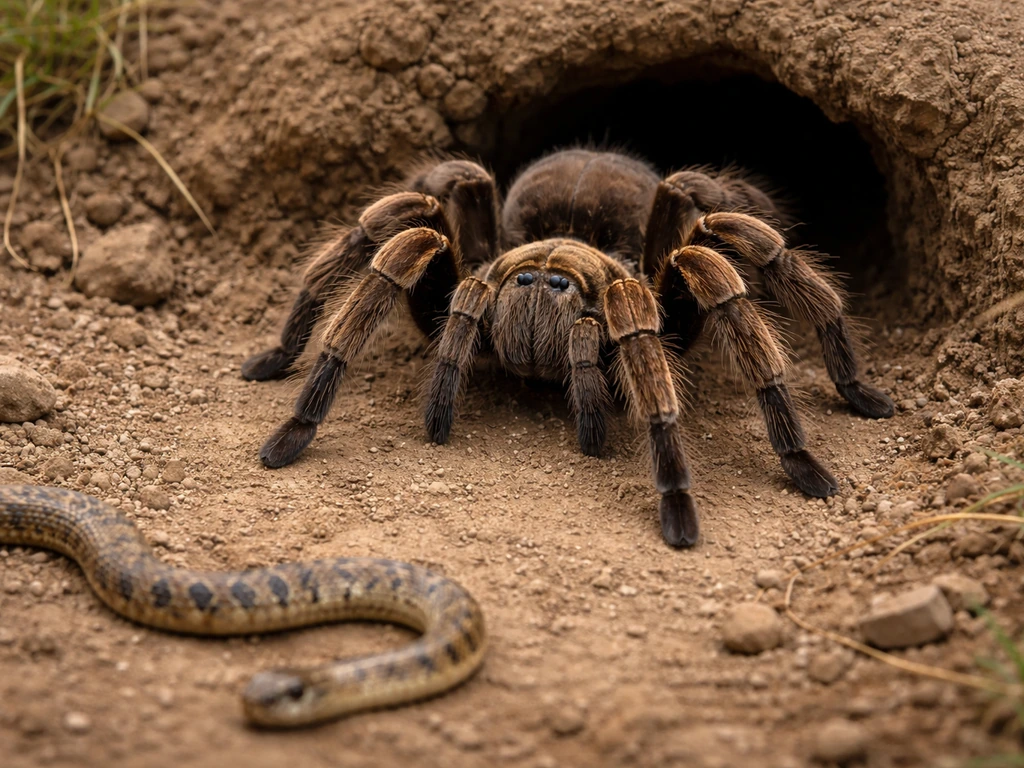
The goliath birdeater can and does eat small snakes when it ambushes them. As an ambush predator, it waits near burrow entrances for prey to come within striking range, and a small snake that wanders too close is fair game. A large snake, on the other hand, would simply eat the tarantula. This is not a general matchup, it's entirely size-dependent. The tarantula wins against small snakes; anything significantly larger wins against the tarantula.
Goliath bird-eating spider vs emperor scorpion and scorpions generally
The emperor scorpion (Pandinus imperator) is one of the largest scorpions in the world, reaching about 20 cm, and it's often compared to large tarantulas because both are popular in the exotic pet trade. In a direct encounter, the outcome depends heavily on the individuals involved. Scorpions are active hunters with a venomous sting, while tarantulas are ambush predators. In captivity they're never housed together for good reason.
In the wild, their ranges don't typically overlap (the emperor scorpion is West African; the goliath birdeater is South American), so the comparison is hypothetical. For the camel spider, the dynamic is different: camel spiders are known to hunt and kill scorpions. The University of Arizona Extension notes that solpugids can even take down an occasional scorpion, which is impressive given that scorpions are venomous and camel spiders are not.
Arachnid lookalikes: telling them apart
Several other large arachnids and invertebrates get confused with both the goliath birdeater and camel spiders. Here's how to sort them out.
Camel spider vs tarantula
The table above covers the main points, but the behavioral cue is often the fastest tell: a camel spider sprints. Tarantulas walk. A camel spider clocking speeds of up to 16 km/h will look like a blur compared to the measured, deliberate movement of any tarantula. Also, comparing a bird-eating spider to other tarantulas shows that all tarantulas share that dense, hairy body structure, while camel spiders look almost translucent or bare by comparison, with visible segmentation between body sections.
Giant huntsman spider vs huntsman spider
The giant huntsman spider (Heteropoda maxima) holds the record for largest leg span of any spider, reaching up to 30 cm, which is comparable to the goliath birdeater. But it's completely different in build: it's flat, long-legged, and lightly built, almost crab-like in how its legs angle outward. It's found in Laos, not South America. Regular huntsman spiders follow the same body plan at smaller sizes. Neither huntsman nor giant huntsman has the dense body mass and heavy fur of the goliath birdeater. If the spider you're looking at is large but flat and has a crab-like stance with legs that extend sideways rather than arching overhead, that's a huntsman.
Tarantula hawk wasp
The tarantula hawk wasp (genus Pepsis) is an insect, not an arachnid, but it shows up in comparisons because it hunts tarantulas. It's a large, iridescent blue-black wasp with orange wings, and it's famous for having one of the most painful stings of any insect on the Schmidt sting pain index. It paralyzes tarantulas (including large theraphosids) with its sting and uses them as a living food source for its larvae. If you see something that looks like a large, colorful wasp near a tarantula burrow, that's likely what you're dealing with. No one should confuse it for a spider visually, but knowing the relationship helps explain why tarantulas, despite their size, have real predators to worry about.
Goliath bird-eating spider vs giant centipede
The Amazonian giant centipede (Scolopendra gigantea) shares habitat with the goliath birdeater in parts of South America and Venezuela. It can reach 30 cm in length and is an aggressive, venomous predator that has been documented eating bats, frogs, and rodents. Both animals are large, dark, and live in similar environments, which causes photo confusion.
The centipede is immediately distinguishable by its elongated, segmented body with one pair of legs per segment (many pairs total), antennae at the front, and the modified front legs that function as venomous claws. A tarantula has a rounded, two-part body with exactly eight legs. In encounters between the two, either can prey on the other depending on size and circumstance.
The giant centipede's venom is genuinely dangerous to humans (causing severe pain, swelling, and in rare cases more serious effects), which is a key practical difference from the tarantula.
Where birds fit into this picture
It might seem odd to compare spiders to birds, but large predatory birds are actually among the goliath birdeater's natural predators. Certain hawks and large insectivorous birds will take tarantulas when the opportunity arises. The urticating hairs are one of the tarantula's defenses against avian predators, which is why understanding how a spider compares to a bird in terms of predator-prey dynamics is actually relevant here, not just a random tangent. And camel spiders, despite their fearsome reputation, are also vulnerable to birds: a fast-moving, ground-level prey item like a solifugid is well within the strike range of many raptors and ground-hunting birds.
The predator-prey relationship between arachnids and birds is more complex than most people expect. For a broader look at how insects and arachnids stack up against birds in these encounters, the comparison of a praying mantis versus a bird illustrates just how varied these outcomes can be, and the same logic applies here: size, speed, and defensive tools determine who wins more than any general rule.
It's also worth noting that the overlap between mantis and spider predatory strategies comes up in similar contexts. The way a mantis compares to a bird in terms of ambush hunting mirrors some of the goliath birdeater's own sit-and-wait strategy, which is a useful frame for understanding why the birdeater is so effective despite being slow.
How to confirm which animal you're looking at right now
If you've seen something and you're trying to figure out exactly what it was, work through these questions in order. They'll get you to a confident ID faster than trying to match a photo.
- Where are you? If you're in South America (especially the Amazon basin), a large dark hairy spider is almost certainly a tarantula species, and if it's very large, the goliath birdeater is a real possibility. If you're in the Middle East, North Africa, or the southwestern United States, and you saw something pale-colored moving fast, that's a camel spider. The geography alone eliminates a lot of confusion.
- How fast was it moving? Camel spiders are startlingly fast and erratic. Tarantulas are slow and deliberate. If what you saw could keep pace with a running person, it was not a tarantula.
- What color and texture was it? Dense, dark brown or black fur covering the whole body: tarantula. Pale tan or beige with a somewhat translucent, less furry appearance: camel spider. Flat body with a crab-like leg stance: huntsman. Long, segmented body with many legs: centipede.
- What were the front appendages doing? If the most prominent feature was a pair of large, forward-facing jaw-like structures that were constantly moving and appeared to be the biggest part of the animal, that's the chelicerae of a camel spider. Tarantulas have fangs too, but they point downward and you usually only see them if the spider rears up defensively.
- Did it have wings or antennae? If yes, it's not a spider or solifugid. A large iridescent wasp near a spider burrow is probably a tarantula hawk wasp, and that's a completely different (and extremely painful) situation.
- What was it doing? Sitting still in a burrow entrance at dusk: likely a tarantula. Sprinting across open ground in the heat of the day: almost certainly a camel spider. Hunting actively and attacking aggressively: camel spider behavior. Defensive rearing with abdomen-scratching motions: tarantula preparing to flick urticating hairs, back away immediately.
After a bite or hair contact: what to do

- Tarantula bite: wash the wound with soap and water, apply a cold pack for pain, and monitor for signs of infection or unusual symptoms. Seek medical attention if pain is severe or spreading, or if you feel systemically unwell. No antivenom exists or is needed for tarantula bites in humans.
- Tarantula urticating hairs on skin: press sticky tape (duct, masking, or Scotch tape) over the area and peel off quickly to lift the barbed hairs out. Wash with soap and water. Do not rub. Repeat tape applications if needed.
- Tarantula urticating hairs near eyes: flush eyes immediately with clean water for several minutes and seek medical care. Eye exposure to urticating hairs can cause significant inflammation.
- Camel spider bite: clean the wound thoroughly. Camel spiders have no venom, but their chelicerae can break the skin and secondary bacterial infection is the real risk. Seek medical attention if the wound shows signs of infection (increasing redness, swelling, warmth, discharge).
- If you're unsure what bit you: seek medical evaluation regardless. As MedlinePlus notes, many suspected 'spider bites' are actually other skin conditions or bites from other insects, and a doctor can help rule out anything more serious.
The bottom line is this: a goliath bird-eating tarantula is a genuinely impressive animal that is far less dangerous to humans than its name and appearance suggest. A camel spider looks alarming and moves fast, but it has zero venom to worry about. Neither one is trying to hurt you. Knowing the difference between them (and their actual threat level) means you can make a calm, informed decision about what to do next rather than reacting to a reputation built on old engravings and internet exaggeration.
FAQ
What should I do if I find one of these in my home, especially if I might touch it by accident?
If you are dealing with a live animal in a house, avoid “venting and waving” it, instead guide it into a container with a rigid sheet of paper or a clear bin, then release it outdoors. For tarantulas, do not vacuum it, because the urticating hairs can disperse and irritate airways and eyes.
If a camel spider bites, is it more dangerous than a tarantula bite?
Camel spiders do not have medically relevant venom for humans in the way most people worry about, but their bites can still be mechanically painful and may cause localized irritation if skin is broken. If you are bitten by a solifuge and the skin is scraped, wash with soap and water, then monitor for redness that spreads, pus, fever, or worsening pain.
What if urticating hairs get into my eyes, should I wait to see what happens?
Urticating hairs are the main hazard from the goliath bird-eating tarantula. If hairs get into your eyes, flushing promptly matters, but you should also get same-day medical advice rather than waiting for symptoms, especially if you feel gritty irritation, tearing that does not stop, or light sensitivity.
Can I reliably tell them apart just from how big the animal looks in a photo?
Size alone can mislead because photographs distort perspective. Use at least two features together: movement pattern (sprint versus deliberate walk), front appendages (big chelicerae for camel spiders), and body look (tightly bristled, dense fur for the tarantula versus a paler, more segmented look for solifuges).
How can I tell whether the goliath birdeater is just nearby versus actively defensive?
Yes, a goliath bird-eating tarantula can be defensive even without contact, it may rear up and expose fangs as a warning. If you see a raised “threat display,” the safest next step is to back away and create distance before attempting any ID.
Do goliath bird-eating tarantulas actually eat birds regularly?
If someone says the bird-eating spider ate a bird recently, treat that claim as likely myth or a special case. The tarantula’s diet is mostly insects and other invertebrates, birds are not part of its routine feeding, so “bird-eater” is a dramatic label more than a predictable behavior.
If the animal is on a web or appears “caught,” does that change how I should identify it?
In a photo where the spider is airborne, dangling, or caught in a web, the odds shift away from a camel spider, since solifuges are not known for web-building. Tarantulas can web for shelter but do not spin the same kind of classic capture webs as orb-weavers, so location and web structure can help narrow the ID.
What are the most common look-alikes that people confuse with these two?
For a straightforward ID, rule out look-alikes by build: giant huntsman spiders are flatter and crab-like with long outward-angled legs, and centipedes have many leg pairs plus antennae. If it has only eight legs and a two-part rounded body, you are in the spider or tarantula family, if it has many leg pairs, it is not a tarantula.
What should I do if urticating hairs get on my clothes or bedding?
If you get urticating hairs on clothing or bedding, do not brush them off while wearing contact lenses or without ventilation. Bag the item and remove it carefully, then wash with detergent on a normal cycle. If you develop cough, wheeze, or eye irritation after exposure, seek medical advice.
Which danger is more realistic for people, venom or the physical effects?
The “camel spider vs tarantula” danger question often comes from fear of venom. A practical takeaway is to treat risk as two separate things: tarantula venom is not usually a serious threat to people, but mechanical injury and urticating hairs are. For camel spiders, the main issues are mechanical bite injury and handling accidents rather than systemic poisoning.
What is the quickest “field test” I can do without getting too close?
If your main goal is safe identification, focus on the fastest tell first: camel spiders move quickly in a running, almost blur-like way, while tarantulas typically walk in a slower, deliberate pattern. When possible, avoid repeated close passes that provoke defensive behavior and instead step back and observe from a distance.
Next Articles
Mantis vs Bird: How to Tell the Difference Fast
Fast checklist for mantis vs bird: spot feathers and flight vs mantis forelegs, antennae, and ambush hunting behavior.
Praying Mantis vs Bird: How to Tell Them Apart Fast
Fast field guide to distinguish praying mantis from birds by look, posture, movement, habitat, and safe documentation.
Godzilla vs Kong Bird: Identify the Exact Bird Lookalike
Disambiguate and ID the exact bird behind searches like Godzilla vs Kong bird using field marks, habitat, range, behavio