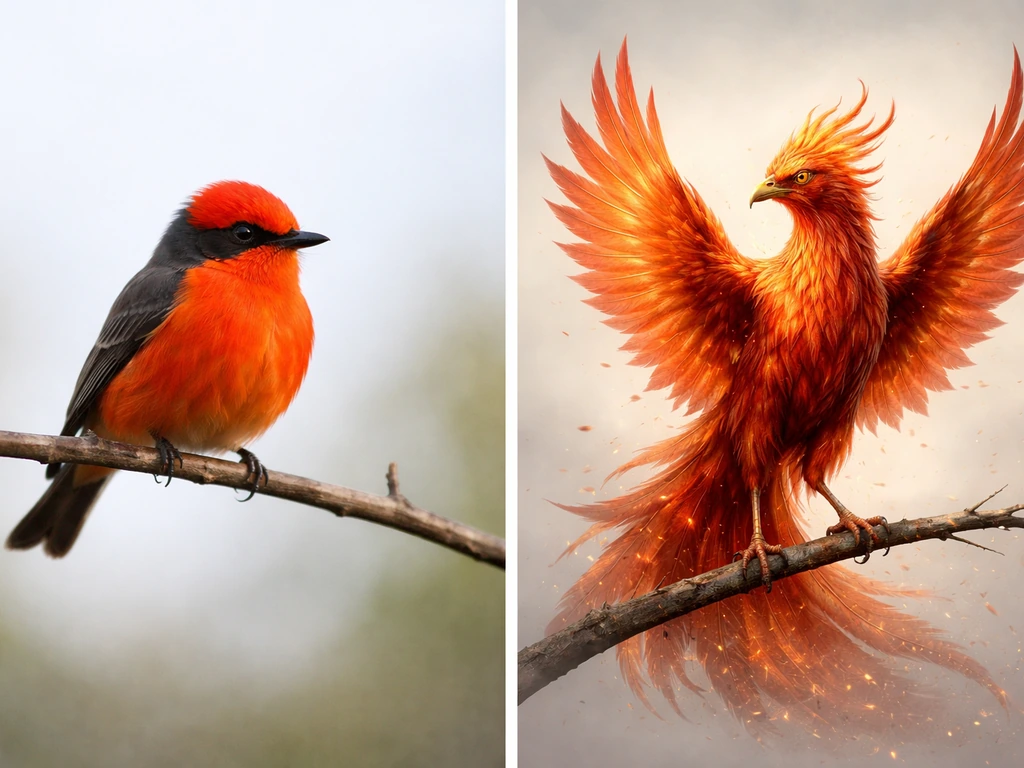
If we're talking about the mythic Vermilion Bird (朱雀, Zhūquè or Suzaku) versus the classical phoenix, the phoenix is more powerful in a direct fight or survival contest, but the Vermilion Bird holds equal or greater authority in cosmological and symbolic terms. For a real, modern “versus” comparison, you might also be interested in the bearded dragon vs bird matchup and how animal traits change what “power” means. If you're asking about a real bird called a 'vermilion bird' (most likely the Vermilion Flycatcher, Pyrocephalus rubinus), there's no contest at all: a small insect-eating passerine has zero mythological combat ability. The answer entirely depends on which 'vermilion bird' you mean, and what you count as 'power.'
Vermilion Bird vs Phoenix: Who Is More Powerful?

Marcus Hendricks
8 Jul 2026
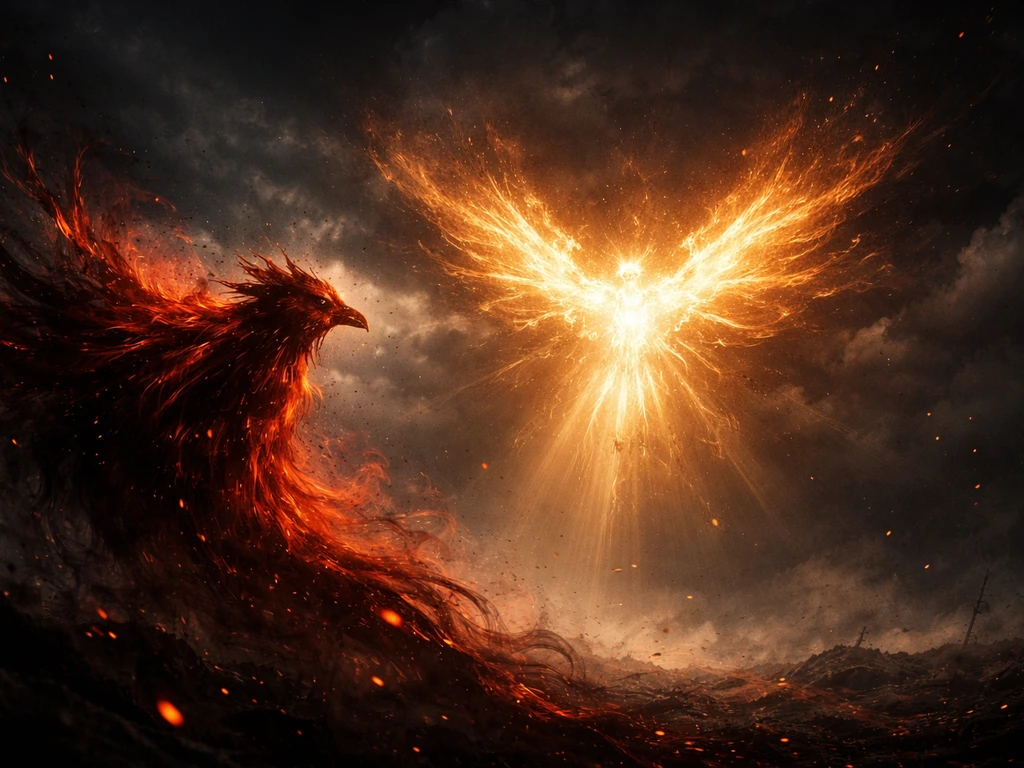
First: which 'vermilion bird' are we actually talking about?
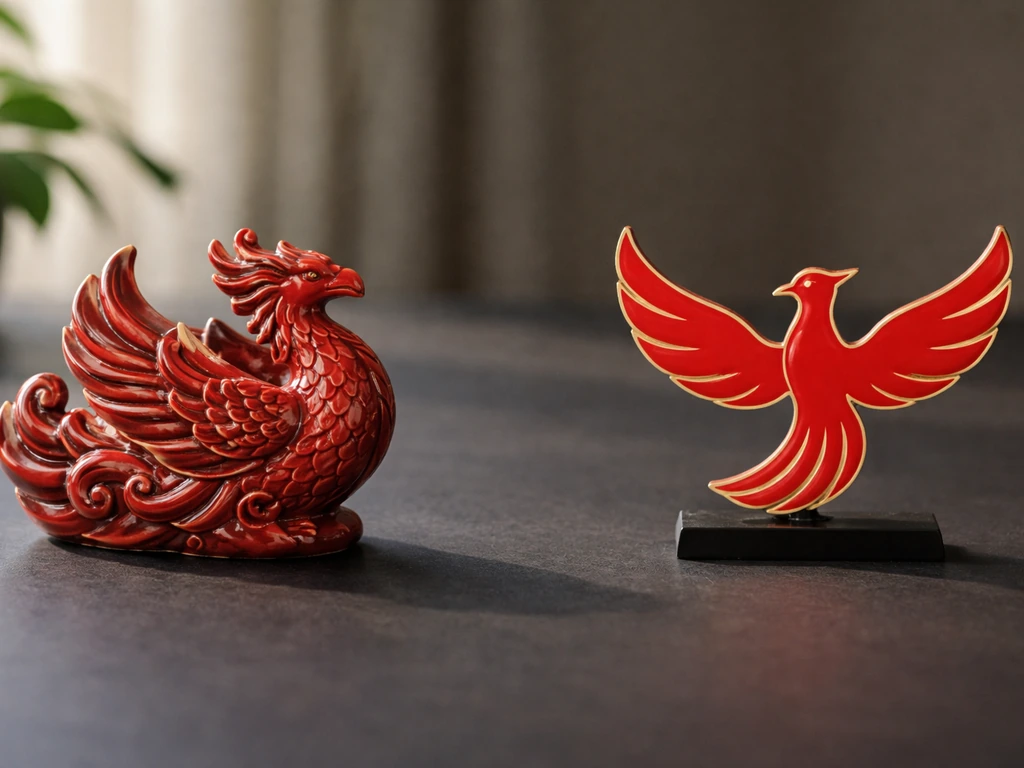
This is the question that trips people up most often. In English, 'vermilion bird' can point to two completely different things, and mixing them up makes any comparison meaningless.
The first is the mythic Vermilion Bird, known in Chinese as 朱雀 (Zhūquè) and in Japanese as Suzaku. This is one of the Four Symbols in East Asian cosmology: four divine guardian creatures that each rule a cardinal direction, a season, and an element. The Vermilion Bird rules the South, Summer, and Fire. NASA's own educational materials on the Suzaku X-ray telescope describe it plainly as the 'vermilion bird of the south' from Chinese mythology. This is a cosmic guardian, not a physical animal.
The second is the Vermilion Flycatcher (Pyrocephalus rubinus), a small real-world bird found across the Americas. Cornell Lab of Ornithology describes it as a 'feathered ember,' and birding communities regularly confirm IDs under that name. The 'vermilion' refers purely to the male's vivid red plumage. It hunts insects by sallying from exposed perches, hovering, and dropping. It is tiny, prey-specific, and not any kind of fighter. If someone in a birding forum asks about a 'vermilion bird,' this is almost always what they saw.
For this comparison to make any sense, we have to assume you mean the mythic Vermilion Bird (Suzaku/Zhūquè). But I'll address the real bird in the misconceptions section too, because the confusion is genuinely common.
What the phoenix actually is (and what 'power' means for it)
The phoenix is a mythological bird that appears in multiple cultural traditions, and which version you're using matters enormously. The Egyptian Bennu, a solar bird tied to creation cycles, is one ancestor of the concept. If you mean the Bennu, the solar Egyptian bird that inspired later phoenix ideas, then the Bennu bird vs phoenix framing is a helpful related comparison to make before judging any winner. The Greek and Roman phoenix (described in detail by Pliny the Elder, though even he expressed uncertainty about whether it was real) is the version most people picture: a single bird that dies in a blaze of flame and is reborn from its own ashes. Later Christian symbolism layered in resurrection themes. These are not interchangeable, and picking the wrong version will skew any comparison.
For the purposes of this comparison, I'll use the most widely recognized baseline: the Greek and Roman phoenix. Its core power is the rebirth cycle. It dies, burns, and returns. In some versions it self-immolates spontaneously; in others it decomposes first. Either way, the defining trait is that it cannot be permanently killed, at least not by conventional means. Some traditions also describe it as the only phoenix in existence at any given time, which makes it a singular, irreplaceable entity. Some retellings treat the phoenix as a singular, not-multi-individual creature, using “one phoenix at a time” style assumptions that can affect comparison fairness against creatures that could exist in many individuals. Its elemental association is solar and fire-based, and it is broadly described as radiant, large, and eagle-like in appearance.
Side-by-side power comparison
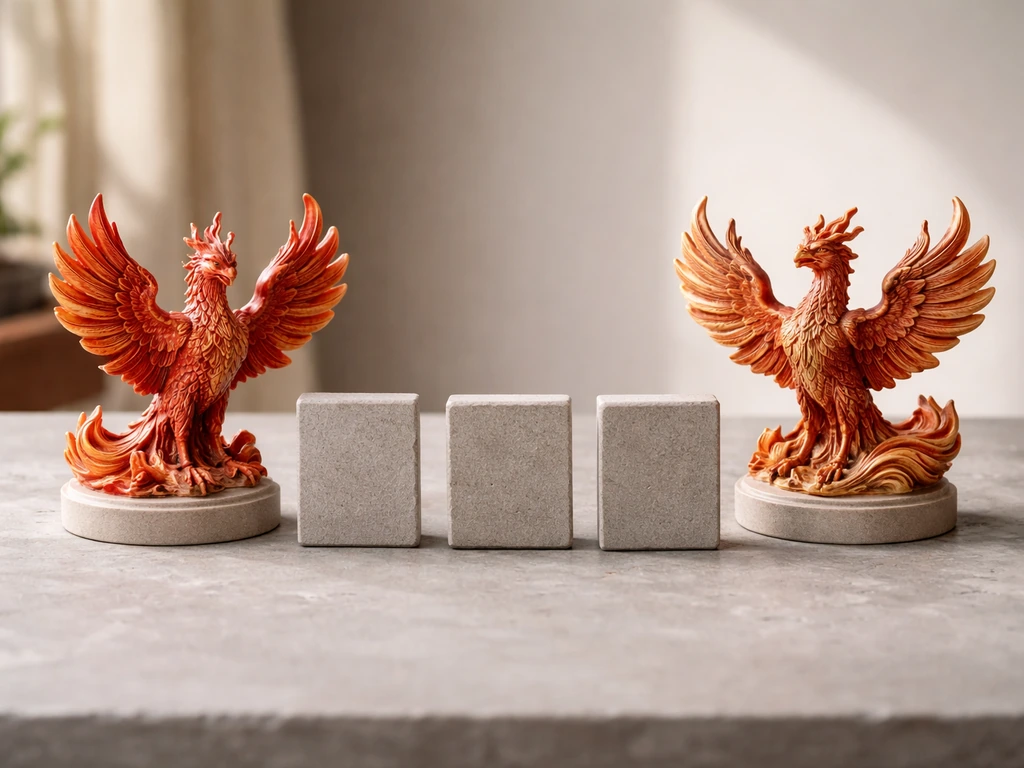
To compare these two fairly, I'm using three criteria: combat strength and elemental ability, survival and rebirth mechanics, and cosmological or symbolic authority. These are the same kinds of criteria you'd use to compare any two mythic creatures where physical stats aren't written down like a rulebook.
| Criteria | Vermilion Bird (Suzaku/Zhūquè) | Phoenix (Greek/Roman) |
|---|---|---|
| Elemental domain | Fire, South, Summer (cosmic guardian role) | Solar fire, renewal (tied to a single death/rebirth cycle) |
| Combat description in primary sources | Minimal; described as a directional/cosmological guardian, not a detailed fighter | Limited but implies great size, radiance, and flame; no detailed combat statblock |
| Rebirth/survival mechanics | No explicit rebirth mechanic in canonical Four Symbols texts; functions as an eternal cosmic entity | Explicit death-and-rebirth cycle; cannot be permanently killed; timing varies by tradition |
| Scope of power | Rules an entire cardinal direction, season, and element across the cosmological model | Singular individual; power is personal and biological rather than cosmic-directional |
| Vulnerability | No primary-text description of defeat or weakness | Vulnerable during the rebirth transition period between death and resurrection |
| Symbolic authority | One of four foundational cosmic guardians; equivalent in rank to the Azure Dragon, Black Tortoise, and White Tiger | Central solar and resurrection symbol but not part of a cosmological hierarchy in the same structural way |
What each one does well (and where each falls short)
Vermilion Bird strengths
- Cosmological rank: it is one of only four supreme directional guardians in East Asian cosmology, which places it in an elite tier by definition
- Fire and South are its domain at a structural, universe-organizing level, not just as personal abilities
- In Daoist internal alchemy and elemental theory, the Vermilion Bird (Zhu Que) represents Fire as a fundamental cosmic principle
- Associated with seven astrological mansions in the southern sky, giving it astronomical scale
- No explicit vulnerability or weakness appears in canonical Four Symbols descriptions
Vermilion Bird limitations

- Primary texts do not give it detailed combat abilities; it is a guardian and cosmological symbol, not a described warrior
- No explicit rebirth or resurrection mechanic in canonical sources (unlike the phoenix)
- Popular culture (games, anime, fandom) often inflates Suzaku's combat abilities beyond what primary texts actually describe
- Frequently confused with the Fenghuang (Chinese phoenix), which is a separate mythological bird entirely
Phoenix strengths
- The rebirth mechanic is the most powerful individual survival ability in classical mythology: death is not permanent
- Described as uniquely large, radiant, and fire-associated in appearance
- Solar symbolism connects it to one of the most powerful natural forces in ancient worldviews
- Widely described as one-of-a-kind, making it irreplaceable and singular in its tradition
Phoenix limitations
- The rebirth cycle creates a real vulnerability window: between death and resurrection, the phoenix is out of the fight
- Some traditions involve decomposition before rebirth, extending that window significantly
- Its power is personal and individual, not cosmological or directional in scale
- The 'one phoenix at a time' constraint in many retellings means it cannot be replaced or supported
- Different traditions (Egyptian Bennu, Greek/Roman, Christian resurrection symbolism) are often blended, making consistent ability claims difficult
Who wins depends on the scenario
There is no single universal answer here because 'power' means different things depending on the context. Here's how I'd call it across three realistic comparison scenarios.
Scenario 1: Direct combat (short fight)
This is the trickiest call because neither creature is described in detail as a melee fighter in primary texts. But if you force the matchup, the phoenix has an explicit fire-death ability that is well-documented, and the Vermilion Bird has only cosmological fire-domain authority, which is not the same as a described combat attack. In a moment-to-moment fight, the phoenix's fire-death event gives it a concrete action. Slight edge: phoenix, but this is genuinely under-described in primary sources for both creatures.
Scenario 2: Long-term endurance and survival
If you define power as 'who is harder to permanently stop,' the phoenix wins clearly. Its rebirth mechanic means you cannot permanently kill it, full stop. The Vermilion Bird has no described resurrection mechanic in canonical Four Symbols sources. However, the Vermilion Bird also has no described way to die in primary texts, which means this scenario is somewhat undefined for it. If we're strict about what's actually written, the phoenix has an explicit survival superpower and the Vermilion Bird simply lacks a described death condition at all. In many debates, people also ask how the phoenix bird stacks up against the thunderbird from Native American mythology phoenix bird vs thunderbird. Draw, leaning phoenix if you require an explicit rebirth mechanism to count.
Scenario 3: Symbolic and cosmological power
Here the Vermilion Bird wins, and it's not particularly close. One of four supreme cosmic guardians, ruling a cardinal direction, a season, and a fundamental element across an entire cosmological system is a different category of authority than a singular solar bird in a Greek/Roman natural history tradition. The phoenix is enormously powerful symbolically, but it is not a foundational structural pillar of the universe in the same way the Four Symbols are. Edge: Vermilion Bird, and it's substantial. If you want a quick summary of the phoenix bird vs griffin angle, it helps to separate mythic role and symbolism from physical combat Vermilion Bird.
Common misconceptions and naming confusion you need to watch out for
This comparison is loaded with name-mixing traps, and getting the names wrong completely changes the answer.
- Vermilion Bird does not equal phoenix: The Vermilion Bird (Suzaku/Zhūquè) and the phoenix are separate creatures from separate traditions. Some sources note the resemblance and overlap in popular culture, but canonical primary texts treat them as distinct. Do not assume Suzaku is just the 'Chinese phoenix.'
- Vermilion Bird does not equal Fenghuang: The Fenghuang is a different Chinese mythological bird, sometimes called the 'Chinese phoenix' in translation. Zhuque and Fenghuang are not the same, though they are frequently conflated in online discussions.
- Phoenix is not a single unified creature: The Egyptian Bennu, the Greek/Roman phoenix, and the Christian resurrection symbol are three different things that share a name in English. Which one you're using changes its abilities and rebirth mechanics significantly. The Bennu article makes clear that Egyptian sources handle the 'death' event very differently from classical phoenix narratives.
- Vermilion Flycatcher is not a mythic creature: If someone in a birding context says 'vermilion bird,' they almost certainly mean this small, insect-eating passerine from the Americas. It has no relevance to a power comparison with the phoenix.
- Fandom inflation: In games and anime, Suzaku is often given explicit fire-attack combat abilities far beyond what Four Symbols primary texts describe. This is valid for those specific fictional universes, but it should not be treated as canonical mythology.
- The Bennu-phoenix connection is worth noting separately: as covered in comparisons of the Bennu bird and the phoenix, the Egyptian origin story has meaningfully different rebirth mechanics than the Greek/Roman version.
How to verify claims and settle this comparison fast
If you're trying to settle this argument with a friend, in a game discussion, or for a research project, here's the fastest reliable path through it.
- Pin down which 'vermilion bird' is being claimed. If someone says 'Vermilion Bird' in a mythology context, ask whether they mean the Four Symbols Zhuque/Suzaku or something else. If they mean a real bird, they almost certainly mean the Vermilion Flycatcher (Pyrocephalus rubinus), which is not a mythic combatant at all.
- Pin down which 'phoenix.' Ask whether the comparison uses the Egyptian Bennu, the Greek/Roman phoenix (Pliny's version), or a later Christian-influenced retelling. Rebirth mechanics differ across these, and the comparison result can change depending on which one applies.
- Define 'power' in one of three ways before arguing: combat strength in a single encounter, survival over time (rebirth and endurance), or cosmological and symbolic authority. Each gives a different winner, and mixing all three without labeling them is how these arguments go in circles.
- Check the source for primary-text support versus fandom extrapolation. Canonical Four Symbols descriptions emphasize the Vermilion Bird as a cosmological guardian. Classic phoenix sources emphasize rebirth. If a claim goes beyond those baselines, ask for the specific primary text.
- Use the NASA Suzaku framing as a quick reality check: if a description matches 'vermilion bird of the south' from Chinese mythology, you're in Four Symbols territory, and that creature's power is cosmic and directional, not combat-detailed.
- If the comparison is for a creative project (game, story, debate), decide which tradition's rules you're using upfront. Suzaku's combat power varies dramatically between East Asian mythology and modern Japanese media, so being explicit about your source avoids a lot of confusion.
The bottom line: in a direct fight or endurance contest, the classical phoenix has the better-documented individual power (the rebirth mechanic is hard to beat). In cosmological rank and symbolic authority, the Vermilion Bird holds a structural position in the universe that the phoenix simply does not match. And if someone means a real bird when they say 'vermilion bird,' the Vermilion Flycatcher is a beautiful little passerine that has no business being in this argument at all. Clarify the terms, pick your scenario, and the answer becomes straightforward. If you want a quick verdict specifically for phoenix bird vs dragon matchups, it helps to define the versions and win conditions first.
FAQ
How do I avoid mixing up Suzaku (Vermilion Bird) with the Vermilion Flycatcher when someone says “vermilion bird vs phoenix”?
Ask one clarifying detail first, the context. If the discussion mentions Four Symbols, the South, the element Fire, or Zhūquè/Suzaku, it is the mythic Vermilion Bird. If it mentions red plumage, insect hunting, or a specific Americas range, it is the Vermilion Flycatcher, and the “power” comparison becomes irrelevant.
Which phoenix version is the article assuming, and why does that matter for power?
It uses the Greek/Roman phoenix as the baseline, where the defining trait is the rebirth cycle. Other traditions (like the Egyptian Bennu) shift the emphasis toward solar creation themes, so the “who is more powerful” answer can change depending on whether you reward rebirth, solar authority, or cosmic symbolism.
If I only care about “can be killed permanently,” does Suzaku ever beat the phoenix?
In canonical Four Symbols sources, Suzaku is not described with a detailed self-rebirth or explicit “cannot be permanently killed” rule. The phoenix has an explicit rebirth mechanic in the baseline version, so under a strict win condition focused on permanent defeat, the phoenix has the advantage.
What if I define power as “who controls fire better,” does the Vermilion Bird win?
Not automatically. Suzaku’s fire association is primarily domain or authority, while the phoenix’s fire link is tied to the death and return event in the baseline version. If your scoring rewards direct, repeatable fire effects as actions in the moment, the phoenix tends to fare better.
In a match-up where both are “invulnerable,” who would win a direct fight?
The texts do not give detailed combat move sets for either creature. If you still force a fight scenario, the phoenix has the more concrete, event-like advantage because rebirth is tied to a specific lifecycle outcome. Suzaku’s strength is more about cosmic governance than a described melee routine.
Can I treat the Vermilion Bird and Suzaku as the exact same entity across cultures?
Yes for the purpose of this comparison, because Suzaku is the Japanese name for 朱雀 (Zhūquè), the Four Symbols Vermilion Bird. The meanings are consistent at the cosmology level (direction, season, element), even though wording can vary by source tradition.
What’s the safest way to settle the argument with a friend who insists their “vermilion bird” is real?
Redirect to the ID. If it is a real animal, the likely candidate is the Vermilion Flycatcher (male red, insect sallying from perches). Then the “who is more powerful” question should be reframed as a mythic-fiction comparison, because a real passerine has no combat or rebirth powers in the mythological sense.
If someone wants a single-number winner, what rule should I use?
Use a decision rule that matches what you can justify. For example: “Winner is who wins the permanently-stoppable criterion,” then pick phoenix. Or, “Winner is who has higher structural cosmological rank,” then pick Vermilion Bird. Avoid scoring combat damage unless you first agree on combat-specific feats, which the primary descriptions largely do not provide.
Next Article
Vermilion Bird vs Phoenix: Key Differences and How to Tell
Side-by-side ID guide for vermilion flycatcher vs Phoenix, with plumage, habitat, behavior, and quick decision steps.