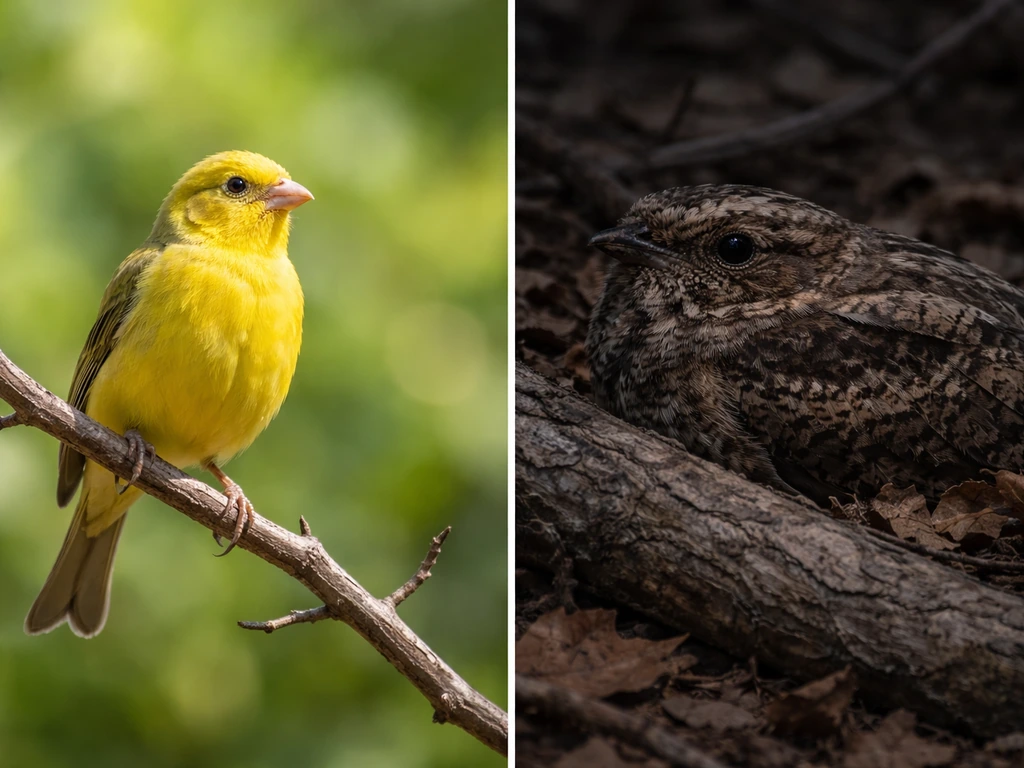
Birds and snakes share more than most people expect. Both are vertebrates built for efficient movement and predation, both rely on sharp sensory systems to track prey, both use camouflage and body positioning to avoid detection or ambush a target, and both evolved from reptilian ancestors. That last point surprises a lot of people: birds are, technically, avian dinosaurs nested within the broader reptile family tree. The similarities aren't coincidence. Some come from shared ancestry, and some come from solving the same survival problems in similar ways, a process called convergent evolution.
How Are a Bird and a Snake Similar? Key Traits Explained

Marcus Hendricks
17 Jun 2026
Big-picture similarities: body plans and key survival traits
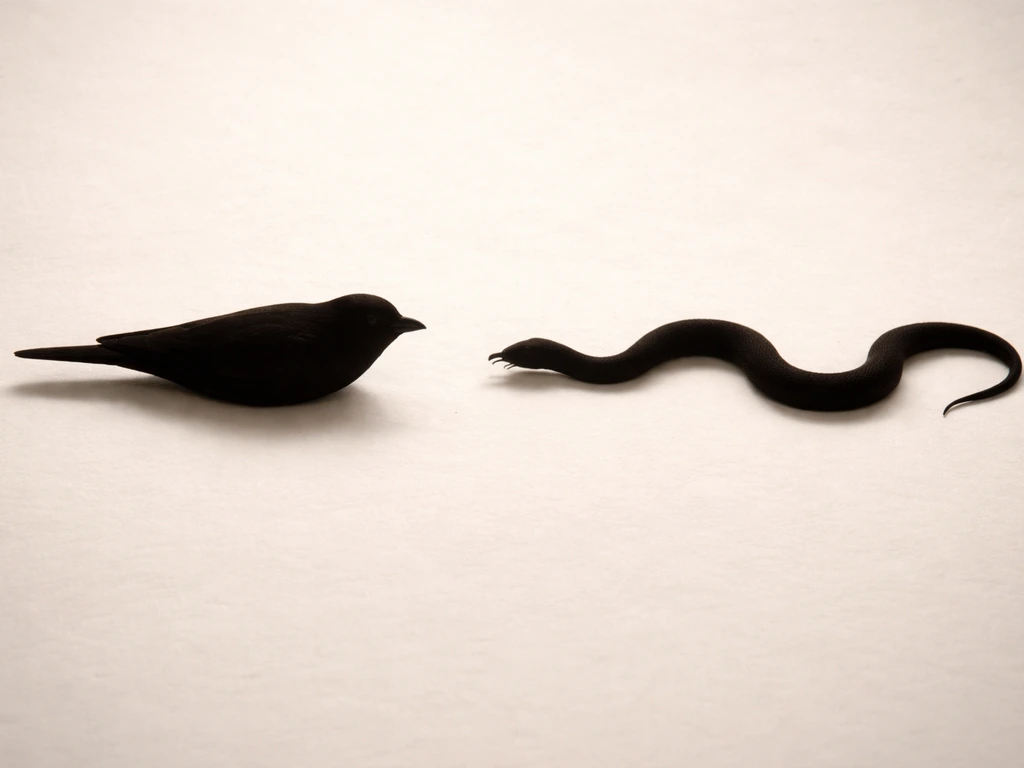
The most obvious thing birds and snakes have in common is that both are vertebrates built around efficiency. A bird's body is streamlined for speed and lift. A snake's body is elongated and flexible to navigate tight spaces and strike fast. Neither design wastes energy. Both body plans are optimized for moving through an environment, detecting prey, and either ambushing or pursuing it.
Both animals are also predators, or at minimum predator-adjacent. Most snake species eat other animals, relying on either ambush or active hunting strategies. Most bird species do the same, whether they're a hawk circling a field or a heron standing motionless at a stream's edge. Even seed-eating birds exist within the same ecological web of predation, competition, and concealment. The survival toolkit looks similar across both groups: stay hidden, sense your environment accurately, and act decisively when the opportunity arrives.
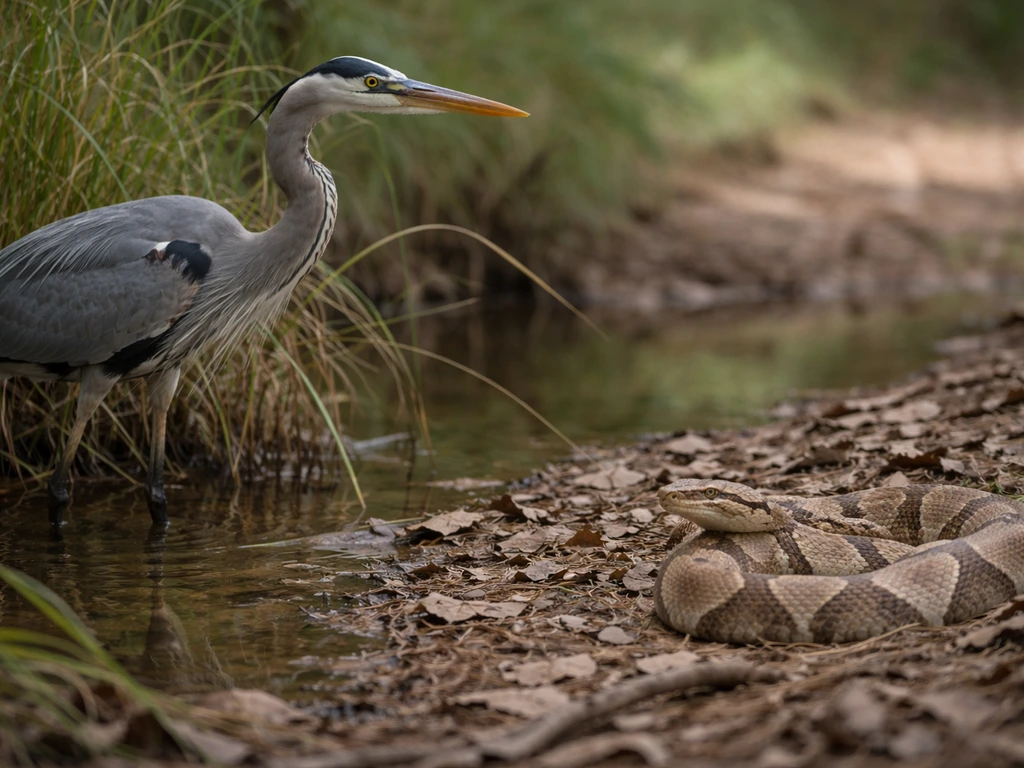
Camouflage is another big overlap. Both birds and snakes have evolved coloration and patterning that help them blend into specific environments. Think of a timber rattlesnake on a forest floor or a nightjar pressed flat against tree bark. The strategy is the same: look like your background, avoid detection, and gain an advantage over predators or prey.
Common behaviors: hunting, movement, and sensory strategies
Ambush predation shows up in both groups in a genuinely striking way. Many snakes use what researchers call sit-and-wait foraging: staying completely motionless in a concealed spot, then launching a rapid strike when prey comes close. Many birds do almost the exact same thing. Herons stand frozen in shallow water for minutes at a time before stabbing a fish. Owls perch silently and then dive. The behavior pattern, conceal yourself, wait, then strike suddenly, appears in both classes independently.
Active pursuit hunting is also common to both. Some snakes actively roam searching for prey rather than waiting. Raptors like falcons do the same from the air. The foraging strategy of any given species sits on a spectrum between pure ambush and pure active pursuit, and you'll find both birds and snakes distributed across that whole spectrum depending on species.
Movement itself is another parallel worth noting. Birds minimize detection during the approach phase of hunting through slow, deliberate movement or by using terrain cover. Snakes do the same on the ground, using slow, controlled lateral undulation to approach prey or avoid being spotted. Both animals modulate how much they move based on whether they're trying to stay invisible or close distance quickly.
Sensory strategies overlap too. Snakes rely heavily on chemosensation: their tongue flicks out to collect scent particles and delivers them to the vomeronasal (Jacobson's) organ, a chemical detection system that gives them a detailed picture of their environment. Pit vipers go further, using specialized facial pit organs as infrared thermoreceptors that detect the heat signatures of warm-bodied prey. That kind of heat-based hunting is exactly what makes senna bird vs chuck comparisons so interesting pit vipers. Birds, meanwhile, have exceptional vision (many raptors can spot movement from hundreds of feet up) and some species use precise hearing to locate prey under snow or vegetation. The specific hardware is different, but the function is the same: build an accurate, real-time model of what's nearby and where it's moving.
Anatomy and functions that overlap (not the same structures, but similar roles)
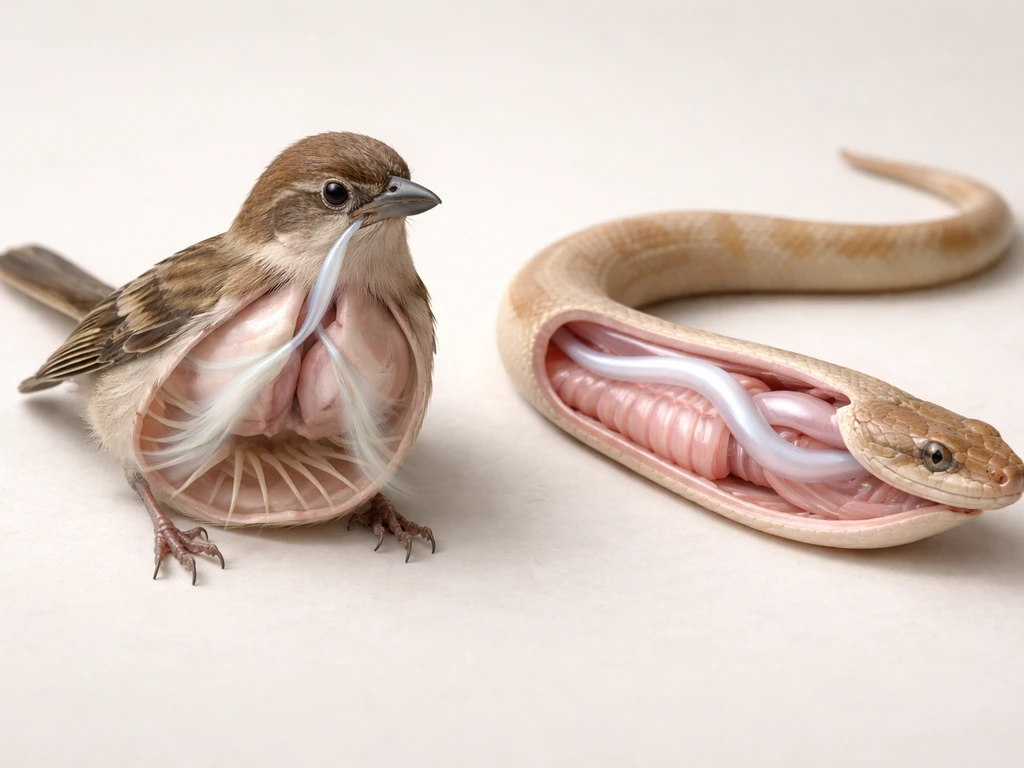
This is where things get genuinely interesting. Birds and snakes don't share the same anatomical structures, but they have structures that perform comparable functions. Take respiration. Birds have a famously efficient respiratory system with air sacs that allow near-continuous gas exchange. Snakes have a different setup: most species have a single functional lung with a large membranous caudal air sac at the rear (as described in studies of species like Pituophis melanoleucus). These aren't the same organs, but both systems represent solutions to moving oxygen efficiently through an elongated or high-demand body plan.
The skull and jaw mechanics are another functional parallel. Snakes evolved highly flexible, loosely articulated skulls that allow them to swallow prey much larger than their head. Birds evolved specialized beaks shaped by diet, with raptors having hooked bills for tearing, herons having spear-like bills for stabbing, and others shaped for cracking seeds or probing bark. Different anatomy, same underlying goal: process whatever food source your niche demands as efficiently as possible.
Striking speed is another functional overlap, especially relevant when you compare snake-hunting birds directly. A secretary bird can deliver a kick with roughly five times its body weight in force, targeting a snake's head to incapacitate it. The snake on the receiving end of that strike uses its own explosive muscular speed to attempt a counter-strike. Both actions rely on fast-twitch muscle systems optimized for sudden, high-force movements. Different limb structures, same functional demand.
Differences that matter: how birds vs snakes really diverge
For all the similarities, the differences between birds and snakes are fundamental and impossible to overlook. If you want a real-world example, roadrunner bird vs coyote showcases the same kind of predator versus prey dynamics. The most important one is thermoregulation. blank" rel="noopener noreferrer">Birds are endothermic, meaning they generate their own body heat through metabolic processes like shivering and non-shivering thermogenesis. This comes at a high energetic cost but gives birds a consistent internal temperature and the ability to be active in cold conditions. Snakes are ectothermic: they rely on external heat sources (sun, warm surfaces, ambient temperature) to regulate their body temperature. A cold snake is a slow, vulnerable snake. A cold bird is still fully operational.
| Trait | Birds | Snakes |
|---|---|---|
| Thermoregulation | Endothermic (internally generated body heat) | Ectothermic (relies on external heat sources) |
| Body covering | Feathers | Scales |
| Limbs | Two wings, two legs (in most species) | No limbs (vestigial structures in some) |
| Locomotion | Flight, walking, swimming depending on species | Lateral undulation, rectilinear, sidewinding, concertina |
| Respiratory system | Multi-chambered lungs with air sacs | Single functional lung with caudal air sac in many species |
| Reproduction | Hard-shelled eggs in most species; parental care common | Eggs or live birth depending on species; minimal parental care |
| Sensory strengths | Exceptional vision; some species rely on hearing | Chemosensation via vomeronasal organ; pit organs in some species |
| Evolutionary class | Avian dinosaurs (Aves) | Squamates (Order Squamata, suborder Serpentes) |
The locomotion difference is also worth spelling out clearly. Birds move primarily by flying, walking, or swimming depending on species. Snakes move in at least four recognized modes: lateral undulation (the classic slithering), rectilinear progression (slow straight-line movement using belly scales), sidewinding (used on loose or slick surfaces like hot sand), and concertina movement (used in tight spaces). An integrative review hosted on PMC (2019) discusses how snake locomotion is categorized into major modes such as rectilinear progression, lateral undulation, sidewinding, and concertina, and argues for broader distinctions beyond the traditional four. No bird moves like a snake, and no snake flies.
Feathers versus scales is the most visually obvious divide. Both are made of keratin, but feathers serve functions that scales simply don't: lift, insulation, display, waterproofing, and silent flight in owls. Scales in snakes are primarily for protection and ground contact during locomotion, with belly scales playing a direct mechanical role in how snakes grip and push off surfaces.
Evolution and why the similarity happens
The similarities between birds and snakes come from two different evolutionary mechanisms, and understanding which is which makes the whole comparison click. Some similarities exist because birds and snakes share a common ancestor. Both belong to a broader group called sauropsids (the reptile-and-bird lineage), so certain traits, like scaled skin at the base, similar jaw structures, and egg-laying in many species, reflect that shared heritage. This is called homology.
Other similarities exist because birds and snakes occupy similar ecological roles, even though they evolved those solutions completely independently. Ambush predation, camouflage coloration, efficient body plans for movement and striking speed: these aren't inherited from a common ancestor that had all these traits. They evolved separately in response to the same environmental pressures. When two unrelated lineages independently evolve similar solutions to similar problems, that's convergent evolution. It's one of the most powerful concepts in comparative biology, and the bird-snake comparison is a great illustration of it.
This is also why the comparison is genuinely useful rather than just trivia. When you understand that two very different animals converge on the same behavior or body plan, it tells you something about the environment they share and the problems that environment creates. Ambush predation isn't just a snake strategy. It's the optimal strategy for any predator operating in dense vegetation or low-visibility conditions, whether it has feathers or scales. So if you're wondering how a coucal bird vs snake interaction plays out, the same camouflage and ambush logic often explains the outcome Ambush predation.
How to spot the comparison in the real world
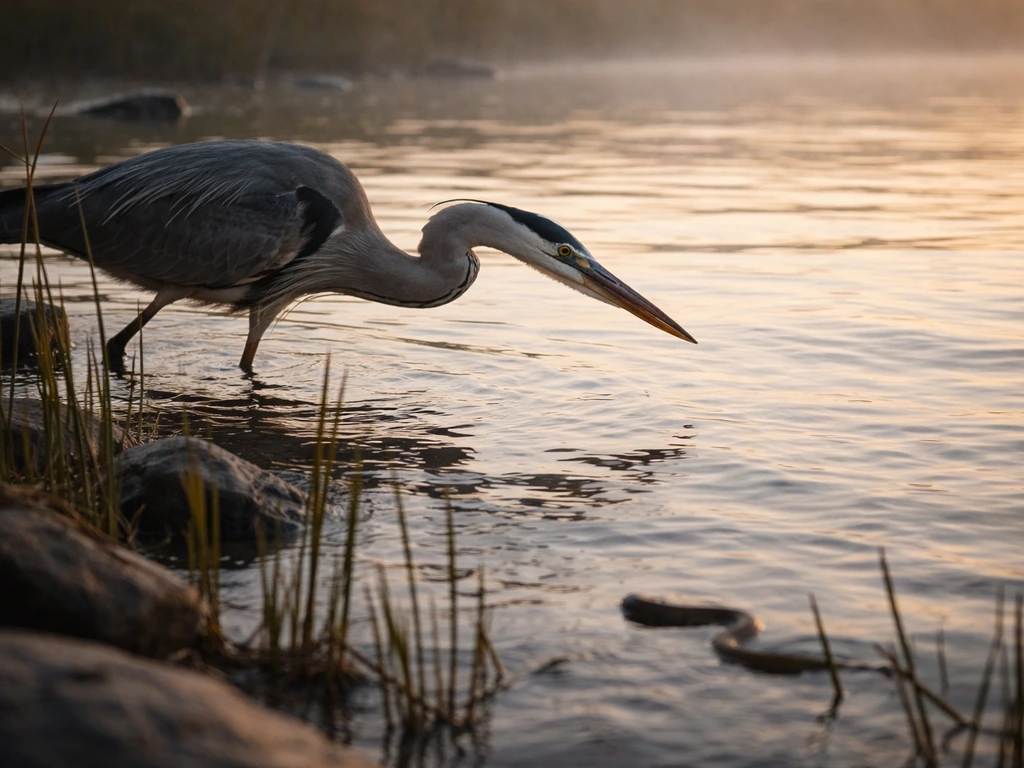
The easiest place to see bird-snake similarities in action is in their hunting behavior. If you watch a great blue heron hunt, you're watching a textbook sit-and-wait predator: completely still, neck coiled back in an S-curve, then an explosive strike. A coiled ambush viper hunting at night works on almost identical behavioral logic. Both are invisible until they aren't.
Watch how both move when they don't want to be seen. A snake approaching prey uses slow, controlled lateral movement, pausing frequently, keeping its body low and parallel to the ground. A stalking heron or a hunting hawk approaching a perch does the same thing: slow, deliberate, using cover, pausing to reassess. The movement strategies are remarkably parallel even though the mechanics are completely different.
You can also test the sensory systems comparison directly. Go near any ambush snake species and notice that it likely detected you before you detected it, whether through ground vibration, infrared heat sensing (in pit vipers), or chemical cues from your scent trail. Go near a raptor's hunting territory and you'll find it spotted you from a distance you wouldn't expect. Different sensors, same outcome: these animals know what's in their environment before most prey realizes it.
The most dramatic real-world example of the bird-snake relationship is birds that actively hunt snakes. The secretary bird, roadrunners, and certain coucal species all hunt snakes using strategies that flip the ambush dynamic: they become the sudden, fast-striking threat that a snake's own reflexes can't always counter. Watching a secretary bird stomp a snake with force equivalent to five times its body weight illustrates, in one moment, exactly how similar the demands of predation are across both groups. It takes a predator to hunt a predator.
If the bird-snake comparison has you curious about specific matchups in the wild, the dynamics get even more specific and surprising when you look at individual species pairs. How a rattlesnake holds up against a secretary bird, or how a roadrunner actually handles a snake encounter, involves details that go well beyond the general comparison. If you’re curious about one memorable matchup, the roadrunner bird vs snake question comes up often because of how these animals respond to each other in the wild. Those are worth exploring if you want to see exactly how these shared and divergent traits play out in a real predator-prey context.
FAQ
Do birds and snakes have the same kind of sensory system, or just similar hunting behavior?
The behavior can look similar, but the sensors are different. Snakes often detect prey indirectly through scent cues (tongue chemosensation) and, for pit vipers, infrared heat. Birds rely more on real-time spatial sensing like vision, and some also use hearing to track prey movement. So an ambush “match” can still involve completely different detection hardware.
Why do some snakes look still for a long time, but other snakes actively hunt?
It usually comes down to species ecology and where prey is predictable. Many ambush species benefit from dense cover where moving would give away their position, so remaining motionless conserves both energy and concealment. More active species may hunt in open areas or where prey movement is easier to track, making searching and pursuit worthwhile even if it increases visibility.
Is camouflage in birds and snakes the same, or do they achieve it differently?
Both can blend into backgrounds, but birds and snakes implement camouflage through different structures. Snakes use skin coloration and patterning across scales for background matching and disruption, while birds often combine patterning with behavior like freezing, choosing specific perches, and using the geometry of their body against tree bark or water surfaces.
Do birds and snakes have similar breathing systems because they both “move oxygen efficiently”?
They are functionally analogous, not the same anatomically. Birds use air sacs with near-continuous airflow through lungs, while most snakes rely on a single functional lung plus a rear air sac. The takeaway is efficient oxygen transfer, but you should not expect identical mechanics or airflow patterns.
How do birds manage rapid strikes without venom, while snakes rely on venom or constriction in some cases?
Both groups can be fast, but the killing method differs by species and niche. Birds that prey on snakes may use a sudden strike or stomping to disable quickly, then relocate if the prey responds aggressively. Snakes may counter by biting, constricting, or using defensive postures depending on whether venom is available and how closely the bird is engaged.
Can a “bird-snake” resemblance mislead people into thinking they are closely related?
Yes, because some traits are similar in outcome, not because they evolved the same way. Birds and snakes are both part of the broader sauropsid lineage, but many day-to-day similarities in hunting and concealment are convergent, meaning unrelated lineages solved similar problems independently.
Why is a cold snake more vulnerable, but a cold bird can still function?
Because their heat strategies differ. Ectothermic snakes depend on external warmth for muscle performance and overall activity level, so cooling slows reaction and mobility. Endothermic birds can maintain internal temperature through metabolic heat production, so activity and coordination remain comparatively reliable even when ambient conditions drop.
Do snakes and birds both use ambush because they are predators, or because the environment favors it?
It is mostly the environment and prey visibility, not just predator status. Ambush works especially well in dense vegetation, low light, or cluttered backgrounds where staying hidden reduces the odds of being detected first. If the habitat makes stalking efficient or prey is easier to locate while moving, active pursuit strategies can dominate for both groups.
Why can’t you “compare anatomy directly” when thinking about jaws and swallowing?
The goal is similar, but the structures are different. Snakes have highly flexible skull and jaw mechanics to swallow much larger prey, while birds use beak shapes shaped by diet and may rely on tearing, stabbing, probing, or cracking rather than extreme mouth expansion. So matching jaw function across the two groups needs species-by-species context.
What’s the best way to observe these similarities without confusing them with behavior that’s just coincidental?
Look for a full sequence, not a single moment. For example, observe concealment before contact, then a sudden decisive action when prey is within range. If both animals follow a similar “hide, wait, strike” timing pattern in the same habitat type, the similarity is more meaningful than a one-off visual resemblance.
Next Article
Senna Bird vs Chuck: How to Identify Them Fast
Fast field guide to tell Senna bird from chuck using range, field marks, flight silhouette, calls, and a quick ID checkl