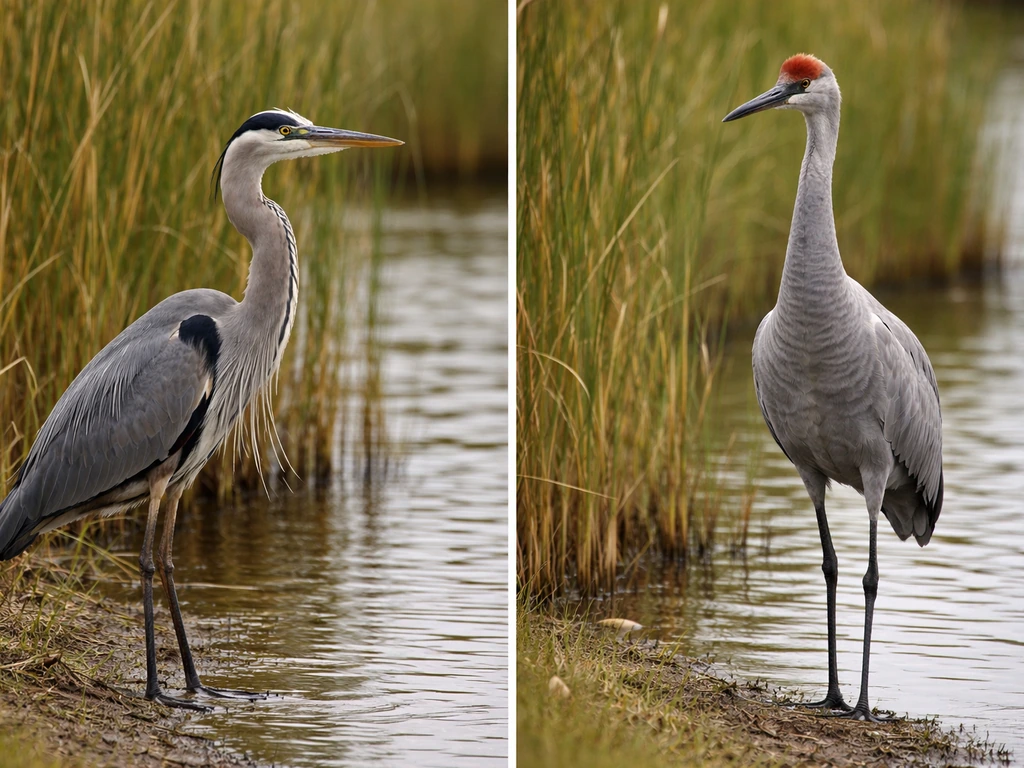
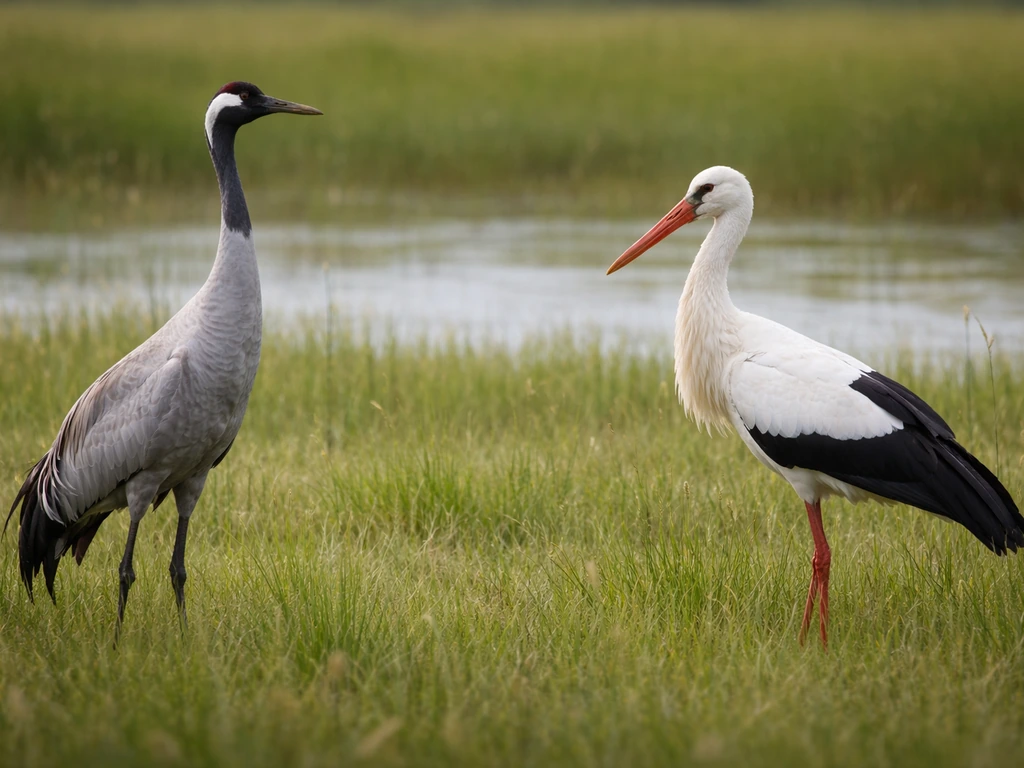
Cranes and storks are not the same bird, and once you know what to look for, you can tell them apart in seconds. The fastest check is neck posture in flight: cranes stretch the neck out completely straight, while storks also fly with the neck extended but carry a heavier, more drooping bill and a distinctly bare, scaly head. On the ground, cranes look like tall, upright, gray or white birds probing open fields and wetlands, while storks (like the wood stork common in the U.S.) stand out with their bald, wrinkled heads and thick downward-curved bills. Those two cues alone will get you most of the way there.
Crane Bird vs Stork: Key Differences for Easy ID

Marcus Hendricks
16 May 2026
Quick ID: what to check first in photos or real life
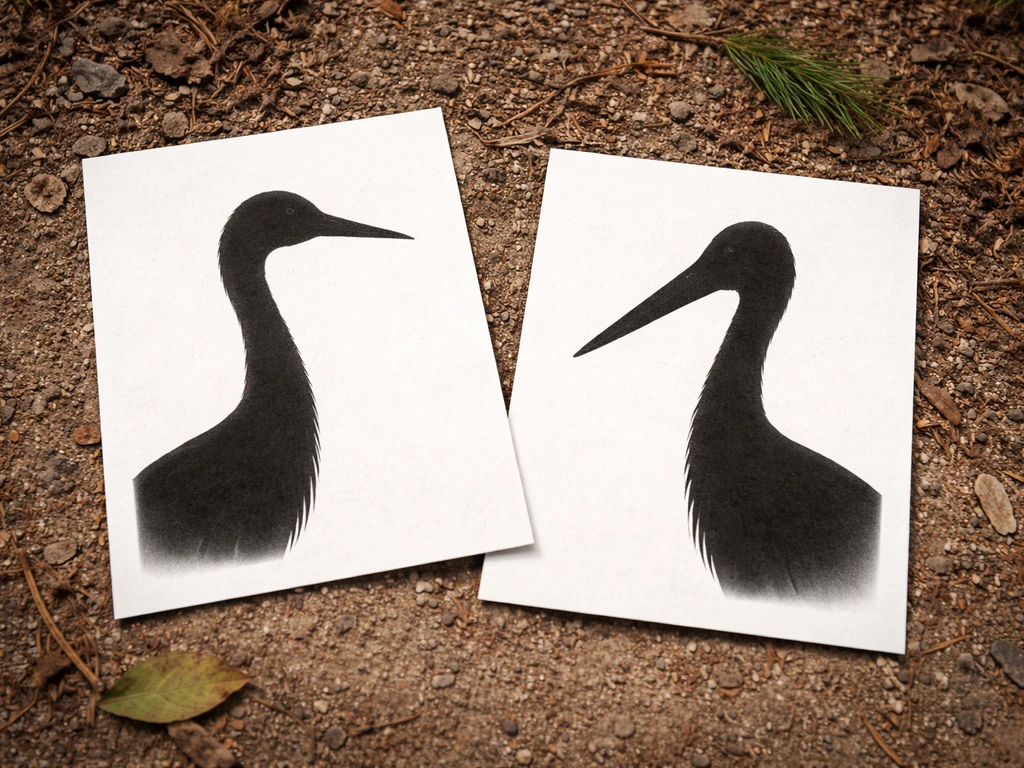
When you spot a large wading bird and you're not sure what you're looking at, run through this short checklist before anything else. It takes about ten seconds and will rule out the wrong group almost every time.
- Head feathered or bald? Cranes have fully feathered heads, often with a bright red or reddish crown patch. Storks (especially wood storks) have a bare, bald, scaly-looking head and upper neck with no feathers at all.
- Bill shape: Cranes carry a long, straight, pointed dark bill. Storks have a thick, heavy bill that curves noticeably downward toward the tip.
- Body color: Sandhill cranes are overall gray, sometimes stained rusty-brown. Wood storks are mostly white with striking black flight feathers and tail.
- Flight neck posture: Both cranes and storks extend the neck straight out in flight. This is how you rule out herons, which fold the neck into a tight S-curve mid-flight.
- What are they doing? Cranes probe open ground and shallow wetland edges for food. Storks wade into water 6 to 10 inches deep and use a grope-feeding technique, holding the bill slightly open underwater.
Body shape and proportions: neck, legs, and overall silhouette
Both birds are tall, long-legged waders, and that's exactly why people mix them up. But their proportions tell different stories. blank" rel="noopener noreferrer">Sandhill cranes are heavy-bodied with very broad wings, a long neck, and extremely long legs that leave a significant portion of the leg exposed below the body. Their overall silhouette is blocky and powerful, almost like a flying cross when seen overhead, because the neck, body, and legs all extend in a flat horizontal line. Whooping cranes follow the same body plan but are even larger, standing about five feet tall.
Wood storks share the long-leg, long-neck blueprint but tend to look a little more hunched at rest, with the neck pulled in slightly at the base. In flight, storks also extend the neck straight, so the silhouette overlap with cranes is real, but storks show more contrast between the white body and black wingtips and have a heavier, drooping bill that changes the head profile noticeably. If you can see the head shape clearly, you won't confuse them. The crane's head looks sleek and feathered; the stork's head looks rough, bare, and almost prehistoric.
Bill and head features: shape, size, and subtle markings
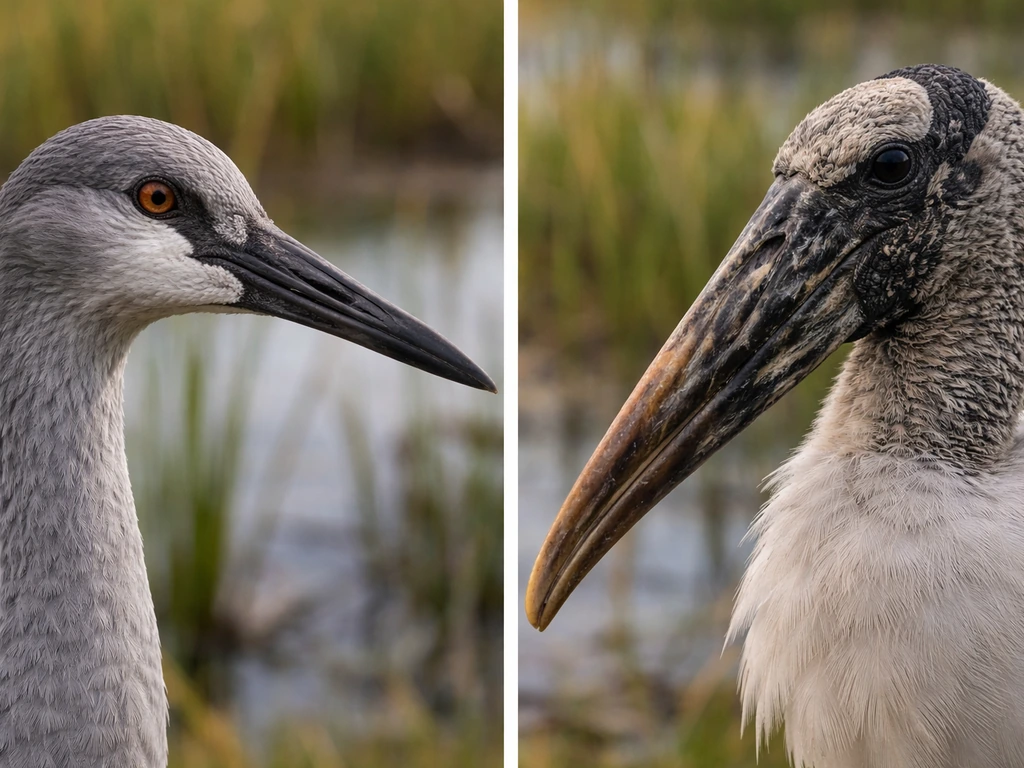
This is the single most reliable feature after body color. Sandhill cranes have a long, straight, pointed bill that looks a bit like a heron's bill but sits on a feathered head with a very distinctive bright red crown. That red forehead patch is almost always visible in adults and stands out even at a distance. The bill itself is dark and tapers cleanly to a point, designed for probing into soil or shallow substrate.
Wood storks have the opposite look on top. The head and upper neck are completely bare, covered in dark, rough, scaly-looking skin. There are no feathers at all up there. The bill is thick at the base, fairly long, and curves downward slightly, giving the bird a heavy, almost prehistoric profile. This bare-headed look is unusual enough that once you see it, you won't forget it. It's one of those features where a photo from any angle makes the ID obvious immediately.
| Feature | Sandhill / Whooping Crane | Wood Stork |
|---|---|---|
| Head | Fully feathered; red crown patch in sandhill cranes | Completely bare, dark, scaly skin |
| Bill shape | Long, straight, pointed | Thick, heavy, slightly downward-curved |
| Bill color | Dark gray/black | Dark, dusky gray |
| Body plumage | Gray (sandhill); White (whooping crane) | White body with black flight feathers and tail |
| Overall size | Very large; whooping cranes up to ~5 ft tall | Large, but typically shorter than whooping crane |
Flight posture and movement patterns
This is where cranes and storks both separate cleanly from herons, so it's worth understanding. Once you rule out herons by flight posture, the next step is figuring out heron bird vs crane by their overall silhouette and bill shape separate cleanly from herons. Both cranes and storks fly with the neck fully extended and straight. This is non-negotiable for cranes, whether sandhill or whooping.
The neck never tucks, never curves into an S, and never droops. The result is that classic flying-cross silhouette where the extended neck and trailing legs form a straight horizontal line through the wingbeats. Whooping cranes in particular are described as easily distinguishable from other large birds specifically because the neck is out completely straight the entire time they're airborne.
Storks also extend the neck in flight, but the heavier bill creates a slightly front-weighted look that experienced observers pick up on. The black-and-white contrast of wood storks is also very visible in flight, with the black flight feathers and tail creating a bold pattern against the white body. If you're watching either bird in flight and the neck is folded back against the body in an S-curve, you're looking at a heron or egret, not a crane or stork. That one rule eliminates a huge amount of confusion.
In terms of wingbeat style, cranes have a somewhat buoyant, fluid flap followed by a glide, while storks tend to soar more on thermals, holding their wings flat and using rising air to gain altitude with minimal flapping. This soaring behavior, combined with that bold black-and-white pattern, makes wood storks quite recognizable from below when they're circling overhead.
Behavior and feeding style differences
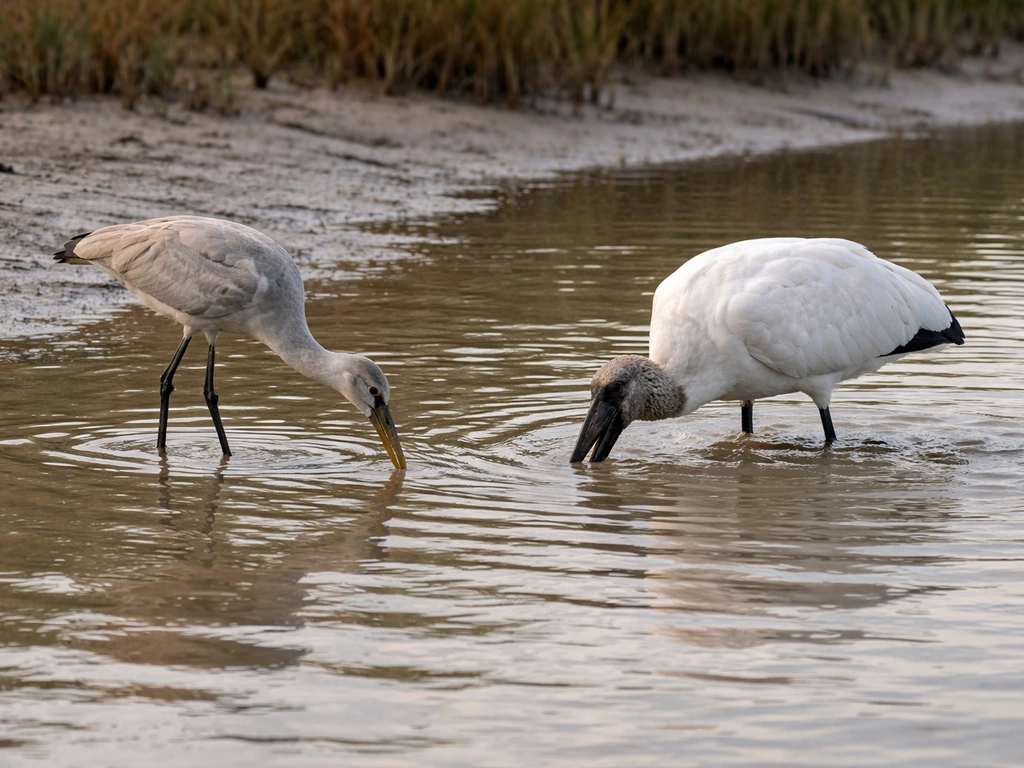
How these birds actually eat is one of the most useful field checks you have, especially when they're standing still and the silhouette isn't enough to call it definitively. Sandhill cranes feed mainly by probing for subsurface food items, working through wetland edges, meadows, and cultivated fields by poking the bill into the ground or shallow substrate. They're generalists, eating everything from plant matter and grain to insects, frogs, and small vertebrates. Watching a sandhill crane feed, you'll see it walking steadily and deliberately, using the bill like a probe or pick.
Wood storks use a completely different and frankly fascinating technique. They wade into water about 6 to 10 inches deep and hold the bill slightly open underwater, waiting to snap shut the moment they feel something. This is called grope-feeding or tacto-location, and it relies on touch rather than sight. It's one of the fastest bill-closing reflexes of any bird. If you see a large wading bird standing in shallow water with its bill submerged and partially open, barely moving, that's a stork behavior, not a crane behavior. If you want a quick crane bird vs flamingo-style comparison, focus on posture and bill cues before you try to judge color stork behavior. Cranes don't do this.
Cranes are also notably social and vocal. Sandhill cranes travel in large flocks, and their loud, rattling bugling calls carry an impressive distance. During migration, over 500,000 sandhill cranes converge on the Platte River basin in Nebraska each March, one of the most spectacular wildlife events in North America. Storks are quieter, more solitary feeders, and while they nest colonially, they don't produce the same kind of loud vocal performances.
Habitat, range, and where you're likely to see each
Your location matters a lot here because cranes and storks don't share the same range cleanly. Sandhill cranes are widespread across North America and use a mix of wetlands, open meadows, grasslands, and cultivated fields. They nest in wetlands on low mounds of vegetation, but they forage in open areas nearby, which means you might spot them walking through a cornfield or standing in a wet prairie far from obvious water. During migration, they concentrate heavily along river corridors like the Platte River in Nebraska.
Whooping cranes have a much more restricted range. They breed in the wetlands of Wood Buffalo National Park in northern Canada and winter almost exclusively on the Texas coast at Aransas National Wildlife Refuge near Rockport. The winter 2024 to 2025 season recorded a record estimate of 557 whooping cranes at Aransas, which shows both how rare they are and how precisely their wintering location is known. If you're in Texas near Rockport between November and March and you see a tall white crane-shaped bird, the whooping crane is absolutely worth considering.
Wood storks in the U.S. are almost entirely a southeastern bird. They're strongly associated with southern wetlands and swamps, particularly in Florida, Georgia, and South Carolina. Their breeding is timed to match wetland water cycles so there's maximum fish availability when chicks need to grow fast. If you're anywhere north of the Gulf Coast states, a stork sighting is unusual and worth verifying carefully. If you're in Florida and you see a large bald-headed wading bird, the wood stork is the first thing to check.
Common lookalike traps and how to confirm your ID
The biggest lookalike trap isn't actually crane vs stork. It's crane vs Great Blue Heron. Great Blue Herons are incredibly common across North America, and at a distance a standing heron can look remarkably like a sandhill crane. The fastest way to resolve this: look at the neck in flight. If the bird folds its neck back into a tight S-curve, it's a heron. If the neck stays fully extended and straight, it's a crane. This single check works almost every time and takes about two seconds to apply.
The stork-versus-heron confusion is also common. Wood storks can look heron-like when standing at rest, especially from a distance. But up close, the completely bare, dark, scaly head and neck immediately separate a stork from any heron. No heron in North America has that bald, rough-skinned head. If you're comparing a wood stork to a Great Egret, the bare head and thick downward-curved bill on the stork will be obvious once you know to look for them. The Great Egret has a bright yellow bill, a fully feathered head, and a much more slender overall build.
Another trap: whooping cranes and wood storks are both large and mostly white, so a distant bird in flight could create confusion. The check here is the head and bill profile. Whooping cranes have a feathered head with a red crown patch and a straight, pointed bill. Wood storks have that bare wrinkled head and a heavy, slightly curved bill. In flight, the whooping crane's neck looks almost impossibly straight and clean, while the stork's heavier bill gives the head end a slightly different silhouette. Cranes also show red on the face if you can get close enough to see it.
It's also worth knowing that cranes are sometimes confused with herons for the same reasons storks are, so if you've been exploring the broader heron-versus-crane question, the same flight-neck rule applies. The straight-neck-in-flight test is the most universal separator for cranes from every heron species. Similarly, if you've been trying to sort out pelicans from storks (another bird pair that occasionally causes confusion), the bill shape and feeding behavior differences are the fastest route to a confident ID. The bill shape and feeding behavior differences help you tell a pelican bird vs stork apart quickly pelicans from storks.
Your field ID checklist at a glance
| Trait | Crane (e.g. Sandhill) | Stork (e.g. Wood Stork) |
|---|---|---|
| Head | Feathered; red crown (sandhill) | Bare, dark, scaly skin |
| Bill | Long, straight, pointed | Thick, heavy, slightly curved down |
| Body color | Gray or white depending on species | White body, black flight feathers/tail |
| Neck in flight | Fully extended, straight | Extended, but heavier bill creates front-weighted profile |
| Feeding method | Probing ground/substrate while walking | Grope-feeding in shallow water with open bill |
| Habitat | Wetlands, grasslands, cultivated fields | Shallow southern swamps and wetlands |
| U.S. range | Widespread; whooping cranes wintering Texas coast | Primarily southeastern U.S., especially Florida |
FAQ
What should I do if I can only see the neck and not the head or bill clearly?
Use the flight-neck rule first. Cranes keep the neck fully extended and straight with no droop or S-curve, while herons and egrets fold into a tight S. If you still cannot see the head, rely on ground posture after the bird lands: cranes usually look tall and upright with feathered head, storks show a distinctly bare, rough-looking head and thicker downward-curved bill.
Can cranes droop their necks slightly, especially in windy conditions?
Generally, no. The crane identifier is that the neck stays straight and extended through the whole flight segment, not tucked into an S and not drooping below the wing line. If the neck position changes during the same flight, that is a sign to re-check for heron or egret rather than force a crane ID.
How can I tell sandhill cranes from wood storks when the birds are close together in the same wetland?
Compare head covering and bill type at rest. Wood storks have a completely bare, dark, scaly-looking head and a heavier bill that curves slightly downward. Sandhill cranes have a feathered head and a long, straight, pointed bill with a distinctive red crown patch on adults.
What if the bird is standing still and I cannot see whether the bill is submerged?
Look for head appearance and bill shape instead of feeding. A stork’s bare, wrinkled head and thick, downward-curved bill are visible even when it is not actively probing or grope-feeding. If you truly cannot see those cues, wait until it moves into shallow water, because storks often hold the bill slightly open underwater and snap shut reflexively.
How do I avoid confusing wood storks with great egrets or other white waders?
Use two specific checks: head skin and bill color or build. The wood stork has bare dark, rough skin on the head and neck plus a thick bill that curves downward. A great egret has a feathered head and typically a slender-looking, bright yellow bill, and it lacks the stork’s heavy bill silhouette.
If I hear calls, can I use that to confirm crane versus stork?
Yes, but only as a supporting clue. Sandhill cranes are loud and social, often bugling in flocks, and those calls travel far. Storks are generally quieter and more solitary feeders even when they nest nearby. If you are observing a single bird with no calls, do not rely on sound alone, prioritize head and bill features.
Are whooping cranes likely to be mistaken for wood storks?
They can, because both can look large and mostly white from a distance. The reliable separator is head and bill profile: whooping cranes have a feathered head with a red crown patch and a straight, pointed bill, while wood storks have a bare, wrinkled head and a heavier bill that curves slightly downward. Also, both can show a very straight neck in flight, so head detail is the tie-breaker.
What’s the fastest way to tell crane versus heron if I can only see them in flight from far away?
Use the neck shape. A heron folds its neck into an S-curve, while a crane keeps the neck fully extended and straight. This holds across crane species and works better than trying to judge overall size or color at long distance.
Does location alone confirm a stork sighting?
It helps, but it should not replace visual ID. Wood storks are strongly associated with southeastern U.S. wetlands and are unusual north of the Gulf Coast states, so location can raise or lower your suspicion. Still, verify with the bare dark head, scaly skin texture, and heavy slightly downward-curved bill.
What is the most common mistake people make when trying to ID cranes and storks?
Overtrusting silhouette and color when the head is not visible. Because both are tall, long-legged waders, people often rely on the “long-neck” idea and mis-ID. The fix is to prioritize head coverage (feathered versus bare), then bill shape (straight pointed versus thick downward-curved), and use the neck posture in flight as the rapid tie-breaker.
Next Article
Heron Bird vs Crane: Side-by-Side ID Guide
Side-by-side tips to tell herons from cranes by size, neck and bill shape, legs, feeding, and typical habitat