If you're standing outside right now trying to figure out whether you just heard a bird-voiced tree frog or a gray tree frog, here's the fastest answer: listen for the quality of the call. The bird-voiced tree frog gives rapid, high-pitched whistled notes that genuinely sound like a small bird singing, while the gray tree frog delivers a slower, musical trill that's rougher and more resonant. If you can also catch or closely photograph the frog, flip it over (or get a look at its inner thighs): greenish-yellow or yellowish-white flash marks mean bird-voiced, bright orange-yellow marks mean gray treefrog. Those two cues together will get you to a confident ID almost every time.
Bird-Voiced Tree Frog vs Gray Tree Frog: How to Tell

Marcus Hendricks
3 Jul 2026
What people actually mean by 'bird-voiced' vs 'gray' tree frog
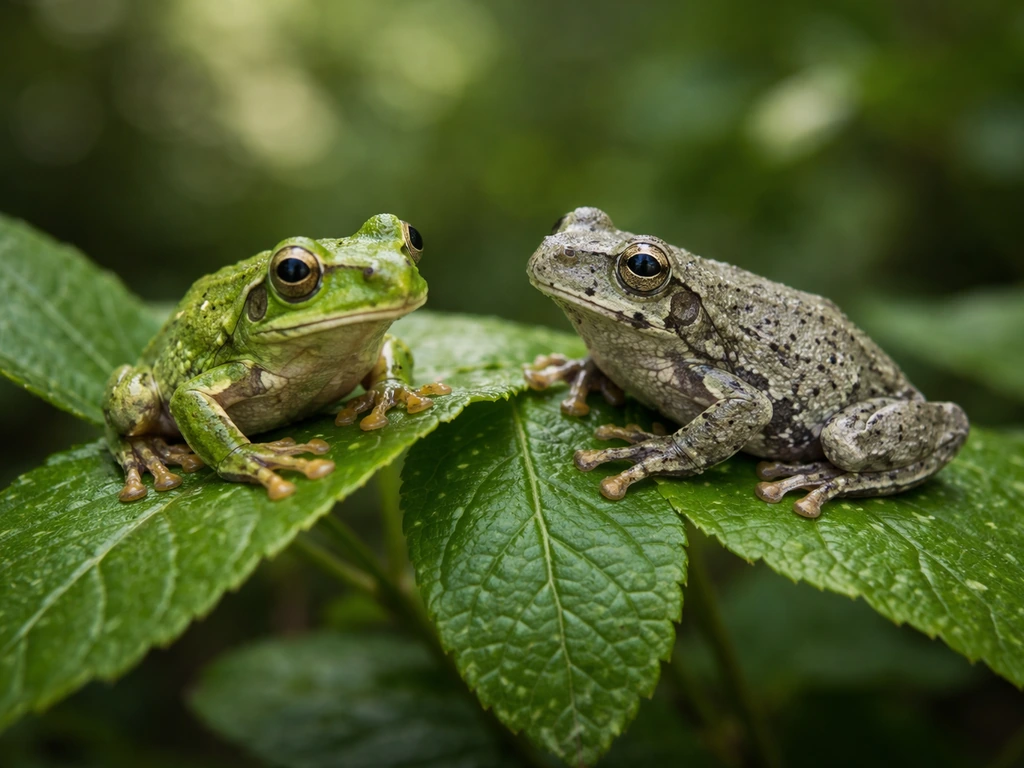
These are two distinct species, not just nicknames for the same frog. The bird-voiced tree frog is Hyla avivoca (also written as Dryophytes avivoca in newer taxonomy). Its common name comes directly from its call, which really does sound more like a songbird than a frog. Like many related frogs, the bird-voiced and gray tree frogs share a common ancestor that traces back through their evolutionary history bird and crocodile common ancestor.
The gray tree frog is Dryophytes versicolor (older field guides may label it Hyla versicolor). You might also see the name 'Cope's gray tree frog' floating around, which refers to a closely related cryptic species, Dryophytes chrysoscelis, that looks nearly identical to the gray tree frog and is only reliably separated by call.
For practical field purposes today, think of it this way: bird-voiced is a southeastern swamp specialist, gray tree frog is a woodland generalist with a much wider northern and eastern range.
One reason people get tangled up here is that both frogs occasionally get called 'birdlike' in field guides, which is genuinely confusing. Both species have earned that label at some point, but the bird-voiced tree frog earns it far more literally. Keeping the species names straight also matters because some older apps and guides still use Hyla nomenclature while newer resources use Dryophytes, so you may be looking at the same frog under two different scientific names depending on which source you're reading.
What to listen for and how to nail the call ID
The call is your single most reliable tool for separating these two frogs, especially at night from a distance. Here's how each sounds in plain terms.
Bird-voiced tree frog call
The bird-voiced tree frog call is a rapid series of high-pitched, whistled notes delivered in quick succession. It genuinely mimics the rhythm and tone of a small songbird. Think of it as a bright, airy, fast whistle burst. The Illinois Natural History Survey describes it as 'fast pulsed trills,' and UGA's herpetology lab calls it a 'birdlike series of high-pitched, whistled notes given in rapid succession.
' When you hear it the first time, your instinct will probably be to scan the shrubs for a bird, not look down at the water's edge. Males call from elevated perches along wetland edges, sometimes several feet up in shrubs or low tree branches, which reinforces the 'is that a bird? ' confusion.
Peer-reviewed research on call parameters confirms the species has a consistent, measurable advertisement call structure, so if you record it, you can compare your recording to reference audio on AmphibiaWeb.
Gray tree frog call
The gray tree frog's call is a blank" rel="noopener noreferrer">slower, musical trill lasting roughly 1 to 3 seconds per burst. It's still described as 'birdlike' by some sources (Minnesota DNR, Missouri Department of Conservation), but the quality is throatier and more resonant than the bird-voiced tree frog's whistle. Imagine a short, melodic purring trill rather than a rapid whistle. The key measurable difference between the gray tree frog and the very similar Cope's gray tree frog is pulse rate: Cope's trills about twice as fast as the gray tree frog. For your purposes today, just know that if the call sounds like a slow, warm musical trill rather than a rapid bright whistle, you're probably hearing a gray tree frog.
Practical tips for recording and confirming calls
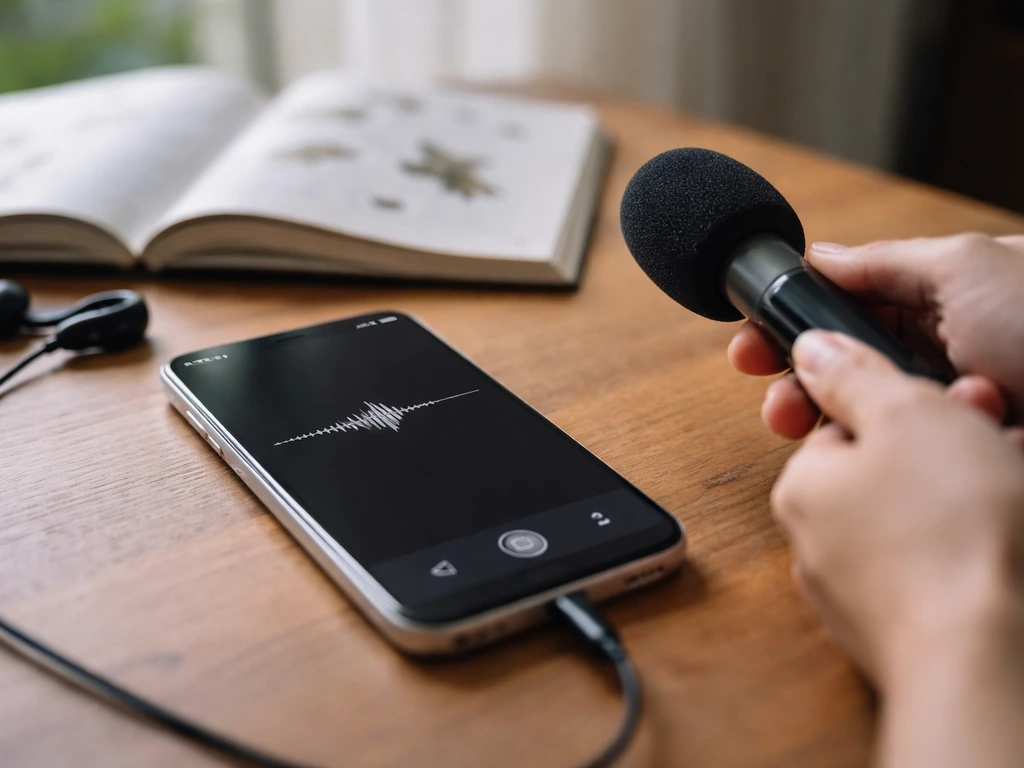
- Record the call on your phone even if conditions aren't perfect. A short clip is enough to compare against reference recordings.
- Search AmphibiaWeb or iNaturalist for verified recordings of Hyla avivoca and Dryophytes versicolor and play them side by side.
- If the call is ambiguous, Missouri Department of Conservation recommends using sonogram analysis (apps like Spectroid are free) to examine pulse structure, which is especially useful when separating gray tree frog from Cope's gray tree frog.
- Note the height of the calling frog. Bird-voiced males commonly call from elevated perches in shrubs or low branches along wetland edges. Gray tree frogs are also arboreal but tend to call from woodland-edge vegetation near water.
- Call activity peaks on warm, humid nights. In July, you're right in the active season for both species.
Visual field marks: what to look for if you can see the frog
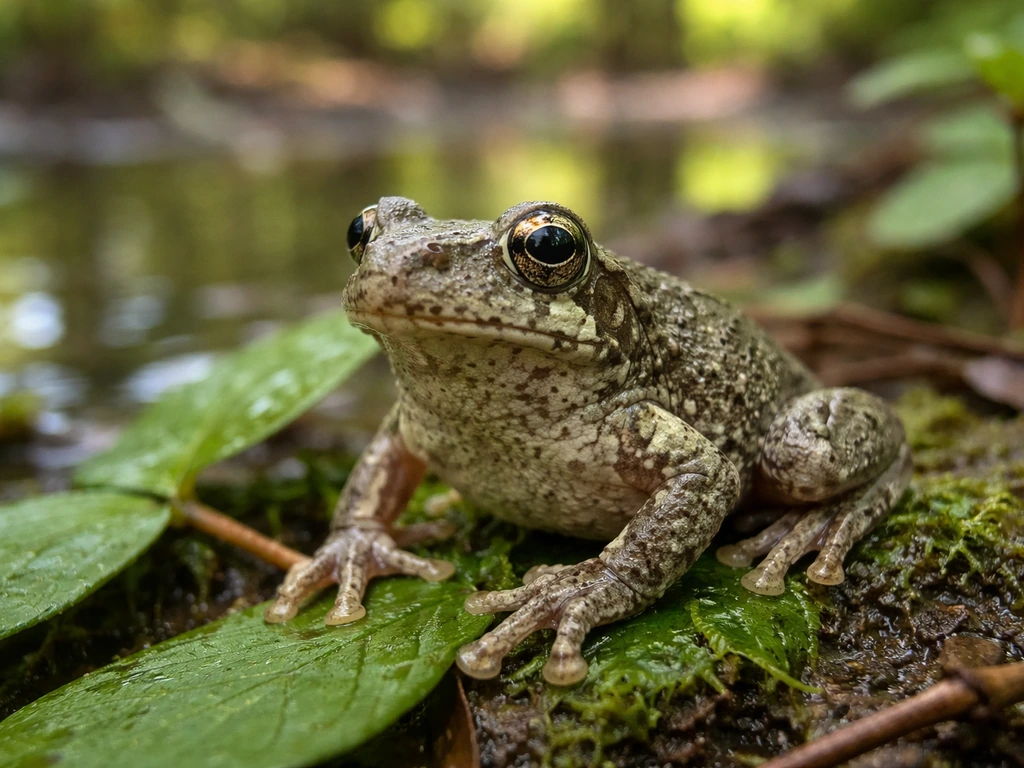
Both species are small, warty, and capable of changing color from gray to green to brown depending on temperature and background. You cannot reliably tell them apart by overall body color alone. But there are a few field marks that cut through the ambiguity.
| Feature | Bird-Voiced Tree Frog | Gray Tree Frog |
|---|---|---|
| Scientific name | Hyla avivoca / Dryophytes avivoca | Dryophytes versicolor (older: Hyla versicolor) |
| Adult size | Approx. 1 1/8 to 1 3/4 inches (2.9–4.4 cm) | Approx. 1 1/4 to 2 inches (3.2–5.1 cm) |
| Inner thigh/groin flash color | Greenish-yellow or yellowish-white | Bright orange-yellow, often mottled with black/gray |
| Toe pads | Large, adhesive (typical tree frog) | Large, adhesive (typical tree frog) |
| Skin texture | Warty/granular | Warty/granular |
| Pale spot under eye | May be absent or less distinct | Typically present as a pale spot |
The inner thigh color is the go-to visual confirmation. Kentucky's Department of Fish and Wildlife specifically states that certain identification comes from either hearing the male call or checking inner-thigh coloration. NPS guidance for the Chattahoochee River area contrasts this directly: Cope's gray tree frog has bright yellow-orange flash marks mottled with black, while the bird-voiced tree frog has green or yellowish-white marks on the concealed thigh surfaces. The same rule applies when separating bird-voiced from the gray tree frog (Dryophytes versicolor). Greenish-yellow or white inner thighs: bird-voiced. Orange or golden-yellow inner thighs: gray treefrog complex.
Toe pads are big and sticky on both species, which immediately separates either frog from toads (toads lack those adhesive pads). Both have the rounded, suction-cup toe pads typical of tree frogs, so toe pads alone won't separate bird-voiced from gray, but they'll confirm you're dealing with a tree frog in the first place. Size overlap is significant: the gray tree frog runs slightly larger on average but the ranges overlap enough that size alone is not reliable.
Where each frog is likely to be: habitat and range
Geography is one of your fastest filters. Before you even listen to a call, knowing where you are dramatically narrows the odds.
The bird-voiced tree frog is a southeastern U.S. specialist. It lives in wooded wetlands: bald cypress swamps, tupelo swamps, buttonbush swamps, and similar habitats near rivers and streams. If you're in the coastal plain or river-bottom forests of states like Georgia, Alabama, Mississippi, Louisiana, Arkansas, southeastern Missouri, southern Illinois, or the western Carolinas, bird-voiced is a realistic possibility. It's not a species you'll encounter in the northeastern U.S., the Midwest plains, or the Great Lakes region.
The gray tree frog has a much wider range, covering most of the eastern half of the United States and extending well into southern Canada. It favors woodland settings, swamps with flooded trees and shrubs, and forest edges near shallow wetlands. In Minnesota, Indiana, Ohio, Pennsylvania, New York, and across the Upper South, the gray tree frog is the default tree frog you're likely to encounter. If you're outside the southeastern swamp zone, you're almost certainly not hearing a bird-voiced tree frog.
In the overlap zone (parts of Illinois, Missouri, Kentucky, Tennessee, Arkansas, and the Carolinas), both species can be present at the same wetland. That's where the call and inner-thigh checks become critical. Even in those overlap areas, microhabitat matters: the bird-voiced tree frog strongly prefers standing-water swamps with woody vegetation, while the gray tree frog is more flexible and shows up in drier woodland edges too.
Seasonal and breeding behavior: timing your search
Good news: if you're reading this in early July, you're right in the middle of the active season for both species. The bird-voiced tree frog breeds mid-April through July, with males moving down near standing water to call and mate. Egg-laying happens in shallow, still, or slow-moving water in wooded wetlands. The gray tree frog also breeds through the warm season, using temporary ponds, swamps, and shallow lake margins within or near forested habitat. Females deposit eggs in loose clusters of 10 to 40 eggs attached to plants or debris near the water surface.
Both species are most vocal on warm, humid nights, especially after rain. Late afternoon and evening calling is common during peak breeding periods. In July, if you're near suitable wetland habitat at dusk or after dark, your chances of hearing males call are high. During the day both frogs retreat into tree canopy or dense vegetation and are much harder to find. Your best window for call-based ID is roughly 8 PM to midnight on a warm, still night.
Outside breeding season, both frogs go quiet and arboreal, resting high in trees and nearly impossible to detect by call. The gray tree frog in northern parts of its range becomes inactive earlier in fall as temperatures drop. If it's late September or later and you're not hearing calls, that's expected behavior, not absence.
Common confusion and how to rule out lookalikes
The biggest source of confusion isn't actually bird-voiced vs. gray tree frog. It's gray tree frog vs. Cope's gray tree frog (Dryophytes chrysoscelis).
These two are nearly identical visually and share most of the same range. They're classified as a 'cryptic species complex' precisely because you cannot tell them apart by appearance. The only reliable field separation is call: gray tree frog trills slowly (1 to 3 seconds, relatively few pulses), Cope's gray tree frog trills faster with roughly twice as many pulses per second.
If you are trying to sort out the closer match between a potoo bird and a tawny frogmouth, the same idea of using the right call cues applies bird-voiced tree frog. If you care about separating those two, a sonogram analysis of a recording is the most reliable method.
Another common mix-up is the green tree frog (Hyla cinerea), which shares range with the bird-voiced tree frog in the Southeast. Green tree frogs are distinctly green with a white lateral stripe and a very different call (a nasal 'queenk' or 'rainbird' sound), so once you know what you're looking at, they're not hard to separate. The bird-voiced tree frog can appear greenish when perched on green foliage, but it lacks the crisp white lateral stripe.
If you're in a swamp in South Carolina or Georgia and you see something that looks like it could be a very unusual bird-voiced or gray tree frog doing something odd, it's worth knowing that the animal-comparison world has some genuinely strange overlap zones. The confusion between species that use sound as a primary identification tool is a theme that shows up across very different animal groups, not just frogs. The way birders learn to separate look-alike species like ravens and crows by call cadence and behavior is almost exactly how you separate these two tree frogs. If you're thinking about another call-based matchup, it helps to know how different animals compare, like coconut crab vs bird identification by sound and behavior.
To confirm a bird-voiced tree frog ID specifically, you ideally want three things lining up: you're in southeastern swamp habitat, the call is a rapid high-pitched whistle (not a slow trill), and if you can examine the frog, the inner thighs are greenish-yellow or whitish (not orange). Two out of three with strong evidence on each is usually enough for a confident ID. One out of three is not.
Your practical checklist for making the ID today
Walk through these steps in order. By step three or four you'll usually have a confident answer.
- Check your location first. Are you in the southeastern U.S. in a wooded wetland or swamp? If yes, bird-voiced is possible. If you're in the northern or midwestern U.S., you're almost certainly hearing a gray tree frog.
- Listen for the call. Rapid, high-pitched, whistled bursts that sound like a small bird singing: bird-voiced tree frog. Slower, resonant, musical trill lasting 1 to 3 seconds: gray tree frog (or Cope's).
- Record the call on your phone and upload it to iNaturalist or compare it to reference audio on AmphibiaWeb for Hyla avivoca and Dryophytes versicolor.
- If you can see or photograph the frog, look at the concealed inner thigh surfaces. Greenish-yellow or yellowish-white: bird-voiced. Bright orange or golden-yellow (often mottled with dark patches): gray treefrog complex.
- Check for a pale spot beneath the eye and the general size. Gray tree frogs tend to be slightly larger (up to 2 inches) and typically show a pale spot under the eye.
- If the call is ambiguous and you have a recording, run it through a free spectrogram app like Spectroid to visualize pulse rate. A slow pulse pattern points to gray tree frog; a fast, dense pulse pattern points to bird-voiced or Cope's.
- Cross-reference your location against a state herpetology resource. Illinois Natural History Survey, Kentucky DFW, and your state's DNR will have range maps showing whether bird-voiced tree frog is even documented in your county.
- If you still need help, post your photo and recording to iNaturalist with location data. The community of amphibian identifiers there is active and knowledgeable and will usually give you a confirmed ID within a day or two.
The most important thing is to use multiple cues together. Don't try to call it on sound alone if you're in the overlap zone, and don't call it on a quick visual if the frog won't stay still. Call plus inner-thigh color plus location is a very strong combination, and if all three agree, you've got your answer.
FAQ
What should I do if I can only hear a call but I cannot get a look at the frog (or its inner thighs)?
In that case, rely on call structure plus context. Bird-voiced males tend to give a rapid burst of high-pitched whistles, while gray tree frogs give a slower musical trill lasting about 1 to 3 seconds. If you are in the southeastern swamp zone you can also weigh location heavily, because outside that region bird-voiced becomes much less likely even if the call resembles a whistle.
How can I tell which frog is calling if more than one male is singing at the same wetland?
Try to record from one spot for a minute and listen for distinct call “patterns,” not just overall noise. Bird-voiced calls usually sound like fast, bright whistles arriving in quick succession, whereas gray tree frog trills sound more like a steady, slower purring. If you can, note whether calls seem to come from elevated woody perches (bird-voiced) versus closer to forest edge or drier shrubs (often gray).
I recorded audio, but the playback sounds different. How should I compare my recording to reference calls?
Use your recording to compare tempo and duration rather than exact pitch. Focus on whether the burst is a rapid whistle sequence versus a slower trill, and estimate how long each burst lasts (gray typically spans about 1 to 3 seconds). Phone microphones can blur timing, so counting pulses per second is more dependable than judging “tone” alone.
What if I hear a call that seems “between” a bird-voiced whistle and a gray tree frog trill?
Treat it as uncertain and look for the next cue in your checklist. Call alone should carry the most weight, but if it does not clearly match the rapid-whistle versus slow-trill contrast, prioritize inner-thigh flash color (greenish-yellow or whitish for bird-voiced, orange or golden-yellow for the gray complex) and then confirm location within the appropriate habitat zone.
Can weather and time of night change how the calls sound enough to confuse me?
Yes. Warm, humid nights after rain can make calls sound stronger and sometimes more continuous, so don’t judge based on volume or how “loud” it feels. In early evening and late night, both species are most active, so use burst timing and whether the sound is a fast series of whistles versus a slower trill, and keep the listening window around the peak hours (roughly evening into midnight in the active season).
Do younger males or quieter individuals call differently than “typical” reference recordings?
They can. If you have only a short snippet, you may hear incomplete bursts that make tempo harder to estimate. If possible, wait for another full call burst so you can measure duration (gray trills about 1 to 3 seconds) and whether the whistle-like pulses arrive quickly in a sustained run (bird-voiced).
How do I avoid confusing bird-voiced tree frogs with the similar green tree frog?
Use the call first, since green tree frogs have a very distinct nasal “queenk/rainbird” style call. Visual confirmation helps too: green tree frogs typically show a crisp white lateral stripe and look distinctly green, while bird-voiced can appear greenish depending on background but lacks that sharp stripe pattern. If you cannot see stripes, inner-thigh flash color is still a useful tie-breaker.
In the overlap zone, what’s the most reliable order of evidence when I’m unsure?
Use call quality first, then inner-thigh flash color, then habitat location. The article’s rule of thumb is that two out of three strong indicators usually give a confident ID, but one out of three is not enough. In overlap wetlands, don’t let one “maybe” visual detail override a clear call mismatch.
What if the inner-thigh flash colors I see are faint or hard to interpret?
Try to get the flash during handling or a moment when the frog is partially turned, because body coloration can vary with background. For faint markings, look for the overall category: greenish-yellow or whitish flashes point to bird-voiced, while orange or golden-yellow with the gray-tree-frog complex points to gray or Cope’s. If you cannot get reliable thigh information, fall back to call structure and timing.
Could I accidentally be dealing with gray tree frog versus Cope’s gray tree frog instead of bird-voiced versus gray?
Yes, and that’s a common pitfall. Cope’s versus gray is mostly a call problem, not a color problem. Cope’s trills are about twice as fast with roughly twice as many pulses per second. If you confirm the “gray complex” via inner-thigh color but the tempo suggests extra-fast pulsing, you may be hearing Cope’s rather than the gray tree frog.
If I only know my state and not the exact site, how accurate is the geography filter?
State-level geography is helpful but microhabitat still matters. The bird-voiced tree frog is strongly tied to southeastern wooded wetlands with standing water, while the gray tree frog is more flexible and can occur in woodland edges and flooded-tree swamps. If you are in the overlap states, treat geography as a narrowing tool, not a final decision, and lean on call timing plus inner-thigh color.
Next Articles
Lizard vs Bird: How to Tell Them Apart in Seconds
Lizard vs bird ID fast: spot feathers or scales, wings vs limbs, movement and habitat cues to confirm safely.
Bird and Crocodile Common Ancestor: How They’re Related
Do birds and crocodiles share a common ancestor? Get the split point, traits, misconceptions, and how to verify it.
Potoo Bird vs Tawny Frogmouth: Key ID Differences
Side by side guide to tell potoo and tawny frogmouth apart by size, plumage, perch, calls, and key ID marks.