If you are looking at a cryptic, bark-patterned bird sitting perfectly still on a branch and wondering whether it is a potoo or a tawny frogmouth, the fastest answer is geography: potoos live in Central and South America, tawny frogmouths live in Australia. If you already know where the bird was seen, you can stop right there. But if you are comparing the two species out of curiosity, researching them side by side, or trying to understand why they look so eerily similar, there is a lot more worth knowing, because these two birds are a textbook case of convergent evolution fooling even experienced birders.
Potoo Bird vs Tawny Frogmouth: Key ID Differences

Marcus Hendricks
6 Jun 2026
Why these two birds get mixed up so often
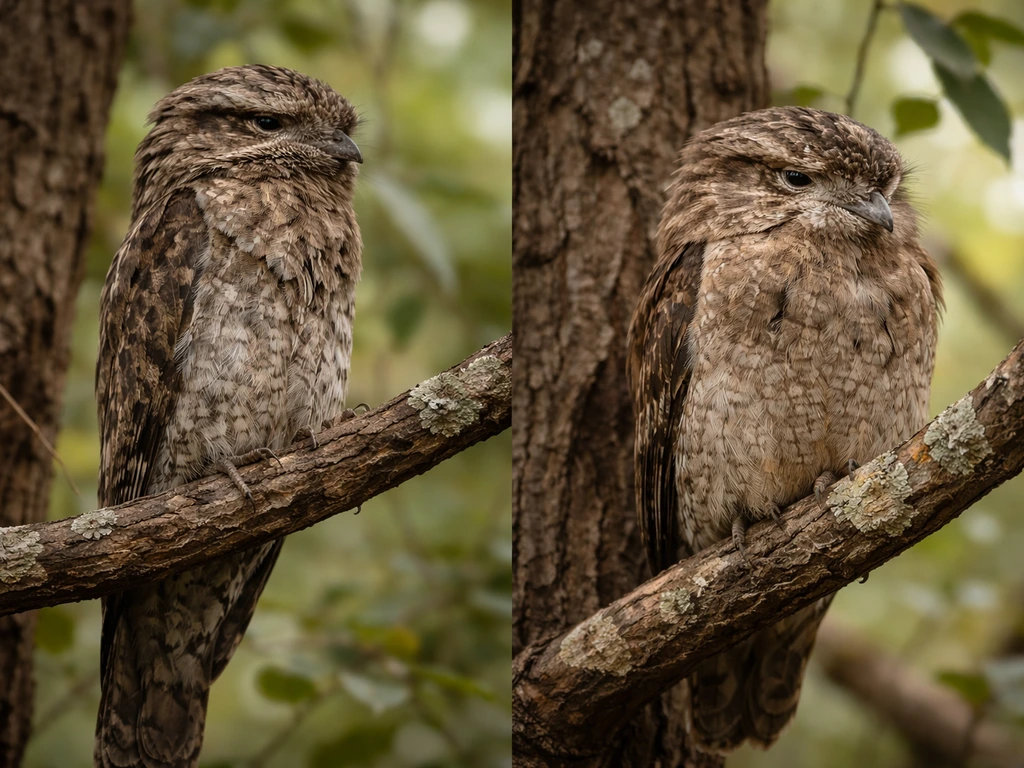
Both the potoo and the tawny frogmouth are nocturnal, both roost motionless during the day in plain sight, and both rely on bark-mimicking plumage to disappear against a branch or tree stub. When someone posts a photo of a weirdly still, wide-eyed bird that looks like it is pretending to be wood, the comments immediately split between 'potoo' and 'tawny frogmouth,' even among people who know birds well. The confusion is understandable because the two species fill almost identical ecological niches and have evolved strikingly similar solutions: mottled brown-grey plumage, upright posture, enormous eyes for night vision, and a general 'broken branch' silhouette that makes them almost invisible in daylight. They are not closely related in any meaningful way, but they look like they could be cousins.
Adding to the mix-up, neither bird looks much like what most people picture when they think of a bird. The tawny frogmouth is so frequently mistaken for an owl that it has historically been called 'mopoke' in parts of Australia, a name that actually belongs to the boobook owl. The potoo gets called a 'tree stump with eyes' online, which is accurate but not exactly a field guide entry. Both birds occupy that uncanny valley where the animal looks almost fake, which makes confident identification harder for beginners.
The fastest way to tell them apart
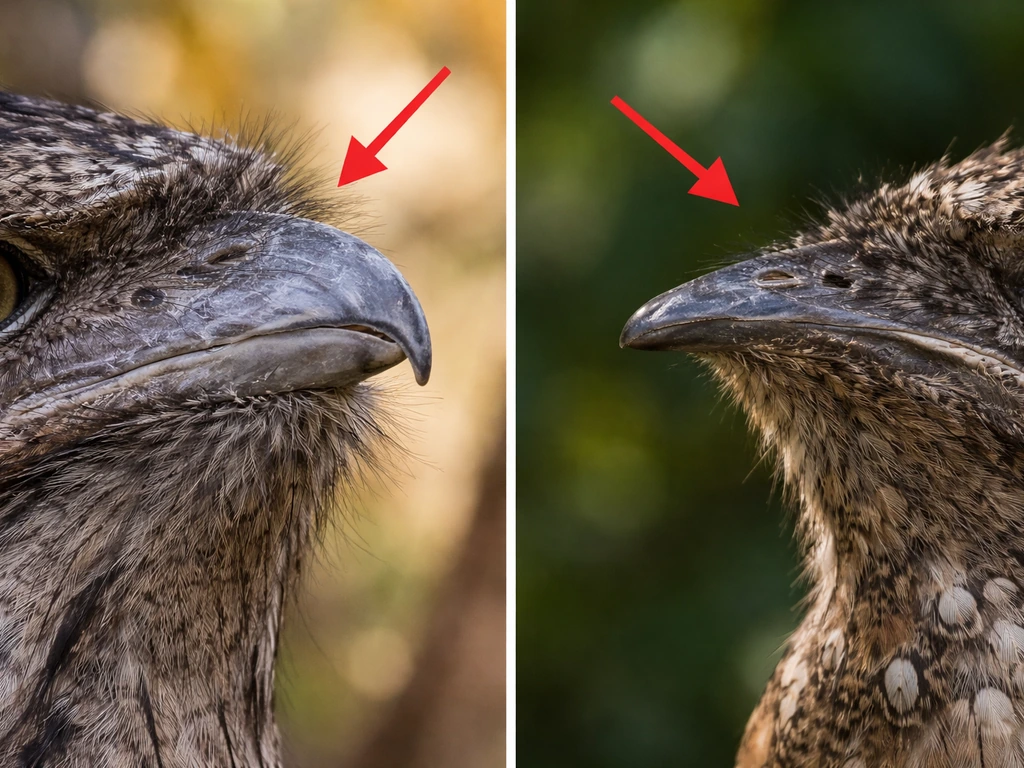
If you only have a few seconds to make a call, use these four quick checks in order:
- Location first: Australia means tawny frogmouth, every time. Central or South America means potoo.
- Bill shape: the tawny frogmouth has a broad, hooked, almost raptor-like bill with a distinctly frog-like wide gape. The potoo's bill looks tiny and narrow when closed, but opens into a surprisingly huge mouth lined with bristle-like feathers.
- Eye color: potoos have large, striking golden-yellow eyes that practically glow. Tawny frogmouths have yellow eyes too, but they look comparatively smaller relative to the face and sit under a heavy, furrowed brow that gives the bird a permanently grumpy expression.
- Posture when alarmed: a startled potoo points its bill straight up toward the sky in a rigid 'I am definitely a stick' freeze. A tawny frogmouth in defensive posture tends to puff up and stare you down rather than elongating vertically.
Appearance in detail: size, plumage, head, bill, and eyes
The common potoo (Nyctibius griseus) is a medium-sized bird, typically around 33 to 38 centimeters long. Its plumage is a beautiful but understated mix of grey, brown, black, and buff streaks that replicate the texture of weathered bark almost perfectly. The head is large relative to the body, the neck is short, and when the bird is in its resting posture the whole shape narrows to a point, making it look like the tip of a broken branch.
The bill itself, when closed, is so small it barely registers, but when the potoo opens its mouth to catch insects the gape is enormous and fringed with bristle-like feathers that help funnel prey inward. The eyes are the most striking feature: large, forward-facing, and a vivid yellow-gold that almost seems to emit light.
The tawny frogmouth (Podargus strigoides) is notably larger, with Britannica putting its length at around 50 centimeters (about 20 inches). Its plumage follows a similar grey-brown bark-mimicking pattern but tends to look slightly more rufous (reddish-brown) in some individuals, and the overall texture is coarser with broader streaking. The most immediately different feature is the bill: wide, strongly hooked, and powerful-looking, resembling a compressed version of a raptor's beak crossed with a very wide frog mouth. This is not subtle. The frogmouth's eyes are yellow like the potoo's, but they sit beneath a heavily ridged brow that gives the face a very different character, closer to an angry owl than to the potoo's more open, surprised-looking face.
| Feature | Common Potoo | Tawny Frogmouth |
|---|---|---|
| Length | 33 to 38 cm | Up to ~50 cm (20 in) |
| Overall build | Slender, tapers to a point | Bulkier, broader-headed |
| Plumage | Grey-brown-black bark streaks | Grey-brown, often more rufous, coarser streaks |
| Bill (closed) | Small, narrow, almost invisible | Broad, hooked, frog-like gape |
| Eyes | Large golden-yellow, open and prominent | Yellow, smaller-looking, under heavy brow |
| Facial expression | Wide-eyed, slightly surprised | Heavy-browed, stern or grumpy |
| Bristles around bill | Yes, prominent bristle fringes | Present but less prominent than true nightjars |
How each bird sits and hides during the day
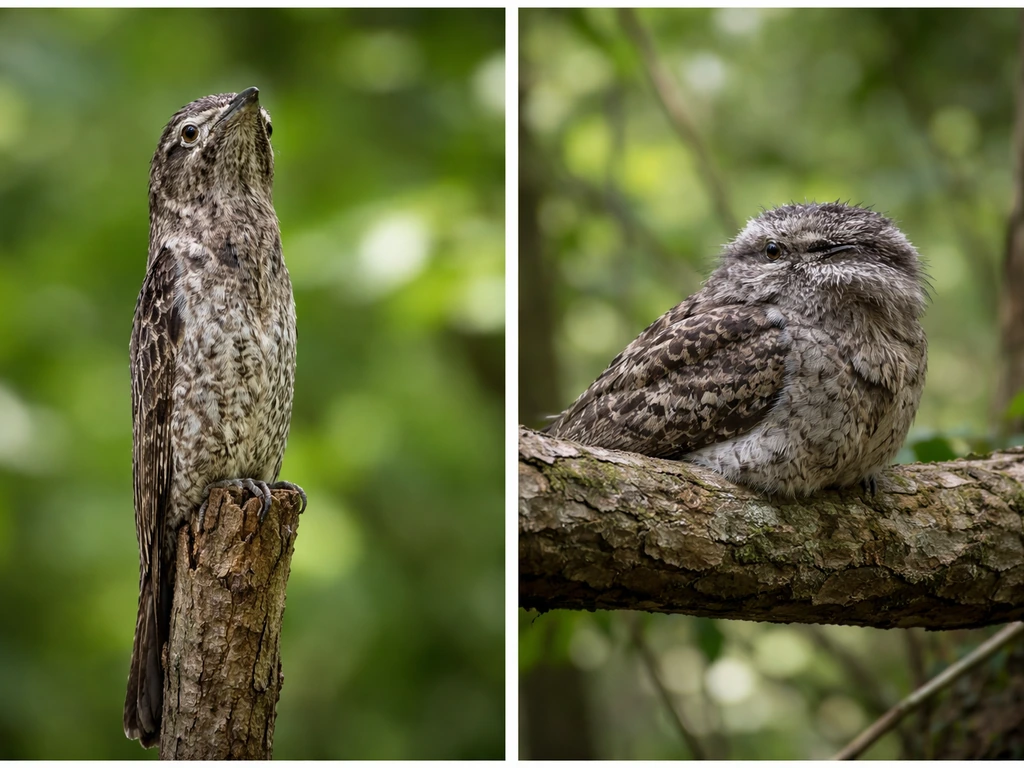
This is where the two species diverge in a way that is genuinely useful in the field. The potoo is a master of the vertical branch stub. It roosts on horizontal branches or exposed stubs and adopts a rigid upright stance with its eyes closed to slits, its head tilted slightly upward, and its body feathers held loosely to widen the silhouette just enough to look like a broken chunk of wood.
Oiseaux-birds’ family account for potoos notes that they roost during the day on horizontal branches or exposed stubs, holding a rigid upright, cryptic posture with eyes closed and loose body feathers, and they may freeze completely when disturbed roost on horizontal branches or exposed stubs.
If you approach it and it feels threatened, it stretches its neck out and points its bill straight at the sky, going almost completely rigid. When it does this, it really does look like a dead branch end. During daylight hours it barely moves at all, and even when awake it holds its bill horizontally with minimal motion.
The tawny frogmouth also roosts in trees during the day and relies on camouflage, but its approach is slightly different. It tends to sit on branches in an erect posture with its feathers compressed, mimicking bark, but it can also adopt a more hunched position and peer downward. When alarmed it elongates and tightens its feathers, but the effect is less extreme than the potoo's full vertical stick impression. The frogmouth also sometimes roosts in pairs or small family groups on the same branch, which the potoo does not typically do. Spotting two birds together on a branch in Australia is a strong frogmouth indicator.
Where in the world you will actually find them
Range is the single most reliable ID tool for these two species because their distributions do not overlap at all. The common potoo is found across tropical Central and South America, from Mexico down through much of the continent including Trinidad and parts of the Caribbean fringe. It lives in forest edges, open woodlands, and areas with large trees for roosting. The tawny frogmouth is exclusively Australian, found throughout the mainland and Tasmania. It occupies a wide range of habitats including heathlands, woodlands, urban parks, and rural gardens, but avoids dense rainforest interiors and completely treeless desert. The Australian Museum notes it is genuinely comfortable in suburban environments, which is why many Australians encounter it in their own backyards.
If you are unsure about which region a photo was taken in, checking a distribution map for each species will settle the question immediately. The common potoo's range is well-documented on resources like Birds of the World, and the tawny frogmouth's Australian range is mapped in detail by the Australian Museum and similar sources. There is no edge case where both species could be present in the same location.
Calls: what you will hear at night
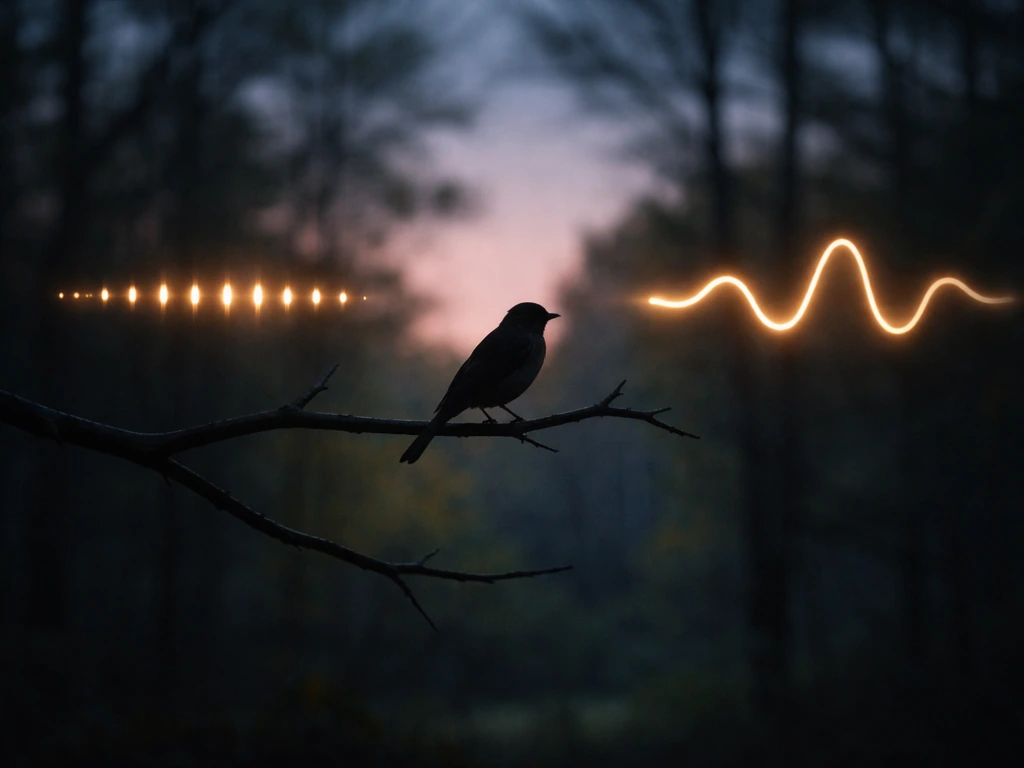
Both birds are nocturnal and most active after dark, so their calls are a critical identification tool even when you cannot see the bird clearly. The common potoo has one of the most haunting calls in the bird world: a descending, mournful series of notes often written as 'poor-me-one,' which is actually the origin of one of its folk names. It is an eerie, wailing sound that carries well through forest and open woodland at night. Xeno-canto has numerous recordings of this call if you want to train your ear before a trip. The call has a lament quality that is genuinely distinctive once you have heard it.
The tawny frogmouth sounds nothing like that. [Its call is a low, repetitive booming described as 'oom-oom-oom,' with a nasal, grunting quality. ](https://fieldofmar-e. schools.
nsw. gov. au/fact-sheets/birds/tawny-frogmouth-fact-sheet) It is a deep, resonant sound that carries through the night but is much less melodic than the potoo's wail. This call has historically been confused with the boobook owl's call in Australia, which is a useful reminder that even locally familiar sounds can be misattributed.
If you hear a low, rhythmic booming from a tree in Australia at night, tawny frogmouth is a very strong candidate. If you hear a descending, mournful wail in a tropical American forest at night, that is potoo territory. To confirm the call identity, compare the bird-voiced tree frog versus gray tree frog by listening for their distinctive vocalizations wail in a tropical American forest at night.
One practical note: both birds are mostly silent when roosting during the day. Do not expect a resting bird to call and confirm its identity for you. The calls are a night-time tool, and the visual field marks are your daytime toolkit.
Are they actually related? Taxonomy explained simply
Despite looking like they could be in the same family, potoos and tawny frogmouths are not closely related. Despite looking like they could be in the same family, potoos and tawny frogmouths are not closely related bird and crocodile common ancestor. The common potoo belongs to the family Nyctibiidae, and the tawny frogmouth belongs to the family Podargidae. Both families were historically lumped into the broad order Caprimulgiformes along with nightjars, nighthawks, and oilbirds, but modern taxonomy has increasingly split this group into separate orders as genetic work has clarified evolutionary relationships. The IOC World Bird List reflects ongoing updates along these lines.
What this means in plain terms is that the two birds evolved their similar looks, behaviors, and niches independently, on separate continents, from different ancestral lineages. This is a classic example of convergent evolution, the same process that produced similar body plans in, say, dolphins and ichthyosaurs. The 'broken branch' camouflage strategy, nocturnal hunting from a perch, and wide gape for catching insects were such effective solutions to a shared ecological problem that evolution arrived at them twice. The potoo and tawny frogmouth are not each other's closest relatives; they just found the same answers to the same questions.
Interestingly, frogmouths are more often confused with owls than with potoos in the field (Wildlife Victoria explicitly flags this), while potoos are more often confused with dead wood than with any other bird. The anatomical distinctions matter too: frogmouths have that strong, distinctly hooked bill designed for gripping prey, while potoos have a comparatively weaker bill but a wider gape fringed with bristle-like structures that help scoop insects from the air.
Field checklist: confirm your ID step by step
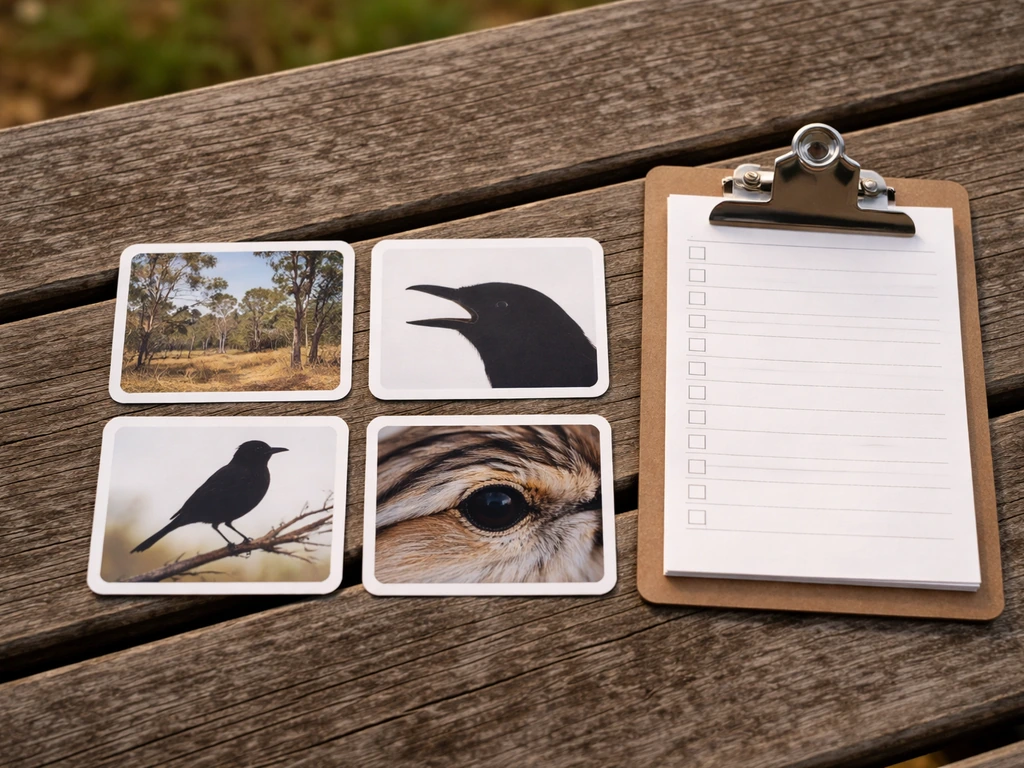
Use this workflow whenever you have a photo or a live sighting and need to confirm which bird you are looking at. If you are also curious about how other animals compare in the wild, you might like to see a coconut crab vs bird breakdown too. Work through the steps in order and stop when you have a confident answer.
- Check the location. Australia (including Tasmania)? Tawny frogmouth. Central or South America (including Mexico, Trinidad, the Caribbean fringe)? Potoo. This single step resolves the question the vast majority of the time.
- Look at the bill shape. Is it broad, wide, and hook-tipped, like a compressed raptor bill with a frog-like gape? Tawny frogmouth. Is it narrow and almost invisible when closed, but opens into a wide bristle-fringed mouth? Potoo.
- Assess the overall size and build. Larger, bulkier, broad-headed bird around 50 cm? Lean toward tawny frogmouth. Slimmer, more tapered bird that narrows toward the head and bill around 33 to 38 cm? Potoo.
- Check the eye and brow. Heavy, furrowed brow giving a stern expression? Tawny frogmouth. More open, wide-eyed, almost startled-looking face? Potoo.
- Observe the alarm posture if possible. Bill pointing straight at the sky in a rigid vertical freeze? Potoo. Puffing up and staring you down, or compressing feathers against a branch? Tawny frogmouth.
- Check for companions. Two or more birds roosting together on the same branch in Australia? Almost certainly tawny frogmouth; they roost in pairs and family groups.
- Listen at night if the bird is active. Descending mournful wail ('poor-me-one')? Common potoo. Low repetitive booming grunt ('oom-oom-oom')? Tawny frogmouth.
- Confirm with a photo if unsure. A clear photo of the bill shape alone is usually enough to separate the two species. Upload to a resource like iNaturalist or share with a birding community for a second opinion, and cross-check the location against a published range map.
If you are working from a photo shared online without location data, the bill is your most reliable single feature. No other mark separates the two species as cleanly and consistently as the frogmouth's broad, hooked bill versus the potoo's narrow, almost hidden closed bill. Get that right and you are most of the way to a confident answer. Everything else in this checklist is there to back you up when the photo is not perfectly clear.
FAQ
What if I see a “dead branch with eyes” outside the Americas or Australia, could it still be a potoo or a tawny frogmouth?
In the wild, no. Potoos and tawny frogmouths do not overlap geographically, so if your sighting is outside Central and South America or Australia, the bird is almost certainly a different look-alike (often a regional nightjar, owl, or even a misidentified swallowtail-like silhouette in low light). Treat “location outside range” as a stop sign and verify with local bird lists before deciding.
How can I tell them apart when the bird is perched in an unusual angle or not fully visible?
Use the head and bill first. A potoo’s closed bill looks narrow and can seem almost absent from the face, whereas a tawny frogmouth shows a visibly broad, hooked-looking bill even from partial views. If the bill shape is hidden, switch to posture: potoos more often show a rigid, upright “vertical stub” impression, while frogmouths more commonly show a compressed erect or slightly hunched silhouette.
What should I do if a photo shows the bird with its mouth open or gaping?
An open mouth strongly favors potoo. Potoos have a huge gape with bristle-like fringe that forms a conspicuous “insect scoop” when they open to feed. Tawny frogmouths can gape, but their hallmark is still the broad, hooked bill shape, not a bristle-fringed, funnel-like gape.
Can I rely on eye color and eye position alone?
Only as a supporting clue. Both can show yellow-gold eyes, so eye color will not reliably separate them. Eye position and face shape matter more, particularly the frogmouth’s ridged brow that creates a more “angry owl” look versus the potoo’s more open, surprised expression.
If I hear a call, but I am not sure what direction or habitat it came from, which ID cue should I trust most?
Trust the call pattern more than the bird’s daytime appearance. A potoo’s descending mournful notes (“poor-me-one”) versus tawny frogmouth’s low, repetitive booming (“oom-oom-oom”) are distinct. However, since sounds can be misattributed locally (like boobook confusion), it helps to combine call type with the macro-habitat cue, tropical American forest edges for potoo, versus Australian woodlands and suburban parks for frogmouth.
What time of night should I expect calls, and should I still ID visually at dawn?
Calls are most useful after dark, and both species tend to stay very still and quiet during day roosting. At dawn or midday, do not wait for vocal confirmation. Instead, focus on camouflage posture and bill shape in daylight, then use nighttime calls only if you can get them.
Is it true that tawny frogmouths can roost in pairs, and can that be used as a diagnostic?
Yes. Seeing two tawny frogmouths together on the same branch is a strong field indicator because potoos are not typically seen roosting that way. Still, do not rely on group size alone, especially if branches are close and the birds might be separate individuals at different distances.
What is the single best feature when the photo is blurry or the bird is far away?
The bill. In most real-world photos, bill shape survives blur better than fine texture. A tawny frogmouth’s broad, strongly hooked bill usually reads clearly, while a potoo’s closed bill looks narrow and less obvious against the bark-mimic face.
If I’m on a border area, like near a coastline or islands, could range boundaries cause confusion?
Range boundaries still matter most. Since the two species’ distributions do not overlap, even odd localities will usually have only one candidate at most. For an “island” photo, confirm whether the location is within Australia for frogmouths, or within the Central and South America region for potoos, before concluding it’s the other species.
What common mistakes lead people to misidentify these birds from photos online?
The biggest mistakes are (1) assuming the bird is an owl because it looks owl-like, especially for frogmouths, and (2) relying on bark-mimic patterns rather than the bill. Another frequent issue is misreading posture, where a potoo stretched rigidly can look less like a vertical stump, so always check the bill first if possible.
Next Article
Godzilla vs Kong Bird: Identify the Exact Bird Lookalike
Disambiguate and ID the exact bird behind searches like Godzilla vs Kong bird using field marks, habitat, range, behavio