
Crane flower and bird of paradise are the same plant: Strelitzia reginae. "Crane flower" is simply the name used in South Africa (where the plant originates), while "bird of paradise" is the name most common elsewhere in the world. If someone hands you a tag that says either name, they are almost certainly referring to the same compact, clumping plant with the dramatic orange-and-blue bloom. The confusion worth solving is a different one: the name "bird of paradise" also gets applied to completely unrelated plants, especially Caesalpinia species (a shrubby tree with feathery leaves and yellow-orange blooms) and sometimes Strelitzia nicolai (the giant white-flowering tree version). That's where real mix-ups happen at nurseries and in online listings.
Crane Flower vs Bird of Paradise: Quick ID Guide

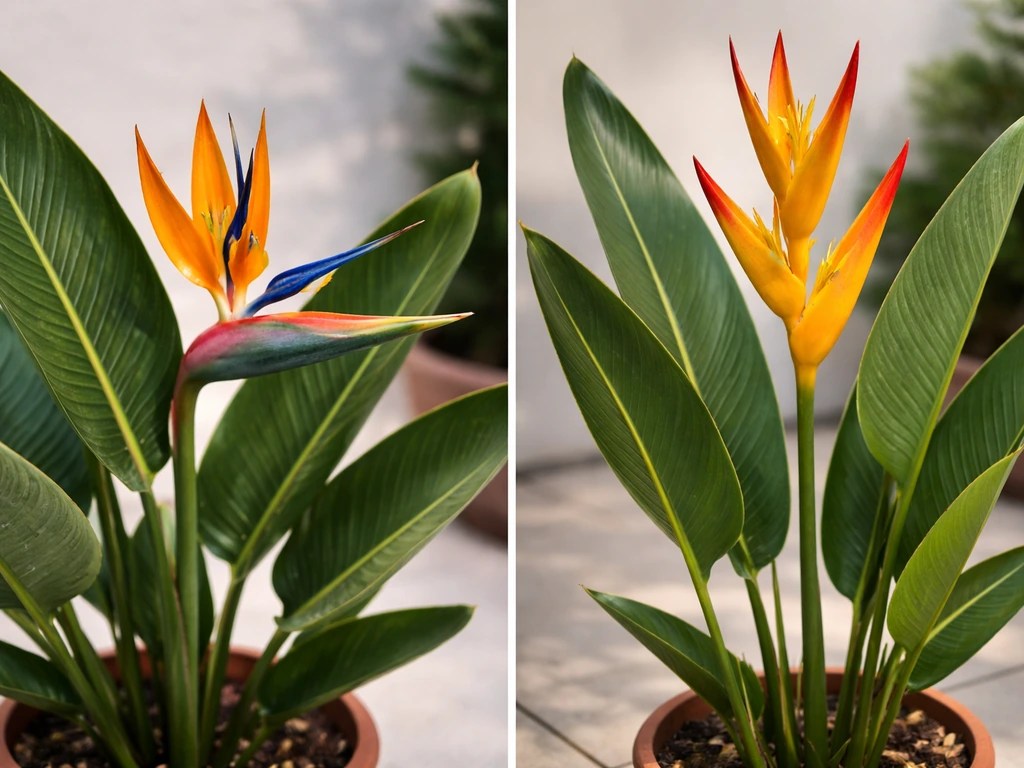
What "crane flower" usually means
In any horticultural or botanical context, "crane flower" refers to Strelitzia reginae. The name comes from the flower's resemblance to the crowned crane, a bird native to southern Africa. The bloom sits atop a long stiff stem, and the arrangement of the orange sepals fanning out above the blue petals looks strikingly like a crane's head with a feathered crest. Kew's Plants of the World Online uses both names interchangeably for this species, and Britannica does the same. So if a label says "crane flower," you can read it as a direct synonym for the classic bird-of-paradise plant, no separate species involved.
Strelitzia reginae is a compact plant, reaching about 1.2 meters tall, with clumps of greyish-green paddle-shaped leaves that emerge from an underground rhizome rather than a central cane or trunk. It is native to South Africa's Eastern Cape, and it thrives outdoors in USDA Hardiness Zones 10 and 11, though gardeners in cooler climates grow it in containers with frost protection.
What "bird of paradise" usually means (and why the name is slippery)
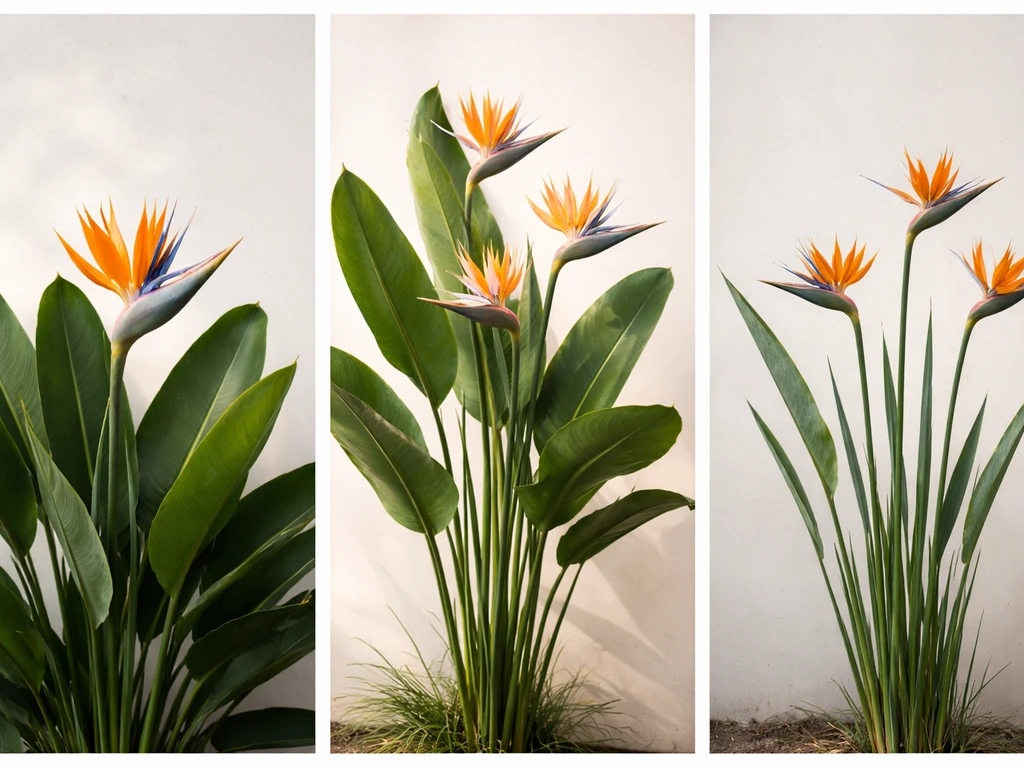
Here is where things get genuinely messy. "Bird of paradise" is used as a common name for at least three distinct plants you might encounter in a garden center or an online search result. Most people and most reference sources mean Strelitzia reginae when they say it, but that is not always what you are actually looking at. If you also keep hearing the name parrot flower, you may find a similar naming mix-up, so the parrot flower vs bird of paradise comparison can help you confirm what you really bought.
- Strelitzia reginae: the classic crane flower, compact clumper, orange and blue blooms, about 1.2 m tall. This is the default meaning in most gardening contexts.
- Strelitzia nicolai (giant bird of paradise): a tree-sized relative that can reach 6 to 9 meters, with large banana-like leaves and white-and-purple flowers. Frequently mislabeled as plain "bird of paradise" at big-box stores.
- Caesalpinia pulcherrima (red bird of paradise) or Caesalpinia gilliesii (yellow bird of paradise): completely unrelated shrubs or small trees with feathery compound leaves and clusters of red, orange, or yellow blooms with long stamens. Common in desert Southwest landscaping and often sold simply as "bird of paradise."
Knowing that three plants share one common name explains almost every case of buyer confusion. Someone searching "bird of paradise care" may be growing a Caesalpinia in Arizona, a potted Strelitzia reginae in Ohio, or a giant Strelitzia nicolai in a Florida yard, and the care advice for each is completely different. If you end up comparing the giant bird of paradise vs bird of paradise, you will see why botanical name matters even more than the label. Getting the botanical name right is not pedantry; it is the only way to get accurate growing information.
Side-by-side visual differences: flowers, leaves, and plant shape
The fastest way to sort out which plant you are looking at is to check three things in this order: flower color and form, leaf shape, and overall plant structure. Here is how each of the main candidates stacks up.
| Feature | Strelitzia reginae (crane flower / classic bird of paradise) | Strelitzia nicolai (giant bird of paradise) | Caesalpinia species (red/yellow bird of paradise) |
|---|---|---|---|
| Flower color | Brilliant orange sepals, bright blue petals | White sepals, blue-purple petals | Red-orange or yellow, with long protruding stamens |
| Flower structure | Emerges from a horizontal boat-shaped green/pink bract (spathe); 3 sepals + 3 petals | Larger white bract; same genus structure | Cluster of open cup-shaped blooms, no spathe bract |
| Leaf shape | Paddle-shaped, greyish-green, 30–45 cm long, stiff | Very large, banana-like, up to 1.8 m long | Feathery, finely divided compound leaves (like a fern or mimosa) |
| Plant height | About 1.2 m tall | 6–9 m (tree-like) | 1–4 m depending on species; shrub to small tree |
| Growth habit | Low clump from underground rhizome, no visible trunk | Multiple cane-like trunks, tree form | Shrubby, multi-stemmed, woody branches |
| Bloom season | Year-round in warm climates; winter/spring in temperate zones | Sporadic, mainly spring | Summer and fall, especially after monsoon rains |
The single quickest tell for Strelitzia reginae (crane flower) is that boat-shaped spathe. It sits horizontally at the top of a bare stem, is green with reddish or pink edges, and the orange and blue flower parts pop up out of it sequentially, one at a time. Nothing else looks quite like that up close. If you are trying to decide between lego bird of paradise and orchid, confirm the actual plant name first, because similar common-name wording can point to very different species. If the bloom you are looking at has feathery compound leaves on the plant and open flowers without any bract structure, you are looking at a Caesalpinia, not a Strelitzia at all.
How to confirm quickly today
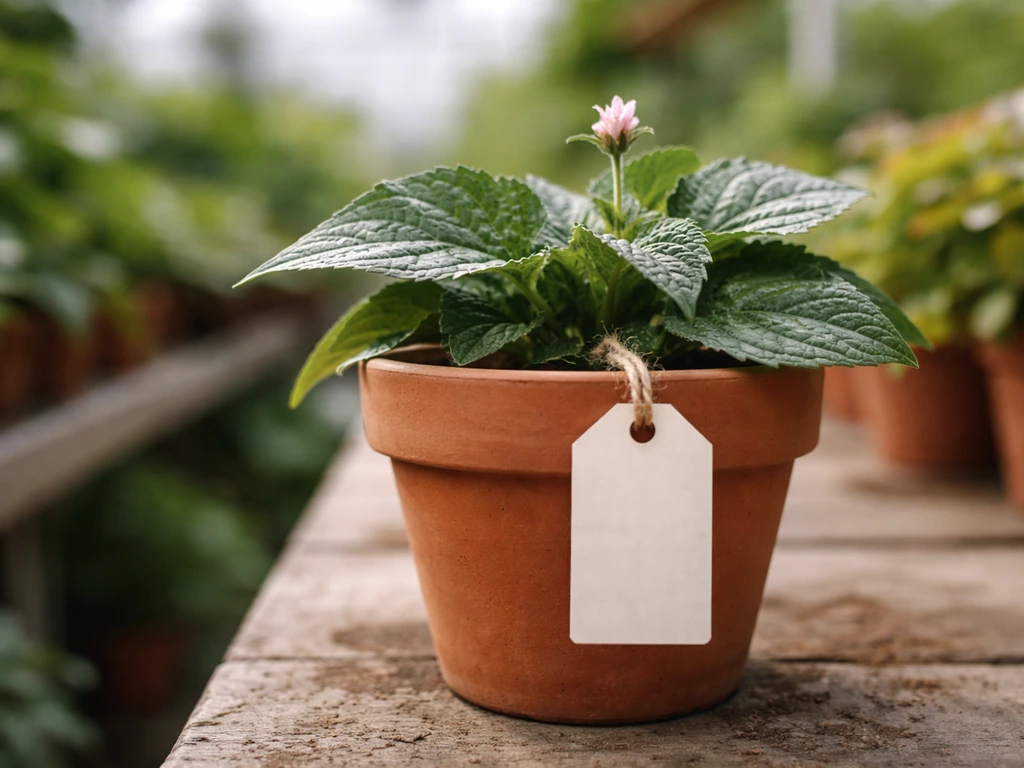
If you are standing in a nursery or looking at a plant in someone's garden and want a fast, confident ID, work through this sequence.
- Check the label for the botanical (Latin) name. Any reputable nursery label will include it. You want to see Strelitzia reginae for the classic crane flower/bird of paradise. If the label only says "bird of paradise" with no Latin name, treat it as unverified.
- Look at the leaves first. Paddle-shaped and greyish-green in a low clump? That is Strelitzia reginae. Enormous and banana-like on a tall trunk? That is Strelitzia nicolai. Feathery and fern-like? That is a Caesalpinia.
- If the plant is in bloom, photograph the bract. The horizontal, boat-shaped green spathe with reddish edges is the definitive marker for any Strelitzia. Take a photo from a 45-degree side angle so the bract shape and the emerging flower parts are both clearly visible.
- Run a reverse image search using that photo through Google Lens or iNaturalist. Both tools handle Strelitzia vs. Caesalpinia identification reliably because the foliage alone is distinctive enough.
- Cross-check the botanical name on Kew's Plants of the World Online (powo.science.kew.org) or the NCSU Extension Plant Toolbox. These are free, authoritative, and easy to navigate.
If you are shopping online, filter your search by botanical name rather than common name. Searching "Strelitzia reginae for sale" will return far more accurate results than "bird of paradise plant for sale," which often mixes all three plants together in the same search results page.
Why nurseries and online listings get this wrong so often
Mislabeling at the point of sale is genuinely common, and it is not always deliberate. The core problem is that "bird of paradise" is an umbrella common name that no one in the trade has agreed to standardize. A wholesaler might ship Strelitzia nicolai in flats labeled "bird of paradise," a garden center reprints those labels without correction, and suddenly you have a plant that will grow 8 meters tall being sold as if it were a 1.2-meter container plant.
Online marketplaces compound this. Sellers on Etsy, Amazon, and even some specialty plant sites use the common name that gets the most search traffic, regardless of which specific species they are actually selling. Photos help, but photos of a young Strelitzia nicolai and a young Strelitzia reginae can look nearly identical before either has bloomed. This is also exactly why people searching for comparisons between similar-looking plants (the way heliconia vs.
bird of paradise or giant bird of paradise vs. If you are comparing two common candidates, peace lily vs bird of paradise usually comes down to very different light, watering, and growth habits. bird of paradise confuse shoppers) often end up with the wrong plant entirely. The visual differences become obvious at maturity but are subtle in a 4-inch nursery pot.
The "crane flower" label is actually more reliable in practice. In horticulture, “crane flower” is used as a common name for the bird-of-paradise plant Strelitzia reginae crane flower as a common name for Strelitzia reginae. Because it is used primarily in a South African context and by botanically precise sources, a plant sold specifically as "crane flower" is almost always correctly identified as Strelitzia reginae. If you see that name on a tag, you can have more confidence than if you see the vague "bird of paradise" alone.
Choosing and caring for the right plant once you have ID'd it
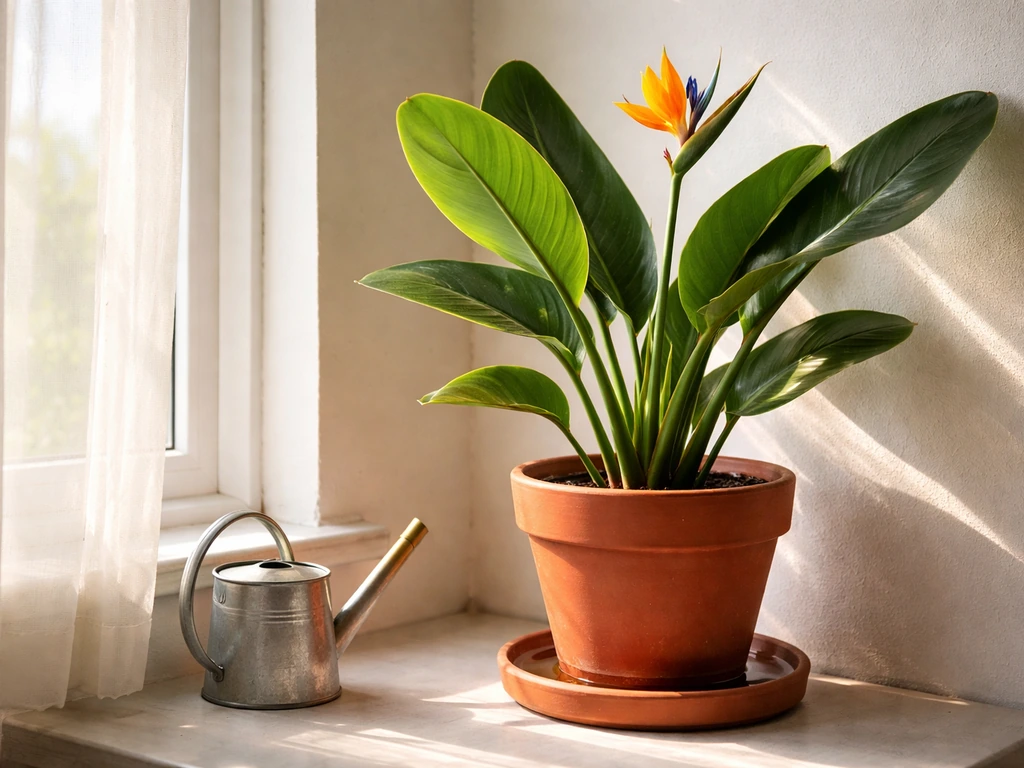
Once you know you have Strelitzia reginae (the crane flower / classic bird of paradise), here is what you need to know to keep it thriving. It wants full sun to light shade and moist, well-drained soil. UF/IFAS recommends frequent irrigation or rainfall during the first six months after planting to help it establish. After that it becomes reasonably drought tolerant. It is salt-tolerant, which makes it a good choice for coastal gardens. Outdoors it is happiest in USDA Zones 10 and 11, though container growing works well anywhere if you bring it inside before frost.
Division is the standard way to propagate Strelitzia reginae, and it is something to know before you buy: after dividing or replanting, these plants can sulk for a year or more before blooming again. If a vendor is selling divisions (which is common), factor that into your expectations. A plant that came from a division a few months ago may not bloom for 12 to 18 months even under ideal conditions. That is normal and not a sign of a sick plant.
If you discover you accidentally purchased Strelitzia nicolai thinking it was the compact variety, the care is broadly similar (full sun, good drainage, warm climate), but you need to plan for a plant that will eventually dominate a space. If you are also comparing bird-of-paradise lookalikes, it helps to know how it differs from heliconia before you buy heliconia vs bird of paradise.
It is a commitment better suited to a large garden or a wide courtyard than a patio container. And if what you ended up with is a Caesalpinia, the care diverges significantly: those plants are adapted to arid conditions, need sharply drained soil, and in some climates die back to the ground in winter and resprout from the root. Treat them accordingly.
The bottom line for buying: always ask for the botanical name before purchasing anything sold as "bird of paradise." If the seller cannot give you one, look up the photo they provide using Google Lens before you commit. The few seconds that takes will save you from ending up with a 30-foot tree in a spot you planned for a 4-foot clumper, or vice versa.
FAQ
If a plant tag says “bird of paradise,” can I assume it is the same as “crane flower”?
Not always. “Bird of paradise” can be Strelitzia reginae (crane flower), but it can also refer to Caesalpinia species, or sometimes Strelitzia nicolai. If you want the compact plant, insist on “Strelitzia reginae” on the listing or tag before buying.
How can I tell which one I have if I only have photos and no botanical name?
Yes, but use it as a confirmation tool, not as your only proof. Photos of young plants can look similar, especially before flowering. If you rely on images, check for the boat-like green spathe and the orange-and-blue flower parts emerging sequentially.
What visual detail is the fastest way to confirm Strelitzia reginae?
The spathe is the quickest. For Strelitzia reginae, look for a horizontal, boat-shaped bract at the top of a bare stem, with reddish or pink edges. The true blooms then pop up from it one at a time.
If I accidentally buy the giant bird of paradise, how will that affect my space and expectations?
Yes, and it changes what you should do next. Strelitzia reginae forms clumps from an underground rhizome and stays relatively compact, around 1.2 m in typical conditions. Strelitzia nicolai is the “giant” form and will eventually become much taller and broader.
Why isn’t my crane flower blooming after I divided it or bought a new division?
Let it be true to the plant’s timeline. After division or recent repotting, Strelitzia reginae commonly sulks for many months and may not bloom for 12 to 18 months. A low-growth period right after you buy it is often normal.
Can I grow crane flower (Strelitzia reginae) in a cold climate, and what’s the safest way to overwinter?
Not exactly the same. If you are in a cooler climate and overwinter indoors, acclimate gradually to avoid leaf burn, and keep it in bright light while protecting it from frost outdoors. When it goes back out, reintroduce sunlight slowly rather than moving it straight from indoors to full sun.
What’s the biggest mistake to avoid when watering Strelitzia reginae in containers?
Your key is drainage plus sun. Strelitzia reginae tolerates some drought after establishment, but it still needs moist, well-drained soil while it’s getting established. In a pot, use a mix that drains fast and never let the pot sit in water.
Is “bird of paradise” salt-tolerant, and does that hold for all lookalikes?
It depends on which plant you actually have. Strelitzia reginae is usually salt-tolerant, making it a better coastal choice. Caesalpinia lookalikes can have very different moisture and soil needs, including preferring sharper drainage and different winter behavior.
What should I do if a seller only provides the common name and won’t share the scientific name?
If you want the compact clumper, the most reliable next step is to request the botanical name in writing from the seller (not just the common name). If they refuse or can’t provide it, verify by matching their photo to the plant’s features, especially the spathe.
Can mislabeling happen even when I buy from a reputable nursery?
Yes. Many stores sell a plant that is labeled correctly at the farm but gets relabeled in transit or repack. When you receive it, check the label against the plant structure immediately (leaf shape and the presence or eventual formation of the spathe) before you schedule planting.