
Canna lilies and bird of paradise plants look nothing alike once you know what to look for, but the confusion is real, especially when you're staring at a photo online or standing in a garden center trying to decide. Canna lily (Canna spp.) is a tropical-looking, fast-growing plant with broad paddle-shaped leaves and showy, iris-like flowers in red, orange, yellow, and pink. Bird of paradise (Strelitzia reginae or Strelitzia nicolai) is a slower-growing, more structural plant with stiff, long-stalked leaves and those unmistakable iridescent orange and midnight blue crane-shaped blooms. If you're asking 'which one do I have?' or 'which one should I plant?', this guide walks through both questions directly.
Canna Lily vs Bird of Paradise: How to Identify and Care

Marcus Hendricks
5 Jun 2026
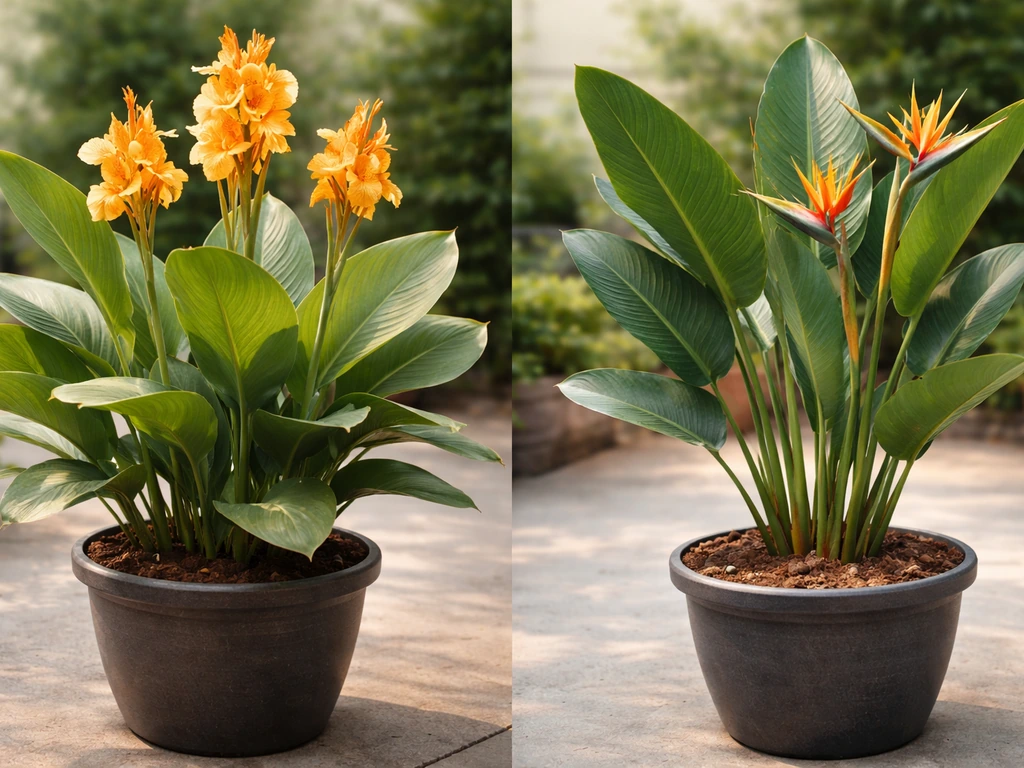
Quick ID: leaves, flowers, and growth habit
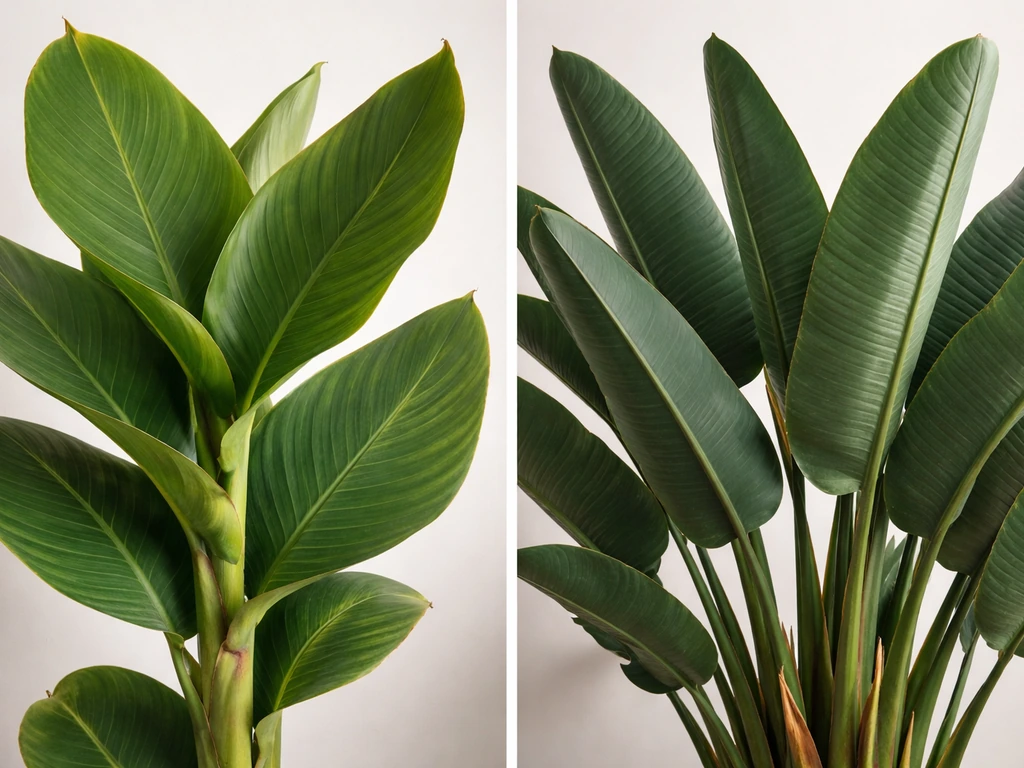
The fastest way to tell these two apart is the leaf. Canna leaves are large, paddle-shaped, and arranged in a spiral up a thick, cane-like stem, giving the plant a lush, tropical feel. They can be green, bronze, burgundy, or even striped depending on the cultivar. The whole plant grows from a fleshy underground rhizome that branches out and spreads. Bird of paradise leaves, by contrast, are long, stiff, and leathery on individual upright stalks, arranged in a flat, fan-like clump from the base, not stacked up a cane. They look a lot like a miniature banana tree arrangement, but much stiffer and more architectural.
Flower shape is the definitive tell. Canna flowers are large, open, and iris-like, sitting at the top of the cane in clustered spikes. Bird of paradise flowers are the famous 'crane' shape: a stiff, horizontal beak-like spathe in orange and deep blue, sitting on a single long stem. The University of Wisconsin Extension specifically calls out the blank" rel="noopener noreferrer">iridescent orange and midnight blue color combination as a signature identification feature. No canna is going to produce that. Cannas stay roughly 2 to 6 feet tall depending on variety; standard Strelitzia reginae typically reaches 3 to 5 feet, while the giant white bird of paradise (Strelitzia nicolai) can hit 20 to 30 feet.
| Feature | Canna Lily | Bird of Paradise (Strelitzia) |
|---|---|---|
| Leaf shape | Broad, paddle-shaped, spiraling up a cane | Long, stiff, leathery on individual stalks in a fan |
| Flower form | Open, iris-like spikes in red/orange/yellow/pink | Crane-shaped, orange and deep blue (reginae) or white (nicolai) |
| Growth habit | Clumping canes from spreading rhizomes | Dense basal clump from a crown; slow-spreading |
| Height | 2 to 6 feet (most cultivars) | 3 to 5 ft (reginae); up to 30 ft (nicolai) |
| Underground structure | Branched, fleshy rhizomes (~1–1.5 in thick) | Thick, fleshy roots; no true rhizome |
Where they come from and what conditions they actually like
Canna lilies are native to tropical and subtropical regions of the Americas, from the southern United States down through South America. That origin explains their love of heat, humidity, and rich, moist soil. They thrive in hot summers and hate frost. Bird of paradise (Strelitzia reginae) is native to South Africa's Eastern Cape, where it grows in coastal scrub and river banks with good drainage, warm temperatures, and plenty of sun. It's used to drier, better-drained conditions than canna and is more tolerant of some drought once established.
In terms of US hardiness, the difference is significant. Strelitzia reginae is hardy in USDA zones 10 through 11. Strelitzia nicolai is slightly more cold-tolerant, rated for zones 9B through 11. Canna is more adaptable: it's a true perennial in zones 7 through 10 (leaving rhizomes in the ground year-round), but gardeners in colder zones treat it as an annual or dig and store the rhizomes over winter. Both plants want full sun and warmth, but they diverge sharply on moisture and drainage.
Caring for each one: light, soil, water, and fertilizer
Canna lily care
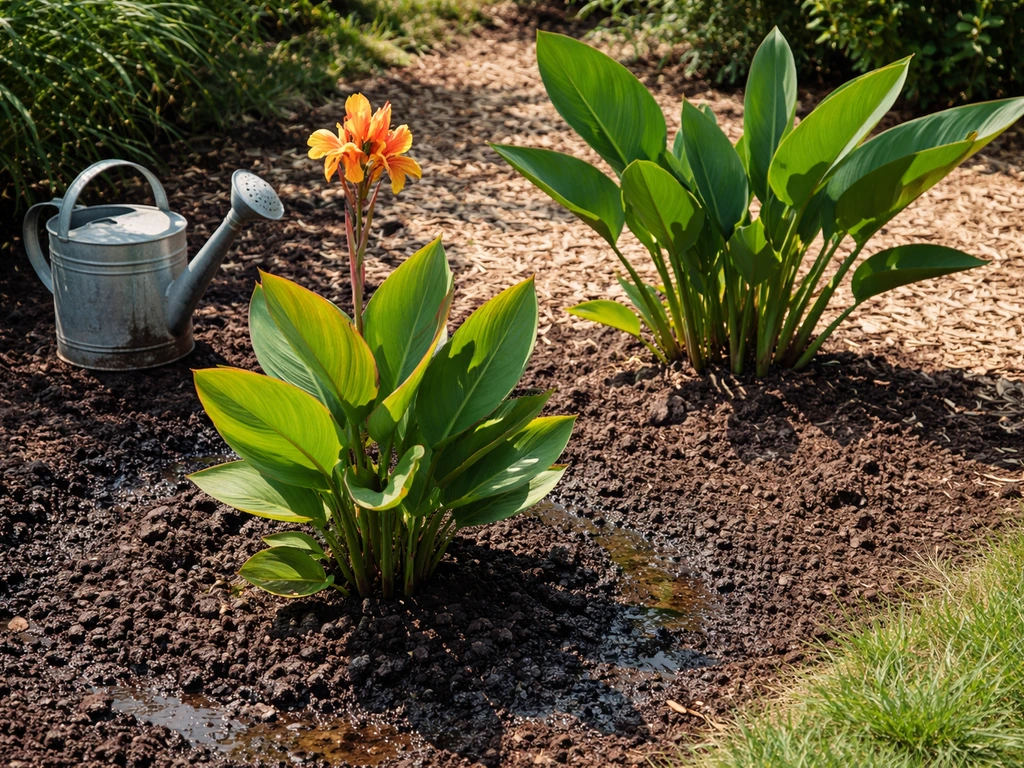
Cannas want full sun, hot weather, and consistent moisture. They grow best in rich, organic soil but are forgiving: UF/IFAS notes they can grow in most soils if you give them enough water and fertilizer. The University of Minnesota Extension echoes this, recommending full sun and adequate moisture with soil high in organic matter. Illinois Extension goes even further, noting that cannas can actually grow in standing water if you start the rhizomes in submerged pots. For fertilizing, UMN recommends a 5-10-5 or 5-10-10 fertilizer in spring after planting; UF/IFAS suggests a monthly balanced fertilizer or a controlled-release formula works well too. Water regularly and don't let them dry out during the growing season.
Bird of paradise care
Bird of paradise prefers full sun to partial shade and well-drained soil. It's more drought-tolerant than canna once established, but consistent watering during active growth improves flowering. The fertilizing schedule from University of Wisconsin Extension is specific: every two weeks during summer with a water-soluble fertilizer, then monthly in winter. That routine keeps mature plants producing their maximum blooms. Healthy, mature Strelitzia reginae plants can carry as many as three flowers at once. The main thing to avoid is waterlogged soil, which can rot the roots quickly.
| Care Factor | Canna Lily | Bird of Paradise (Strelitzia reginae) |
|---|---|---|
| Light | Full sun preferred; tolerates some shade | Full sun to partial shade |
| Soil | Rich, moist, organic; tolerates wet | Well-drained; does not tolerate waterlogged |
| Watering | Regular; consistent moisture; can handle wet feet | Moderate; drought-tolerant once established |
| Fertilizing | 5-10-5 or 5-10-10 in spring; monthly balanced during season | Every 2 weeks in summer; monthly in winter (water-soluble) |
| Heat tolerance | Very high; thrives in heat | High; needs warmth but dislikes hard frost |
Planting, propagating, and getting through winter
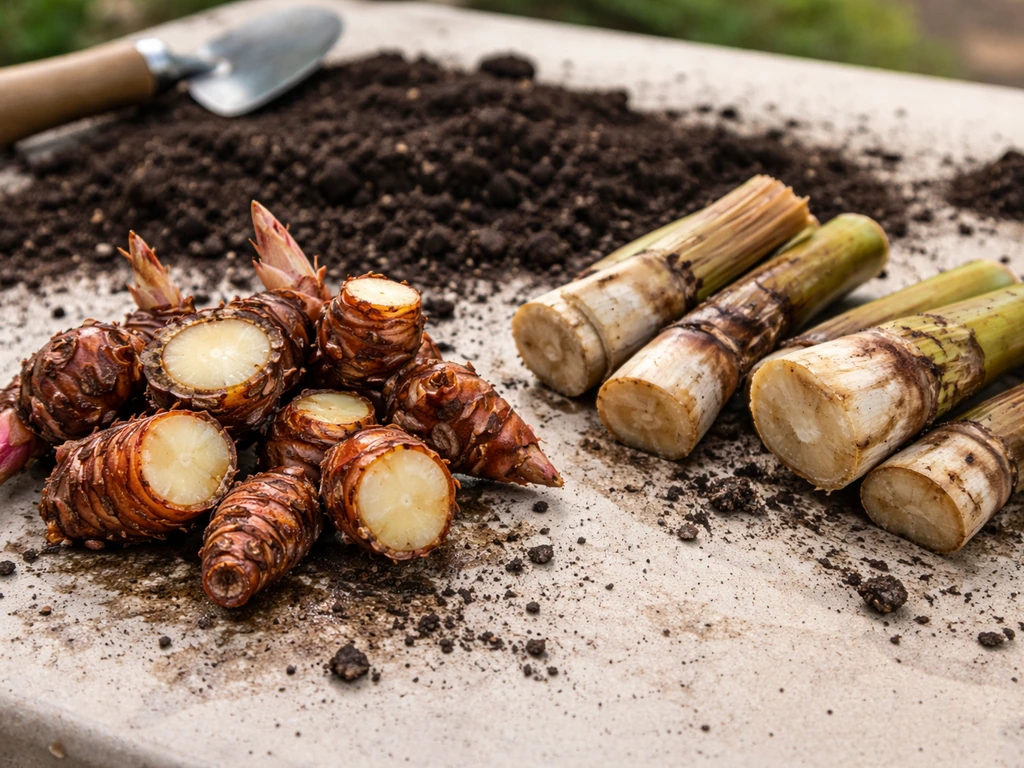
Cannas are propagated by dividing their rhizomes. The rhizomes are branched, fleshy, and stout, typically about 1 to 1.5 inches thick. Illinois Extension recommends starting rhizomes indoors in containers in March, cutting them apart to include at least one growing eye per section, and then planting outside after frost danger has passed. In cold climates like Minnesota, cannas must be dug up in fall before a hard freeze, dried briefly, and stored indoors in a cool, dry place over winter. In zones 7 to 10, you can leave them in the ground with some mulch for protection. This is one of the bigger care commitments cannas require compared to bird of paradise.
Bird of paradise is propagated by division as well, but it's slower and you need to be patient. When dividing, replant the divisions at the same depth they were growing originally, as planting too deep is one of the most common reasons a bird of paradise fails to bloom. Since Strelitzia reginae is only hardy to zone 10, most gardeners outside of Southern California, Hawaii, and South Florida grow it in containers that come indoors for winter. Container growing is actually ideal for bird of paradise in colder climates: it roots comfortably in a large pot and actually tends to bloom better when slightly root-bound.
Where each plant shines in the landscape
Cannas are workhorses for bold, tropical-looking summer beds, poolside plantings, and large containers. NC State Extension highlights their value as a landscape accent with showy flowers and colorful foliage, and they're commonly used along borders, in mass plantings, and near water features. Space cannas about 1 to 2 feet apart for standard cultivars or up to 3 feet for the large-growing types. They fill in fast and create a lush screen quickly. Deadheading spent flowers keeps them looking tidy and encourages more blooms.
Bird of paradise is more of an architectural statement plant. It works best as a focal point, in a large container on a patio, or as a specimen in a warm-climate garden bed. In zones 10 and 11, it makes a stunning evergreen landscape shrub or treelet. Strelitzia reginae clumps slowly over years; give individual plants about 3 to 4 feet of space in the ground so the clump can expand without crowding. In containers, a slightly tight pot actually encourages blooming, so don't rush to upsize the container. If you're comparing bird of paradise to other tropical-looking flowering plants, it's worth noting that heliconia, crane flower, and even giant bird of paradise all have their own distinct identities worth exploring when you're planning a tropical-themed space.
Pests, diseases, and toxicity: what to watch for
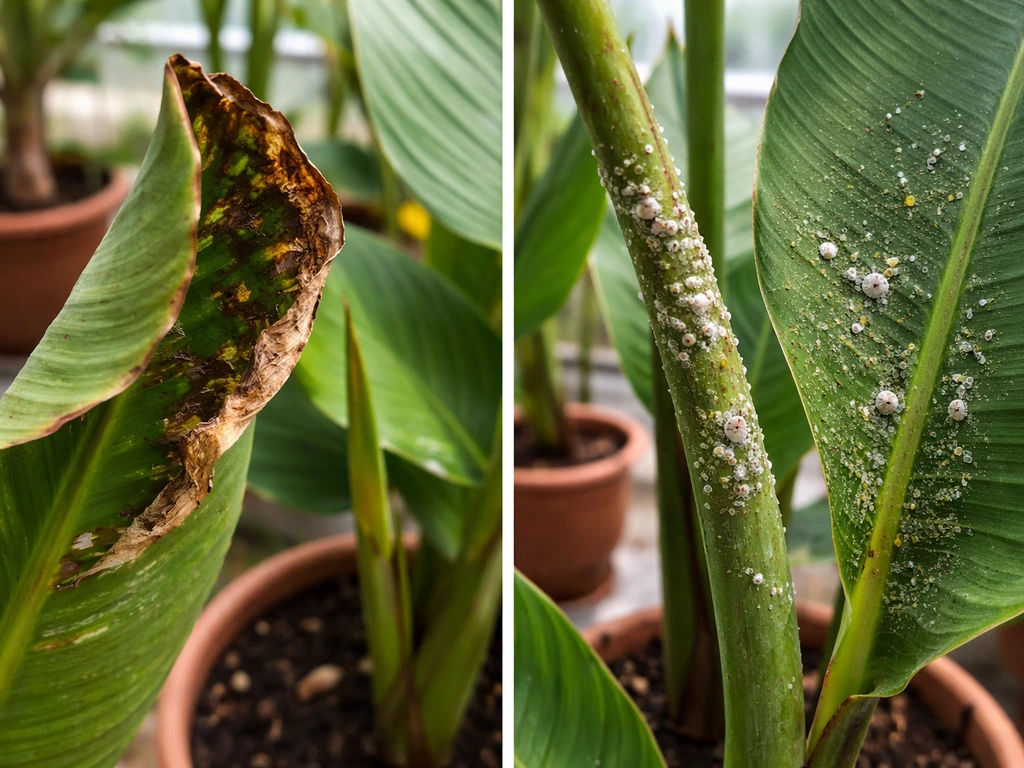
Cannas have a handful of specific pest problems you should know about. The lesser canna leafroller caterpillar causes unsightly brown defoliation damage as it rolls and feeds inside leaves before they unroll. The larger canna leafroller attacks new shoots emerging from the rhizome, and a bad infestation can leave plants with almost no flowers. Inspect new growth regularly and treat with appropriate insecticides or pick off larvae early. On the disease side, NC State lists rust, mosaic virus, bud rot, and aster yellows as potential problems. Texas A&M also flags rhizome rot caused by Sclerotium rolfsii and Fusarium spp., which shows up as decay and base stem rot, usually when soil drainage is poor or rhizomes are damaged.
Bird of paradise's biggest pest concern indoors and in greenhouses is mealybugs, which form colonies on the plant and are a common problem for container-grown Strelitzia. Outdoors in the landscape, it's generally a tough, low-problem plant. Scale and spider mites can occasionally be issues in hot, dry conditions. On toxicity: canna lily is considered non-toxic to humans and animals, which makes it a safe choice around pets and kids. Bird of paradise is a different story. Strelitzia plants are mildly toxic, particularly the seeds and pods, and can cause nausea and vomiting in dogs, cats, and humans if ingested. If you have curious pets or small children who explore the garden, that's worth factoring into your placement decision.
Which one should you choose?
If you want fast-growing, summer-long color with bold tropical foliage and you're in a temperate climate, canna lily is the practical pick. It's adaptable, forgiving, affordable, and you can dig and save the rhizomes each fall if needed. If you're in zone 9B or warmer and want a long-lived, structural plant with one of the most striking flowers in the ornamental plant world, bird of paradise is worth the slower setup. It rewards patience and consistent fertilizing with years of blooms. For container gardeners in cold climates who want bird of paradise, it absolutely works indoors over winter as long as you give it enough light. The two plants serve different design purposes, and once you've seen them side by side using the leaf shape and flower details above, you won't confuse them again. If you're still weighing lego bird of paradise vs orchid, comparing how the real plants differ by leaf and flower will help you choose confidently side by side. Parrot flower is sometimes confused with bird of paradise, but their leaves and bloom shapes are different parrot flower vs bird of paradise.
FAQ
Can I rely on photos online to identify canna lily vs bird of paradise?
Yes, but only in a couple of practical situations. If you truly mean “bird of paradise” as Strelitzia reginae or Strelitzia nicolai, the species with the crane-shaped blooms will look like a different plant than canna even when young, because canna has paddle leaves and Strelitzia forms stiff fans. If you’re mixing up names at a nursery, ask for the botanical name (Canna spp. vs Strelitzia spp.) to avoid substitutions like parrot flower.
What should I check on a nursery plant before buying if it has not flowered yet?
It can confuse you, because canna leaves can show bronze or striped cultivars and young Strelitzia fans can look “banana-like.” For the safest quick check, look for leaf arrangement and the flower signal: canna grows up a cane with broad paddle leaves, Strelitzia forms upright stiff fans from the base. If blooms are present, the orange and midnight blue crane shape is the tie-breaker.
How do I overwinter cannas if my winters are harsh?
If you live where canna is not hardy (below about zone 7), you should not leave rhizomes in the ground unless you can provide reliable winter protection and still accept losses. For most northern gardens, dig before hard freeze, let rhizomes air-dry briefly, and store in a cool, dry place. For container canna, you can also overwinter the container indoors with the pot kept just dry enough to prevent rot.
What’s the best way to keep bird of paradise alive through winter in a colder climate?
Bird of paradise can survive outdoors only in very warm climates (reginae around zone 10, nicolai down to about 9B to 11). In colder areas, the best approach is container growing so you can bring it indoors when nights cool. Keep it in the sunniest window or under grow lights indoors, and reduce watering in winter to avoid root issues.
Are there common mistakes when dividing and replanting these plants?
Both can be grown from division, but they do not tolerate planting depth errors the same way. For bird of paradise, planting too deep is a common reason it fails to bloom, so match the original depth exactly. For canna, divisions with at least one growing eye matter, but the more typical failure points are cold damage and staying too wet during early growth.
Which plant is more tolerant of soggy soil, canna or bird of paradise?
They have different “wet feet” tolerances. Cannas generally handle more moisture and can even be started with wetter conditions in some guidance, but they still need healthy rhizomes, so avoid stagnant, muddy conditions that remain cold. Bird of paradise is more sensitive to waterlogged soil, so prioritize fast drainage, and let the top portion of the mix dry slightly between waterings in containers.
How long does it usually take each plant to flower after planting or potting?
Expect different timelines. Canna typically establishes faster and can produce summer color in the same season once rhizomes are planted after frost risk. Bird of paradise is slower and may take longer to settle, especially in containers after repotting. If you just moved it or repotted recently, give it time before judging it by the lack of blooms.
Which one is better for a fast tropical look in a landscape or patio pot?
Design-wise, yes. Cannas can act as a quick “fill in” plant because they send up cane-like growth and spread fairly fast, so they work well for borders and mass plantings. Bird of paradise is better as a single focal specimen because it grows more slowly and has a strong architectural silhouette. If you want a tropical look quickly, cannas will generally deliver sooner.
What pests should I watch for if I keep these plants indoors or in a greenhouse?
They differ in pest and indoor risk. Cannas have issues like canna leafrollers and can get fungal and viral problems when conditions are poor. Bird of paradise grown indoors is more often troubled by mealybugs on the plant, while outdoor issues are usually lighter (like scale or spider mites in hot dry spells). If you keep tropical plants indoors over winter, plan for insect checks on Strelitzia.
Which is safer to grow around pets or small children, canna lily or bird of paradise?
Yes, toxicity matters for placement. Canna lily is generally considered non-toxic to humans and animals, which makes it a safer choice around pets that chew. Bird of paradise is mildly toxic, with seeds and pods being the biggest concern, so keep it out of reach and clean up any fallen pods to reduce accidental ingestion risk.
Next Articles
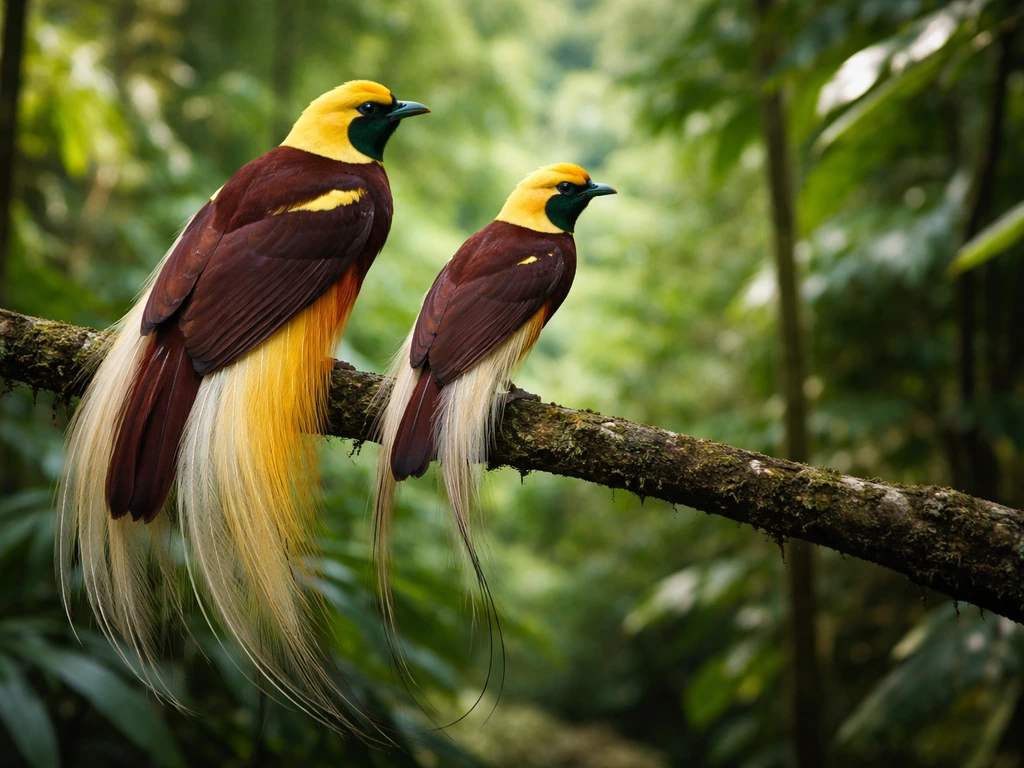
Giant Bird of Paradise vs Bird of Paradise: How to Tell
Step-by-step guide to tell giant vs normal bird of paradise, including white variants by size, markings, range, and beha
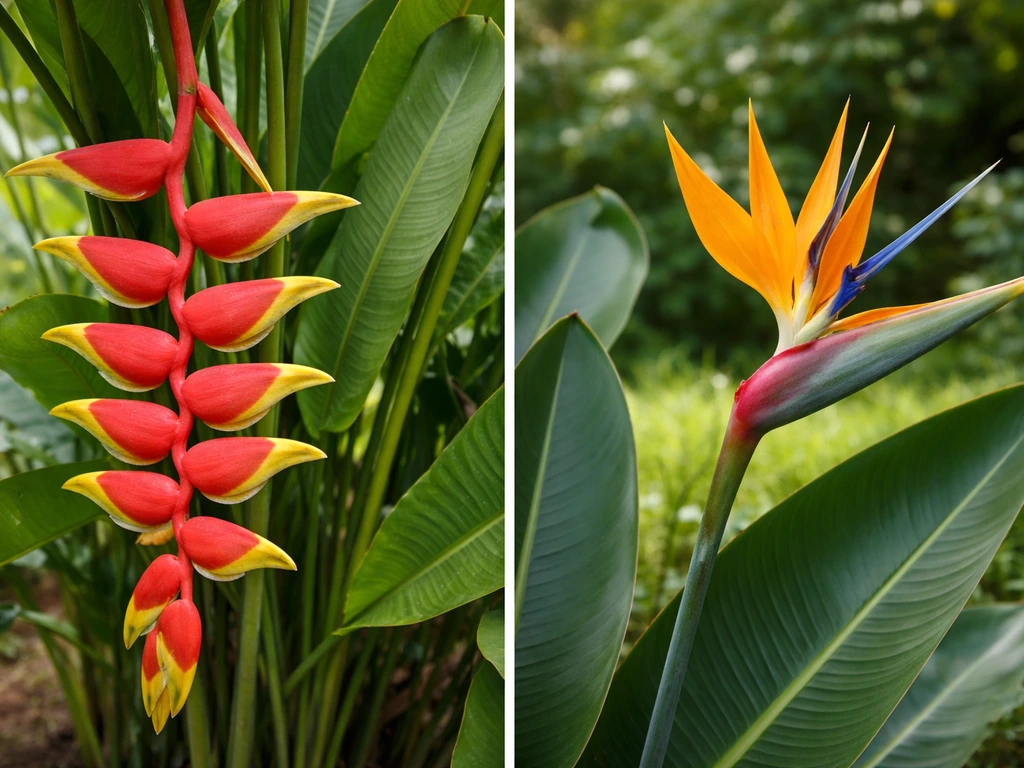
Heliconia vs Bird of Paradise: Key Differences
Heliconia vs bird of paradise: how to spot bracts, leaves and blooms at a glance, confirm identity, and care properly.
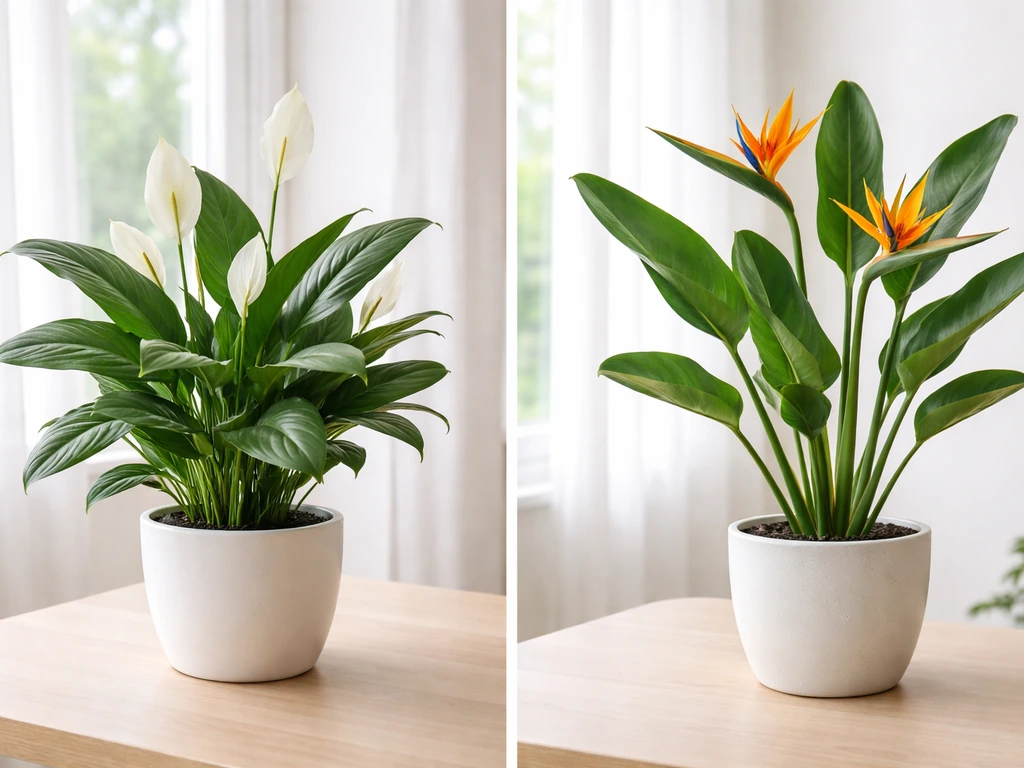
Peace Lily vs Bird of Paradise: How to Tell and Care
Peace lily vs bird of paradise: quick ID, bloom differences, side-by-side care, pet safety, and troubleshooting tips.