A bird-eating spider and a tarantula are actually the same thing at the species level: the goliath birdeater (Theraphosa blondi) is a tarantula. But when most people search "bird-eating spider vs tarantula," they're really asking how to tell a giant, chunky, ground-dwelling tarantula apart from the other large spiders they might encounter, especially the fast-moving huntsman spider that often gets mislabeled as a tarantula. Add scorpions and snakes into the mix, and the confusion compounds fast. Here's how to sort them out on the spot, starting with what to look for first.
Bird Eating Spider vs Tarantula: How to Tell the Difference

Marcus Hendricks
21 May 2026
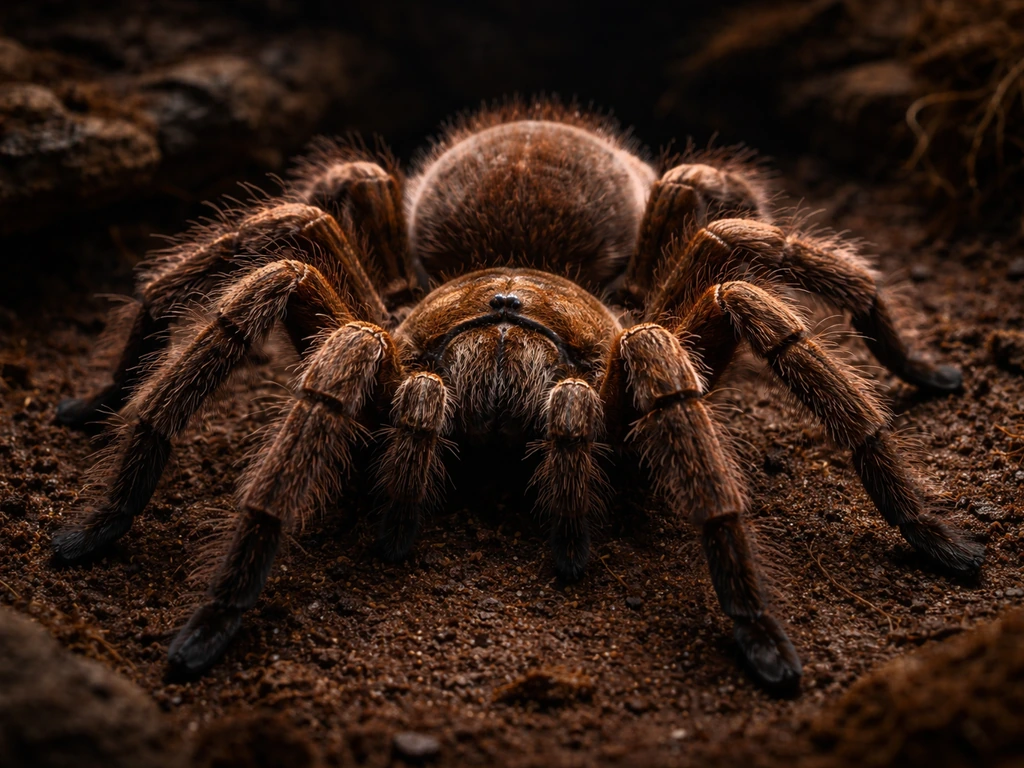
Quick ID: where to look first
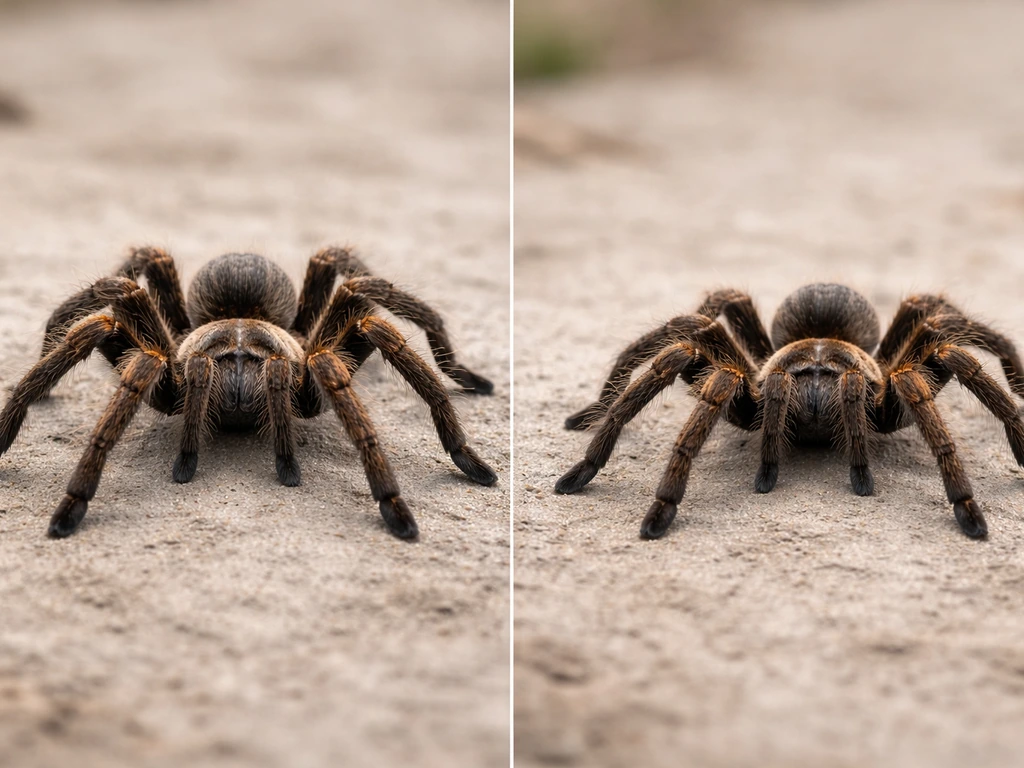
Before anything else, check four things in this order: overall size and leg span impression, body shape and posture, the number and arrangement of legs, and where you actually found it.
- Size and leg span: The goliath birdeater reaches leg spans up to about 30 cm (12 inches), making it the largest spider by mass. If what you're looking at fits in your palm, it's almost certainly not a birdeater. Huntsman spiders can match that leg span but look far more slender.
- Body shape and posture: Tarantulas and birdeaters sit low and compact, with a wide, rounded abdomen and a thick, hairy build. Their bodies look almost "boulder-like" compared to other large spiders.
- Legs: All spiders have exactly eight legs. If you count a tail or pincers, you're not looking at a spider at all. A scorpion has eight legs plus two grasping pincers and a segmented tail with a stinger at the tip.
- Habitat: Finding a large spider in a deep ground burrow in a tropical or subtropical area strongly points to a tarantula or birdeater. Finding one on your wall, behind a curtain, or under bark suggests a huntsman spider instead.
What a bird-eating spider actually is (and does)
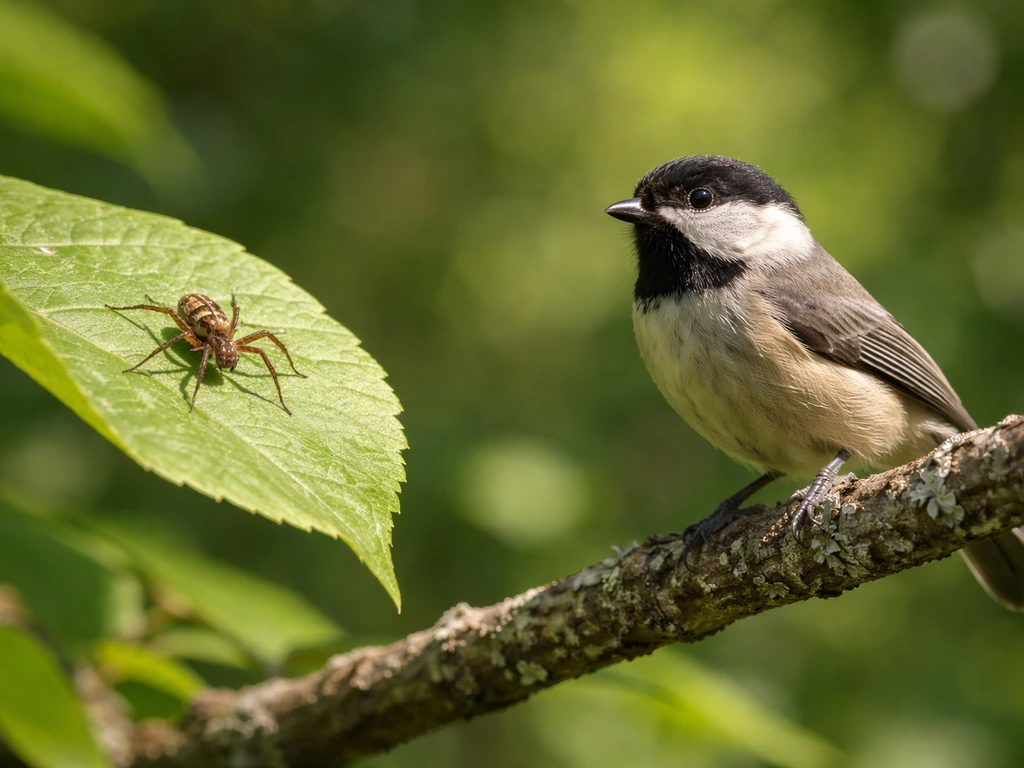
The "bird-eating" name comes from an 18th-century engraving by naturalist Maria Sibylla Merian that depicted a large spider eating a hummingbird. That image stuck, and the name has been causing confusion ever since. blank" rel="noopener noreferrer">In reality, the goliath birdeater rarely eats birds. If you are really trying to nail down spider vs bird, start with the goliath birdeater’s name versus its actual diet. Its actual diet is dominated by insects, earthworms, frogs, and toads. It can eat small mammals, reptiles, and occasionally small birds or bird eggs, but that's opportunistic, not routine. The Smithsonian's National Zoo feeds its birdeater cockroaches. National Geographic puts it plainly: "Goliaths don't usually eat birds, but they are big enough to be able to, and occasionally they do." So the name is more of a historical reputation than an accurate diet description.
Behaviorally, the goliath birdeater is a classic ambush predator. It doesn't build a capture web to catch prey. Instead, it retreats to a burrow (or a sheltered ground location) and waits. When threatened, it rears up dramatically to expose its large fangs, a signature defensive display you won't see from a huntsman spider. It also has urticating hairs on its abdomen, which it can flick toward threats using its hind legs, causing irritation on skin and especially dangerous to eyes. If you see a large, hairy spider doing either of those things, that's a strong tarantula family confirmation.
Tarantula vs bird-eating spider: the key distinction
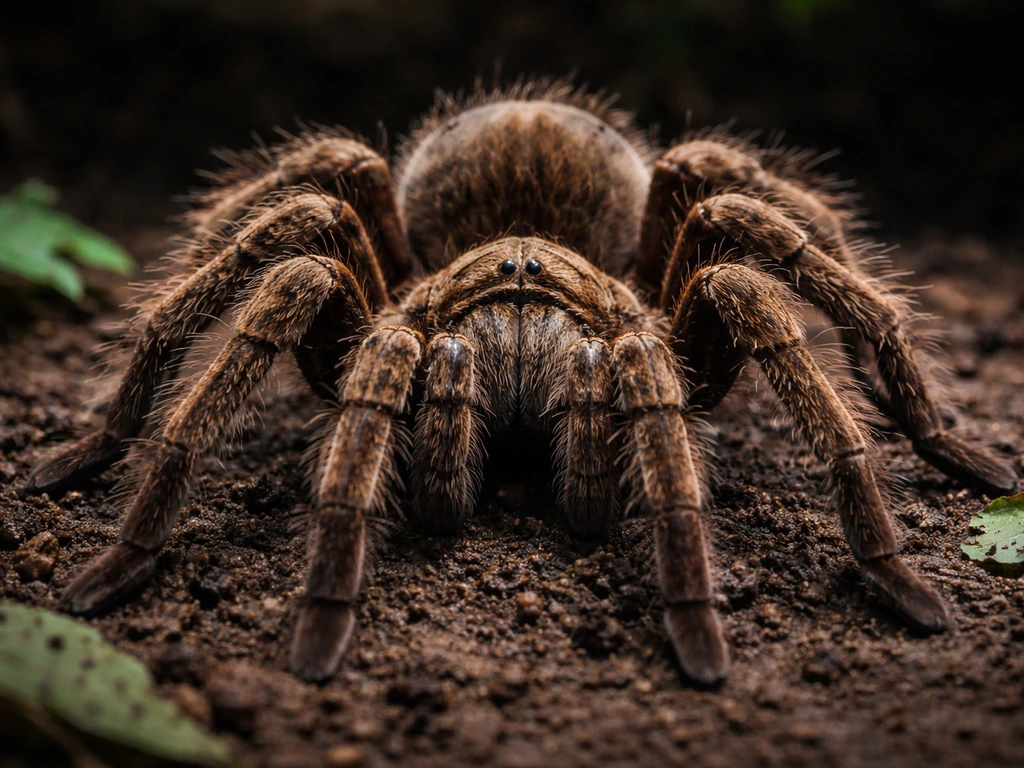
Here's the direct answer: the goliath birdeater is a tarantula. It belongs to the family Theraphosidae, the same family as all true tarantulas. So "bird-eating spider" and "tarantula" are not two separate creatures you need to tell apart from each other; the birdeater is simply the largest member of the tarantula family. When people think they're comparing the two, they're usually noticing size differences between the goliath birdeater and smaller tarantula species, or they're comparing a tarantula (any Theraphosidae species) against the huntsman spider, which is a totally different spider family.
If you want to confirm something is a true tarantula (goliath birdeater or otherwise), the reliable markers are: a dense, hairy body; a compact, low posture with legs held close to the body rather than splayed outward; ground-dwelling or burrowing behavior; no capture web; and, if threatened, that rearing-up defensive posture. Tarantulas in Australia, for instance, live in web-lined burrows that can go 40 to 100 cm deep. The web isn't for catching prey; it's essentially a door mat that alerts the spider to movement.
Huntsman spider vs bird-eating spider (and vs tarantula)
This is where most real-world misidentifications happen. Huntsman spiders are large, hairy, and alarming when you find one, so people immediately assume "tarantula" or even "bird-eating spider." The Australian Museum even notes that huntsman spiders are the "so-called tarantulas" people regularly find on walls. But once you know what to look for, the differences are obvious.
Leg posture is the fastest tell
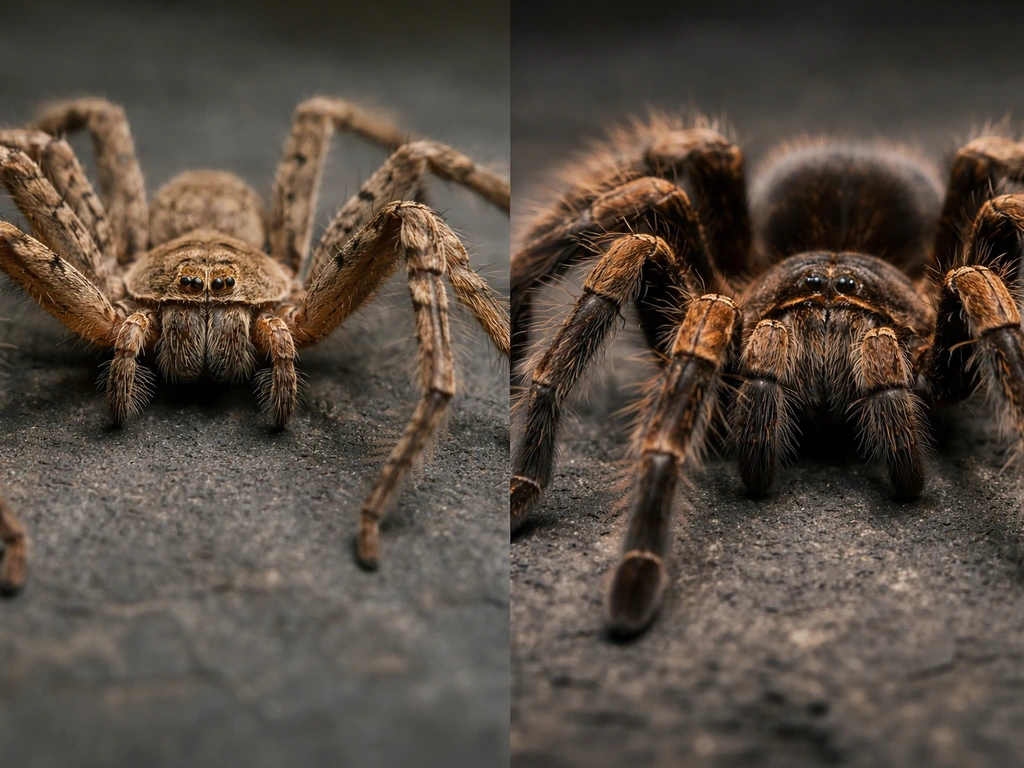
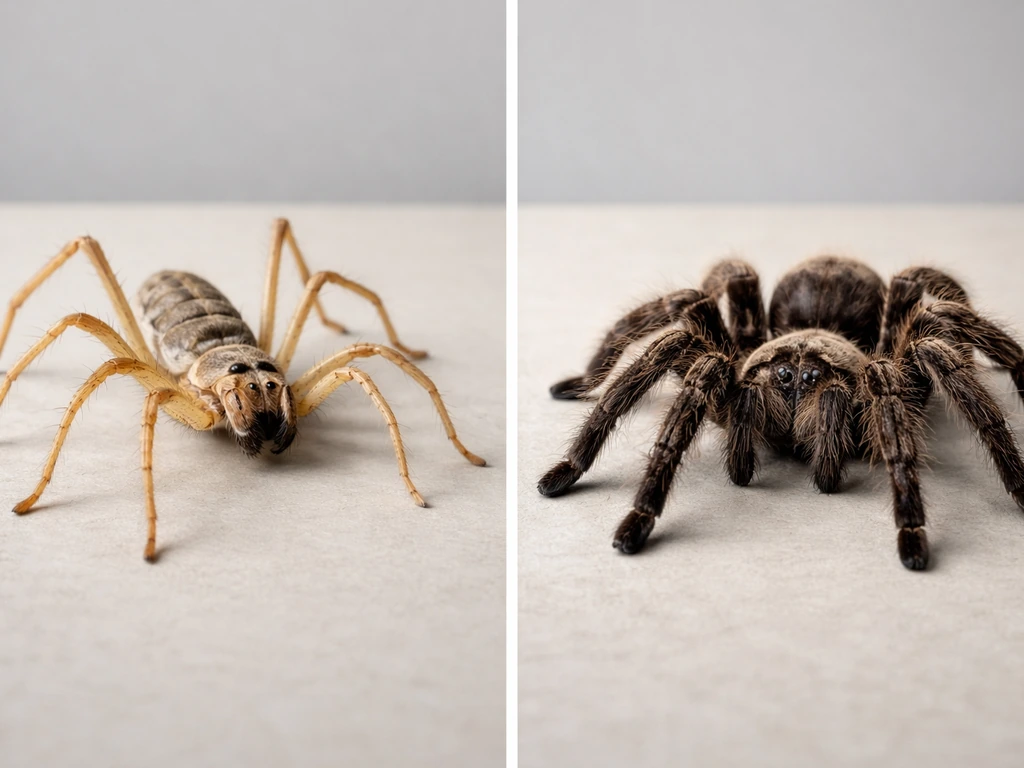
Huntsman spiders have what are called laterigrade legs, meaning their legs are blank" rel="noopener noreferrer">twisted at the joints so they extend outward and forward in a crab-like fashion. This lets them move sideways rapidly, which is a behavior you will not see from a tarantula. Tarantulas hold their legs more vertically beneath their body, giving them that compact, grounded stance. If the spider in front of you looks like a crab and scuttles sideways, it's a huntsman.
Body shape and build
A huntsman is built flat and lean, an adaptation for living under bark and in tight crevices. A tarantula or birdeater is built wide and bulky, with a visibly round, thick abdomen. Even at similar leg spans, the huntsman looks almost two-dimensional by comparison.
Habitat and behavior
Huntsman spiders are active hunters that roam walls, ceilings, under bark, and sometimes the ground beneath rocks. Adult huntsman spiders do not build webs. Neither do tarantulas for prey capture, but tarantulas stay close to the ground and burrows. Finding a large spider high on your wall at night is almost always a huntsman. Finding a large spider near or in a ground hole in a tropical forest is pointing toward a tarantula or birdeater.
| Feature | Bird-eating spider / Tarantula | Huntsman Spider |
|---|---|---|
| Leg posture | Legs held under body, vertical stance | Legs splayed outward, crab-like (laterigrade) |
| Body build | Thick, bulky, rounded abdomen | Flat, lean, elongated |
| Movement | Slow, deliberate, stays ground-level | Fast, sideways-capable, roams walls and bark |
| Web for prey? | No capture web; uses burrow/ambush | No web; active hunting |
| Habitat | Ground burrows, tropical/subtropical soil | Walls, bark, crevices, under rocks |
| Defensive display | Rears up, exposes fangs, flicks urticating hairs | Typically retreats or runs; no urticating hairs |
| Leg span at max | Up to 30 cm (goliath birdeater) | Up to 30 cm (giant huntsman), but looks much leaner |
Ruling out scorpions and snakes
You might think nobody confuses a spider with a scorpion or snake, but in low light or at a glance, it happens more than you'd expect. Here's how to rule them out immediately.
Scorpions: look for the tail and pincers
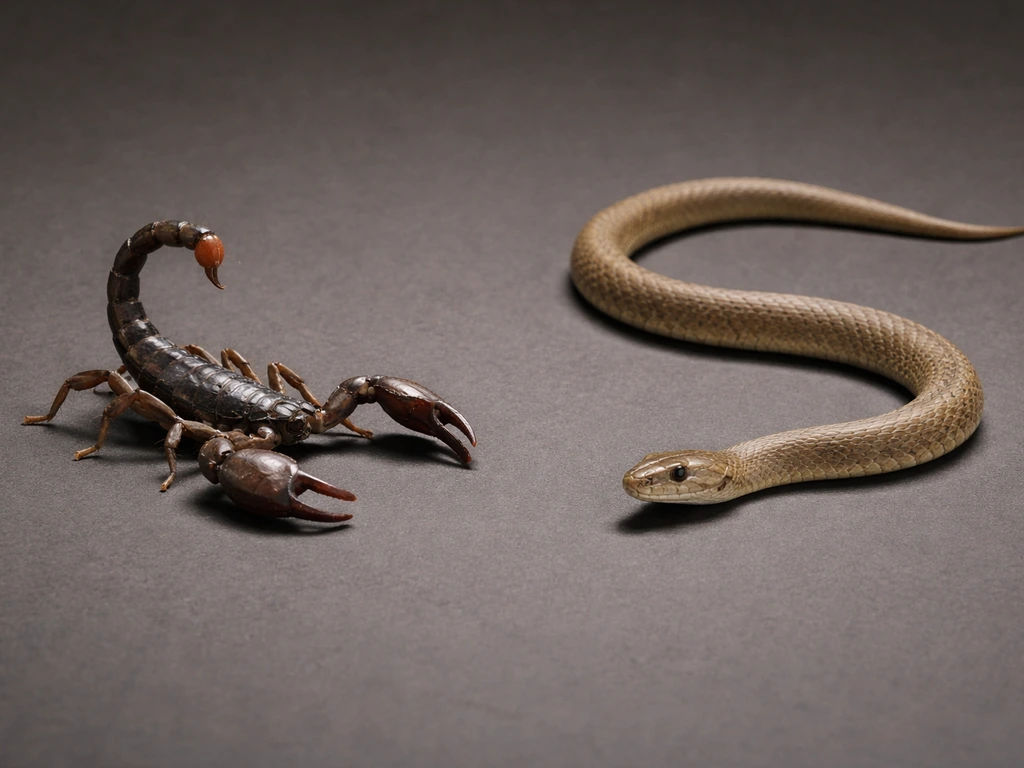
Scorpions share the eight-leg count with spiders, which is the source of confusion. But a scorpion also has two large grasping pincers at the front (called chelae, extensions of their pedipalps) and a narrow, segmented tail curling over the body that ends in a venomous stinger. No spider has either of those. If you see pincers and a curving tail, stop trying to classify it as a spider at all. Also, scorpion bodies are visibly segmented along the tail section in a way no spider body is. Spiders have two distinct body regions (the cephalothorax and an unsegmented abdomen) with no tail whatsoever.
On the danger side: scorpion stings range from painful-but-manageable to medically serious depending on species. If you or someone is stung, call Poison Control (1-800-222-1222 in the US) right away for guidance. If there are body-wide symptoms or prolonged severe pain, go to an emergency room.
Snakes: an entirely different shape
A snake has no legs. That's the quickest elimination. It also has a distinct head separated from its body by a recognizable neck, and it moves by undulating its entire elongated body. A coiled or partially hidden snake might be glimpsed as just a round shape, but its scale texture, lack of visible legs, and smooth continuous body distinguish it from any spider immediately. Keep a safe distance from any snake you can't identify, and use field guides or a local expert rather than getting close enough for a detailed look.
Your next-step confirmation checklist
If you've found something large and spider-like and still aren't sure what it is, work through these steps before making any definitive call.
- Count the legs. Eight legs with no pincers or tail: you have a spider. Pincers plus a segmented tail with a stinger: scorpion. No legs and a continuous elongated body: snake.
- Check the leg posture. Legs splayed sideways in a crab-like spread: huntsman spider. Legs tucked compactly under a bulky, hairy body: tarantula or birdeater.
- Note where you found it. On a wall, ceiling, or under bark: almost certainly a huntsman. In or near a ground burrow in a warm, humid environment: tarantula family.
- Look at body build. Flat and lean: huntsman. Wide, rounded, and heavy-looking: tarantula or birdeater.
- Take a photo from a safe distance. Don't handle any large unidentified spider. A clear lateral photo showing body shape and leg posture is enough for most expert IDs.
- Use location as a major filter. Goliath birdeaters are native to South American rainforests. If you're in Australia and find a large ground spider, you're more likely dealing with an Australian tarantula. If it's on your wall anywhere in the world, huntsman is the top candidate.
- If bitten or stung, call Poison Control (1-800-222-1222 in the US) immediately, describe the animal as accurately as possible, and follow their instructions. Go to the emergency room if symptoms spread beyond the bite site.
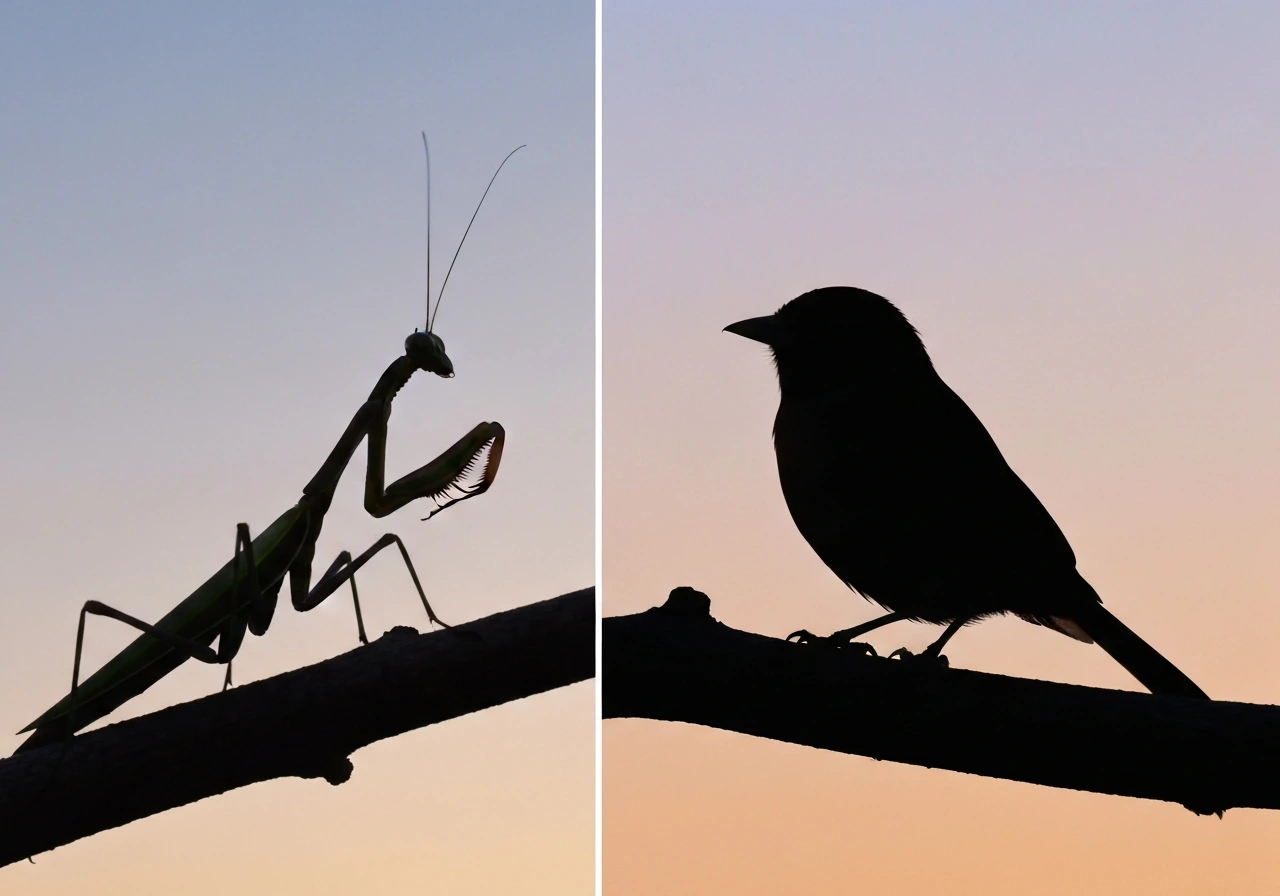
The comparison between bird-eating spiders and similar creatures is part of a broader pattern of spider and animal misidentification that trips people up regularly, much like how people mix up similar-looking birds or confuse one animal class for another entirely. For a quick visual comparison, see the differences in how a praying mantis and a bird move, hunt, and use their body shape bird-eating spiders. The good news is that the physical cues here are clear and reliable once you know what to look for: posture, body build, habitat, and a quick leg count will sort out the vast majority of cases without needing a specialist. If you specifically want to tell a camel spider from a bird-eating spider, the quickest win is comparing leg posture and hunting behavior side by side camel spider vs goliath bird eating spider.
FAQ
If I see “bird-eating spider” online, should I assume it’s always the goliath birdeater tarantula?
Not necessarily. “Bird-eating spider” is a common name that gets reused for other large tarantulas too, and many posts mix in huntsman spiders. Use the physical markers (compact stance, urticating hairs behavior, burrow behavior, no prey-capture web) to confirm it’s a Theraphosidae tarantula, not just a large spider.
Does a tarantula ever build a web like people expect, and could that confuse me?
Yes, but it’s different from a capture web. Many tarantulas make webs for lining burrows, creating a retreat, or anchoring a molting or egg area. If you see no webbing associated with catching prey and you mainly observe ground or burrow behavior, that still fits tarantula rather than huntsman.
How can I tell whether it’s a huntsman spider versus a tarantula if the legs look hairy and the size is similar?
Focus on leg posture and movement style. Huntsmans scuttle sideways in a crab-like way using outward-extending, laterigrade legs, while tarantulas typically hold legs more vertically beneath a compact body. A quick 5 to 10 second observation of how it walks can be decisive.
What should I do if the spider flicks hairs toward me, and how dangerous is that?
If it rears up and you see a defensive hair-flick, move away and avoid rubbing your eyes. These hairs are meant to irritate, and eye exposure can be a medical concern. If irritation persists or gets into eyes, seek urgent medical evaluation rather than trying to wash repeatedly without guidance.
Are urticating hairs only on goliath birdeaters, or do other tarantulas have them too?
Many New World tarantulas can have urticating hairs, not just the goliath birdeater. The key point is the defensive behavior, urticating hair presence, and the tarantula stance and lifestyle cues (ground/burrow, no prey-capture web).
Can I confirm it’s a tarantula by counting body parts or segments?
Yes. Spiders have two main body regions (no segmented tail), while scorpions have a tail with a stinger and also show prominent front pincers. If you can clearly see a stinger or grasping pincers, it’s not a tarantula even if there are eight legs.
What if I only get a blurry photo in low light and can’t see posture clearly?
Rely on elimination cues. First, check for obvious scorpion features (pincers and tail stinger) and snake features (no legs, continuous elongated body). If it’s clearly an eight-legged spider and you found it on or near the ground in a burrow area, that increases tarantula likelihood compared with huntsman spiders that are often encountered higher on walls.
Is it safe to handle a suspected bird-eating spider or tarantula to get a better look?
No. Even if you think it’s a tarantula, defensive displays and urticating hairs can happen quickly. For identification, observe from a distance, use zoom if possible, and allow it to move away on its own.
Where would I most likely find a tarantula compared with huntsman spiders?
In general, tarantulas are more associated with ground-level habitats, burrows, and sheltered retreats, while huntsman spiders are commonly seen roaming on walls, ceilings, and under bark where they actively move and hunt. Exact location still depends on species, but the pattern is usually strong.
If I’m outside the Americas, should my identification assumptions change?
Yes, mostly for expectations. The “bird-eating spider” label commonly targets Theraphosidae, but habitat patterns and look-alikes vary by region. In areas where huntsman spiders are common, the chance of mislabeling goes up, so emphasize posture and movement (sideways scuttling versus compact, grounded stance).