If you spot a large white-and-dark bird out at sea or on a coastal headland and wonder whether it's an albatross or a seagull, the fastest answer is usually size and flight style. Albatrosses are dramatically larger than any gull you'll encounter, with wingspans that routinely hit 6 to 7 feet, and they glide for long, banking stretches without flapping. Gulls flap more frequently and are typically half the size or less. Once you know what to look for, telling them apart takes about ten seconds.
Albatross Bird vs Seagull: How to Tell the Difference

Marcus Hendricks
30 Jun 2026
Fast ID: Size, Shape, and Silhouette
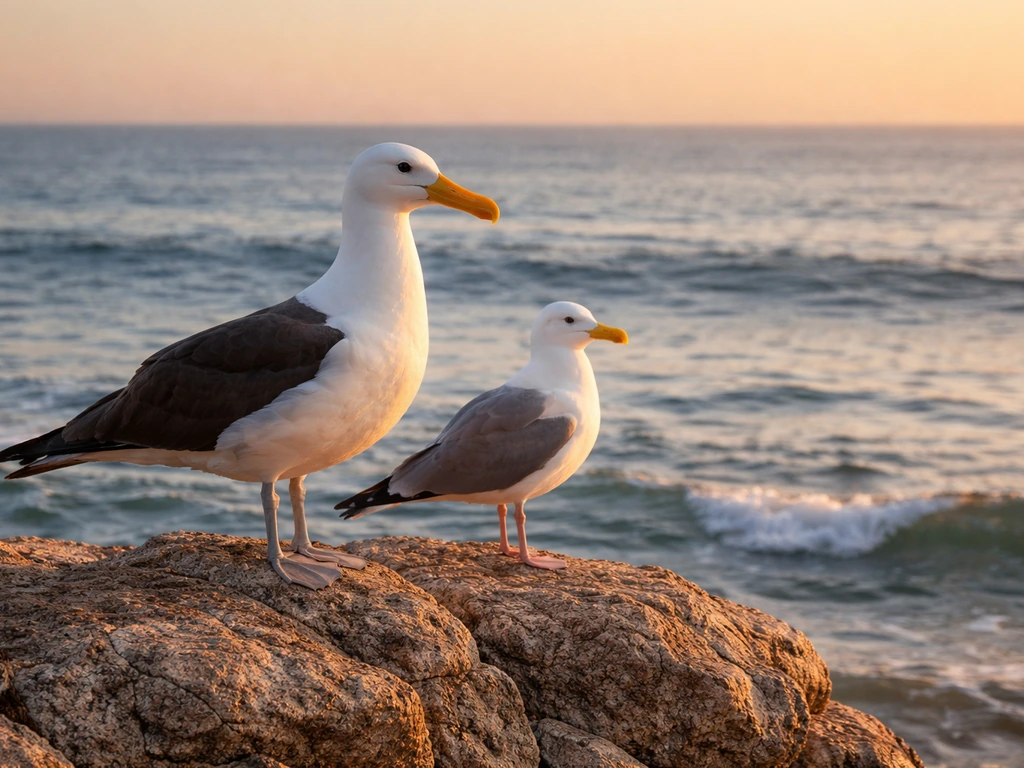
Size is your first and most reliable cue. The Laysan Albatross, one of the most commonly seen albatrosses in the North Pacific, blank" rel="noopener noreferrer">runs about 31 to 32 inches in body length with a wingspan of roughly 77 to 80 inches (that's around 6 feet 5 inches to 6 feet 8 inches). The Black-browed Albatross hits similar numbers: roughly 80 cm body length and a 200 cm wingspan. Now compare that to a Herring Gull, which has a wingspan of only 130 to 150 cm, and a Ring-billed Gull, which tops out at a 49-inch wingspan. At the same distance on the water, an albatross looks like a different category of bird entirely.
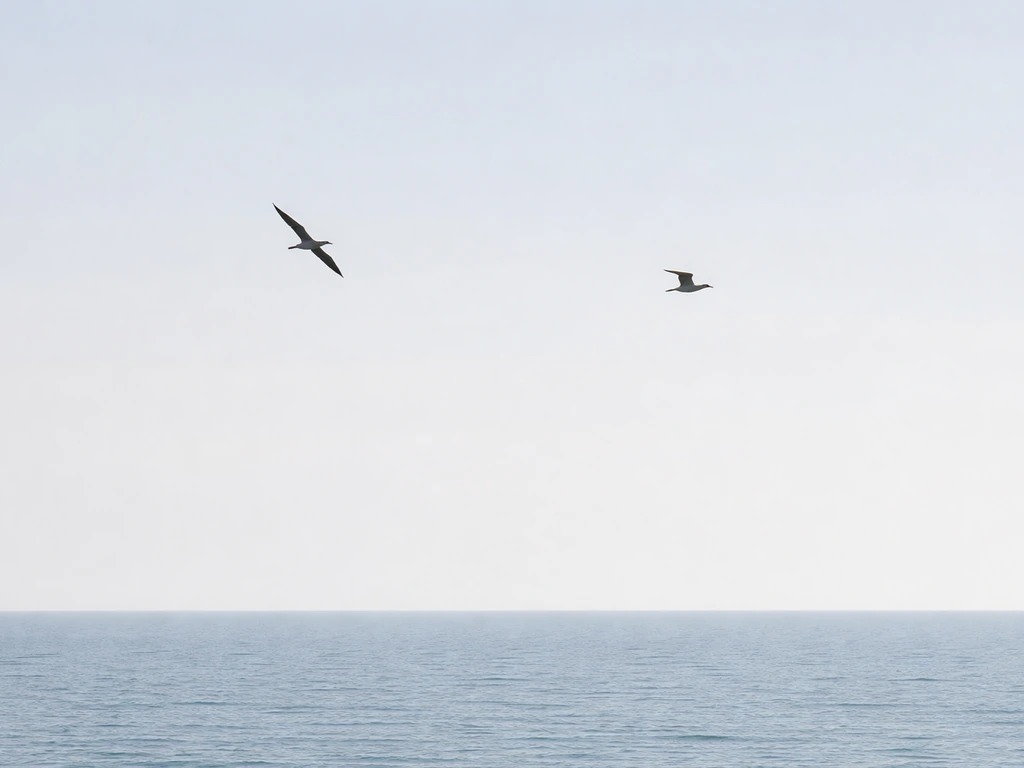
The silhouette reinforces the size difference. Albatrosses have extremely long, narrow wings that taper to a point, creating a distinctly swept-back or crossbow shape in flight. The body is relatively compact by comparison, giving a high wing-to-body ratio that looks almost architectural. Gulls have broader, more rounded wings relative to their body, with a chunkier overall shape. If the bird in your binoculars looks like a flying plank with massive wings and a small-ish head, you're probably looking at an albatross.
| Feature | Albatross (Laysan/Black-browed) | Seagull (Herring/Ring-billed) |
|---|---|---|
| Body length | 79–89 cm (31–35 in) | 43–67 cm (17–26 in) |
| Wingspan | 195–203 cm (77–80 in) | 113–150 cm (44–59 in) |
| Wing shape | Long, narrow, pointed, swept-back | Broader, more rounded tips |
| Overall silhouette | Crossbow/plank shape | More compact, gull-shaped |
Plumage and Markings Up Close
Both albatrosses and gulls can look broadly white-and-dark at a distance, which is where the confusion starts. Up close, the patterns are quite distinct. The Laysan Albatross has a white head and body with dark gray-brown upperwings, mantle, and back. The underwing is mostly white but carries variable dark markings along the edges and center. Look for a dark smudge around the eye, which varies between individuals but is consistently present. There's also a clean white rump with a U-shaped white patch that can flash noticeably in flight.
The Black-browed Albatross is even more distinctive close up. It has a white head with a bold dark eyebrow stripe (the feature that gives it its name), and a yellow-orange bill with a darker reddish-orange hooked tip. The underwing is predominantly white with broad, irregular black margins along both the leading and trailing edges. The tail is short and black. If you can see that combination of eyebrow stripe, hooked bill tip, and thick-bordered white underwing, you're looking at a Black-browed.
Gulls tend toward cleaner patterning. Adult Ring-billed Gulls are pale gray above and white below, with black-spotted wingtips carrying white spots (called mirrors). Their signature field mark is a neat black band encircling the yellow bill. Herring Gulls share the gray-and-white pattern with pink legs and a yellow bill with a red spot.
Herring birds are different from herons, which are long-necked waders, not seabirds, so the names are easy to mix up Herring Gulls. Breeding Laughing Gulls have a fully black head with thin white eye crescents, which can look dramatic but is nothing like albatross face patterning. The key contrast: gull markings are generally crisper and more symmetric; albatross markings are bolder, more irregular, and associated with that massive size.
Beak and Head Shape: Structural Differences That Stick
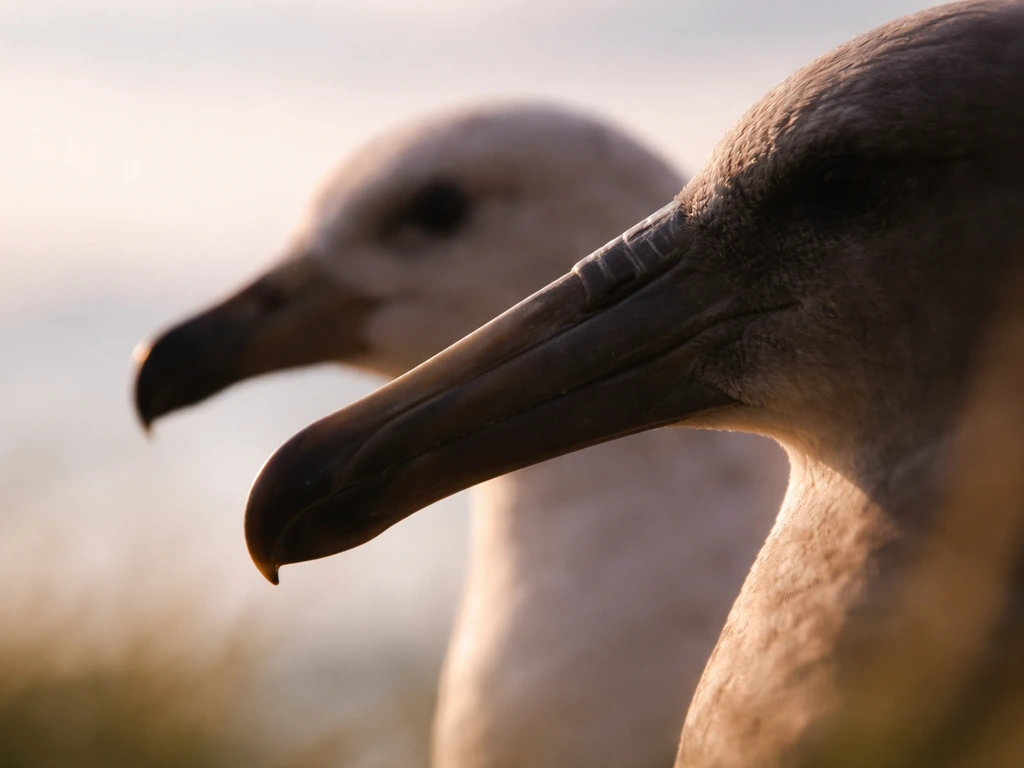
The bill is one of the most reliable close-range ID tools. Albatrosses belong to the tubenose family, which means they have visible nasal tubes (called naricorns) running along the sides of the upper bill. You won't see anything like this on a gull. The albatross bill itself is large and hooked at the tip, built for gripping slippery squid and fish at the ocean surface. The Black-browed Albatross specifically has a distinctly hooked reddish-orange tip on a yellow-orange bill, which is hard to mistake once you've seen it.
Gull bills are also hooked but proportionally smaller and differently shaped. Ring-billed Gulls have that diagnostic black ring partway down a yellow bill. Herring Gulls have a red gonydeal spot on the lower mandible. Neither has the nasal tube structure you see on albatrosses. If you're close enough to see the bill anatomy and you notice a tube-like structure running along the top, that's an albatross (or another tubenose like a petrel or shearwater). The head shape also differs: albatrosses tend to have a slightly larger, rounder head relative to a long neck, while gulls often look a bit flatter-headed and more angular.
Wing Shape, Wingbeat, and Gliding Patterns
This is where albatrosses really give themselves away. Albatrosses are built for dynamic soaring, a flight technique that extracts energy from differences in wind speed at various heights above the ocean surface. In practice, this means an albatross will bank steeply, drop toward the water, arc back upward, and repeat, covering enormous distances with minimal flapping. When you watch one in good wind, it can go several minutes without a single wingbeat. Audubon has aptly called wandering albatrosses the ultimate soaring birds, and watching one in real life makes that obvious immediately.
Gulls do also glide and can occasionally perform dynamic soaring in strong winds, so flight style alone isn't completely definitive in stormy conditions. If you’re comparing an ibis bird versus an egret, use flight style as a starting point, but focus more on leg length, neck posture, and overall body proportions flight style alone. But the typical gull pattern involves much more frequent flapping interspersed with shorter glides. Gulls flap-flap-flap-glide; albatrosses bank-and-soar with long arcing turns.
The wing shape drives this: those long, thin, pointed albatross wings are optimized for soaring efficiency, while gull wings are more general-purpose. Worth noting: in very light wind conditions, even albatrosses flap more frequently than usual, so wind state matters when making the call based purely on flight style.
- Albatross: long arcing glides with steep banking turns, rarely flaps in moderate wind
- Albatross wingbeat: when it does flap, wingbeats are slow and deliberate given the massive wing area
- Gull: regular flap-glide pattern, shorter glide periods, more active wingbeats
- Gull wings: broader with more rounded tips, creating a different visual rhythm in flight
- Caveat: in strong wind, gulls can soar longer and albatrosses may flap more, so combine flight cues with size and plumage
Habitat and Range: Where You'd Actually See Each One
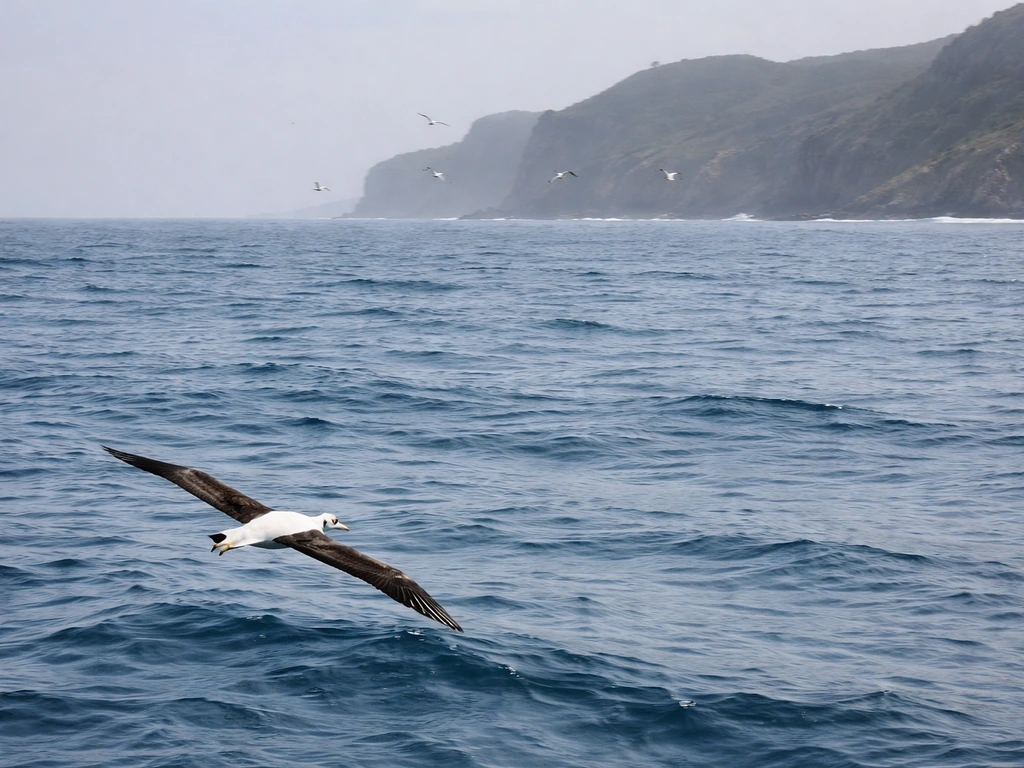
Where you are when you see the bird is enormously useful context. Albatrosses are genuinely pelagic seabirds, meaning they spend most of their lives over open ocean, far from shore. Laysan Albatrosses breed primarily in Hawaii and then forage across the North Pacific, ranging northwest toward Japan and Alaska. You're not going to see one at a parking lot, a landfill, or a river inland. If you see a large white-and-dark bird miles offshore during a pelagic boat trip in the North Pacific, albatross becomes a real possibility.
Gulls are the opposite in terms of habitat flexibility. Ring-billed Gulls are famously common across North America and are described as rarely seen far offshore. They nest near freshwater inland and are regular visitors to parking lots, landfills, beaches, and lake shores. Herring Gulls are more coastal and sea-associated but still far more tied to shorelines than albatrosses are. If you see a large gull-like bird over a supermarket parking lot or at a lake in Nebraska, it's definitely not an albatross. If you're watching from the deck of a research vessel a hundred miles offshore in the Pacific or Southern Ocean, then albatross is absolutely on the table.
Feeding Behavior and Diet
How the bird feeds is another useful field cue. Albatrosses are surface feeders over open ocean, primarily targeting squid, fish, crustaceans, and flying fish eggs. They often settle on the water and seize prey from the surface, or make shallow plunges. You won't see an albatross hovering over a beach or stealing chips from a tourist. Their foraging is quiet, deliberate, and happens far out at sea. They also occasionally scavenge floating carrion or fishing boat waste, but this happens offshore.
Gulls are opportunistic in a way that albatrosses simply are not. Ring-billed and Herring Gulls are well known for scavenging at landfills, stealing food from other birds (a behavior called kleptoparasitism), and exploiting human food sources on beaches and in parking lots. Environmental factors such as wind intensity and direction, which change sea roughness and visibility, can trigger when gull kleptoparasitism occurs stealing food from other birds (a behavior called kleptoparasitism). Kleptoparasitism is actually a recognized ecological strategy for gulls, where they actively chase and harass other seabirds to steal their catch. Albatrosses don't typically do this. If you're watching a bird bully a smaller bird into dropping its fish, or if it's circling a garbage truck, it's a gull.
Common Confusion Pitfalls and Field Checklist
The biggest pitfall is assuming any large white seabird with dark wing markings must be an albatross. Immature Herring Gulls, in particular, go through mottled brown-and-white plumage phases that can look vaguely albatross-like at a distance, especially when they're soaring in a headwind. The solution is to check size first (a Herring Gull maxes out at about 150 cm wingspan; an albatross starts around 195 cm), then look at flight style and location.
A quick guide to snake bird vs cormorant can also help you separate look-alikes based on behavior and body shape. A similar dynamic applies with other large coastal seabirds like pelicans or gannets, which share the white-and-dark palette.
If you're comparing water birds more broadly, the distinction in feeding style and habitat is just as useful as plumage for narrowing things down, much like how size and behavior help separate birds in comparisons like ibis vs egret or egret vs pelican.
Taking a photo or short video whenever you're unsure is genuinely good advice. Wing pattern in flight shows far more diagnostic detail than a resting bird, and a frozen frame lets you count wingbeats, check bill structure, and compare proportions without relying on memory. Bill-to-head ratio and overall head shape are particularly useful when you're watching a bird in flight and can't see color clearly.
Quick Field Checklist
- Size first: is the wingspan clearly over 6 feet? If yes, you're in albatross territory. If it looks roughly crow- to hawk-sized, it's a gull.
- Location check: are you miles offshore on open ocean? Albatross is possible. Near a beach, harbor, parking lot, or inland water? Almost certainly a gull.
- Flight style: long banking glides with steep arcs and minimal flapping? Albatross. Regular flap-glide-flap pattern? Gull.
- Bill shape: can you see a nasal tube along the top of the bill? Albatross (or other tubenose). Clean bill without tubes? Gull.
- Bill color and markings: yellow-orange with a hooked reddish tip (Black-browed) or a clean ring around the bill (Ring-billed Gull)?
- Underwing pattern: mostly white with broad irregular dark margins along the edges? Albatross. Clean gray-and-white with black-tipped wingtips carrying white spots? Gull.
- Face marking: dark eyebrow stripe on white head? Black-browed Albatross. Dark eye smudge on white head? Laysan Albatross. Black head with white eye crescents? Laughing Gull.
- Behavior: stealing food from other birds or circling over a beach crowd? Gull. Quietly surface-feeding far offshore? Albatross.
Put it all together and the identification is usually straightforward. Albatrosses are larger, more elegantly built for ocean soaring, and found in genuinely offshore environments. Gulls are smaller, more versatile, more aggressive feeders, and practically everywhere humans are near water. That same offshore-versus-coastal logic is also the key to telling an egret bird vs pelican apart in the field. When you're unsure, location and size will eliminate the wrong answer almost every time before you even get to plumage.
FAQ
What should I do if flight style looks ambiguous because the wind is calm or gusty?
Not reliably. In very light wind, albatrosses may flap more often than usual, and gulls can glide for long stretches. If you want a “tie breaker,” check bill anatomy first (albatrosses show tube-like naricorns along the upper bill) and then use habitat (true albatrosses are typically far offshore, gulls are near shore or human areas).
Can an immature gull be mistaken for an albatross, and how do I avoid that mistake?
If the bird is near land but looks “too big,” treat it as an albatross only if you can rule out large gulls. Immature gulls can be mottled and soaring, but they still will not show naricorn tubes on the upper bill, and their wingspans top out lower than an albatross’s typical range. Use size plus bill structure, not color alone.
When the bird is too far for close bill details, what ID cues should I prioritize?
Use the visual sequence: first confirm the scale (wingspan looks clearly in the “multi-feet” category), then check wing silhouette (albatross wings are long, narrow, and sharply tapered, giving a crossbow or swept shape), and finally look for the bill. If you cannot see the bill anatomy clearly, location and feeding behavior become more important.
How can I tell the difference if the bird is near shore and I’m not sure whether it’s feeding normally?
Albatrosses are surface feeders and usually do not hover or “bag” food over a crowded shoreline like gulls do. If the bird is repeatedly approaching beaches for scraps, lingering over parking lots, or stealing from other animals, it is far more likely a gull (or another opportunistic coastal species) than an albatross.
What if it’s not an albatross or a seagull (for example, a petrel, shearwater, or other seabird)? How do I not get fooled?
Yes, and the most practical approach is to treat the upper bill as the deciding feature. Albatrosses (tubenoses) show visible nasal tubes along the top of the bill, while gulls do not. Also, albatrosses tend to have that very compact body with an exceptionally large wing-to-body ratio, which is less typical of gull silhouettes.
Is the bill really the most reliable way to distinguish albatross bird vs seagull, and what exact detail should I look for?
Look for a tube-like structure running along the sides of the upper bill and a generally larger, hooked bill shape. With many gulls, you may see a hooked bill too, but you will not see the tube anatomy. If you can only see one feature, bill anatomy is usually more definitive than head color pattern.
What’s the best way to confirm my ID using a photo or video after I’ve left the spotting area?
Capture a photo or short clip, then compare the wingbeat cadence and overall geometry. In a usable clip, you can count the time between flaps (albatrosses often show long intervals in good soaring conditions), and you can compare head-to-body proportions, not just wing color. If the bird is in frame at least partially, a still image often makes naricorn tubes easier to inspect.
How do I avoid the common error of misjudging size when the bird is at an unknown distance?
Double-check scale cues with something measurable in your view. For example, if you can see the bird’s distance relative to boat size, search for whether it clearly dwarfs nearby gulls. A common error is assuming “large and white” equals albatross when you are actually seeing a smaller large gull at closer range.
How should my location (beach, landfill, lake, offshore boat) change what I assume is most likely?
Location matters most for “elimination.” If you are on a pelagic trip far offshore over open water, albatross probability rises sharply. If you are at a landfill, supermarket parking lot, or inland lake, the probability flips, and a gull is the default expectation.