When someone says 'herring bird,' they almost always mean one of two things: a herring gull (Larus argentatus), which is the only common bird with 'herring' in its actual name, or they've accidentally swapped 'herring' for 'heron' while describing a large wading bird they saw. Both mix-ups are extremely common, documented enough that ornithologists have specifically flagged 'heron vs herring' as one of the most frequent bird-name errors people make. So before you can compare anything, you need to figure out which bird the person actually saw.
Herring Bird vs Heron: Quick Field ID Guide

Marcus Hendricks
24 May 2026
What 'herring bird' actually means (and why it causes so much confusion)
The word 'herring' in bird names belongs almost entirely to the herring gull, formally called the American Herring Gull (Larus argentatus) in North America. Cornell Lab's All About Birds uses 'American Herring Gull' as the standard common name, and the National Park Service does the same. There is no established bird called a 'herring bird.' So if someone uses that phrase, they're either shortcutting 'herring gull' or they've scrambled the word 'heron' in the moment.
The name swap happens more than you'd think. 'Heron' and 'herring' sound alike, especially when spoken quickly or when someone is writing from memory. A person who just watched a tall, grey, long-necked bird standing motionless at the water's edge might later describe it as a 'herring bird' when they meant 'heron.' Alternatively, someone who watched a chunky, grey-and-white gull scavenging fish scraps at a harbor might say the same phrase and actually mean a herring gull. The two birds look nothing alike, so identifying which one the reader actually encountered is the first step.
A quick mental filter: if the bird was large, stood perfectly still in shallow water on long legs, had a snaking neck, and stabbed at fish, that's a heron. If the bird was stocky, flew in noisy flocks over open water or parking lots, had a hooked yellow bill with a red spot, and scavenged food, that's a herring gull. Everything else in this article builds from that distinction.
Heron basics: how to recognize one at a distance
Herons are colonial wading birds in the family Ardeidae. In North America, the bird most people are actually looking at when they say 'heron' is the Great Blue Heron (Ardea herodias), the largest heron on the continent. In Europe and parts of Asia, the equivalent is the Grey Heron (Ardea cinerea). Both species share the same fundamental body plan, and the ID cues that work for one translate directly to the other.
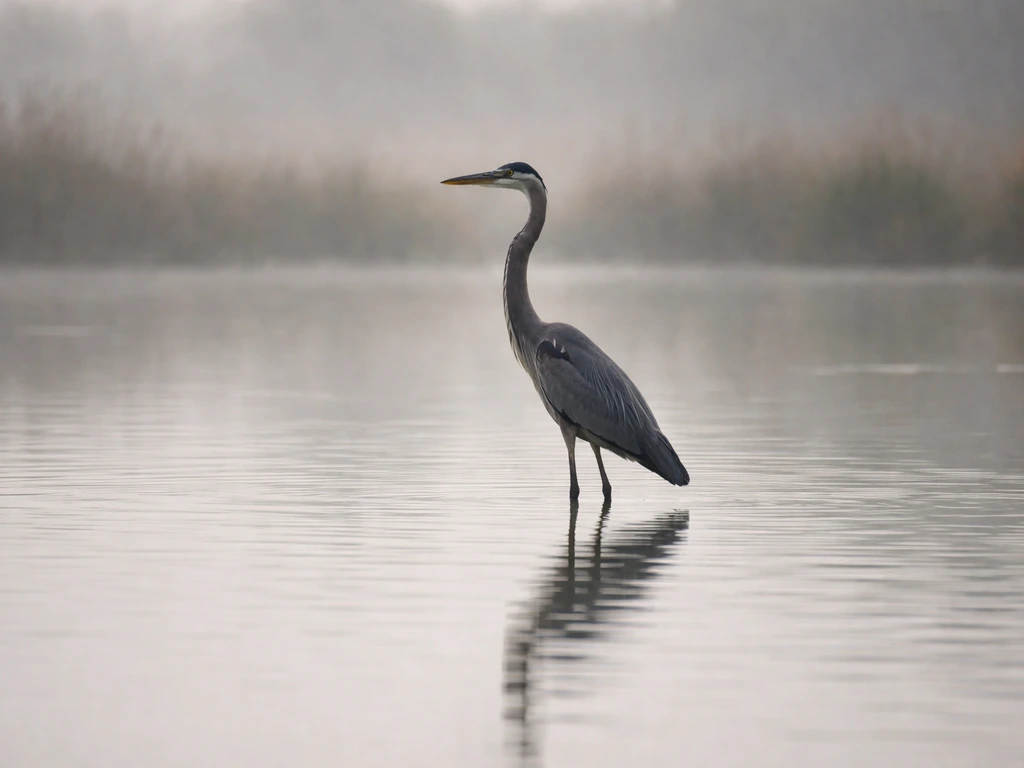
At a distance, a heron registers as an unusually tall, angular, mostly grey bird standing at the water's edge or wading slowly through shallows. The Great Blue Heron stands around 4 feet tall with a wingspan reaching 6 feet. The bill is thick, straight, and dagger-like, built for spearing prey rather than picking or filtering. The neck is long and sinuous, typically held in a compressed S-curve even at rest. The legs are long and dark, extending well behind the tail in flight. That trailing-leg silhouette, combined with the S-curved neck, is the single most reliable distance cue for any heron species.
Up close, the Great Blue Heron has a blue-grey body, a white face, a black stripe above the eye that runs into a black head plume, and chestnut-and-black streaking along the neck. The Grey Heron shows a light grey head flecked with white, a black crown, and a black crest that trails behind. Both species can switch between a fully stretched neck when actively searching for food and a fully hunched posture with the neck folded over the chest when resting. That posture switch catches a lot of birders off guard, especially in photos.
Side-by-side: herring gull vs heron at a glance
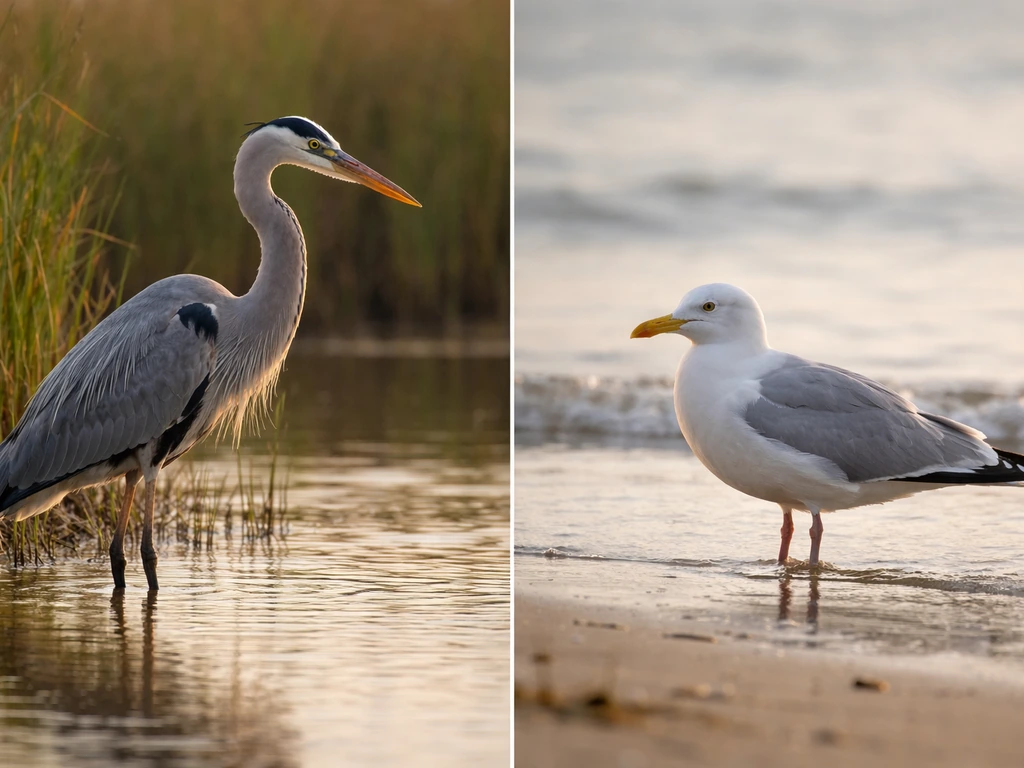
If the 'herring bird' in question is genuinely a herring gull (not a mislabeled heron), the two birds are dramatically different. Here's how they stack up across the traits that matter most in the field:
| Trait | Herring Gull | Great Blue Heron |
|---|---|---|
| Overall size | Medium-large; about 22–26 inches long | Very large; about 45–54 inches tall |
| Body shape | Stocky, compact, horizontally oriented | Tall, lean, vertically oriented when standing |
| Neck | Short, tucked into body at rest | Long, sinuous, S-curved even when relaxed |
| Bill | Stout, hooked yellow-orange with a red spot on lower mandible | Long, straight, dagger-like; yellow to orange-yellow |
| Legs | Short, pink | Very long, dark grey to black |
| Plumage | White body, pale grey wings, black wingtips with white spots | Blue-grey overall, white face, black eye stripe and plumes |
| Flight silhouette | Gull-typical: flat body, pointed wings, neck not retracted | Slow, deep wingbeats; neck in S-curve; legs trailing far behind tail |
| Habitat | Coasts, harbors, open water, landfills, parking lots | Freshwater marshes, lake edges, rivers, tidal flats, shallow bays |
| Feeding style | Scavenges, dives, snatches food opportunistically | Stands still or stalks slowly, then strikes with bill to spear prey |
| Vocalizations | Loud, laughing 'keow-keow' and wailing calls | Deep, hoarse 'frahnk' or croaking squawk, usually in flight |
Where they live and how they feed
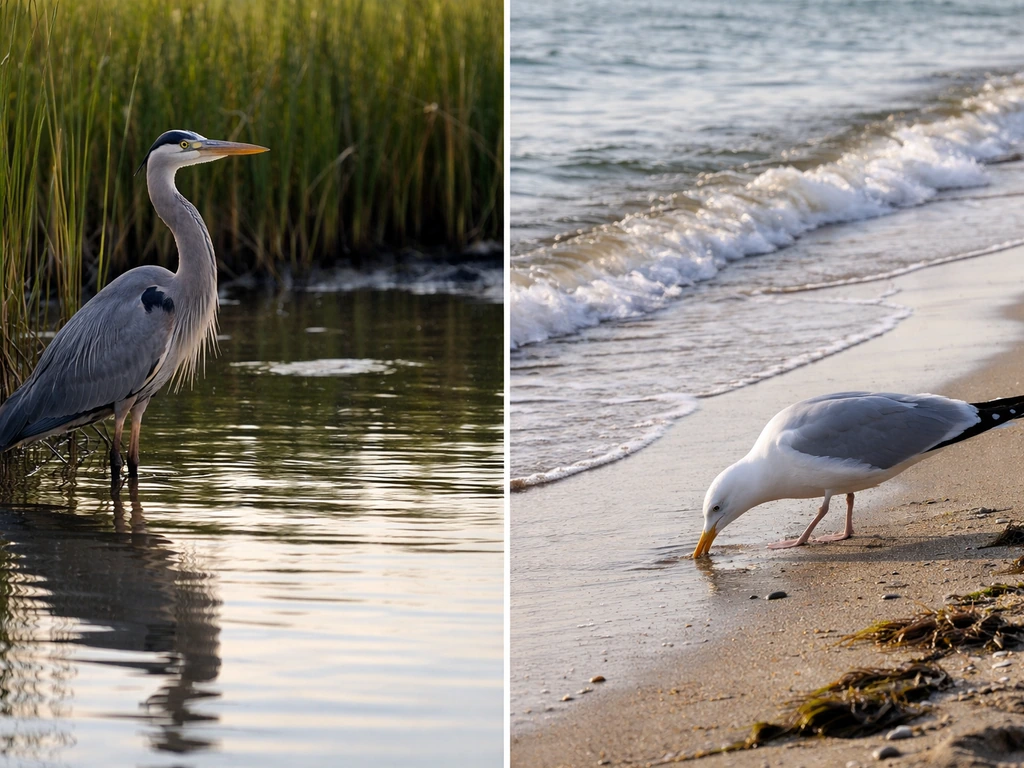
Habitat is often your fastest clue. Herons are freshwater and coastal wetland specialists. You'll find Great Blue Herons standing motionless in the shallows of ponds, marshes, slow-moving rivers, tidal flats, and lake edges. They're patient hunters: they stand still for minutes at a time, then strike with their bill like a thrown spear to catch fish, frogs, snakes, and even small mammals. That stillness is almost defining. If the bird you saw was frozen at the water's edge for an extended period, it was almost certainly a heron.
Herring gulls operate in a completely different ecological space. They concentrate around coastlines, open ocean, large lakes, harbors, fishing docks, landfills, and even inland parking lots near food sources. They're opportunistic scavengers and active hunters rolled into one: they'll steal food from other birds, drop shellfish on hard surfaces to crack them, follow fishing boats, and crowd around any food source they can find. The behavioral contrast with a heron couldn't be sharper. One is all patience and stillness; the other is all movement and noise.
Range also helps. Herring gulls are common across much of the Northern Hemisphere, with large concentrations along the Atlantic and Pacific coasts and the Great Lakes. Great Blue Herons are widespread across North America from southern Canada into Central America. Grey Herons fill the equivalent niche across Europe, Asia, and Africa. In most temperate locations, you're likely to encounter both species, but they won't often be in the same microhabitat at the same time.
Flight, calls, and seasonal patterns
A heron in flight is one of the most distinctive silhouettes in birding. The wingbeats are slow and deep, almost labored-looking, and the wings are broad and rounded. The neck folds back into a tight S-curve so the head sits close to the body, making the bird look front-heavy. The long legs extend well past the tail. This neck-back posture is one of the key features that separates herons from storks and cranes, which typically fly with the neck extended forward. If you see a large grey bird flying with its neck pulled back and its legs sticking out behind, you're looking at a heron.
Heron vocalizations are loud, harsh, and prehistoric-sounding. The Great Blue Heron produces a deep, resonant 'frahnk' or a series of hoarse croaks, most often when flushed from a feeding spot or landing at a colony. The call carries well and doesn't sound anything like a gull's wailing laugh. The Black-crowned Night-Heron, another heron species worth knowing, is nicknamed 'the squawk' in Pennsylvania for the barking 'quark' or 'quack' call it gives at dusk as it leaves to feed. That species is also worth having on your radar: it's compact, hunched, and nocturnal, which makes it confusing in low-light photos.
Seasonally, Great Blue Herons are present year-round in much of the United States and breed across much of North America in spring and summer, nesting colonially in tall trees near water. Herring gulls breed on rocky coastlines and offshore islands in spring and summer in the northern part of their range, then disperse widely in winter, which is when inland sightings peak. If you're seeing a large grey bird far from the coast in winter, context matters: a gull that far inland is unusual unless there's a large water body nearby.
How to confirm your ID from a photo
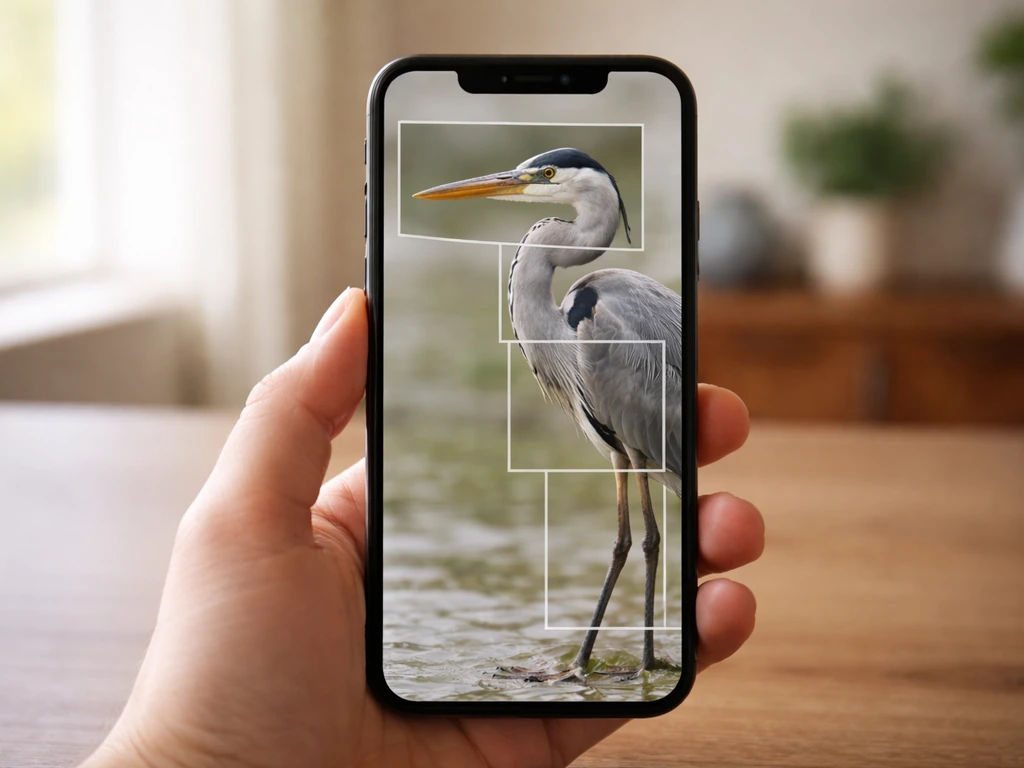
Photos are the most common way people try to confirm a bird ID after the fact, and they work well if you know what to crop for. Audubon's field ID framework leans on size and shape first, then bill structure, then plumage, then behavior. That order holds up well in photos too, because shape and structure survive bad lighting better than color does.
If you only have one photo, focus on the bill. A heron's bill is long, straight, pointed, and thick at the base, built to stab. A herring gull's bill is shorter, stout, and distinctly hooked at the tip with a red spot on the lower mandible. Those two bill shapes are almost impossible to confuse if any part of the face is visible. Next, look at the legs: heron legs are exceptionally long relative to the body; gull legs are short and pink. Then check the neck: even a slightly blurry photo usually shows whether the neck is long and serpentine (heron) or short and tucked (gull).
If you have multiple photos from different angles, even better. Tools like Merlin Photo ID can handle different postures and lighting conditions reasonably well, but the app works better when you give it a clear shot of the head and bill than when you feed it a distant silhouette. If you're documenting for eBird, a written description of the bird's behavior (was it standing still in water? was it flying in a flock?) helps as much as the photo, because behavior is diagnostic.
Five-second field check
When you need a fast answer in the field, run through these five cues in order. They'll get you to a confident ID in under a minute even at a distance:
- Neck length and posture: Is the neck long and S-curved? Heron. Is the neck short and tucked flat into the body? Gull.
- Bill shape: Long, straight, pointed dagger? Heron. Shorter, hooked bill with a red spot? Herring gull.
- Leg length: Legs so long they trail past the tail in flight and look like stilts when standing? Heron. Short, pink legs? Herring gull.
- Behavior at the water's edge: Standing completely still and then striking downward? Heron. Moving around actively, snatching or scavenging? Gull.
- Flight style: Slow, deep wingbeats with neck pulled back and legs trailing? Heron. Lighter, more buoyant flight with neck horizontal and body compact? Gull.
Common mistakes, lookalikes, and when to double-check

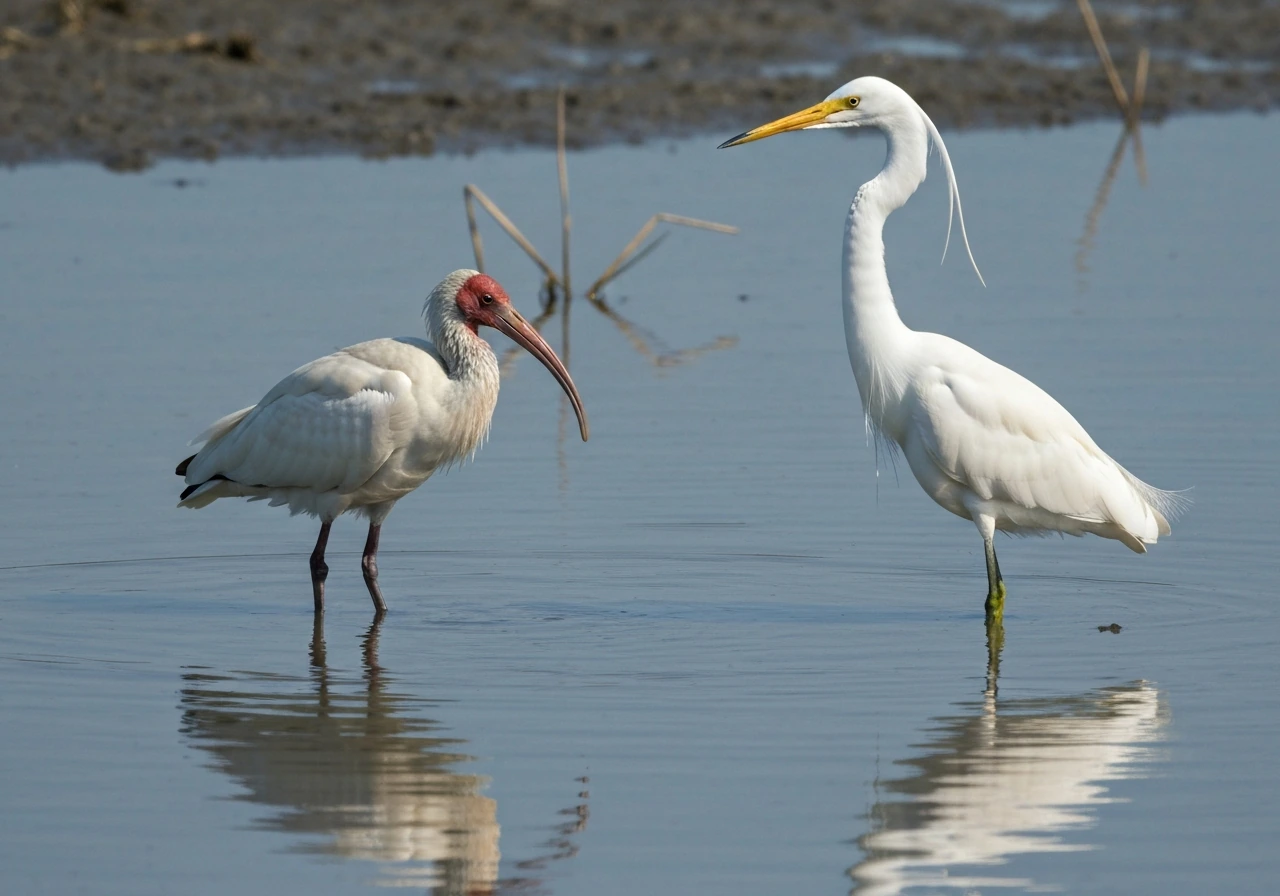
The most frequent mistake beyond the heron-herring name swap is lumping all tall, long-legged wading birds together. Egrets (which are technically herons in the family Ardeidae), ibises, and storks all get mislabeled as herons regularly. If you are trying to identify a distant white bird, the most common comparison people make is ibis bird vs egret, since both can look similar at a glance. The key differences: egrets are white and often smaller; ibises have distinctive downward-curved bills; storks fly with the neck extended forward, not retracted. If you've got a white bird instead of a grey one, you're likely looking at a Great Egret or Snowy Egret, not a heron.
The Black-crowned Night-Heron causes particular confusion because it looks so different from a Great Blue Heron. It's compact, short-necked, and hunched at rest, which makes it look more like a chunky gull than a classic heron silhouette. It's also nocturnal, so photos are often blurry and taken in bad light. The giveaways are the black cap, grey-and-white body, and that barking 'quark' call at dusk. If you hear something croaking overhead as it gets dark and you see a pale, stocky flying shape, that's almost certainly a Black-crowned Night-Heron, not a gull. All About Birds notes that Black-crowned Night-Heron tucks its neck for a hunchbacked look and also shows blank" rel="noopener noreferrer">pale underparts as a cue for flight appearance.
Double-check your ID any time the bird's posture is changing in your photos. Grey Herons can hold a stretched neck when looking for food or adopt a hunched posture with the neck bent over the chest, which is useful for posture-based ID. Herons dramatically alter their apparent shape depending on whether they're hunting (neck stretched long and low) or resting (neck fully tucked). A resting Great Blue Heron can look surprisingly compact and confuse even experienced birders who expect the classic stretched silhouette. When in doubt, wait for the bird to move: a heron hunting will always return to that slow, deliberate stalk-and-strike pattern, and no gull ever does that.
It's also worth knowing that confusion between similarly shaped water birds is extremely common across the board. Cormorants, snakebirds (anhingas), pelicans, and egrets all get mixed into the same mental category as herons by casual observers. Pelicans and egrets can look confusingly similar at a distance, but their body shape, bill type, and typical behavior usually give them away egrets and pelicans. If you're comparing a snakebird to a cormorant, bill shape, neck posture, and typical hunting behavior can make the ID much easier Cormorants, snakebirds (anhingas). If you find yourself unsure, the bill shape is almost always the fastest path to clarity: no other common wading bird has the heron's specific combination of a thick, straight, sharply pointed bill on a long S-curved neck.
To answer the core question directly: 'herring bird' and 'heron' are not the same bird, and 'herring bird' is not a real species name. The person saying it either saw a herring gull or a heron and mixed up the name. Use the five-second field check above, lean on bill shape and neck posture as your primary cues, and check the habitat context. If the bird was standing motionless in water on long dark legs with a dagger bill and a snake neck, it was a heron. If it was loud, stocky, and working a harbor or parking lot, it was a herring gull. If you are specifically trying to sort out an albatross bird vs seagull mix-up, those same field cues for body shape, bill type, and behavior will help you avoid another common confusion herring gull.
FAQ
I only heard “herring bird” and didn’t see the bird. How can I know whether the speaker meant heron or herring gull?
Use the bird’s bill plus posture first, then habitat. If you see a long, straight, dagger-like bill on an S-curved neck and the bird stays frozen for minutes, it is a heron. If the head is attached to a short stout body, the bill looks hooked with a red spot on the lower mandible, and the bird is moving through noisy human areas or shorelines, it is a herring gull.
What’s the best quick cue when the bird is far away or the photo is blurry?
At a distance, herons and gulls can both look like “grey shapes,” but the neck is the tie-breaker. Even in blurry photos, herons show a long serpentine neck with a trailing-leg flight silhouette, while gulls show a shorter neck that tucks closer to the body and legs that do not extend far behind.
Can a heron be misidentified because it looked “hunched” or compact in the photo?
A resting heron can look compact enough to be mistaken for a gull-like shape, so don’t rely on size alone. Wait for any movement, hunting attempts, or head-and-neck extension. If the bird shifts into a slow stalk and then strikes with the bill, that behavior confirms heron.
If I saw a herring gull inland in winter, how do I avoid confusing it with a heron?
Yes. Winter can push herring gulls inland, but they usually appear near large water bodies, landfills, docks, or parking-lot food sources. A “far inland” grey bird in winter is still more likely a gull than a heron unless you have evidence of wetland habitat like marsh edges or shallow pond margins.
What behaviors in the field most reliably separate heron hunting from gull scavenging?
If the bird was active around people, flying in groups, or repeatedly stealing food, that behavior points away from herons. Herons are typically patient stand-and-strike hunters that may pause for long stretches, while gulls are opportunistic and noisy, including at harbors, fishing areas, and trash sites.
How should I use multiple photos to confirm an ID rather than guessing from one image?
If you have multiple images, label them by angle and time, then compare bill shape across frames. Heron bills look uniformly long, straight, and pointed, while herring gull bills are shorter and distinctly hooked at the tip with a red spot on the lower mandible. Consistency across photos is more reliable than color under different lighting.
What exact parts of a photo should I crop or zoom in on to decide herring bird vs heron?
For the “one photo” problem, crop tightly to include the head, bill tip, and at least part of the legs. Then check leg length relative to the body and whether the legs extend far behind in flight. Bill shape is the fastest confirm, legs and neck posture are the supporting evidence.
Besides herons and herring gulls, what look-alikes cause the most “tall wading bird” mislabels?
Yes, common confusion can spill over to other wading birds. If it is white and still, egrets can be mistaken for herons, but egret bills are typically slimmer and the body stance differs. If the bird has a noticeably downward-curved bill, it is more likely an ibis than a heron.
Can sound help me decide, and what should I listen for?
If you hear a loud, harsh resonant call from a heron, that supports heron. Herring gulls have different vocalizations, and they are often very vocal while moving around food sources. For night activity, a black-crowned night-heron’s barking call at dusk is a strong clue, but it is a different species from Great Blue Heron.
What flight posture check works when the bird wasn’t photographed on the ground?
If the bird was flying with the neck pulled back into a tight S-curve and the legs sticking out behind, that favors heron. If the neck looks extended forward, or the overall silhouette seems more gull-like with a shorter neck, prioritize gull cues like bill shape and habitat to prevent a straight “grey bird in flight” mislabel.
Next Article
Ibis Bird vs Egret: How to Tell Them Apart Fast
Fast ibis bird vs egret ID guide using size, neck posture, bill and legs, plus flight and foraging cues.