Bird feet and dinosaur feet share a deep evolutionary connection, but they are not the same thing. Modern birds have highly specialized feet built around an opposable hind toe, keratinous claw sheaths, and sophisticated tendon mechanics that allow perching, grasping, and swimming. Dinosaur feet, as best as paleontologists can reconstruct them from fossils and trackways, were built more for locomotion and weight-bearing, with most non-avian theropods lacking the opposable hallux that makes bird feet so versatile. The similarities are real and significant. The differences are just as important, and a lot of popular science glosses over them.
Bird Feet vs Dinosaur Feet: Key Differences and Similarities

Marcus Hendricks
3 Jun 2026
How Bird Feet Actually Work
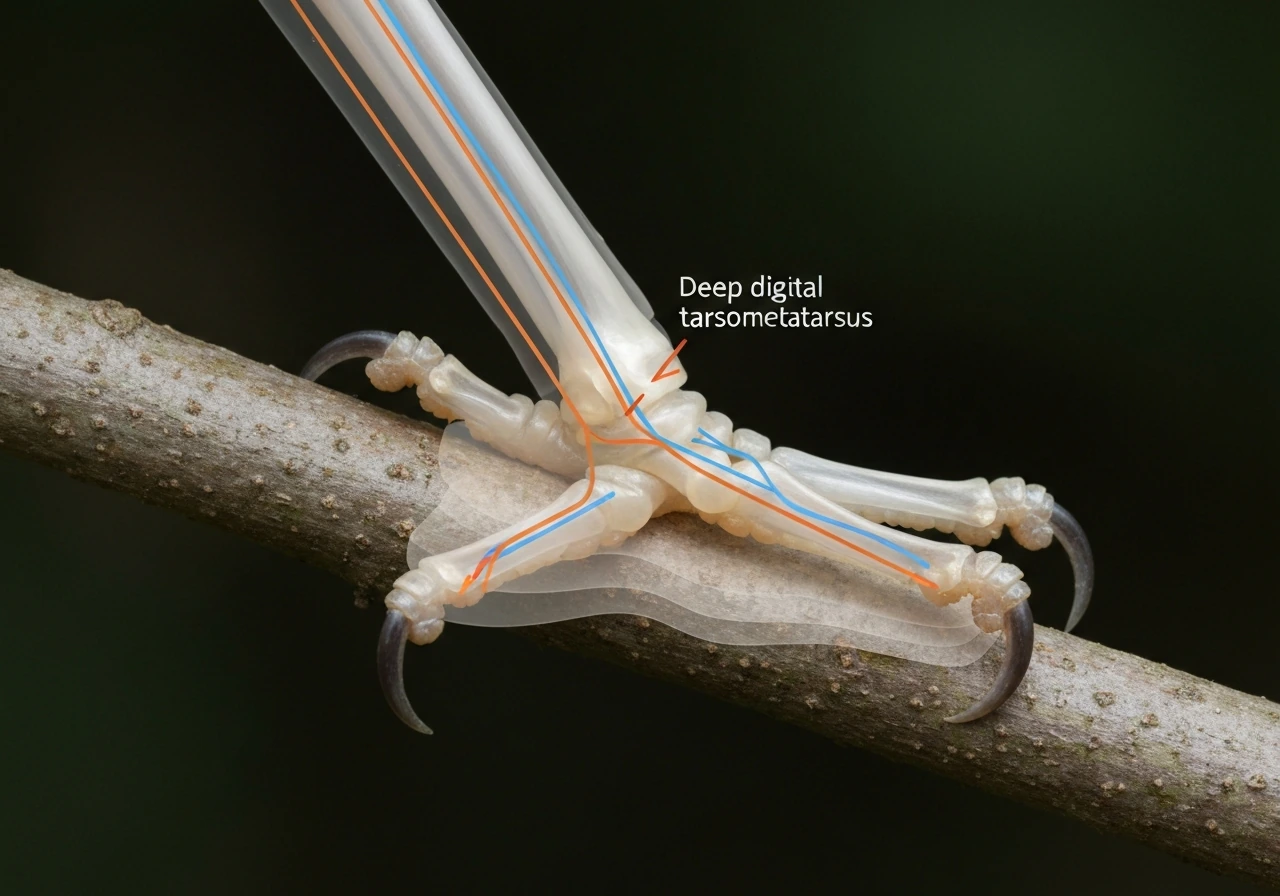
A bird's foot is built on a structure called the tarsometatarsus, which is a fused combination of ankle and metatarsal bones. This single lower-leg segment transmits force every time the bird lands, pushes off, or shifts its weight. Above it sit the toe rays (digits), each tipped with a claw made of a bony inner core covered by a keratinous sheath. That sheath, sometimes called the rhamphotheca of the foot, is what you actually see: it is curved, sharp in raptors, blunt in ground-walkers, and long in climbers depending on the bird's lifestyle.
The real mechanical magic in a bird's foot is in the tendons. Deep digital flexor tendons run along each digit and are coupled together so that when a bird lands on a perch and bends its leg, the toes automatically curl and lock around the branch. This is why a sleeping bird doesn't fall off its perch. It's a passive locking system driven by posture, not active muscular effort. Raptors add another layer of active grasping power on top of this system when they need to restrain prey.
The toe that makes most of this possible is Digit I, the hallux. In most perching birds, the hallux is fully opposed, meaning it points backward while Digits II, III, and IV point forward. This lets the foot wrap around objects. Beyond the hallux, birds are classified by how those forward-facing digits are arranged and whether they are webbed. blank" rel="noopener noreferrer">Zygodactyl feet, with two toes forward and two backward, are widely associated with a strong grip for perching on branches, as described in overviews of bird tracks. Here are the main foot types you'll encounter:
- Anisodactyl: three toes forward, one backward. The most common arrangement, found in songbirds, raptors, and most perching species.
- Zygodactyl: two toes forward, two backward (Digits II and III forward, I and IV back). Found in woodpeckers, owls, and parrots. Great for gripping vertical surfaces and branches from multiple angles.
- Tridactyl: only three toes, with no hallux. Found in ostriches and emus. Optimized for running, not grasping.
- Semipalmate: small webs connecting the anterior digits (II through IV) without forming a full paddle. Found in shorebirds like sandpipers. Adds stability on soft substrates.
- Totipalmate: all four digits webbed, as in pelicans. Maximum surface area for swimming and diving.
- Syndactyl: two adjacent toes fused along part of their length, as in kingfishers. Useful for digging nest burrows.
Each of these arrangements reflects a different functional priority: grasping, running, swimming, climbing, or a combination. This kind of bird egg comparison can help you think about how form and function vary across species, even when there are clear evolutionary links comparing them to what we know about dinosaur feet. That functional diversity is exactly what makes bird feet such a useful reference point when comparing them to what we know about dinosaur feet.
What We Think Dinosaur Feet Looked Like (And Why It's Complicated)
Here is the first thing to keep in mind: we cannot directly observe a living dinosaur's foot. Everything paleontologists say about dinosaur foot structure, posture, and function comes from three sources: fossilized bones, fossilized trackways, and comparisons to living relatives like birds and crocodilians. That means every reconstruction is a hypothesis, not a direct observation. Some hypotheses are very well-supported. Others are more speculative.
From fossilized bones, we know that most theropod dinosaurs (the two-legged group most closely related to birds) had three main weight-bearing toes pointing forward, with a smaller fourth digit (the hallux) that sat higher up and did not bear significant weight in most non-avian species. This is a key point: the hallux in early and most non-avian theropods was not opposable in the way that a modern perching bird's hallux is. It could not swing backward and downward to wrap around a branch. The opposable hallux that enables perching evolved later, in the lineage leading to modern birds.
Trackways give us a different kind of evidence. A dinosaur footprint records the interaction between the animal's foot and the substrate at a specific moment. Researchers use trackway measurements, including stride length, step angle, and foot rotation, to infer gait, speed, and posture. The widely used Alexander's equation, which estimates speed from stride length and hip height, is still applied to dinosaur tracks, though there is ongoing debate about how well it works when validated against modern birds walking on soft or uneven ground. The substrate itself matters: soft mud distorts impressions, and later exposure and erosion can further change what a track looks like. So even a beautifully preserved three-toed theropod footprint is not a perfect anatomy cast.
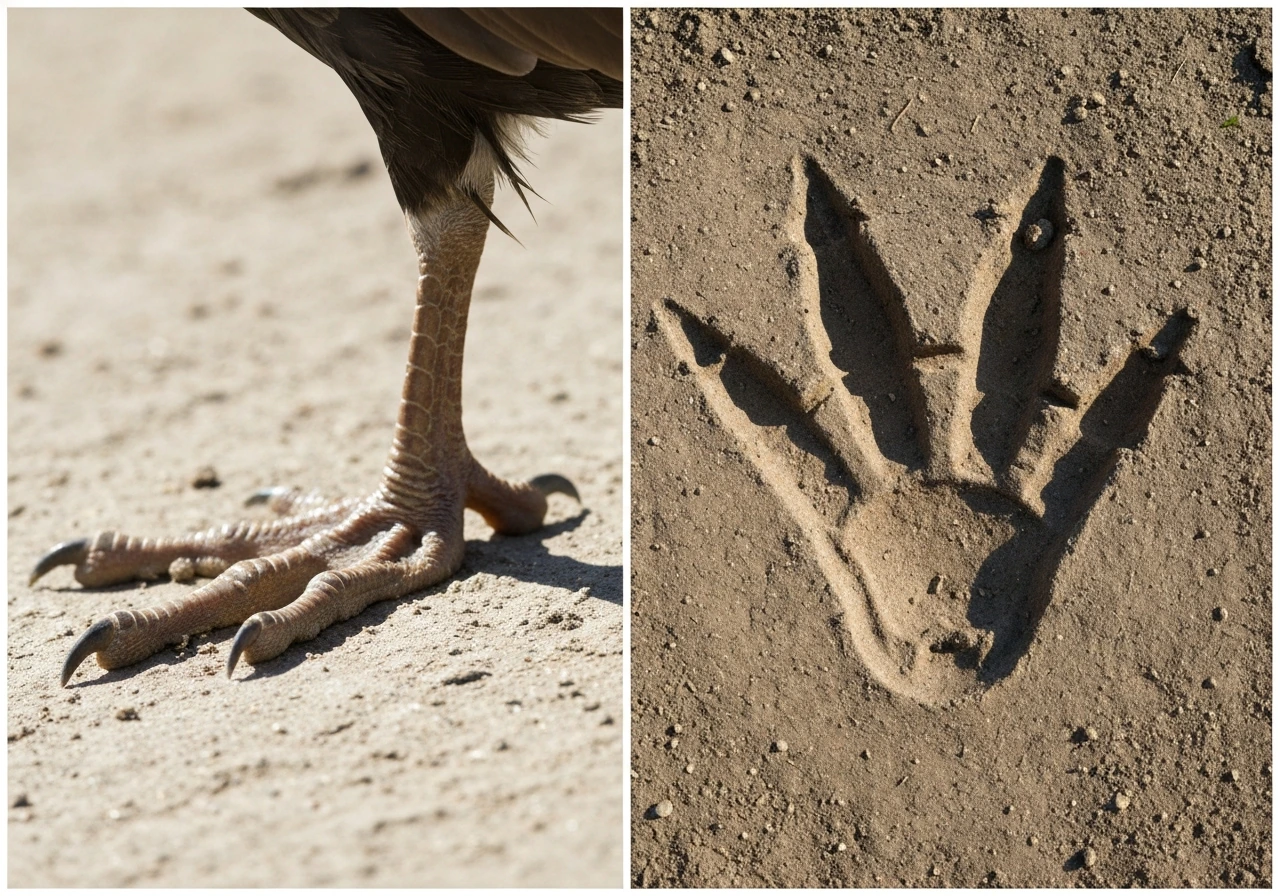
What trackways do reliably show is digit number and general orientation. Most theropod tracks show three long, forward-pointing digit impressions, often with claw marks at the tips. Some preserve skin texture or hints of toe webbing. Large theropods, based on trackway analyses, appear to have shifted hindlimb posture between walking and running, in a way that looks superficially similar to how modern large birds like ostriches move. An early Jurassic theropod resting trace even shows a crouching posture with digit impressions consistent with a bird-like resting stance. These are fascinating data points, but they constrain inferences about posture, not directly measure it.
Where Bird and Dinosaur Feet Are Genuinely Similar
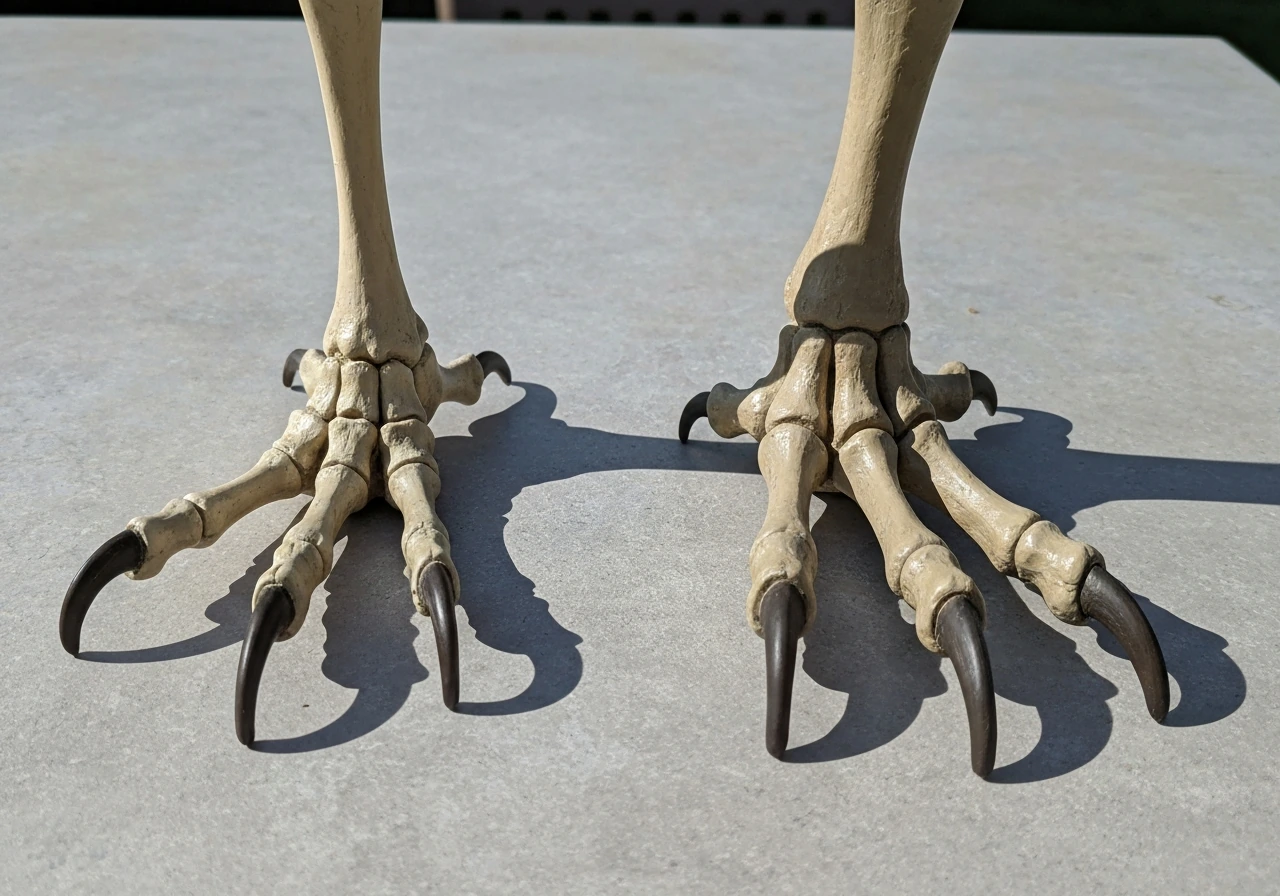
The similarities between bird feet and theropod dinosaur feet are not a coincidence: birds are theropod dinosaurs, evolutionarily speaking. So the shared traits reflect shared ancestry, not just convergence.
- Multi-digit, claw-bearing feet: Both birds and theropod dinosaurs have multiple clawed toes. The claws share the same basic structure: a bony inner core covered by a keratinous sheath. The geometry of that inner core and outer sheath differs by species and lifestyle, but the blueprint is the same.
- Three primary weight-bearing toes: Most theropods and most ground-walking or running birds (like ostriches and emus) rely primarily on three forward-facing digits for locomotion and weight support.
- Digitigrade posture: Both walk on their toes, not flat-footed. The heel does not contact the ground during walking or running. This is one of the clearest functional links between theropod tracks and modern bird tracks.
- Claw traces in prints: Theropod tracks and modern bird tracks both commonly show claw marks at the end of digit impressions, reflecting similar claw geometry and substrate interaction.
- Tarsometatarsus analog: Theropods had a similar fused lower-leg bone structure (the metatarsals in advanced theropods became fused and elongated), which is the direct evolutionary precursor to the bird tarsometatarsus.
Where They Actually Differ
The differences are where things get interesting, and where a lot of popular coverage gets sloppy. Saying dinosaurs had 'bird-like feet' is true in a broad evolutionary sense, but it can mislead people into imagining a T. rex with the feet of a sparrow. That's not right.
| Feature | Modern Bird Feet | Non-Avian Dinosaur Feet (Inferred) |
|---|---|---|
| Hallux (Digit I) position | Fully opposed in most perching birds; points backward and downward for grasping | Non-opposable in most theropods; sat higher on the foot, didn't contribute to grasping in the bird sense |
| Primary function | Grasping, perching, prey capture, swimming (varies by species) | Locomotion and weight-bearing; cursorial support in most large theropods |
| Toe arrangement | Highly variable: anisodactyl, zygodactyl, tridactyl, etc. | Mostly tridactyl (three forward-pointing toes) in theropods; four-toed in many ornithischians |
| External covering | Scaled tarsometatarsus, keratinous toe pads, distinct claw sheaths with measurable geometry | Likely scaled, but exact skin texture and claw sheath extent are inferred from rare skin impressions |
| Passive perching lock | Tendon locking system allows passive grip on perches without muscle effort | No evidence for equivalent passive locking mechanism in non-avian theropods |
| Weight distribution | Center of mass shifts allow both perching and bipedal walking efficiently | Center of mass generally more anterior; locomotion optimized for ground travel, not elevated perching |
| Webbing | Many lineages evolved semipalmate, palmate, or totipalmate webbing for aquatic use | No evidence for toe webbing in most theropod fossils; some track evidence is ambiguous |
The hallux difference is the single most important functional distinction. It's not just about anatomy: the opposable hallux in modern birds is connected to the whole multiarticular tendon system that enables perching and grasping. Without an opposable hallux, most of that grasping functionality doesn't work the same way. This is why large non-avian theropods, regardless of how bird-like their tracks look, were almost certainly not capable of perching on a branch the way a crow or hawk does.
Which Bird Foot Types Most Resemble Dinosaur Foot Patterns
If you want to map modern bird foot categories onto what we know about dinosaur feet, the best matches come from birds whose feet are optimized for walking and running rather than perching and grasping. Here is how that mapping shakes out:
| Bird Foot Type | Example Birds | Closest Dinosaur Analog | Why It Matches |
|---|---|---|---|
| Tridactyl (three forward toes, no hallux) | Ostrich, emu, rhea | Large cursorial theropods (e.g., ornithomimids), and also some ornithopods | Three weight-bearing forward toes, no functional hallux, optimized for running on open ground. Most structurally close to many theropod track patterns. |
| Anisodactyl ground-walkers (large) | Cassowary, bustard | Mid-size theropods and some ornithischians | Three dominant forward toes plus a small, elevated hallux that doesn't contribute much to weight-bearing. Similar to reconstructed theropod foot posture. |
| Anisodactyl raptors | Eagles, hawks, falcons | Small theropods with inferred grasping ability (e.g., dromaeosaurids) | Strong claws, claw sheath geometry suited for prey capture, but the opposable hallux in raptors goes beyond what most dromaeosaurids could do. |
| Zygodactyl | Woodpeckers, owls, parrots | No strong dinosaur analog; highly derived bird specialization | The two-forward, two-backward arrangement has no clear equivalent in the non-avian dinosaur fossil record. |
| Semipalmate / palmate | Sandpipers, ducks, pelicans | Possibly some semi-aquatic theropods or spinosaurids (speculative) | Some track evidence hints at webbing-like impressions in a few theropod tracks, but this is contested and likely not comparable to true avian webbing. |
The clearest takeaway is that if you want to visualize what a large theropod's feet functioned like, look at an ostrich or emu, not a perching songbird. The ratite foot, with its powerful tridactyl or near-tridactyl structure optimized for ground locomotion, is the closest living analogue to the reconstructed locomotor mechanics of large cursorial theropods. For smaller, clawed, predatory theropods like dromaeosaurids, the raptor foot (eagles, falcons) is a closer functional analog, though even that comparison breaks down at the hallux.
Reading the Clues: Fossils vs Living Bird Feet
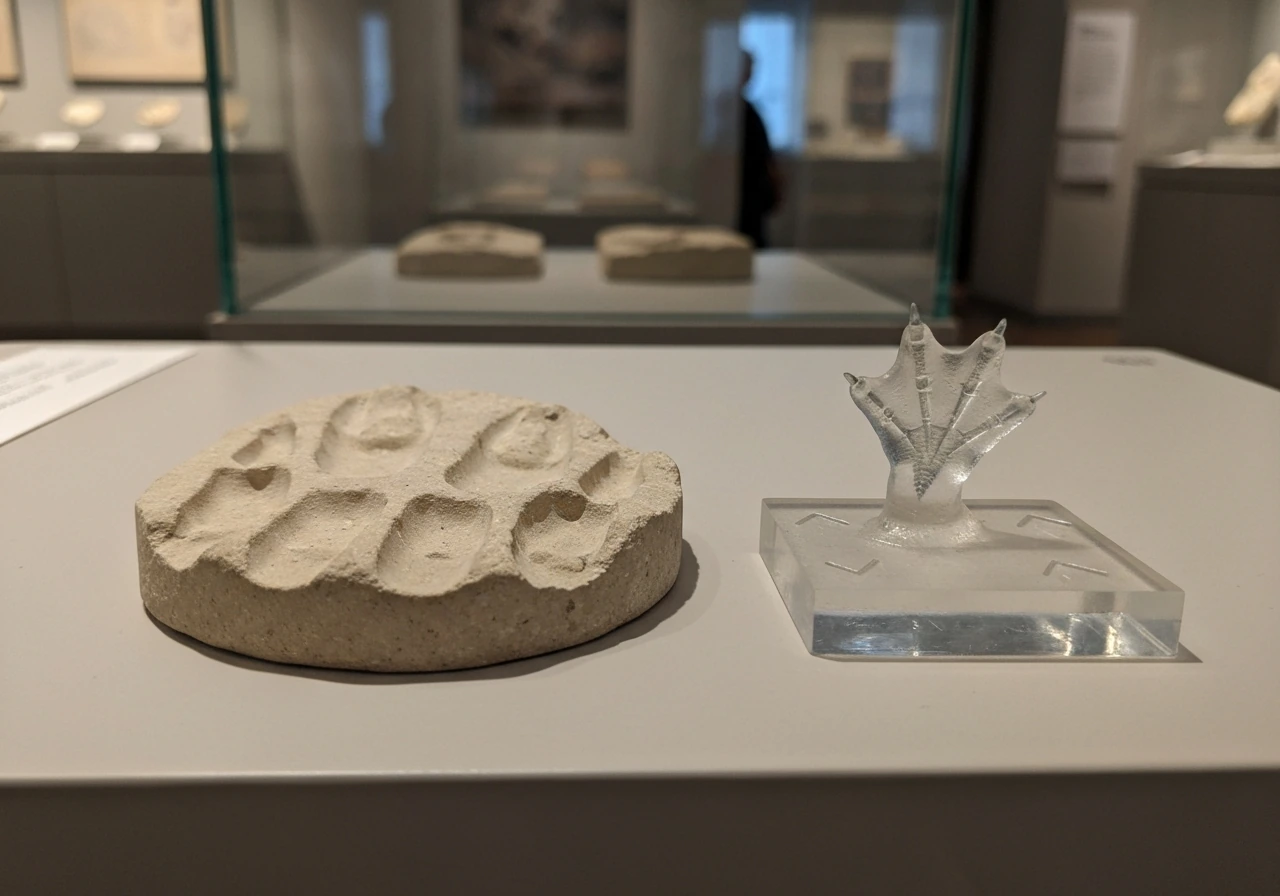
Knowing what to look for, whether in a fossil display at a museum or while watching a bird in the field, makes the comparison much more concrete. A clear bird comparison by foot type helps you see which theropod features are most likely to reflect locomotion rather than perching. Here is a practical guide to the visual and structural clues that matter most in each case.
What to Look For in Fossil Casts and Trackways
- Count the digit impressions and check orientation. Three forward-pointing impressions with no backward toe usually indicate a large cursorial theropod. Four impressions (three forward, one angled back) suggest a smaller or more derived theropod, or potentially a bird-like dinosaur with a more developed hallux.
- Look for claw marks at the tips of digit impressions. Sharp, narrow claw traces suggest a predatory or at least claw-bearing foot. Blunter, wider impressions at digit tips suggest a heavier animal with less curved claws, more like an ornithopod.
- Check how the toes splay. The angle between the outermost digits tells you about foot posture. A narrower splay often indicates a more cursorial animal; a wider splay may indicate a slower-moving or more heavily built trackmaker.
- Look for any hint of webbing or skin between digits. A slight 'filling in' between digit impressions in soft substrate can hint at webbing, though this is easily confused with substrate collapse. Treat webbing inferences from tracks as provisional.
- Consider the substrate and preservation context. Tracks in firm mud preserve detail better than tracks in loose sand or deep water-saturated sediment. A track that looks like it has only two toes might simply have poor preservation of the third.
- Be skeptical of skin impressions unless the preservation is exceptional. Most tracks preserve the outline of the foot, not the skin texture. When skin impressions do appear, they are scientifically significant but represent a minority of track sites.
What to Look For on Living Birds
- Check the hallux first. Is it opposed (pointing clearly backward and down, making contact with the perch)? If yes, this is a derived perching bird feature with no clear non-avian dinosaur equivalent. If the hallux is small, elevated, or absent, you are looking at a foot that functions more like a reconstructed theropod foot.
- Watch how the toes move when the bird lands. If the toes curl automatically when the bird bends its leg, you are seeing the passive tendon locking system at work, a feature specific to modern perching birds.
- Look at claw curvature. Highly curved, laterally compressed claws (as in raptors) indicate predatory grasping function. Flatter, straighter claws indicate ground-walking or digging. Claw sheath geometry correlates with ecology.
- Note toe webbing. Any webbing between toes immediately tells you this bird has a specialized foot for aquatic or semi-aquatic use. This feature is unknown in non-avian dinosaurs from direct fossil evidence.
- Observe the bird walking. Digitigrade walking (on the toes, with the 'knee' actually being the ankle high off the ground) is shared with theropod dinosaurs. Flat-footed walking is not typical of either group.
Common Myths Worth Correcting
The 'dinosaurs had bird-like feet' shorthand, while not wrong, gets misread in a few consistent ways. Here are the most common misconceptions and what the evidence actually says.
- Myth: 'Dinosaur footprints look just like bird footprints.' Some theropod prints do look strikingly similar to large bird tracks, especially those of ratites. But the similarity reflects shared ancestry and shared digitigrade posture, not identical foot anatomy. A theropod track lacks the opposed hallux impression you see in most perching bird tracks, and the overall scale and digit proportions are often different.
- Myth: 'Dinosaurs could perch like birds.' Most non-avian theropods could not perch in the way modern birds do. The passive tendon locking system and the fully opposed hallux that make perching possible are derived features of modern birds, not a general dinosaur trait. Some small, late-stage theropods close to the bird lineage may have had partial grasping ability, but this is actively debated.
- Myth: 'Three-toed footprints always mean a dinosaur made them.' Many modern birds, including emus, ostriches, and several shorebird species, leave three-toed tracks that can look superficially similar to theropod prints. Context, scale, claw geometry, and digit proportions all matter for identification.
- Myth: 'We know exactly what a T. rex foot looked like on the outside.' We know the bone structure well. The outer covering, exact claw sheath shape, skin texture between digits, and whether there was any soft tissue padding are reconstructed from indirect evidence like related species, rare skin impressions from other theropods, and comparisons with modern birds and reptiles. The reconstruction is well-informed, but it is still a reconstruction.
- Myth: 'Bird feet evolved from dinosaur feet in a straightforward progression.' The evolution of bird feet involved significant changes, most notably the development of the opposable hallux, from an ancestral non-opposable theropod condition. This wasn't a simple linear upgrade; it involved developmental and mechanical shifts that fundamentally changed what the foot could do.
Putting It All Together
Bird feet and dinosaur feet share a common skeletal blueprint, digitigrade posture, and claw-bearing digits. But modern bird feet have been significantly modified by evolution, most critically through the development of an opposable hallux and a passive tendon locking system that non-avian dinosaurs almost certainly lacked. If you want the closest living approximation of a large theropod's foot mechanics, look at an ostrich or emu. If you want to understand how some small predatory theropods might have used their feet, a hawk or falcon is a better reference, though even that comparison has limits. And whenever you are looking at a fossil track or a museum reconstruction, remember that the track records an interaction between anatomy and substrate, not a direct anatomical snapshot. The clues are there; you just need to read them carefully.
If you are interested in how this comparison extends to the broader skeleton, the differences and similarities in wing structure, skull, and overall body plan between birds and their dinosaur relatives follow similar patterns of shared ancestry plus significant derived specialization. The feet are just one of the most visible and trackable places where that evolutionary story is recorded.
FAQ
How can I tell from a dinosaur footprint whether it was a walking gait or a running gait?
Look beyond the number of toes. Trackway evidence is most informative when you compare stride length, step angle, and foot rotation across multiple steps, because single prints can be distorted by mud hardness or claw drag. Consistent changes in how the footprint is placed over several strides are more reliable than shape differences within one impression.
Do all theropods have the same toe arrangement as birds (three forward toes plus a smaller fourth)?
Most reconstructions for non-avian theropods show a dominant three-toed forward arrangement, but the exact role of the smaller hallux digit varies by group and by reconstruction quality. If you are using a museum display as a guide, treat the hallux height and contact with the ground as uncertain unless the display explicitly explains the evidence source (bones vs trackways).
Could a dinosaur still climb or perch even if it lacked an opposable hallux?
It might have climbed in some contexts, for example by using claws to hook onto rough surfaces, but the classic bird perching mechanism relies on an opposable hallux plus tendon behavior that passively locks the toes around a stable perch. Without that system, you should expect less secure branch-gripping and less reliable passive locking.
Is it accurate to compare any raptor claw marks in a footprint to what bird claws would do?
Not automatically. Claw traces in trackways can reflect substrate type, pressure, and how much the animal swung or dragged its foot during the step. A footprint can show claw tips even when the underlying foot mechanics are not the same as a bird’s grasping system, so you need multiple trackway cues, not just one feature.
Why do speed estimates from dinosaur trackways sometimes disagree with expectations from biology?
Because equations like Alexander’s equation use simplifying assumptions about gait and hip height. If the substrate was soft, uneven, or the trackway is mis-measured due to slumping, speed estimates can shift noticeably. The article’s key caveat applies here: validation against modern animals on controlled surfaces is not perfect for every trackway scenario.
How does substrate change what a footprint looks like, and what should I do when looking at fossils?
Soft mud can cause toes to sink and widen, making digit boundaries look less distinct. Later erosion or partial collapse can blur or elongate toe impressions, and overlapping steps can camouflage rotation or dragging. When possible, judge digit orientation and consistent patterns across several steps rather than relying on a single “best-looking” print.
If birds are theropods, why do bird feet look so different from what people picture for dinosaurs?
Shared ancestry explains the basic digitigrade, claw-bearing layout, but derived changes reshaped the foot for different mechanical goals. The opposable hallux and the passive tendon locking system are the major upgrades that support perching and sustained grasping, which most non-avian theropods likely did not have in the same form.
Which modern bird is the best analogue for a large cursorial theropod’s feet, and why?
For large, ground-moving theropods, ratite-like feet are the closest functional analogue. Ostriches and emus emphasize powerful forward-weight-bearing digits and locomotor mechanics rather than the perching-grasping setup of a songbird, making them a better mental model for theropod track-based locomotion.
Are the common “bird-like” labels in dinosaur books always misleading?
They are context-dependent. Saying “bird-like” can be accurate at the level of shared skeletal plan and digit-bearing posture, but it becomes misleading when readers assume a specific perching capability or bird species-like foot behavior. The reliable approach is to match the question you are asking (perching vs running) to the functional features you expect in the fossil evidence.
When comparing bird feet to dinosaur feet, what clues are most diagnostic to focus on first?
Start with the hallux presence and whether the evidence supports an opposable digit, then look at whether the main weight-bearing impressions are consistent with three dominant forward digits. Next, use trackway-level patterns, such as consistent step placement and rotation, to infer locomotor posture rather than treating a single imprint as a full anatomical snapshot.
Next Articles
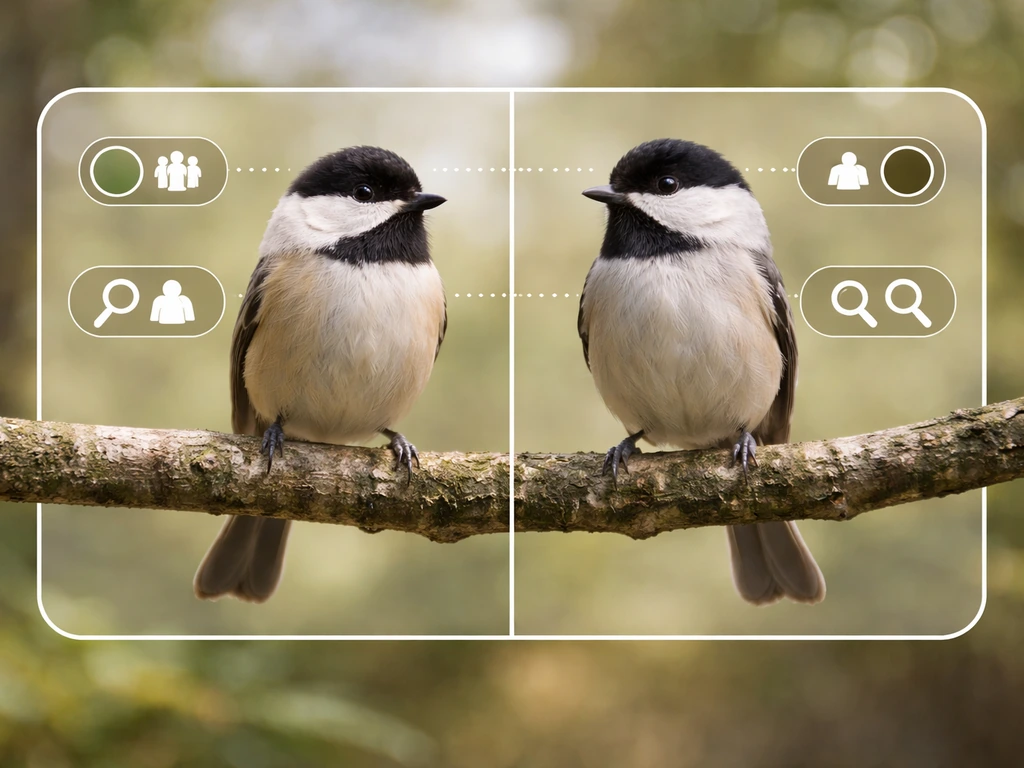
Bird Comparison Chart: How to Compare Lookalikes Fast
Use a bird comparison chart to distinguish lookalikes fast by plumage, size, shape, behavior, and gender differences.
Godzilla vs Kong Bird: Identify the Exact Bird Lookalike
Disambiguate and ID the exact bird behind searches like Godzilla vs Kong bird using field marks, habitat, range, behavio

Batman vs Bird: Identify the Animal and Tell Them Apart
Learn what Batman vs bird means and use field marks, behavior, and habitat to ID the right animal fast.