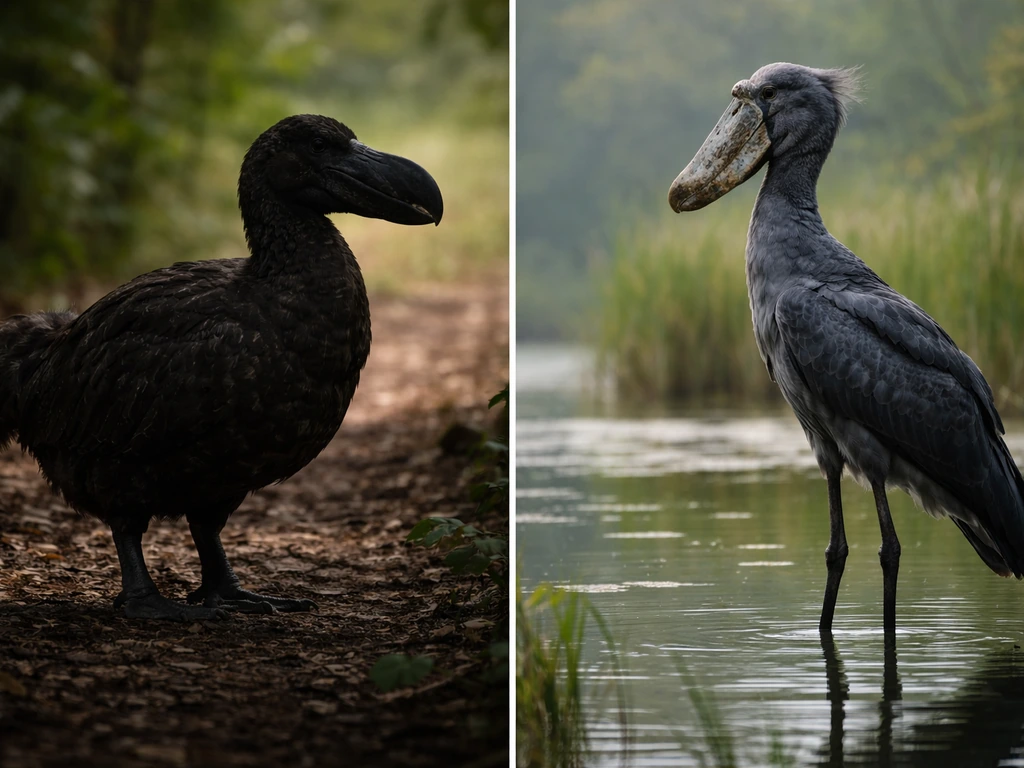
The dodo and a modern human share almost nothing in terms of biology, capability, or survival strategy. The dodo (Raphus cucullatus) was a roughly 1-meter-tall, flightless pigeon relative that weighed somewhere between 10 and 21 kg, had no natural predators for millions of years, and blank" rel="noopener noreferrer">went extinct around 1662 after humans arrived on Mauritius with rats, pigs, and monkeys in tow. The Natural History Museum (London) emphasizes that the dodo was driven to extinction before modern species descriptions and that this timing limits how much can be reconstructed about its biology and appearance blank" rel="noopener noreferrer">went extinct around 1662. Humans, by contrast, are large, adaptable, tool-using omnivores with a global range. This comparison is less about which is 'better' and more about understanding how a bird perfectly shaped for one isolated island environment had absolutely no defenses against the ecological disruption that came with people.
Dodo Bird vs Human: Key Biological and Survival Differences

What 'dodo vs human' is really comparing
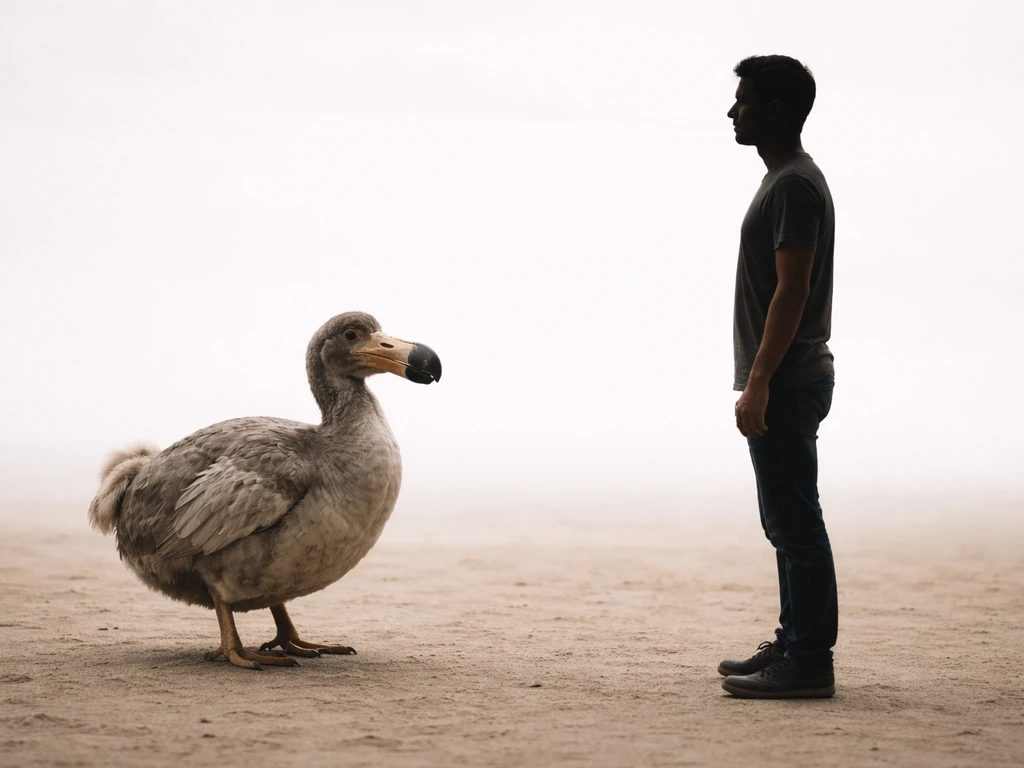
When people search 'dodo bird vs human,' they're usually trying to understand one of a few things: how big the dodo actually was relative to a person, whether it was as dumb as the phrase 'dead as a dodo' implies, or how humans caused its extinction. These are all legitimate questions, and they're all connected. The comparison isn't about who would win in a fight or who is smarter in some abstract sense. It's about two wildly different animals with wildly different evolutionary histories colliding on a small island, and only one of them surviving that meeting. The dodo's story is ultimately a story about ecological mismatch, and humans are the main character in that disaster.
It's also worth noting that much of what people think they know about the dodo comes from popular culture rather than science. The dodo appears in Alice in Wonderland, gets name-dropped in countless extinction metaphors, and is treated as a symbol of stupidity and obsolescence. Oxford University Museum of Natural History, which holds the only surviving dodo soft-tissue remains in the world (a skull, foot skeleton, sclerotic ring from the eye, a femur section, and a feather), has worked hard to push back against these caricatures. The real biology is far more interesting than the cartoon version.
Dodo anatomy vs human anatomy
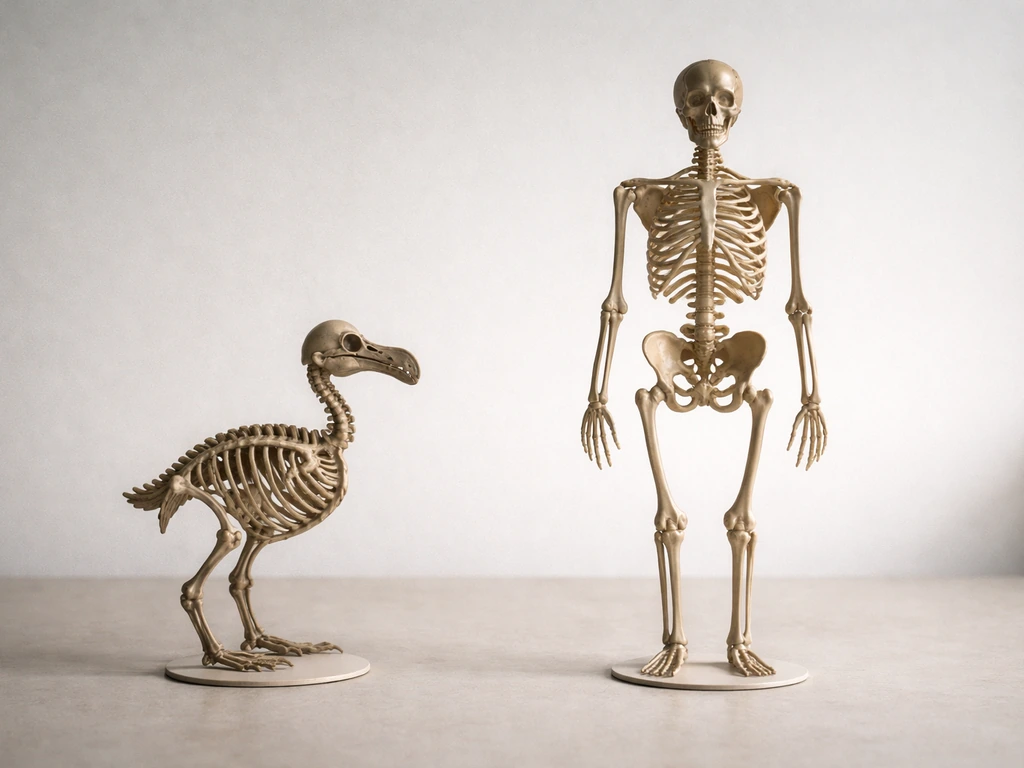
Both the dodo and humans are animals with internal skeletons, warm blood, and a need for food, water, and reproduction. That's roughly where the structural similarities end. The dodo was a bird, which means a completely different body plan: hollow or semi-hollow bones, a beak instead of a jaw with teeth, a keeled sternum (though dramatically reduced compared to flying birds), feathers, scaly feet, and a digestive system built around seeds, fruits, nuts, and possibly fallen vegetation. Humans have dense bones, a flat sternum, no beak, and a flexible omnivorous gut.
| Trait | Dodo | Human |
|---|---|---|
| Height | Roughly 1 m (approx. 3.3 ft) | Average 1.65–1.75 m (5.4–5.7 ft) |
| Body weight | Estimated 10–21 kg (22–46 lb) | Average 60–80 kg (132–176 lb) |
| Skeleton type | Avian: lightweight, partly hollow bones | Mammalian: dense, solid bones |
| Wings | Vestigial, non-functional for flight | Arms/hands, fully functional for manipulation |
| Sternum | Reduced keel (flightless anatomy) | Flat sternum, no keel |
| Beak/mouth | Large hooked beak for hard-shelled food | Flexible jaw with teeth |
| Skin covering | Feathers over most of body | Bare skin with hair |
| Brain-to-body ratio | Relatively small, but enlarged olfactory bulbs | Proportionally very large brain |
| Lifespan (estimated) | Unknown; inferred seasonal breeding cycles | 70–80 years average today |
Reconstructing the dodo's exact anatomy is genuinely difficult. Only one near-complete skeleton exists (the Thirioux dodo, used in CT-based mass estimation research), and most museum specimens are assembled from multiple individuals or are fragmentary. Richard Owen's 1866 anatomical memoir was groundbreaking for its time but has since been revised on several points. What is clear is that the dodo had a robust, forward-leaning body supported by strong legs, a proportionally large head with a distinctive hooked beak capable of processing hard seeds and possibly tough vegetation, and wings so reduced they were essentially useless for locomotion of any kind.
The dodo's beak and feeding apparatus
The dodo's beak was large, strongly curved, and built for processing tough food, most likely hard-shelled seeds, fallen fruits, and roots. Humans have a very different oral setup: a flexible jaw with differentiated teeth (incisors, canines, molars) suited to processing a wide range of food types. The dodo was essentially a specialist in its home environment. Remove that environment, and its whole feeding apparatus becomes a liability rather than an advantage.
Locomotion and flight: the dodo walked, humans do a lot more
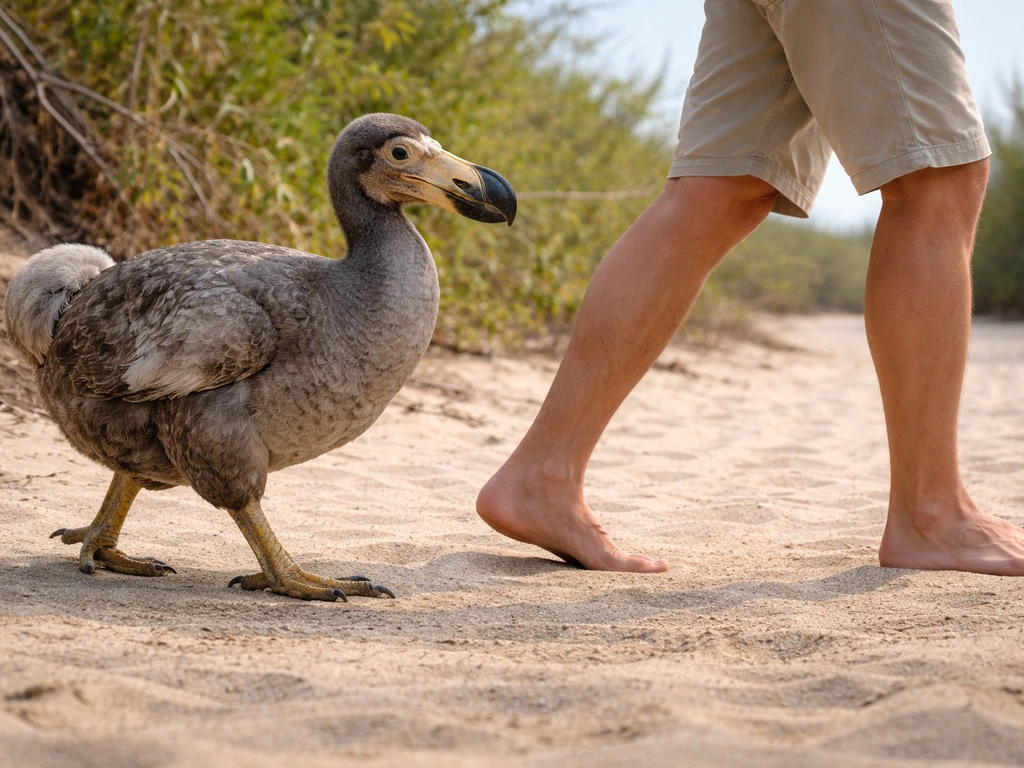
The dodo could not fly, full stop. This wasn't a failing so much as an evolutionary response to living on an island with no ground predators. Flying is expensive, metabolically speaking, and when you don't need it, evolution tends to reduce it. Flightless birds consistently show a reduced or absent sternal keel (the ridge on the breastbone where flight muscles attach), and the dodo fits this pattern perfectly. Its wings were present but vestigial, probably used for balance or display at most.
The dodo walked on two legs, like all birds, and its strong legs suggest it was reasonably capable on the ground. It lived in the forests of Mauritius, navigating a terrain of roots, fallen leaves, and dense understory vegetation. Humans, by contrast, are bipedal but with a dramatically different gait and a set of arms that can climb, throw, build, and carry. More importantly, humans can run sustained distances at speeds that would easily outpace a dodo, and can use tools to extend their capabilities in ways no bird can match.
This locomotion gap mattered enormously when Dutch sailors arrived. The dodo's walking pace and inability to escape into the air meant it had no flight response (literally and figuratively) to ground-level threats. Early accounts describe sailors walking up to dodos and catching them with minimal effort, though this narrative has been somewhat overstated in popular retellings.
How the dodo lived day to day vs how humans operate
Diet and feeding behavior

The dodo was likely a frugivore and seed-eater, relying heavily on the seasonal availability of fruit and seeds on Mauritius. Bone histology research from the University of Cape Town found evidence of seasonal breeding cycles and moulting patterns tied to the time of year, suggesting the dodo's life was closely tuned to Mauritius's seasonal rhythms. Humans are generalist omnivores who can eat almost anything, modify food through cooking and preservation, and survive in almost any climate on Earth. The dodo's diet was narrow and place-specific.
Senses: was the dodo really oblivious?
Here's a misconception worth correcting head-on: the dodo was probably not a sensory dunce. Endocast analysis (studying the brain cavity shape) of the dodo and its closest relative, the Rodrigues solitaire, revealed enlarged, differentiated olfactory bulbs, suggesting the dodo had a strong sense of smell relative to many birds. Studies on the sclerotic ring (a small ring of bones inside the bird's eye, preserved in the Oxford specimen) can be used to infer whether a bird was diurnal or nocturnal. The dodo's eye anatomy is consistent with a daytime-active bird, like most fruit-eating forest birds. So it could see, it could smell, and it probably had reasonable situational awareness for an animal that had never needed to fear anything on the ground before humans showed up.
Social behavior and reproduction
Not much is known about dodo social structure, but the bone histology and seasonal evidence suggests they bred at specific times of year and went through predictable moult cycles. They nested on the ground, which is common for island birds that never evolved aerial escape strategies. Ground nesting made their eggs and chicks immediately vulnerable the moment egg-eating mammals arrived. Humans, obviously, have a completely different reproductive and social strategy: long developmental periods, intensive parental care, complex social structures, and the ability to adapt behavior rapidly to new threats.
How humans drove the dodo to extinction
This is the heart of the comparison. The dodo went extinct because of humans, but the mechanism is more complicated than the old 'sailors ate them all' story. The last confirmed sighting of a dodo was reported by Volkert Evertsz in 1662, on a small islet off Mauritius. Scientific debate over the precise extinction date continues, but the consensus places it firmly in the mid-to-late 17th century.
Direct hunting by humans was a factor. Isolated dodo bones found in cave contexts have been interpreted as evidence of human predation, and early visitors did hunt and eat dodos. But peer-reviewed ecosystem reviews suggest direct human predation alone probably wasn't enough to wipe out the species. The real drivers were the suite of introduced mammals that arrived with people.
- Black rats arrived via shipwrecks and spread rapidly, preying on dodo eggs and chicks in ground nests
- Pigs released by Dutch settlers consumed eggs, chicks, and competed for fruit and seeds on the forest floor
- Macaque monkeys (also introduced) raided nests and ate eggs
- Goats destroyed understory vegetation, eliminating the dodo's food sources and shelter
- Habitat clearance for early Dutch settlement further reduced available forest
A key point from the research: many of these ecological pressures were invisible to the European settlers at the time. The animals they released spread through the forest independently, wreaking havoc on ground-nesting birds and understory vegetation without anyone watching or documenting it. The dodo didn't stand a chance against this combination of pressures, not because it was stupid, but because its entire evolutionary history had prepared it for a world without ground predators or large-scale habitat disturbance. The comparison with humans here is about adaptability: humans can respond to threats, change behavior, use tools, and move. The dodo had none of those options.
Common misconceptions, corrected
A few wrong ideas about the dodo pop up constantly, and they're worth tackling directly before they stick.
| Misconception | What the science actually says |
|---|---|
| The dodo was stupid | Endocast analysis suggests enlarged olfactory bulbs and a brain reasonably adapted to its environment. It was naive to predators, not cognitively impaired. |
| Sailors ate the dodo into extinction | Direct hunting was a factor, but introduced mammals (rats, pigs, monkeys) destroying eggs and habitat were the primary extinction drivers. |
| The dodo was a fat, clumsy bird | Early illustrations were likely made from overfed captive birds. Wild dodos were probably leaner and more agile than the classic image suggests. |
| The dodo was closely related to chickens or turkeys | It was actually a giant flightless pigeon, most closely related to the Rodrigues solitaire and distantly to modern pigeons (family Columbidae). |
| We have complete dodo skeletons everywhere | Only one near-complete skeleton from a single individual exists (the Thirioux dodo). Most museum specimens are composites from multiple birds. |
| Humans and dodos had a long, complex relationship | Humans were present on Mauritius for fewer than 80 years before the dodo was gone. The relationship was brief and catastrophic. |
What this comparison teaches us about extinction and survival
The dodo vs human comparison is most useful as a case study in ecological mismatch and the speed of human-caused extinction. For a contrasting example of how different islands shaped different survival strategies, see how the kiwi bird compares to the dodo kiwi bird vs dodo. The dodo was not a weak or poorly designed animal. It was exceptionally well-adapted to Mauritius before humans arrived. Its flightlessness, ground nesting, reliance on specific food sources, and lack of fear responses all made perfect sense in a predator-free island environment. This is also why a similar “specialist vs sudden new predator pressure” story shows up in comparisons like dodo bird vs terror bird. That same mismatch between a predator-free island animal and a disruptive, tool-using human is why the phrase dodo bird vs t rex comes up when people compare different “top predator” eras. The moment humans introduced a mammalian predator guild and began clearing habitat, all of those adaptations became fatal vulnerabilities. A similar matchup to consider is how a kiwi bird vs ostrich comparison highlights how different niches and defenses shape survival when environments change.
Humans, by contrast, are generalist survivors. We can eat almost anything, live in almost any climate, use tools to compensate for physical limitations, and adapt our behavior rapidly. For a very different kind of survival comparison, you can also look at dugast small bird vs typhoon and how scenario-specific advantages shape outcomes. That's not a moral virtue; it's just a different evolutionary strategy. The dodo's extinction isn't evidence of its inferiority. It's evidence of how quickly a specialist species can collapse when its specific environment is disrupted.
This pattern shows up in other comparisons on this site too. The dodo's ecological story is interestingly different from the shoebill, which survived in a very different habitat and context, or the terror bird, which was itself a formidable predator in a completely different era. Even comparing the dodo to the kiwi, another flightless island bird, reveals how similar evolutionary pressures (island isolation, no mammalian predators) can produce animals with comparable vulnerabilities. In every case, the introduction of humans and their associated species changed the rules of the game faster than evolution could respond.
- The dodo was a specialized island species, not a generalist, and specialization is a vulnerability when environments change fast.
- Direct human hunting was less important than the indirect effects of introduced mammals in driving extinction.
- The 'dodo as stupid' narrative is a myth: naivety to predators is not the same as low intelligence.
- Physical comparisons (size, weight, locomotion) show how different the dodo's body plan was from a human's, but the key difference in survival odds was behavioral and ecological, not anatomical.
- The dodo was extinct within roughly 80 years of sustained human contact on Mauritius, making it one of the clearest documented cases of human-caused extinction in history.
- Studying the dodo-human comparison helps build accurate mental models for understanding why other ground-nesting, island-endemic birds remain critically endangered today.
FAQ
When people say “dodo bird vs human,” do they mean a fight, or survival ability in general?
Most people mean “could a human physically overpower a dodo,” but the more biologically relevant question is whether the dodo had any defenses against ground-level threats (it did not). With no flight response and strong legs that evolved for foraging on an island floor, a human encounter would be a mismatch in escape options, not a fair “strength contest.”
How big was a dodo compared to a person in a real-world, visual way?
Estimating exact size is tricky because museum material can be fragmentary and reconstructed bones may be assembled from different individuals. If you want a practical comparison, think “about the height of an adult’s upper leg,” and “heavier than most modern birds of similar height,” rather than an exact single number.
Was the dodo really as stupid as the phrase “dead as a dodo” suggests?
The dodo was likely not “blind” or “dumb,” but it also had never evolved behaviors for mammalian predation. That means even if it could smell and see well for its daytime niche, its threat response to introduced predators would be slow or ineffective.
Did humans hunt dodos to extinction, or were the introduced animals the main cause?
Direct hunting probably happened, but the larger extinction mechanism was ecological disruption. Introduced rats and other mammals damaged eggs and chicks, while habitat disturbance reduced food and nesting success, which compounds over time rather than ending in a single event.
Can we tell how the dodo used its senses, and what can those findings actually conclude?
Foot-and-sclerotic-ring style eye evidence can inform whether a bird was active in daylight versus night, but it does not prove “intelligence.” For the dodo, the key takeaway is that its sensory systems fit a fruit-and-seed forest lifestyle, not an environment full of new mammalian predators.
Why did ground nesting make the dodo especially vulnerable once mammals were introduced?
Because it was a ground-nester, losing eggs and young would disproportionately harm the population. Even if adults survived longer, a sustained drop in successful breeding would quickly prevent recovery after predator introduction.
Was the dodo physically weak because it could not fly?
A common mistake is assuming “flightless means weak.” In reality, flightlessness often means energy savings and a build optimized for walking and maneuvering in stable island conditions. The fatal flaw was not body strength, it was the lack of an aerial escape strategy.
How dependent was the dodo on specific foods, and what happens when that food disappears?
Dodo diet was probably tuned to seasonal availability of fruits and seeds, so a sudden reduction in forest structure or food plants could create nutritional bottlenecks. Humans, by comparison, can buffer seasonal shortages through broad diets and cultural techniques like cooking and storage.
Do we know whether dodos bred at certain times, and why that timing mattered for extinction?
Social structure is uncertain, but the breeding and molting evidence implies timing that matched seasonal rhythms. If introductions hit during critical nesting or resource periods, reproductive failure would be more likely to cascade.
Why is the dodo extinction date debated, and does the uncertainty change the story?
“Extinction around 1662” is a best-fit estimate based on last confirmed reports and ongoing debate about the final timeline. That uncertainty matters because it affects how long introduced predators had to establish before the population fully collapsed.
What’s the biggest misconception about what humans changed in Mauritius during that period?
Another frequent confusion is picturing humans as the only changing factor. The real driver was a package of changes, introduced mammals spreading independently and altering the forest ecosystem, often faster than settlers could track or manage.
Dodo Bird vs Shoebill: Key Differences in Appearance, Ecology
Side-by-side guide to tell dodo vs shoebill apart by look, size, beak, habitat, and behavior, plus photo tips.