A goliath birdeater is not a bird. It is Theraphosa blondi, the world's largest tarantula by mass, and it belongs to class Arachnida, the same group as scorpions and mites. If you came here wondering whether a goliath birdeater is some kind of exotic bird species, the answer is a hard no. It is a spider, full stop. The confusion is almost entirely the fault of a dramatic common name that has been misleading people since the 1700s.
Goliath Birdeater vs Bird: Key Differences and How to Tell Them Apart

Marcus Hendricks
1 Jul 2026
What a goliath birdeater actually is
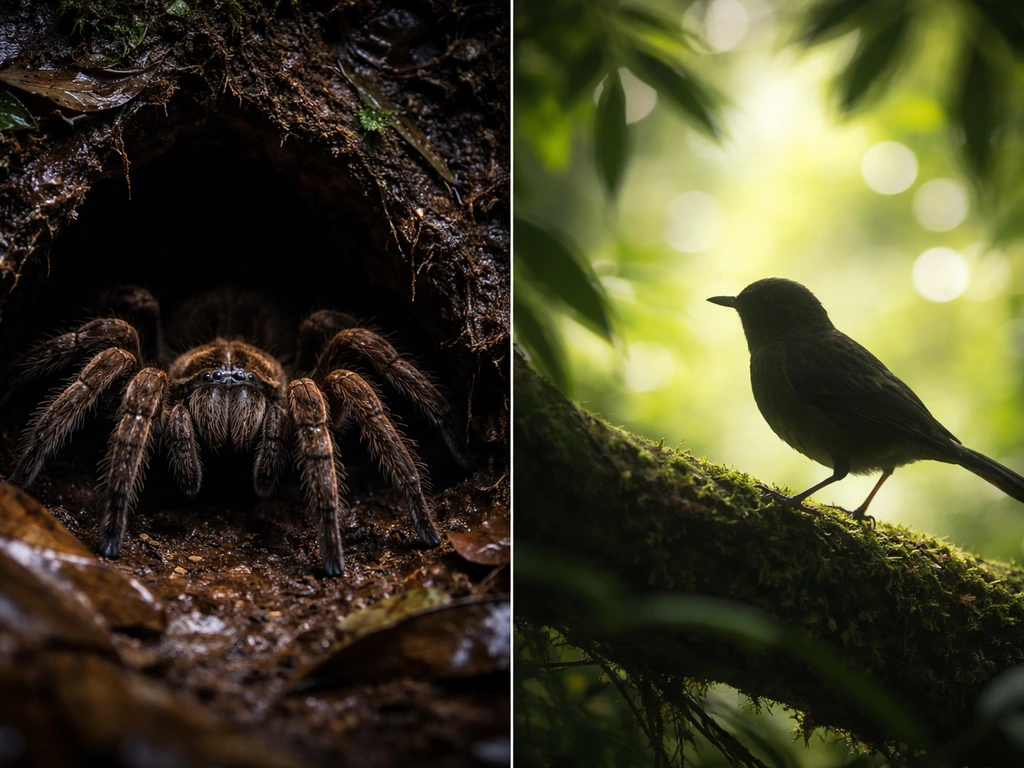
Theraphosa blondi is a tarantula in the family Theraphosidae, first formally described in 1804. It holds the Guinness World Record as the largest spider species by mass and body length, with a leg span reaching up to 30 cm (about 12 inches) and a body length of 10 to 12 cm. Females can live 12 to 20 or more years. It has a dark brown body with lighter markings, an abdomen covered in thick, hairy bristles, and two prominent fangs.
It is found on the ground, not in the sky, and it has no wings, no feathers, and no beak. Taxonomically, it sits in kingdom Animalia, phylum Arthropoda, class Arachnida. Birds sit in class Aves. These are entirely different branches of the animal kingdom.
Why the name "birdeater" is misleading
The "birdeater" name traces back to an 18th-century engraving by German naturalist Maria Sibylla Merian. The illustration depicted a large tarantula (not even the same species as T. blondi) consuming the remains of a hummingbird. That single dramatic image stuck, and when naturalists later named the Theraphosa genus, the "birdeater" label came along for the ride. Guinness World Records specifically notes that the goliath birdeater "very rarely" attacks birds, and both National Geographic and Audubon confirm the reputation is rooted in that historical artwork, not in any documented pattern of routine bird predation. So the name describes one old illustration, not a real feeding habit.
Physical differences you can spot immediately
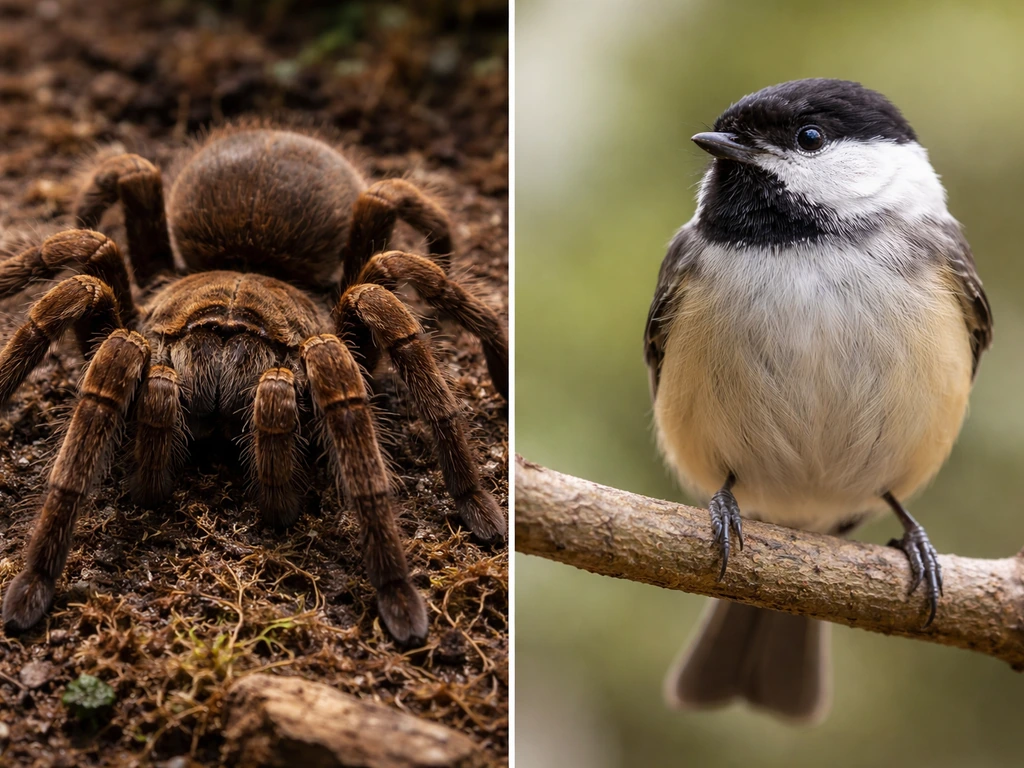
This is where any confusion should dissolve fast. The body plans of a tarantula and a bird are about as different as two animals can get. If you are comparing, remember that the elephant bird is an extinct flightless bird from Madagascar, not a giant spider elephant bird vs elephant. Here is a side-by-side look at the most obvious traits:
| Trait | Goliath Birdeater (Theraphosa blondi) | Bird (general) |
|---|---|---|
| Limbs | 8 legs (arachnid) | 2 legs + 2 wings (avian) |
| Body sections | 2 (cephalothorax + abdomen) | 3 (head, trunk, tail) |
| External covering | Hair/bristles (urticating setae) | Feathers |
| Eyes | 8 simple eyes (low resolution) | 2 large, complex eyes (high acuity) |
| Mouthparts | Two large chelicerae with fangs | Beak/bill (no teeth in most species) |
| Leg span / wingspan | Up to 30 cm (12 in) leg span | Varies widely; uses wings for flight |
| Wings | None | Present; primary locomotion method |
| Color | Dark brown with light markings, hairy | Extremely variable by species |
| Skeleton | External exoskeleton (chitin) | Internal skeleton (bone) |
The eight-leg count alone is decisive. No bird has eight legs. Bird comparisons like moa bird vs emu are often about body plan and habitats, not mistaken identities with spiders No bird has eight legs.. No spider has wings. If you can count legs or see feathers, you have your answer in under three seconds.
How each one moves and behaves
A goliath birdeater lives on the ground and in burrows. It does not spin a web to catch prey the way a garden spider does, but it does produce silk, which it uses to line its burrow and create a silken mat around the entrance that vibrates when prey walks across it. When threatened, it rubs its legs against its abdomen to flick urticating (barbed, irritating) hairs into the air and may rear up to display its fangs. It ambushes prey rather than chasing it. Everything about its movement is low to the ground, deliberate, and slow by bird standards.
Birds, by contrast, are built for three-dimensional movement. A hummingbird (the species featured in the original birdeater engraving) can hover, fly backward, and beat its wings up to 80 times per second. Even ground-dwelling birds like cassowaries or emus move through the world with legs structured for bipedal striding, not the eight-legged, wide-stance creep of a tarantula. By comparison, large flightless birds like the cassowary are the kinds of animals people often pair up in head-to-head comparisons, such as elephant bird vs cassowary. Perching birds grip branches with their feet, produce vocalizations, and are almost always visually detectable by their flight posture or wing-spreading before you get close.
What each one actually eats
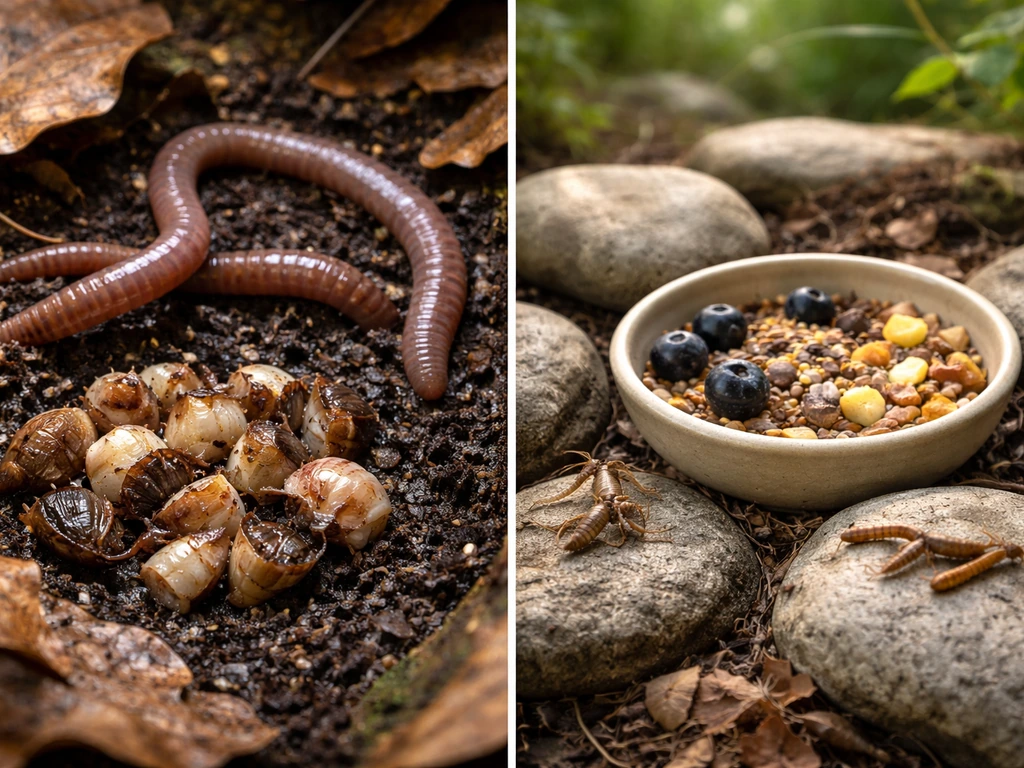
The goliath birdeater's real diet is primarily other large arthropods, earthworms, and small amphibians like frogs. It occasionally eats small reptiles or rodents. It drags prey back to its burrow and uses digestive enzymes to liquefy the prey before consuming it. Despite the sensational name, documented predation on birds is extremely rare and is considered opportunistic at best, not a regular hunting strategy. A bird watcher might be surprised by how often the nickname "birdeater" comes up, even though these spiders do not regularly hunt birds goliath birdeater.
Birds, depending on the species, eat everything from seeds and berries to insects, spiders, fish, and small mammals. Elephant birds were huge, flightless birds from Madagascar, and their diet and behavior are sometimes compared to myths about spider predation. The irony here is that many birds actively hunt spiders. Insectivorous and omnivorous birds (including common sparrows) consume large quantities of spiders annually. In the real predator-prey relationship between spiders and birds, birds are more often the threat to the spider than the other way around.
Where each one lives
The goliath birdeater has a specific native range: the upland rainforests of northern South America, including Suriname, Guyana, French Guiana, northern Brazil, eastern Colombia, and southern Venezuela. According to the World Spider Catalog, Theraphosa blondi is distributed in countries such as Venezuela, Brazil, and Guyana, supporting its native range across northern South America blank" rel="noopener noreferrer">Theraphosa blondi distribution across northern South America. It prefers a damp forest floor with deep leaf litter and soil suitable for burrowing. You are not going to encounter one in a backyard in Ohio or a park in the UK. It is a tropical forest specialist.
Birds, of course, are found on every continent including Antarctica (penguins) and across almost every habitat type on Earth. The overlap in range between T. blondi and birds is real but geographically specific: if you are in a northern South American rainforest, there are absolutely birds in the same canopy above the forest floor where the tarantula lives. But outside that region, if someone says they spotted a "goliath birdeater," they are either talking about a captive exotic pet or they are misidentifying something else entirely.
It is worth noting that the rainforests where T. blondi lives are also home to some remarkable bird species. The comparison of large, unusual animals to birds is a recurring theme in zoology, much like discussions of giant extinct birds such as the elephant bird or cassowary alongside other large animals. That same fascination also shows up in debates about giant birds like the giant moa vs elephant bird.
Fast ID checklist and common confusion scenarios
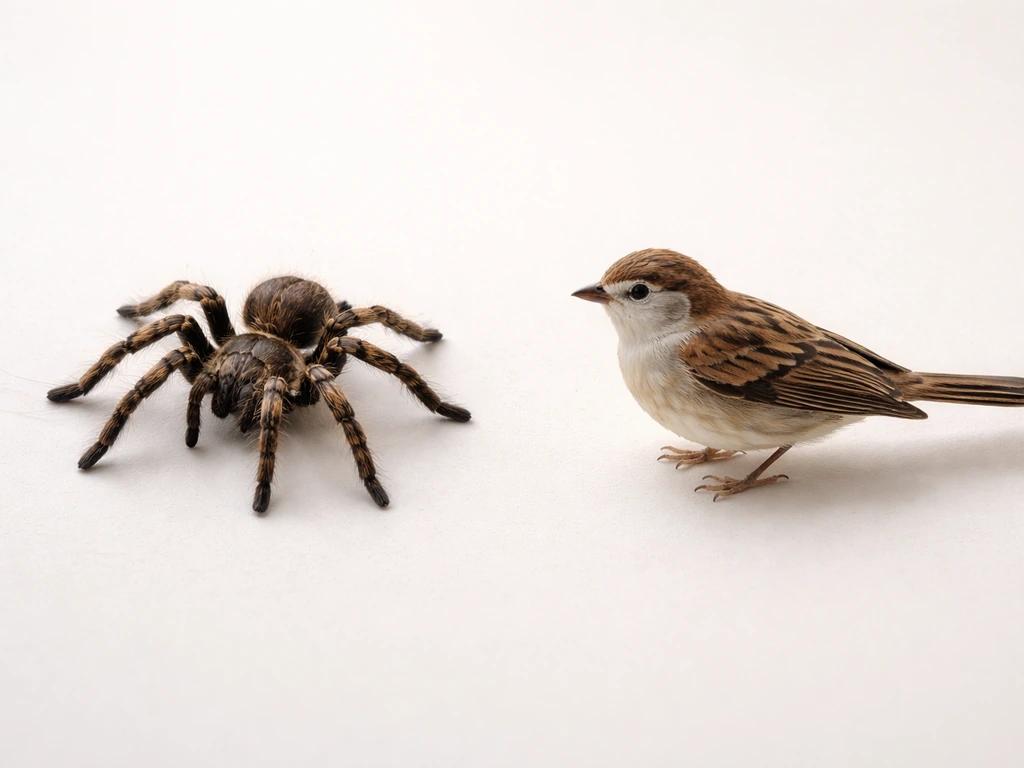
If you think you have seen something that might be a goliath birdeater, or if someone described one to you and you are not sure what you are dealing with, run through this checklist:
- Count the legs. Eight legs = spider (arachnid). Two legs = bird. This single check is definitive.
- Look for wings. Any visible wings, even folded flat, mean you are looking at a bird (or possibly a bat or insect, but not a spider).
- Check for feathers. Feathers are unique to birds. If the body covering is dense hair or bristles, you have an arachnid.
- Watch how it moves. Flying, hopping, or perching? Bird. Crawling low and wide across the ground with all limbs extended? Spider.
- Look for a beak or bill. No spider has one. No bird has chelicerae (fangs at the front of the face).
- Check the environment. In a tropical South American rainforest on the forest floor near a burrow? Could be T. blondi. In a tree, on a feeder, on a wire? Not a tarantula.
- Size context. A leg span of 30 cm is genuinely large for a spider but still not comparable to even a small bird's body.
The most common confusion scenario is purely verbal: people hear the name "goliath birdeater" and assume it must be a large, predatory bird. There is also occasional photo confusion online where a large tarantula is photographed near a nest or small bird and the image goes viral with alarming captions. In those cases, the spider is almost always near the bird opportunistically or incidentally, and documented actual predation events are rare. If someone sends you a photo of a huge, hairy spider and calls it a birdeater, they are correct. If they call it a bird, they are not.
What to do if you encounter one
If you are in the native range (northern South America) and come across a large, dark, hairy spider on the ground near a burrow, here is the practical guidance:
- Do not touch it. The goliath birdeater's primary defense is flicking urticating hairs from its abdomen. These barbed hairs cause skin irritation, itching, redness, and a papular rash that can last for weeks. Contact with the eyes is particularly serious and can cause significant inflammation.
- Back away slowly without making sudden movements. The spider is more likely to retreat than attack, but startling it can trigger a defensive response.
- If you are keeping one as a pet and hairs contact your skin, use tape (duct tape or masking tape) pressed and lifted gently to remove the hairs. Avoid rubbing, which drives them deeper.
- If bitten, wash the area with soap and water. Tarantula venom is not considered life-threatening to humans; there are no reported human deaths from tarantula venom toxicity. Symptoms are typically local: pain, redness, and mild swelling. Call Poison Control for guidance.
- If hairs reach your eyes or if you have an allergic reaction (rare but possible), seek medical attention promptly.
- If you are unsure whether a bite or skin reaction came from a spider at all, see a doctor. The CDC and Mayo Clinic both note that many suspected spider bites turn out to be skin infections or other causes.
- If you encounter one outside its natural range in a home or public space, it is almost certainly an escaped or released exotic pet. Contact local animal control or a wildlife removal specialist rather than handling it yourself.
The key safety principle is simple: observe from a distance, do not handle, and get medical or professional help if anything goes wrong. The goliath birdeater looks intimidating and carries a dramatic name, but it is not actively hunting humans. If you are trying to compare elephant bird vs human, the most important thing is to look at size, speed, and how early humans would have encountered and hunted the animals it is not actively hunting humans. Treat it with the same respect you would give any large wild animal: keep your distance, admire it from afar, and let it do its thing.
FAQ
How can I tell for sure whether a “goliath birdeater” photo is actually a tarantula and not a bird (or a miscaptioned image)?
If you see feathers, a beak, or a birdlike three-part body plan with wings, it is not a goliath birdeater. If you see eight legs plus a fuzzy abdomen and prominent fangs, it is a spider. Captive tarantulas are sometimes marketed as “birdeaters,” so verify whether the photo was taken in northern South America, where they’re native, or indoors.
If I found a goliath birdeater near a nest or a dead bird, does that mean the spider killed it?
A tarantula near a bird is usually coincidence, not proof of predation. The most convincing evidence would be a clear sequence of the spider capturing and carrying off the bird, ideally from multiple reliable observations, since the article notes bird attacks are extremely rare and tied to opportunistic situations.
Can other “birdeater” tarantulas be confused with goliath birdeater (Theraphosa blondi)?
Yes, “goliath birdeater” can be used loosely for other large tarantulas in the hobby, or even for different Theraphosa species. A key detail is that Theraphosa blondi is specifically the goliath birdeater, with a native range in northern South America and the burrowing lifestyle described. If the animal is sold online, ask for species-level identification, not just the nickname.
What behavior should I look for if I only get a quick glimpse and can’t get close enough to count features?
Telling them apart by motion is reliable. Birds will typically display wing posture changes, faster head and body turns, and perching or flapping. Goliath birdeater behavior is low to the ground, deliberate, and slow, and when threatened it tends to raise the front and use defensive hair flicking rather than taking off or flying.
Is a goliath birdeater actually dangerous to people, and what should I do if it feels threatened?
The risk level to people is mostly about defensive hairs, not “bird-level” aggression. The article emphasizes not handling and getting help if anything goes wrong. In practice, keep pets and kids away, avoid leaning over the burrow, and if hairs get into eyes or breathing, treat it as a medical situation.
What are the most common mistakes that lead people to confuse goliath birdeater with a bird?
Yes. Telling “bird” from “spider” can fail when someone focuses only on size or color. A common mistake is assuming any large animal in a wildlife photo is the named species. The article’s checklist helps, especially counting legs and looking for feathers versus hair and fangs.
If I’m outside South America, what’s the most likely explanation if someone claims they saw a goliath birdeater?
Native-range matters. In northern South America, you may find them on damp forest floors with burrows. In most other places, an observed “birdeater” is far more likely to be a captive pet that escaped or a different species entirely, rather than a true wild goliath birdeater.
How do hunting or shelter habits help distinguish a goliath birdeater from a bird in the same area?
A goliath birdeater will not spin the classic web most people imagine. Instead, it uses silk for lining and a vibration-sensitive entrance setup. Birds, even if they build nests, do not produce ground vibration mats in the same way, so location plus hunting setup clues can help you identify the animal.
What questions should I ask to evaluate a claim that a goliath birdeater actually ate a bird?
If someone’s story includes “the bird flew in and got eaten,” that’s a red flag for misidentification. Since the article says bird predation is extremely rare and not a routine strategy, ask for what species the bird was, where it happened, and whether there are credible photos showing the spider actively handling a bird.