Pelicans and storks are both large birds with long bills, and they both hang around water, but once you know what to look for, they're actually pretty easy to separate. The single biggest giveaway is the bill: pelicans have that unmistakable expandable throat pouch hanging below the lower mandible, which storks completely lack. Beyond that, storks stand on dramatically longer legs, hold a more upright wading posture, and feed by slowly stalking or probing through shallow water, while pelicans either scoop fish while swimming on the surface or (in the case of Brown Pelicans) dive from the air. Give yourself one good look at the bill and the legs, and you'll rarely be unsure again.
Pelican Bird vs Stork: How to Tell Them Apart in the Field

Marcus Hendricks
10 Jul 2026
Why people confuse pelicans and storks
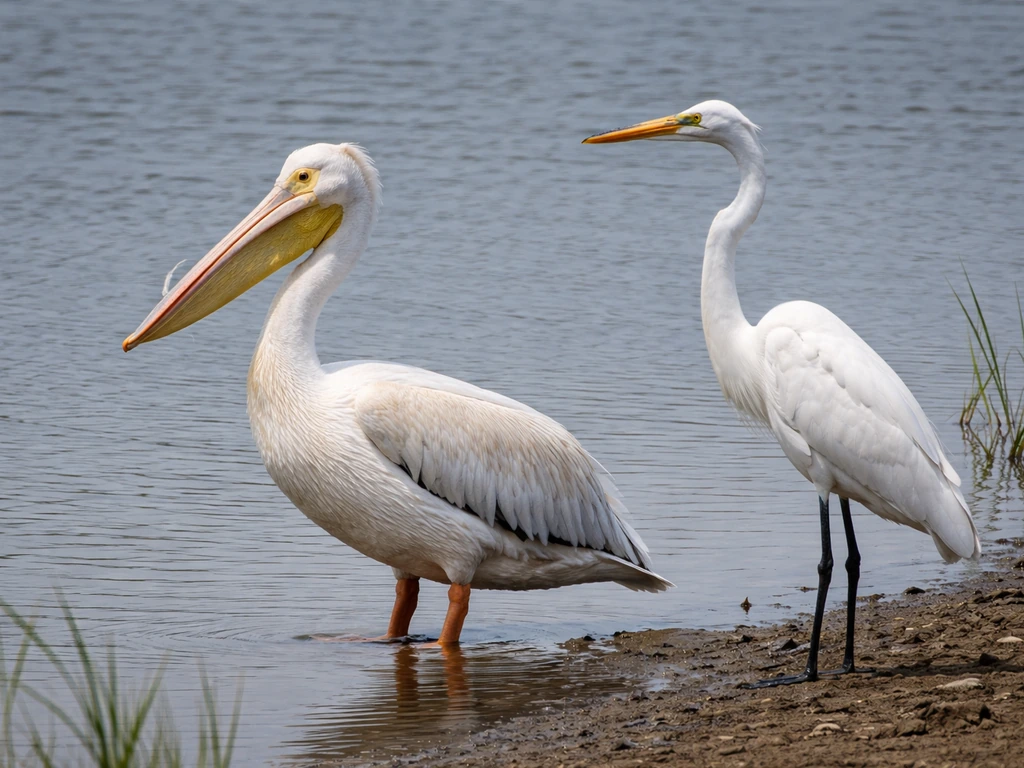
At a glance or at a distance, the confusion is understandable. Both are large, mostly white birds (think American White Pelican and White Stork or Wood Stork) that frequent wetlands and open water. Both soar gracefully on thermals with their wings spread wide. And when a pelican is resting with its bill tucked against its chest, that distinctive pouch is much less obvious. Field guides have noted that distant Great White Pelicans in hazy conditions can genuinely be mistaken for storks, especially when the gular pouch is not clearly visible. Juveniles of both types add another wrinkle, since their plumage and proportions can look less defined than adults. Beginners often group pelicans, storks, herons, and egrets into one mental bucket of "big waterbirds," which is exactly the kind of shortcut that causes misidentifications.
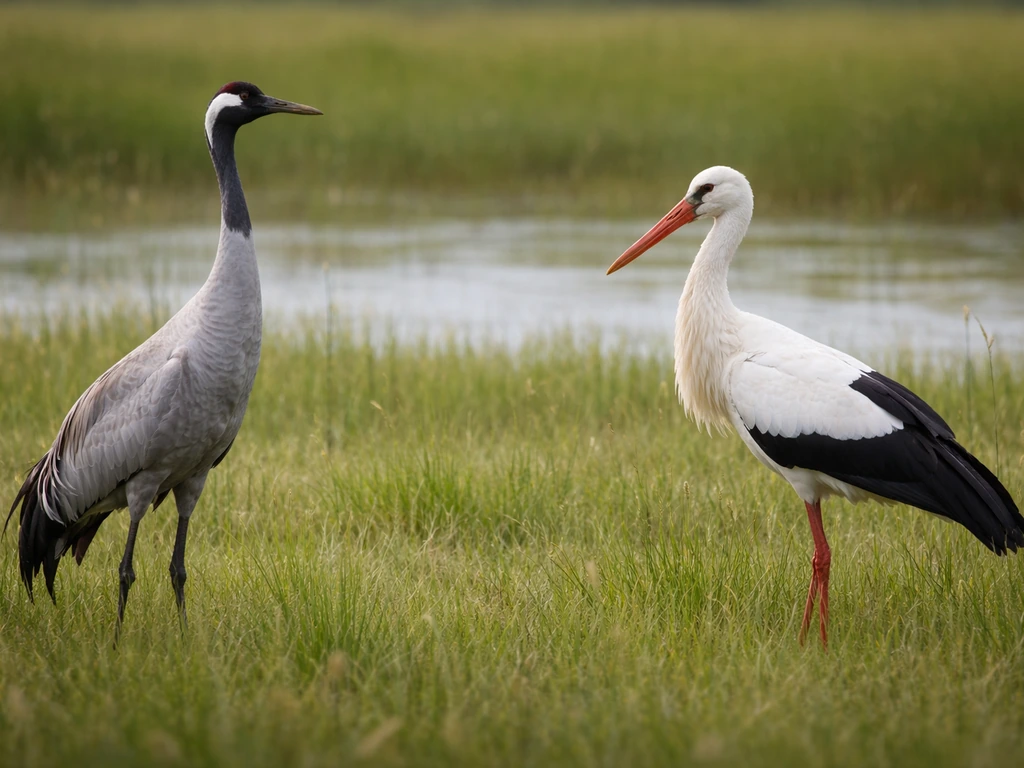
There's also a specific flight-based confusion worth knowing about: Wood Storks extend their neck forward and trail their long legs behind in flight, and at a distance that silhouette can resemble an all-white American White Pelican soaring overhead. The key difference in flight is that the Wood Stork's head and neck are dark and unfeathered, while the White Pelican's head stays pale yellow-white. Similar confusions come up with other large waders like cranes and herons, so it helps to build a mental checklist of a few anchoring features rather than relying on overall impression alone. Those same kinds of visual cues are also what you use when comparing a heron bird vs crane in the field cranes and herons.
Key visual ID differences
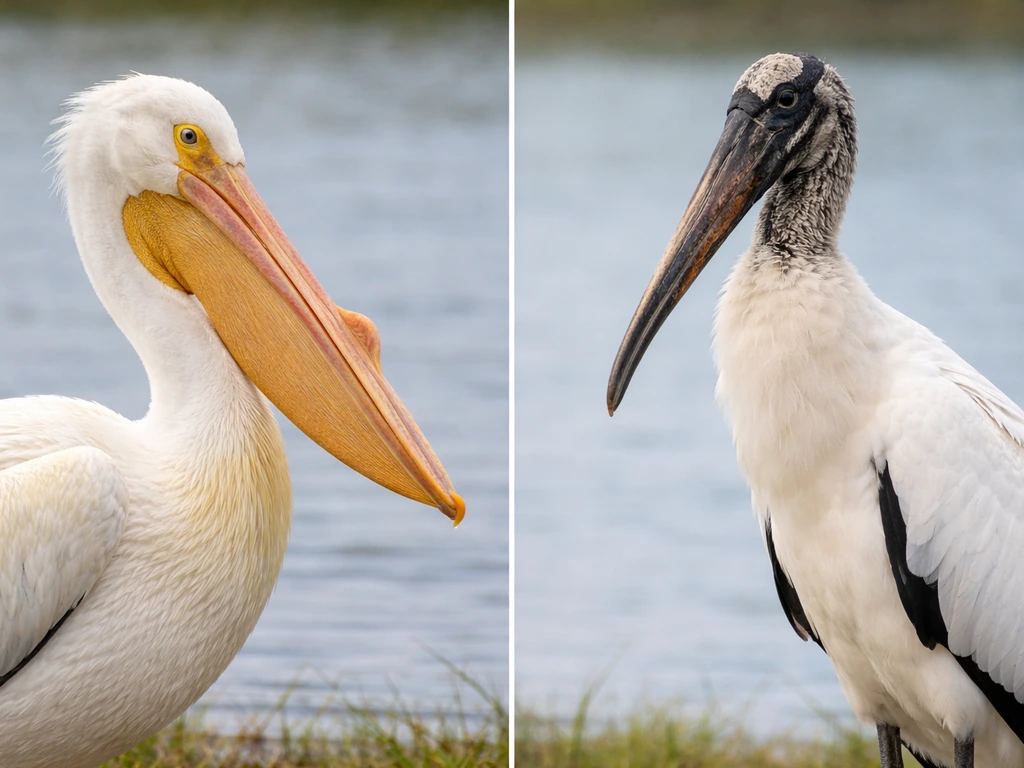
Here's a side-by-side breakdown of the features that matter most in the field.
| Feature | Pelican (American White / Brown) | Stork (Wood Stork / White Stork) |
|---|---|---|
| Bill | Very long, flattened, with a large expandable gular pouch beneath the lower mandible; yellowish-orange on American White Pelican; hooked tip on Brown Pelican | Long, heavy, and slightly downcurved; no pouch; dark on Wood Stork, reddish on White Stork |
| Throat pouch | Prominent and distinctive; can hold roughly 1 gallon of water and fish | Absent entirely |
| Neck | Shorter and thicker relative to body; often carried in an S-curve at rest | Long and slender; extended straight forward in flight |
| Legs | Short and orange; barely visible below the body when swimming | Strikingly long; trail well beyond the tail in flight; clearly visible when wading |
| Size | American White Pelican is massive (one of North America's largest birds); Brown Pelican is medium-large | Wood Stork stands over 3 feet tall with a ~5-foot wingspan; White Stork similarly large |
| Head | Large and rounded with pale or colorful facial skin; fully feathered | Wood Stork has a dark, bald, unfeathered head and neck; White Stork has a fully feathered white head |
| Silhouette | Stocky body, large head, short neck; bill points slightly downward at rest | Slender body, small bare head, long neck; upright wading stance |
| Wing pattern | American White Pelican: white body with black primaries and outer secondaries | Wood Stork: white body with black flight feathers on wings and tail; similar contrast pattern but different body shape |
The gular pouch is really the clincher. No stork has anything resembling it. If you can see even a hint of a baggy, skin-colored sac under the bill, you're looking at a pelican. The leg length is the second-best quick check: stork legs are long enough to be obvious even when the bird is standing still on a mudflat, while pelican legs are short and often hidden by the body.
Behavior and feeding style differences
Watching how a bird feeds is often faster and more reliable than trying to see fine anatomical details. Pelicans and storks have completely different feeding strategies, and those strategies are visible from a reasonable distance.
How pelicans feed
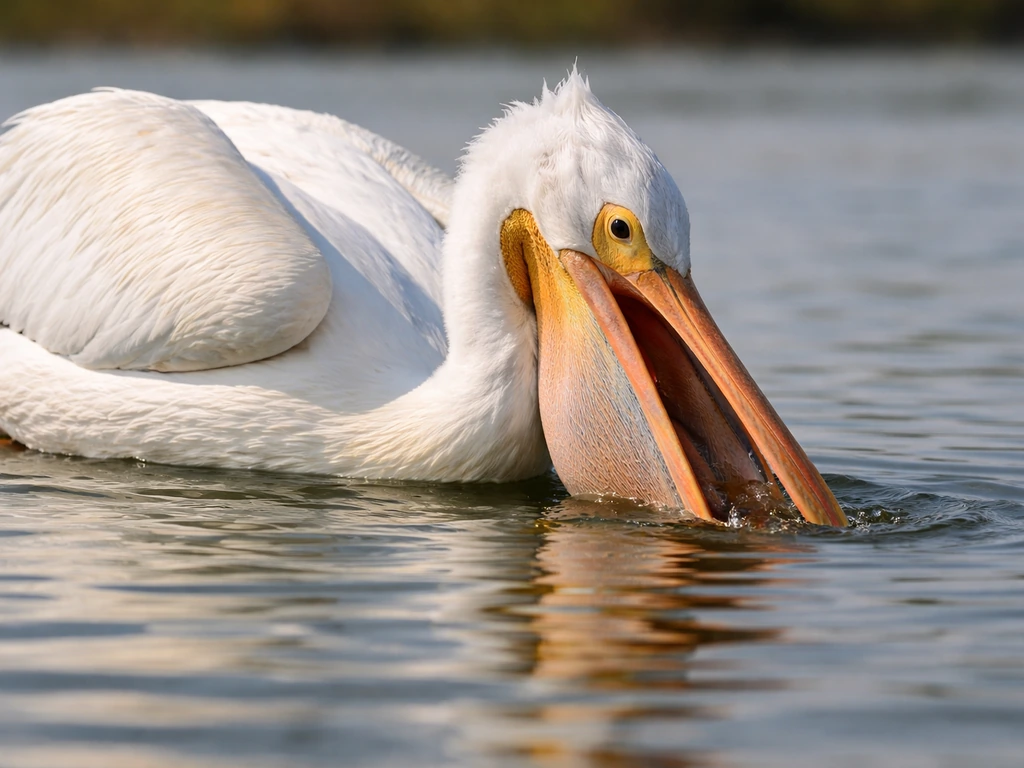
American White Pelicans feed cooperatively on the surface of the water. They swim along, dip their bill down into the water, scoop fish into the expandable pouch, then tilt the bill upward to drain the water and swallow the fish. Science of Birds also notes that this expandable pouch is involved in feeding mechanics and posture, not in the way pelican misinformation claims it is for storing food. They often work in coordinated groups, herding fish into shallows together. Crucially, American White Pelicans do not dive from the air. Brown Pelicans, on the other hand, are famous for their dramatic plunge-dives from height, folding their wings and hitting the water headfirst. After catching fish, Brown Pelicans hold their bill downward and let water drain from the corners of the mouth before swallowing. The pouch in this case acts as a net, not a storage container.
How storks feed
Storks are waders and stalkers. If you are comparing a crane bird versus a stork, the fastest check is how the neck and tail are carried in flight crane bird vs stork. White Storks walk slowly through grasslands or shallow water, watching for prey with their eyes. Wood Storks use a completely different and fascinating technique called tactolocation: they wade through murky shallow water with the bill held open and submerged, feeling for fish or frogs by touch rather than sight. When the bill contacts prey, it snaps shut in about 25 milliseconds, one of the fastest reflex actions in the vertebrate world. This is a fundamentally different strategy from anything pelicans do. If you're watching a bird slowly wade through ankle-deep water with its open bill dragging through the mud, it's a stork, not a pelican.
Flight and movement cues to tell them apart
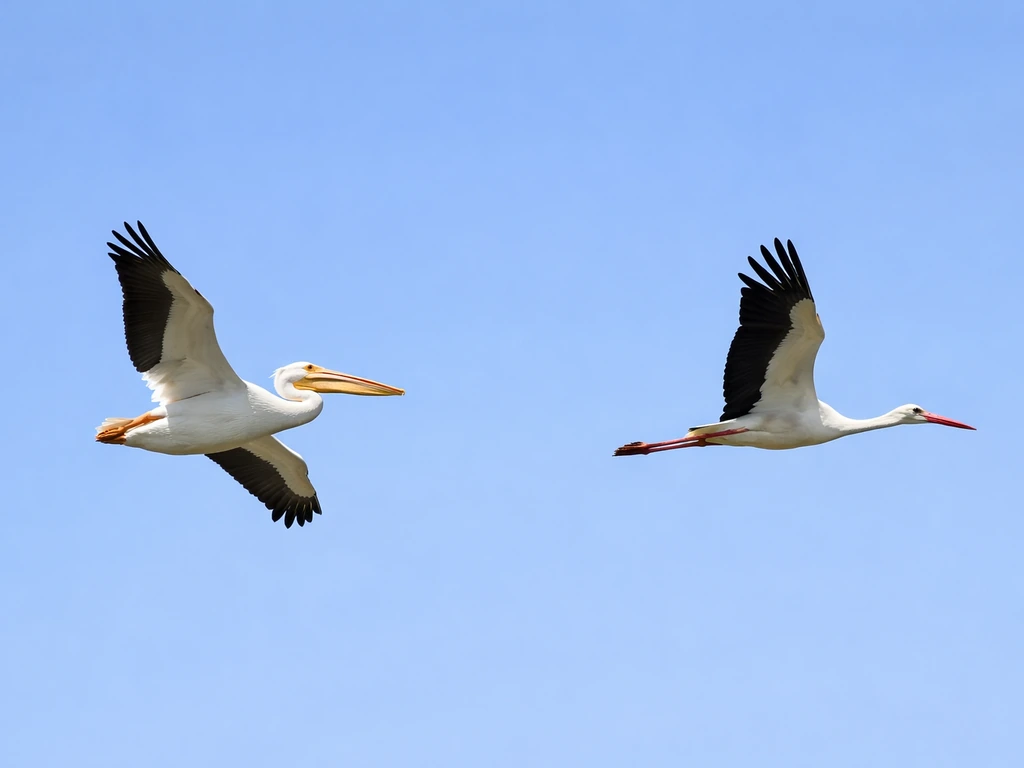
Both pelicans and storks are excellent soarers and will use thermals to gain height and travel long distances. American White Pelicans are particularly impressive in this regard, often traveling in large, organized flocks that spiral upward together on thermals. In the air, though, their body proportions look very different.
- Pelicans in flight: stocky body, large head held back on a thick neck (creating a kinked profile), bill pointed forward and slightly down, legs barely projecting beyond the tail. Wings are broad and the black-and-white contrast on American White Pelicans is striking from below.
- Storks in flight: slender body, neck stretched straight forward, long legs projecting well past the tail. Wood Stork's bare dark head and neck are obvious in flight. White Stork shows a similar stretched-out posture.
- The leg projection is a reliable quick check at a distance: if the legs trail noticeably behind the tail, you're almost certainly looking at a stork, heron, or crane, not a pelican.
- Pelicans flap with a slow, powerful rhythm and then glide; their flapping wingbeats look labored but deliberate. Storks also mix flapping with soaring but have a lighter, more buoyant appearance in the air.
- Flock behavior: seeing a group of large white birds spiraling high on a thermal together is a strong indicator of American White Pelicans specifically, as storks tend to travel in smaller groups or individually.
Habitat and where you'll typically spot each
Knowing where you are helps narrow things down before you even raise your binoculars. Pelicans and storks overlap in some wetland habitats, but their ranges and preferred environments differ enough to be useful.
Pelicans
American White Pelicans breed on freshwater lakes in the interior of North America (including the U.S. Great Plains and Canadian prairies), with migrations beginning around early April. In winter, they move to coastal areas and southern inland waters. Brown Pelicans are almost exclusively coastal birds, found on ocean beaches, bays, harbors, and estuaries along both the Atlantic and Pacific coasts of North America. If you're standing on a California pier or a Florida beach watching a large bird dive into the surf, it's almost certainly a Brown Pelican.
Storks
In North America, the Wood Stork is the bird you're most likely to encounter, primarily in the Southeast U.S., especially Florida, Georgia, and the Carolinas. It favors freshwater marshes, cypress swamps, and shallow ponds where it can wade and use tactolocation to hunt. White Storks are not found in the wild in North America but are a familiar sight across Europe, sub-Saharan Africa, and parts of Asia, often nesting on rooftops and chimneys in European villages. If you're in Europe watching a large white bird stalking through a field, it's far more likely to be a White Stork than any pelican.
Quick field checklist and photo-confirmation tips
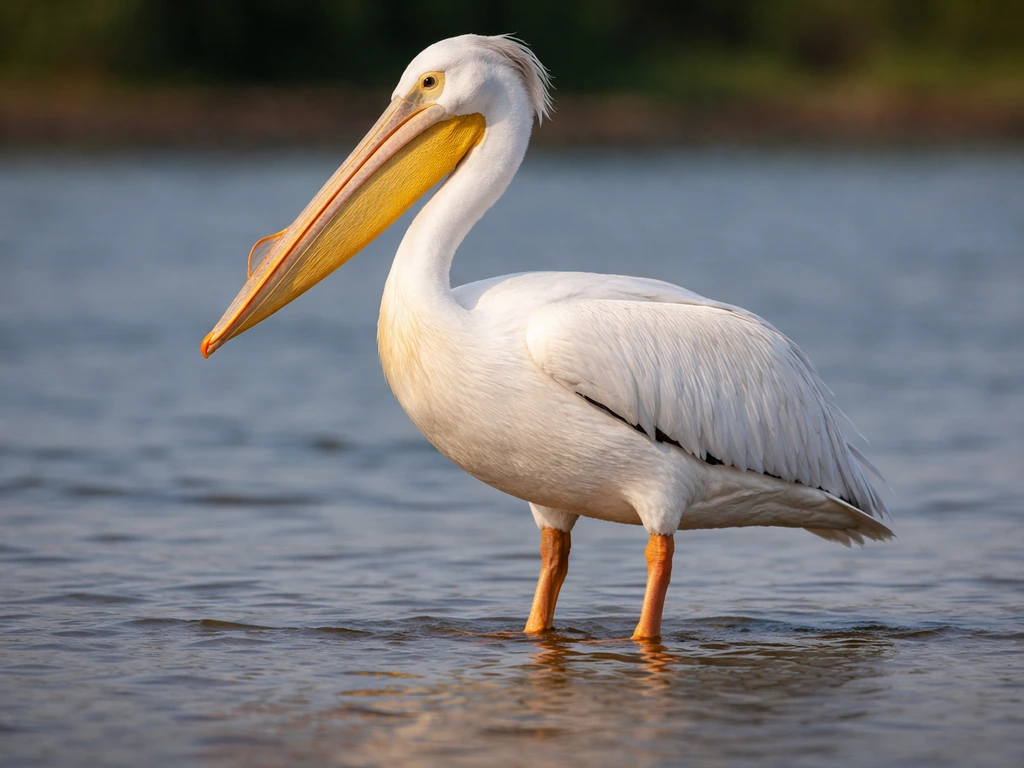
When you spot a large white wading or soaring bird and need to make a quick call, run through these five checks in order:
- Bill pouch: Is there a visible flexible pouch under the bill? Yes = pelican. No pouch = stork (or heron, crane, etc.).
- Leg length: Are the legs long and clearly visible below the body when the bird is standing or flying? Long legs = stork. Short, barely visible legs = pelican.
- Head: Is the head large, rounded, and fully feathered with colorful facial skin? Pelican. Is the head small, bare, and dark? Wood Stork. Fully feathered white head with red bill? White Stork.
- Feeding behavior: Swimming and scooping, or plunge-diving = pelican. Slow wading and probing with an open bill = stork.
- Flight silhouette: Legs projecting well past the tail and neck stretched straight forward = stork. Thick neck kinked back with bill forward and legs barely visible = pelican.
For photo confirmation, a few pitfalls are worth knowing. Lighting and contrast conditions dramatically affect how the gular pouch appears in photos: in flat overcast light or backlit shots, the pouch can look like a shadow or disappear entirely against the bill. Always try to get a photo from the side in good light, with the bill and throat area clearly in frame. If the bird is in water, the pouch may be submerged or flattened, so wait for a moment when the bird lifts its bill. For distant or in-flight shots, focus on leg projection and wing pattern rather than trying to resolve fine bill details. If you're in the U.S. and unsure between pelican species, checking recent eBird sightings in your area can help confirm which species has been reported nearby.
Common lookalikes and how to double-check
Pelicans and storks aren't the only large white birds that get confused with each other. Here are the most common lookalike situations and how to resolve them.
Great Blue Heron and Great Egret
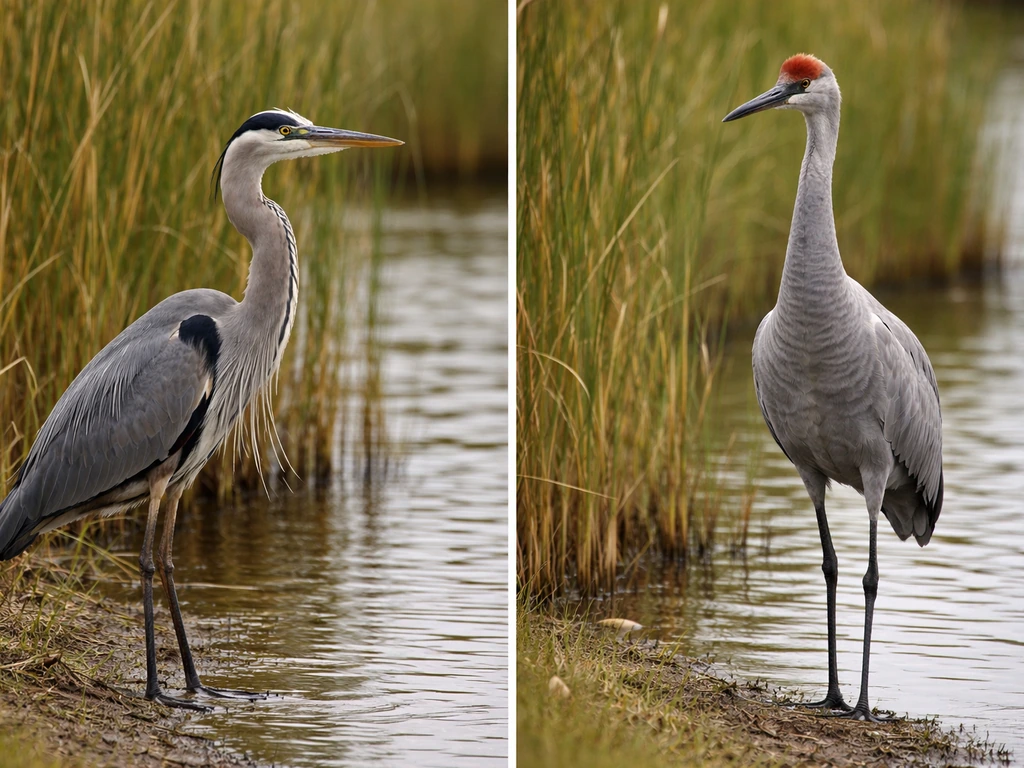
Both are tall wading birds that can superficially resemble a stork at a distance. Herons and egrets have a distinctive S-shaped neck curve that they often carry even in flight, and they pull the neck back into a tight coil when soaring, unlike storks and pelicans, which both extend the neck (or in the pelican's case, keep it kinked but forward). No heron has a gular pouch, and their bills are straight and dagger-like rather than heavy and curved like a stork's. The comparison between cranes and herons is a common confusion too, and worth exploring if you're frequently watching mixed wading bird flocks. A similar check helps you tell a crane bird from a blue heron, since cranes tend to show different neck and leg posture than herons crane bird vs blue heron.
Sandhill Crane and Whooping Crane
Cranes are often confused with storks and large herons, less often with pelicans. If you’re also considering crane birds, compare the crane’s long, neck-forward posture and distinct tail-feather “skirt” to the pelican’s gular pouch cranes are often confused with storks and large herons. The key crane feature is a bushy, drooping set of tertial feathers over the tail that gives cranes a distinctive "rear skirt" appearance. Cranes also have a red or bare patch of skin on the forehead. Neither pelicans nor storks have this. Cranes fly with their neck fully extended, similar to storks, so leg projection and that drooping tail feather cluster are your best checks.
Shoebill
The Shoebill (sometimes called Shoebill Stork, though it's not a true stork) has famously been confused with pelicans in viral photos, likely because its massive, broad, hooked bill vaguely resembles a pelican's bill from certain angles. Shoebills are found only in central Africa's freshwater swamps. If you're in Africa and see something that looks like a pelican with a prehistoric bill standing absolutely motionless in a papyrus swamp, it's a Shoebill, not a pelican or stork.
White Ibis and Spoonbill
In the southeastern U.S., White Ibis and Roseate Spoonbills share habitat with Wood Storks and sometimes pelicans. White Ibis has a long, decurved orange bill that could briefly be confused with a stork's bill, but ibis are much smaller and fly with rapid wingbeats in tight flocks. Spoonbills have a flat, spatula-shaped bill that's hard to confuse with either a pelican's pouch bill or a stork's curved bill once you see it clearly.
The bottom line: if you're regularly watching large wading and soaring birds in mixed wetland flocks, it pays to build familiarity with the whole guild, including cranes, herons, egrets, ibis, and spoonbills, not just pelicans and storks in isolation. If you ever see a crane standing tall in wetlands, compare its long legs and posture to a flamingo, since “crane bird vs flamingo” is a common point of confusion. Each species has one or two anchor features that make it unmistakable once you've locked them in. For pelicans, that anchor is always the gular pouch. For storks, it's the long bare legs and the absence of any pouch. Get those two things solid, and you'll untangle the rest quickly.
FAQ
If the gular pouch is hard to see, what should I do in the field right away?
Most “is it a pelican or a stork?” problems come down to one field moment, can you see the skin sac under the bill. If the bird is resting or facing you, wait for a head turn or a bill lift, because the pouch can be hidden when the bill is tucked against the chest or when it’s flattened by water.
Why do photos sometimes make pelicans and storks look the same, and how can I confirm from pictures?
In overcast light and backlit scenes, the pouch can blend into the bill and look like a shadow or vanish in photos. A good workaround is to prioritize a side view and slightly later shot when the bird lifts its bill, then compare against the leg length you see in the same moment.
How do juvenile pelicans and storks affect identification mistakes?
Yes, juveniles of both groups can look less sharply patterned, and proportions can fool your eye. Instead of trusting overall “big white bird” impressions, use the order of checks the same day, first pouch, then legs, then feeding method (scoop or plunge versus wade and probe).
What if the pelican I’m seeing is walking or standing in shallow water?
If you find a pelican that seems to be “wading,” don’t rely on the general behavior alone. Brown Pelicans often forage near shore and can appear to move through shallow water, but their bill-and-throat pouch still provides the anchor feature, and their typical feeding still differs from a stork’s probing tactolocation.
I only see them overhead, what flight cues help most when I cannot see the pouch clearly?
If you only catch the bird in flight, focus on silhouette traits you can trust from a distance. Wood Storks show a dark head and neck with the neck reaching forward, and their long legs trail. White pelicans keep a pale head and have a different overall body proportion, with no “probe-bird” wader silhouette.
How much does geography (season and region) change the odds of pelican versus stork?
Season and location can help you avoid “impossible” IDs. In North America, a large white bird diving into surf is far more likely Brown Pelican, while a large white wader stalking in the Southeast is more likely Wood Stork. If you are outside those regions, check whether the likely species ranges even overlap before concluding.
What feeding behavior is the quickest way to confirm when both birds are near water?
For field work, treat “stork” as a behavior category, slow stalk and probe, sometimes with an open bill moving through shallow water. Pelicans are more likely to be swimming while scooping, or diving from height (Brown) or feeding at the surface cooperatively (American White).
What other birds most often cause pelican vs stork mix-ups, and what single trait separates them?
A common mistake is confusing storks with other long-legged white waders that have no pouch, like herons and egrets. Herons show an S-shaped neck posture and tend to pull the neck back differently in flight or when soaring, while storks carry the neck more extended and use probing.
What is the best order of checks if visibility is poor (glare, haze, long distance)?
If you’re trying to identify from distance, avoid “bill shape only” decisions. Leg projection and posture usually give a faster yes or no, then you can attempt the pouch check. This reduces errors when water glare or haze hides the throat area.
If I can only observe one trait for a few seconds, which ones should I prioritize?
Use the “anchor features first” strategy: for pelicans, the gular pouch is the clincher, even if you only catch a brief glimpse. For storks, the absence of any pouch combined with long, bare-looking legs is the anchor, so you can still decide even if feeding is not observed.